Sunday, October 26, 2014

The Legend of Dark Witch (3DS eShop) Review

Halloween is coming up shortly-- in fact, this Friday! To get the SPC faithful and myself into the spirit, I'm covering a game with an intriguing title, The Legend of Dark Witch. It's an inexpensive Mega Man-like game for the Nintendo 3DS eShop. Is this legend one worth telling?

A Mega Man Game in Witch's Clothing


It would be a problem if Capcom was still making Mega Man games if there a massive number of Mega Man-style clones entering the market. As the publisher is not green-lighting any projects starring the Blue Bomber, then I say open the floodgates for Mega Man-inspired, styled, heck, even blatant clone games! Circle Entertainment's The Legend of Dark Witch is pretty much all three of these, albeit with a female cast of characters including the hero. What it all adds up to is an affordable adventure worthy of your time and money.

The Legend of Dark Witch throws you into the role of Zizou Olympia, a sassy goddess who begins a quest to recover a mystical power which has been stolen. The world just so happens to depend on this power for a myriad of tasks, such as making fire, all needed for its denizens' survival.

Zizou is powered up and on the loose!
Thus, in typical Mega Man-style fashion, this quest is completed through completing a series of stages chosen in any order you desire. There are six starting levels, each containing a fairly straightforward path to the boss, one of many female challengers that Zizou must take on since diplomacy tends to fail. Upon defeating the boss of a level, you earn that warrior's special weapon. These encounters tend to rely on picking up on boss patterns, memorization of said patterns and boss tells to dodge attacks, and chipping away at their health gauge. This couldn't be more like Mega Man unless Zizou was originally a helper robot named Rock created by someone named Dr. Light.

How cute. You want to face a goddess.
Thankfully, the developers of The Legend of Dark Witch went one step further and crafted an enjoyable currency and powering up system to make their game more than just a Mega Man clone. All to Zizou's lonesome, her abilities aren't very impressive, especially for a goddess. However, defeated enemies drop fragments known as Tres that automatically get added to your overall total. In levels they temporarily strengthen your abilities, allowing for faster speed of Zizou, more range, and more shots being fired out in more directions. You can hold the fire button and run through levels, blowing most foes away with a single hit. Nonetheless, these bonuses remain with you in a level until you die.

Outside of levels, Tres is used as currency to purchase permanent upgrades. From more starting health and lives to powering up special weapons to increase their usefulness, Tres offers the ability to make The Legend of Dark Witch an easier time for those that desire it. It certainly makes the harder difficulties and levels less intimidating. It's also important to note that even if you fail a level, you're able to keep the Tres you collected. This means you can continue whittling away at a level until you get strong enough to finally beat it if your skills aren't at a high enough level.

As for levels, each can typically be finished within five minutes, but also each contains speed-running capabilities. After all, each level records your best time, and it's always fun to share best times with Miiverse. Some levels have branching paths that lead to interesting discoveries such as hidden Pure Syega crystals, optional doodads that expand your abilities. Other times secondary paths are just there as an alternative way to the main route.

And today is the one day I forgot
to bring my sunscreen. 
Each level begins within a netherworld of sorts, a blue background area that materializes into the actual locale once a specific dimensional line has been crossed. There's some neat ideas in the level design to keep levels distinguishable from one another outside of aesthetics. For instance, one level has you riding up and down a path of arrows, allowing you to reach higher platforms, while another has you hitting a switch to make blue blocks solid while making red blocks transparent (and vice versa).

And today is the one day I remember
the sunscreen and forget my mittens.
Mega Man-style games generally don't take too long to complete, and that is very much the case with The Legend of Dark Witch, too. While the game can be beaten in less than an hour, achievements can be unlocked for performing in-game feats, such as beating the game in under 45 minutes, beating the game without buying any upgrades, and so forth. You can purchase bonuses within a special main menu shop which offers info on bosses, enemies, a harder difficulty mode, a musical player, a monochrome graphics filter, and much more. Each play-through of The Legend of Dark Witch can have you on your way to unlocking something new, and thanks to a second playable character, you're bound to have a lot of fun despite a regular play-through's brevity.

The Legend of Dark Witch may be cheap in price, but it doesn't look cheap presentation-wise. The 2D pixel art in the characters and particularly the backgrounds and landscapes look absolutely phenomenal. The lack of any stereoscopic 3D at all is a bit disappointing, considering how great it would make the already exquisite art pop out to the player.

Zizou may be surrounded,
but the odds are on her side regardless.
Regarding sound, the music is suitably Mega Man-ish, featuring different catchy themes for each stage. Sound effects are pleasant and satisfying enough as you mow down enemies, and the voice acting, albeit in Japanese, isn't grating thankfully.

Perhaps my only issue with the presentation comes from the localization/translation of the game into English. Typos, spelling mistakes, and more along those lines are abundant, but even then, it's nothing that got in my way of enjoying the game.

The Legend of Dark Witch is indeed a rather short game with some issues to it. However, there's plenty of longevity that would make the game worth purchasing even if it was more expensive than the very tempting $3.99 it sells for on the Nintendo eShop. It controls tightly, it looks splendid, and the challenge is just right. It's a bewitching trifecta worthy of looking into for anyone yearning for a non-Mega Man Mega Man game.

[SPC Says: 8.0/10]

Paper Monsters Recut (Wii U eShop) Review

We kick off the final week of October with a new review, one of many planned until the end of the month, Halloween. This game, originally made for mobile devices, is from Mobot Studios. It's Paper Monsters Recut for the Wii U eShop. Let's see if it's a cut above the rest.

Halloween may be more suitable for witchcraft,
but for now we're dealing with something better-- papercraft.


For someone new to mobile gaming like I am, I had no idea that Paper Monsters was originally a mobile game. Doing some research, I found out that the game was making its first console appearance in the form of an enhanced port with Paper Monsters Recut. No doubt Mobot Studios took this undertaking of porting a mobile game to a major home console seriously, evident by the work easily seen through comparing the two games. In essence, Paper Monsters Recut takes a tried-and-true take on the old school 2D platformer, and it adds in physical (read: no touch screen) controls to make this Wii U version the definitive one.

The color pallet is bright and varied
in Paper Monsters Recut.
The entire world of Paper Monsters Recut is made of paper and cardboard. This includes platforms, backgrounds, characters, and more. This enhanced port of the original Paper Monsters on mobile features even more to make its unique visual style stand out from the crowd of other eShop titles, such as improved lighting and effects. The colors come from a wide pallet, offering some very beautiful areas. While not everything is perfect tech-wise (e.g. there's some significant slowdown at the start of the Puzzling Pyramid level and rare hard system locks), Paper Monsters Recut looks absolutely glorious on the Wii U, especially if you have an HDTV.

BOING! B-BOING!
Despite the uniqueness of the graphical presentation, Paper Monsters Recut is still a traditional 2D platformer. You run, leap on enemy heads, you traverse platforms, you double jump, and you explore levels for hidden optional goodies like gold paperclips and golden buttons (the latter unlocks mini-games to play and set high scores on). The simplicity of controls make the game very accessible to beginning players, although the challenge of the game itself isn't very high. Paper Monsters Recut doesn't hold back on giving you copious amounts of extra lives at your disposal, nor does it punish you in a harsh way for dying. You just lose one of your many lives and are sent back to the last reached checkpoint with everything you already collected saved.

This surely is no Soul Train.
The level design is a mixed bag. Some levels feature some really clever platforming challenges while others seem hastily thrown together. Thankfully the former type of level design is more abundant than the latter. What's also abundant are the secret alcoves and areas that are teeming with collectibles like extra lives and other goodies.

One of the neat touches and gameplay quirks is a Mutant Mudds, Kirby: Triple Deluxe, and Virtual Boy Wario Land way of moving from the foreground to the background plane and vice versa. Of course, sometimes being in a faraway area in the background can make seeing enemies a little trickier than I would have liked, but overall it works well and is a welcome mechanic to the game.

Take pipes into the background and foreground
with this clever (albeit seen before) gameplay mechanic.
There are also times in Paper Monsters Recut where you get a jet pack and blaster weapon to soar and shoot enemies with. The jet pack requires constant recharging at bright blue orbs serving as fuel stations of sorts. These levels add some nice and pleasing alterations to the gameplay. Even without these, however, Paper Monsters Recut would still have enough variety to have kept me interested.

There are approximately six worlds in Paper Monsters Recut, featuring areas like rolling green hills, Halloween-influenced countrysides, ice cold fjords, and vivid jungles. With this enhanced port of the mobile game, the developers at Mobot Studios added some new levels, remixed sections of older levels, and a fleshed-out overworld that has many secrets in it.

The new overworld has 2D platforming
just like the in-game levels.
As for actual levels, the objective is as simple as reaching the goal, which is a makeshift stage for your cardboard character to celebrate on. Of course, to add some replay value you can always go for a better high score (though there are no leaderboards to speak of) and go searching for the aforementioned optional gold paperclips and buttons.

The end of every world save for one concludes with a boss battle of some sort. These fights are decidedly the weakest part of Paper Monsters Recut. At their best they are mindless encounters that err on the side of being ridiculously easy. At their worst they seem thrown together at the last point in development to add another bullet point to the game. That's not to say they're awful by any stretch of the imagination. They're just not that special and could have used more time in the oven, so to speak. One particular battle where I controlled a submarine allowed me to safely stay in one place between two pipes letting out mines. All I had to do was fire when a mine was near the boss, an octopus. That was the extent of "difficulty" for this encounter.

Just a little lower, little submarine,
and this fight will be easy street.
Paper Monsters Recut isn't that long of a game. I was able to collect 108 of the 110 gold paperclips and beat the game in less than five hours. That said, I had great fun for the short length the game gave me. Even with THAT said, Paper Monsters Recut is a game that is definitely replay-able, ensuring that you get your money's worth.

I'm half-expecting to see Bowser appear
here with these surroundings!
In a sea of titles released on the Wii U eShop, it can be challenging sifting through the games, distinguishing between the good and the bad. Thankfully, Paper Monsters Recut is one of the good ones, and it seems to be on a system perfect for it, the Wii U. Not because of any special Wii U functionality that makes the game only possible on the system (there isn't anything like that to be found), but because platformers are so welcomed on Nintendo's latest home console. Despite missing a few key jumps along the way, Paper Monsters Recut is a worthwhile purchase for any 2D platformer-loving Wii U owner.

[SPC Says: 8.0/10]

Thursday, October 23, 2014

Super Smash Bros. for Nintendo 3DS (3DS) Review

What better way to unwind from today's Super Smash Bros. for Wii U Nintendo Direct than a review of Super Smash Bros. for Nintendo 3DS? Sometimes these things just work out so beautifully! Here's my take on the latest in the Smash Bros. series!

Super Smash Bros. slams onto the super small screen.


Super Smash Bros. is a series that is a once a generation deal. However, this generation is something special. While the games are technically complements of one another, we're due to see two Super Smash Bros. games this year-- one, for the first time on a handheld, the 3DS version, and the second that is launching next month on the Wii U. It's an embarrassment of riches for Super Smash Bros. fans and Nintendo fans in general. However, one might argue that it's worth it to wait a month for the Wii U version and ignore its little brother. I argue that this sentiment is folly, and Super Smash Bros. for Nintendo 3DS is still worth checking out-- not only if you can't wait for the Wii U version, but also because the 3DS version has more than enough exclusive content to be a perfect match for Nintendo 3DS owners.

The rules of Super Smash Bros. haven't changed much at all through the fifteen years it has been around. Up to four fighters do battle with one another on a given stage. As they take damage, their percentage goes up. The higher the percentage, the easier it is to knock them out of the field of play. In Timed Play, when a player cannot recover, either getting jettisoned off screen or into a pit below, they lose a life, and the person who scored the KO earns a point. Otherwise, it's a battle to see who can survive the longest.

Even when uppercutting opponents,
Mario's making mad bank.
The fun of Super Smash Bros. isn't just the competitive side, but it's how simple the series is to learn. There are no confusing, convoluted button combos for special moves like more serious fighting games. Instead, each move is performed with a flick of the Circle Pad and a press of one of two buttons. One button is for physical attacks like punches and kicks, while the other is used for special attacks. Generally, holding up and the special attack button is a given fighter's recovery move to try to make it back onto the field of play in one last ditch effort.

Sometimes when his mouth is tired from too much
garlic-chomping, Wario lets his feet do the talking.
Some new gameplay tweaks make Super Smash Bros. for Nintendo 3DS a better feeling and playing game than its predecessor, Super Smash Bros. Brawl on the Wii. For one, the gameplay itself is noticeably faster and more fluid. Edge guarding-- holding onto a ledge so another player attempting to make a recovery couldn't grab it-- was a popular tactic in past Smash games, but Smash Bros. 3DS makes it so the player who nears the ledge automatically grabs it and replaces the player who was trying to hog it.

While Bowser hangs out, Luigi
gets a double slap from Jigglypuff.
Giving a party flavor to the battles are items. A healthy helping of items return from past games, but it's the new ones that steal the spotlight. For instance, the Bullet Bill turns the player that uses it into the eponymous Super Mario enemy, shooting them across the stage and taking out anyone in its flight path. Then there's the Gust Bellows and Beetle items, both from The Legend of Zelda: Skyward Sword. One can easily push opponents off platforms, and making edges of stages quite the hazardous place to be hanging out! Meanwhile, the Beetle grabs a foe and takes them into the air. The more damage the foe has, the harder it is for them to break free.

The Jetpack is one of many fun
new items in this installment of Smash.
A feature missing from the Nintendo 3DS version of Smash Bros. that all past games contained is the ability to choose how common items appear. In this version, items appear a little too frequently, even for a casual player like myself. Unfortunately, the only option left to the player is to turn them completely off. It's a little too black and white, all or nothing for me, where I wish there was some compromise in the middle to work with.

Furthermore, the real estate of the Nintendo 3DS screen, particularly the original, smaller model, does not provide enough space for the action of Smash Bros. 3DS. This is exemplified by three or four player matches when the screen zooms out, making it nigh impossible to see what in the heck is happening on screen.

Follow the leader!
Worse still, the design of the 3DS and its Circle Pad, don't serve a game like Super Smash Bros. well. It's easily understood that the system was not built for Smash. For my smaller hands, extended play sessions weren't painful in the slightest, but for some of my friends with larger hands, cramping was all too common for them.

Masahiro Sakurai and his team went for parity with both Super Smash Bros. games, and parity is at its most obvious in the character roster. For both the Nintendo 3DS and Wii U versions, the roster of fighters will remain the same with no differences. The majority of fighters from past games returns, and the new additions like Little Mac, Rosalina, Lucina, Wii Fit Trainer, and Villager are most welcome and shake up the roster quite nicely. Unfortunately, due to the technical limits of the Nintendo 3DS, one big omission to the Smash roster of both games is the veteran duo of the Ice Climbers. That notwithstanding, the roster of Super Smash Bros. for Nintendo 3DS (and the upcoming Wii U) is without question the most diverse and largest ever seen in franchise history. Characters are fine-tuned for balance, and while some less-than-admirable tactics work on some characters, what is there is mostly well done.

Three newcomers and an unlikely,
returning series veteran walk into a bar...
Characters like big third-party newcomer Mega Man rely on distance attacks, whereas up-close and personal brawlers like Little Mac lets his boxing gloves do the talking, able to KO opponents with standard attacks! However, what Little Mac excels in fighting on the ground, he has a major disadvantage in the air, looking more like an iron safe with wings and poor recovery. Then there's the brilliance of Rosalina, who uses her baby star Luma to serve as an extension of herself in battle, able to attack foes from a fair distance away. My point here is that each fighter presents something new to the player and has enough personality in both aesthetics and in how they play that makes each worthwhile. Of course, this is save for some clone characters, which do not bother me as much as others, as they didn't take the spot of some other character.

My love and nostalgia for
Mega Man knows no bounds.
Super Smash Bros. for Nintendo 3DS even goes a mile further with characters. This time around you can customize characters, equipping them with stat bonuses, and custom tailoring their special ability move sets with one of three alterations for each move. The only issue here-- and it's an annoying one-- is that stat bonuses and moves are unlocked at a snail's pace. We're not talking a straight road either for our snail to travel. We're talking a detour-filled road full of repeated single player sessions in the various solo modes, hoping you get lucky and unlock the stat bonuses and moves you need. It further is tedious thanks to the fact that you can earn bonuses that you already have acquired. ...Yeah.

Link is seriously (and literally) kicking Ness's butt.
Nonetheless, I was mentioning parity earlier. Parity is mostly relegated to the character roster. The Nintendo 3DS version of Super Smash Bros. makes itself worthy of a purchase even for those intending on buying its big brother releasing next month. One such reason is that the stage selection is almost entirely different from what is available in the upcoming Wii U iteration. Only a select few stages in the 3DS version will appear in the Wii U version, such as Battlefield, Final Destination, Dr. Wily's Castle, and Xenoblade Chronicles's Gaur Plain.

Fox is going to need the number
of a good chiropractor after this battle.
There is a combination of brand-new and returning stages from Melee and Brawl in Smash Bros. 3DS. From riding a steaming locomotive in The Legend of Zelda: Spirit Tracks' Spirit Train to following the auto-scrolling screen through the colorful platforming landscape of Super Mario 3D Land's 3D Land stage, the stages presented in Smash Bros. 3DS are wide and varied. The total amount is less than Brawl, but at the same time there are fewer duds to be found.

One of my favorite new stages,
this is the Spirit Train.
Another exclusive that the Nintendo 3DS version has is a multiplayer mode called Smash Run. If you're familiar with Kirby Air Ride, which just so happens to be a past project of the director Masahiro Sakurai, and its City Trial mode, you'll have somewhat of a vague understanding of Smash Run.

Smash Run gives you and three other opponents five minutes to roam around a large, expansive, multi-tier area where you encounter enemies from various franchises, such as Mario's Goombas, Donkey Kong Country's Kremlings, Kirby's Waddle Dees, Kid Icarus's Reapers, Mega Man's Metaurs, and many more. Each defeated enemy drops stat bonuses in one of six categories. As you play through a round of Smash Run, your fighter becomes noticeably faster, stronger, able to leap higher, and unleash more powerful moves.

Smash Run held my attention for a good
while, but it's not for everyone!
When the five minutes conclude, all four opponents enter a single match type with all of their earned stat bonuses. The match type can be as simple as a traditional smash battle, a race to the finish line, a competition to see who can defeat the most enemies, and so forth.

Other modes in the Nintendo 3DS version of Super Smash Bros. include returning modes like Classic mode and All-Star mode. Classic mode pits you against a handful of rounds against various AI opponents. Each round allows you to choose one of a few paths of varying difficulty. The harder the path, the greater the rewards. Classic mode uses a difficulty system identical to what was found in Masahiro Sakurai's first Nintendo 3DS release, Kid Icarus: Uprising. The more coins you bet, the higher the intensity or challenge. The greater the intensity, the better the spoils. However, failing not only has you lose some of your rewards, but it also makes you play on a lower difficulty.

In this stage, occasionally the Yellow
Devil makes a sudden appearance.
All-Star mode is up to seven rounds of battling the entire Super Smash Bros. roster. This time, however, characters you face are divided up between what years they debuted. For instance, the first fighters you face are Mario, Pac-Man (making his Smash debut), Mr. Game and Watch, Donkey Kong, and Little Mac. Meanwhile, the last round has you up against more recent characters like Shulk of Xenoblade Chronicles fame, Greninja of Pokemon X and Y fame, and Lucina from Fire Emblem: Awakening.

It's "swing around fun town" for Link,
courtesy of Mario!
In addition to all of these aforementioned modes, things from past games like the Home Run Contest, Multi-Man Smash, and more return. Then there's even more new stuff in the forms of Target Blast, Trophy Rush, and StreetPass battles.

No doubt a major question in the minds of many players and aspiring purchases of Super Smash Bros. for Nintendo 3DS is "how does the online play out?" The answer is thankfully much better than Brawl played, but then again that's not too taxing of a task. One-on-one matches, even against out of country players, worked well, but things can get dicey with more than one other opponent. You see, all players need a good connection, because even if one player has a crappy connection, all players suffer.

Yuck! I don't want to know where
that duck's beak's been!
On the local side of things, local play usually worked flawlessly, but at the same time I also had little mechanical or technological interference to contend with. However, I've read reports of local play being disastrous for some other players, so your mileage may vary.

Super Smash Bros. for Nintendo 3DS is a successful transplant of the series formula onto smaller and more portable hardware. There's indeed several hitches that get in the way from being an optimal experience, but overall, Super Smash Bros.'s debut on a handheld was handled and pulled off remarkably. Whether at home, at work, at school, or anywhere else, anytime is a smashing good time!

[SPC Says: 9.0/10]

Wednesday, October 22, 2014

Bad Levels in Gaming History - Volume Five

Good/bad level design, like many things in life, can be a very subjective thing. However, I am pretty sure that my picks for this fifth volume of Bad Levels in Gaming History can be considered by most to be pretty bad, whether it's in its design, its repetitiveness, and so forth. Games on this volume include The Legend of Zelda: Phantom Hourglass, Sonic Adventure 2, Batman: Arkham Asylum, Donkey Kong 64, and Darksiders.

If you've missed a previous volume of Bad Levels in Gaming History, check them out with these links!


The Temple of the Ocean King - The Legend of Zelda: Phantom Hourglass (DS)


Dungeons are generally a fantastic part of The Legend of Zelda line of games. I'd even go so far to say that they're my favorite part of each game. Big thing to say, right? Phil sarcastically asked. Anyway, The Legend of Zelda: Phantom Hourglass had some interesting dungeons in it, but it also bestowed onto players one of the most aggravating and tedious dungeons in series history, The Temple of the Ocean King.

The main issue with the Temple of the Ocean King is just how it is set up. It is essentially a timed stealth dungeon, requiring you to avoid Phantoms that will chase after you if they notice your presence. The titular Phantom Hourglass pours sand from its top to its bottom. If the sand empties from the top and fully fills the bottom, it's game over. The aforementioned Phantoms take away thirty seconds of time if they catch you.

What makes matters worse is that you are returning to the Temple of the Ocean King basically after every dungeon. This means you will have to AT LEAST go through the dungeon six times or more, and that's not including failed runs. Each visit allows you to venture further down the dungeon's thirteen total floors. Don't like repeating puzzles for no reason but to pad the gameplay experience? That's unfortunately too bad. That's exactly what you have to do in this dungeon.


The sad fact is that the Temple of the Ocean King isn't a poorly designed dungeon per se. It just requires the player to retread the same ground, solving the same slow puzzles over and over again, and it forces you to do so more times than should be allowed. Just half of the visits to the Temple of the Ocean King would have worked better than what the final product in the game was.

Crazy Gadget - Sonic Adventure 2 (DC)


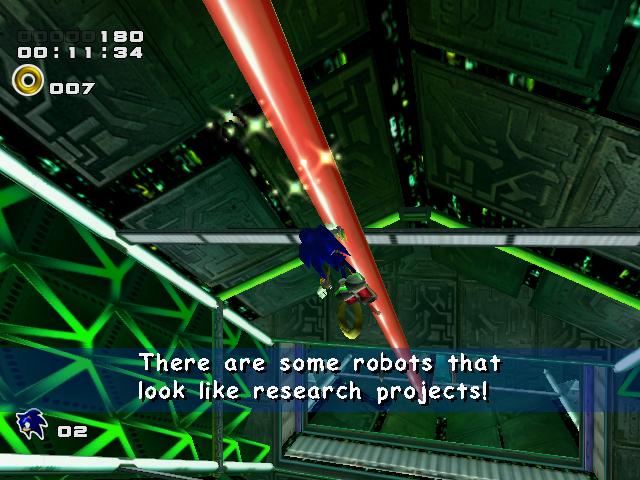
Let's face what I perceive to be facts, shall we? Early 3D Sonics were hard enough to contend with due to their poor cameras, sloppy controls, and frustrating bugs and glitches. Factoring gravity shift mechanics into things makes for one mess of a level. That level is Sonic's penultimate stage in the Hero Story of Sonic Adventure 2, Crazy Gadget.


Crazy Gadget is devised of various gravity switches that change the flow of gravity, pulleys that rappel Sonic up large shafts, and of course, everyone's favorite enemy in the game, Artificial Chaos. These blue blob boobs can attack Sonic from afar with their huge extending reach via a pair of thin blue tentacles.


The problem with these obnoxious beings is that the lock-on mechanic to homing attack these enemies doesn't always work. Sometimes you homing attack them and their tentacles somehow wrap around and take you out. Then there's those Chaos that explode into dozens upon dozens of little Chaos orbs, which the player can only take out by slamming on the homing attack button, praying that the game actually locks onto each foe instead of sending Sonic straight, prone to injury and a resulting loss of all of his rings. Bye-bye, A rank!


Crazy Gadget exemplifies the early 3D Sonic series's grandest control and camera problems, making for a mighty frustrating level that was hard to love when I had more patience as a young high school student, and is now impossible to love now that I have less patience for wonky design.

Killer Croc's Lair - Batman: Arkham Asylum (PS3, 360, PC)


Batman: Arkham Asylum is a roller coaster ride from the very beginning of the game up to close to the end. Then the ride screeches to a halt when Batman enters Killer Croc's lair, a section of the game where slow and steady wins the race for survival, but loses in the contest for fun. The lair itself is a long, pitiful, repetitive sewer maze (even the combination of words to describe the place evokes feelings of tedium) where Batman must tiptoe his way across floating wooden planks.

Meanwhile, Killer Croc leaps out of the water so many times in attempt to scare you that it quickly becomes "the Croc That Cried Wolf." It stops being alarming or intense after about the fifth jump-scare out of around thirty or so. Each time Croc leaps out of the water, a simple throw of an automatically-targeted Batarang knocks old ugly back into the murky drink. Killer Croc's lair is a blight on what is otherwise a near-perfect action game.

Crystal Caves - Donkey Kong 64 (N64)


Donkey Kong 64 is arguably an immensely and overly bloated collect-a-thon that took the amount of objects and trinkets to gather that Banjo-Tooie had and ratcheted that number exponentially. That's a big part of why the game is so understandably overwhelming to many players. Another part of that is definitely the level design. While most of the levels are indeed large, they're at least designed well. Crystal Caves, one of the last areas of Donkey Kong 64, does not follow such a trend.


The problem with Crystal Caves is that so many areas look so similar to one another, and this is thanks to the abundance of brown and blue walls that fill the cavernous complex. It makes trying to navigate yourself around the level a chore. That's not to mention gigantic stalactites falling from the ceiling intermittently, though this is only upon the Kongs' first visit to the level. Not only all of this, but Crystal Caves easily has some of the most arduous and, dare I say, unfair challenges for Golden Bananas within the entire game. This all adds up to one very annoying and irritating level that despite its awesomely chill tune is anything but enjoyable.

The Black Throne - Darksiders (PS3, 360, PC)


It stands to reason that one of the most difficult dungeons in an action-adventure game like Darksiders would be near the end of the game. That is remarkably and definitely true for Darksiders' Black Throne dungeon.

The dungeon's aim is to use the area's special item to redirect a trio of beams of light in the dungeon's central chamber. This can have you gnashing your teeth, pulling your hair out, and smashing your controller against your knee (perhaps that's just me) as you try to wrap your head around the convoluted portal puzzles being presented to you. Don't feel bad if you need to consult a guide or walkthrough just to make it through these puzzles.


Even then, a guide will only help with the puzzling aspects of the Black Throne. There's still plenty of ridiculously powerful foes to contend with, a lack of health pick-ups to nab, and an unrelenting amount of checkpoints. There's a point in a level where its challenge goes from fair and difficult to cheap and agonizing. The Black Throne goes beyond the point of being the former and dives directly into the latter.

Monday, October 20, 2014

SuperPhillip Central's Favorite VGMs - Fall Break Edition

Welcome to a new week here at SuperPhillip Central! As usual, we kick off the week with a listen to five video game musical pieces. This week we have music from Final Fantasy XIII-2, Devil May Cry 3: Dante's Awakening, and Mario Kart 7. If after this edition of SuperPhillip Central's Favorite VGMs you still haven't had enough music, check out the VGM Database for over 700 great VGM picks of the past!

v721. Final Fantasy XIII-2 (PS3, 360) - Paradigm Shift


One of many battle themes heard in Final Fantasy XIII-2, Paradigm Shift gets the blood pumping as you do battle with a variety of enemies. While the Final Fantasy XIII trilogy leaves a lot to be desired story and gameplay-wise, one constant of the trilogy is the excellent music, as evidenced by this theme and many others like it.

v722. Devil May Cry 3 (PS2) - Devils Never Cry


What was your opinion on Ninja Theory's take on the Devil May Cry series with DmC? It single-handily put the series on hiatus. That's a shame, too, because there's so many fond memories gamers have that are attached to the franchise. One of the most cherished titles from the series is Devil May Cry 3, which this staff roll theme plays during.

v723. Donkey Kong Country 3 (GBA) - Northern Kremisphere


Unlike the previous Donkey Kong Country Game Boy Advance ports, Donkey Kong Country 3 had a totally original soundtrack to it for some odd reason. I don't find it better or worse than what the SNES original offered-- it was just different. Regardless, Dave Wise did a terrific job using the meager GBA sound capabilities to produce a lovely soundtrack.

v724. Mario Kart 7 (3DS) - Rock Rock Mountain


One of the major shames is that Mario Kart 7 never received a CD release, whether it be in retail or a reward on Club Nintendo. The reason why this is a major shame is that the music is so expertly made. Rock Rock Mountain is a guitar synth heavy theme perfect for revving engines through caverns, through forests, and up a steep mountain climb.

v725. Mega Man ZX (DS) - Green Grass Gradation (Arranged)


This track is of one of the area themes in Mega Man ZX, a Mega Man game that had a Metroid structure to it. This version of Green Grass Gradation is an arranged one from the ZX Tunes arranged album.