Showing posts with label bad levels in gaming history. Show all posts

Friday, July 6, 2018

Bad Levels in Gaming History - Volume Eleven

Bad Levels in Gaming History is back to kick some less-than-stellar level butt! "Levels" is simply a catch-all term used. As you'll see with this volume of Bad Levels in Gaming History, "levels" can mean stages, courts, dungeons, areas, race tracks, and more. "Bad Levels in Gaming History" is just more elegant of a name than "Bad Levels, Stages, Courts, Dungeons, Areas, Race Tracks, etc. in Gaming History", wouldn't you say?

This volume features a handful of classic franchises with most being all-star characters that see modern takes on their respective series. Such franchises represented this time around include: Crash Bandicoot, Mario Tennis, Sonic the Hedgehog, Final Fantasy, and even a bit of a precursor in some ways to Grand Theft Auto, the Driver series.

If this volume of Bad Levels has you yearning for more, check out the ten past installments conveniently linked to below:

Road to Nowhere - Crash Bandicoot (PS1), Crash Bandicoot: N. Sane Trilogy (PS4, XB1, NSW, PC)


One of two of the most challenging levels in the already difficult original Crash Bandicoot (and the game itself is occasionally difficult for all the wrong reasons), Road to Nowhere is forward-scrolling trek across a seemingly endless amount of bridges. Simple enough, right? No. Not at all. The bridges are practically hanging by a thread with loose planks that quickly fall to the abyss below once Crash steps on them, meaning you have to move, move, move! Many of the jumps require pinpoint precision as they are only one plank surrounded by gaps. Add in some slippery sections of the bridges, and you have one recipe for frustration.


This wouldn't be so much of a problem if Crash Bandicoot's perspective wasn't so bad in this level. Not only do you have limited sight distance thanks to the thick fog permeating throughout Road to Nowhere, but the perspective of the camera makes it tricky to see where Crash is going to land. Mistiming jumps and just completely missing planks in general are common occurrences in Road to Nowhere, so much so that many players have found the easiest way to get passed the arduous jumps in the level are to completely avoid doing them. It's as "simple" (since again, you're a slave to the camera perspective and difficulty to see where Crash is going to land) as landing on one of the rope railings on either side of the bridges and crossing them that way. You don't miss out on any boxes, as they are all located on the islands sprinkled throughout the levels in between bridge crossings.


Still, just knowing that so many use this exploit just to get through an otherwise messy level to get through due to design problems with Crash Bandicoot as a game itself, Road to Nowhere got the first honors of being skewered on this volume of Bad Levels in Gaming History.

Savage Sea - Mario Tennis Aces (NSW)


Since Mario Power Tennis on the Nintendo GameCube, the Mario Tennis series has been no stranger to various themed, fun, gimmick courts. When I say "gimmick", I mean that the courts have special hazards or obstacles on them to impede upon an otherwise normal (well, in normal in the Mario Tennis sense) match of tennis.

Mario Tennis Aces has these as well, and thankfully, for the most part, you can turn off hazards on courts if you desire. In a game with limited options, it's fortunate that at least the ability to turn off court hazards is available to players. Well, that is except one particular court in the game, which has by far the most obnoxious gimmick in Mario Tennis history, Savage Sea.


Don't be fooled by the bright sunshine and colorful and calm ocean waters that surround this ship-themed court. Here within all this beauty and wonder belies one truly tricky and annoying obstacle that makes for a difficult challenge whether playing on it in Adventure Mode or Free Play. The deck of the ship where the action takes place houses a particular annoyance right in the middle of the net, a mast, which bounces balls off of it in sometimes unpredictable ways. These are such ways that sometimes it's simply impossible to get to the ball without the foresight needed to do so. Furthermore, unlike the rest of the hazards in Mario Tennis Aces' courts, there is no way to remove the mast for a traditional Aces match. What it amounts to is a court that would otherwise be at a climactic and enjoyable setting turned into a complete and utter aggravation.

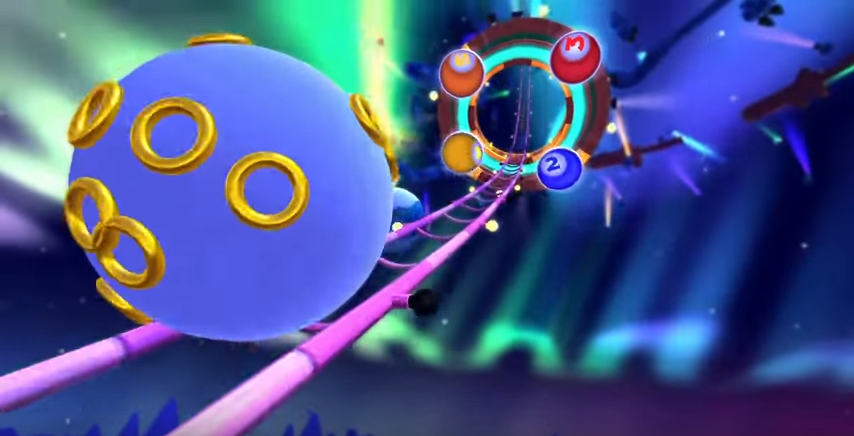
Iron Fortress - Sonic Forces (PS4, XB1, NSW, PC)


How does one screw up a 2D Sonic level after essentially getting them down pat in previous games? As Dr. Ian Malcolm of Jurassic Park would say, "Sonic Team... finds a way." The 28th stage of 30 within Sonic Forces is Iron Fortress, a level situated inside Dr. Eggman's gigantic tower where the final events of the game take place.

Iron Fortress is home to annoying red missiles that launch from boxes, electrified portions of level, wheels that spin Classic Sonic around in all 360 degrees, and one of the most frustrating and shoehorned parts of Sonic Forces, an auto-scrolling section placed directly above a bottomless pit. First of all, there's really no rhyme or reason for there to be auto-scrolling in the first place. There is nothing chasing you--no Death Egg Robot, no wall of instant-death spikes--nothing. Instead, you just get pushed and possibly crushed by an invisible wall.


Couple this with all of the obstacles and level mechanics I previously mentioned and Sonic Forces' clunky jumping, where letting go of the analog stick means that Classic Sonic's midair momentum instantly stops, and Iron Fortress is an annoyance of a stage entirely. It's not impossible; it's just harder than it needs to be due to several bizarre design decisions and Classic Sonic's midair handling, which unfortunately affects the other two characters in Sonic Forces as well, Modern Sonic and the custom avatar.

Karnak Castle - Final Fantasy V (Multi)


We have a lot of classic franchises represented on this volume of Bad Levels in Gaming History, and that continues with Final Fantasy getting representation tonight. This particular bad level, or in this case, area comes from Final Fantasy V, a Super Famicom game that initially skipped the West. This was thankfully rectified with a PS1 release, and now Final Fantasy V is available on a whole wide range of platforms currently.

The area of Final Fantasy V that is especially troublesome is Karnak Castle. This castle has you facing a 10-minute countdown, which you are tasked with escaping before it is destroyed along with you. Quickly you find out that 10 minutes isn't that sizable of an amount of time, as time keeps on ticking through every thing you do in the game--movement in the castle, collecting treasure, dialog, battles, and yes, even a final fight in order to escape Karnak Castle against a powerful boss.


While all this already seems a bit troublesome to take on, Karnak Castle is further the aggravation due to having a dungeon previously and immediately before it. After completing the prior dungeon that leads to your party's transportation to the castle, there is no option to save your data. This means that if you don't make it out of the castle in time or you perish in battle, you have to start over from the previous dungeon. Not exactly the most time-considerate section of Final Fantasy V, but it's for sure one of the most irritating in the game, and possibly the series on the whole.

Tutorial Mission - Driver (PS1)


Crash Bandicoot, Mario, Sonic, Final Fantasy--these are definitely classic franchises that have proven to stand the test of time. While Driver is a classic franchise, it hasn't exactly lasted in gaming. The first game was pretty rough for beginning players, and one would think a tutorial mission would assist in getting players' feet wet. After all, a tutorial mission should teach you the basics, get you comfortable with the controls, and then let you move on easily.

This was definitely not the case with Driver's tutorial mission. Instead of teaching, Driver simply told you to do a checklist of driving maneuvers with little input into how to actually do them. To add insult to injury, for a game that proudly prided itself on having a big driving playground to explore in its metropolis, you were stuck in a dingy parking garage until you finally completed the series of tasks required of you. Many players never got to see the outside of the parking garage due to how difficult the driving checklist was to complete.

In a cruel taste of irony, after the tutorial mission was finished, the rest of the game--outside of the last mission or so--was a breeze to play through. It's easy enough when you've spent 12 hours (might be some slight exaggerating here) learning the basics and trying to escape that wretched parking garage by doing some inane, asinine checklist of parking maneuvers!

Thursday, April 13, 2017

Bad Levels in Gaming History - Volume Ten

Even great games can have bad levels, areas, or sections in them. That's been true of a lot of the levels and games featured on this long-running SuperPhillip Central segment, Bad Levels in Gaming History. These levels can be a chore to play through, suffer from poor design, or just annoy the hell out of players. Once you have checked out the five newest bad levels in this entry, feel free to bring up your own examples. Then, check out all past volumes with these convenient links:


Atlantica - Kingdom Hearts II (Multi)


We begin this volume of bad gaming levels, stages, and whatnot with an entry from Kingdom Hearts II. In the original game, The Little Mermaid's Atlantica was a bit troublesome as Sora, Goofy, and Donald needed to not only battle foes but do so while swimming, something that slipped up players with its atypical controls (at least from the rest of the game).


Even still with those niggles, it was much better than what the Atlantica world offered players in Kingdom Hearts II. Taking its Disney influences quite greatly, Kingdom Hearts II's Atlantica turned the world from a dungeon crawling experience to a rhythm-based mini-game musical. There's no better hell in Kingdom Hearts II than having to listen to Sora and the gang sing dopey lyrics as well as dance and swim around. Fun this is not. Good this is not. It's just something that blends in with the Kingdom Hearts series' mini-game style, and that style is being obnoxious to play. (And in this case, obnoxious to hear.)

Lily Pad Ride - Super Mario Sunshine (GCN)


Super Mario Sunshine is hardly a bad game, but to me it's by far the worst 3D Mario game currently out. There are so many poorly thought out or just plain annoying segments in the game that the whole experience is dragged down. From sections where Mario has to survive inside a giant pachinko machine to dealing with the camera inside the Ferris wheel of Pinna Park, there's a lot to not like about Super Mario Sunshine despite it still being a competent game.

One of the most aggravating levels in Super Mario Sunshine comes in the form of one of Delfino Plaza's secret Shines, the Super Mario 64 Power Star equivalent of Sunshine. Not only is the trek to this dreaded bonus stage a massive annoyance, but the trip is a pain, requiring Yoshi, lots of patience, boats to slowly ride, and plenty of possibilities to ruin your trip by falling in the water, thus forcing you to redo this long and drawn out ride.

When you finally use Yoshi to spray away the gunk blocking the pipe into the bonus stage, you would expect your reward, but NO. The development team laughs at you, taunting you with one of the most sadistic sections in the entire Super Mario Sunshine experience, the Lily Pad Ride.


This ride has you riding on a giant lily pad across a stream of poisonous water that will kill Mario instantly if he touches it. Your goal is to collect eight red coins along the ride while using Mario's FLUDD to guide the lily pad into the coins. Good luck with this because the ride is turbulent and the tides will send you floating off course rather easily. It's a horrid level and quite possibly the worst that Super Mario Sunshine has to offer.

75m - Super Smash Bros. Brawl (Wii), Super Smash Bros. for Wii U (Wii U)


A Super Smash Bros. Brawl stage that is a perfect representation of the third level of the classic Donkey Kong game, 75m isn't one of Brawl fans' favorites, especially for competitive players. It's not even a favorite of mine, and I'm a usual lover of crazy stages.

What makes 75m bad, at least in my opinion, is that there's too few wide enough platforms to have serious fights on, and the only one that is worthwhile to have these types of battles on is at the very top. Unfortunately, this section of stage routinely gets hammered by trampolines that interrupt the flow of battle.


Then there's the fireballs that climb up and down the ladders in the middle and right portions of the stage. Really, it's more about evading all of the stage hazards rather than being able to punish your opponents with epic smashing showdowns. It seems cruel then that the stage made a return in Super Smash Bros. for Wii U. Things like this are why people jokingly (and sometimes not jokingly) yell "SAKURAIIIII!!!" (the director of the series).

Blighttown - Dark Souls (Multi)


Since its conception, Bad Levels in Gaming History has generally considered bad levels bad because of poor design. Dark Souls' Blighttown actually doesn't suffer from that. Instead, its problems come from a purely technical standpoint.

For this uninitiated, Blighttown is a massive, murky, and poisonous swamp that slowly drains your warrior's life as they slog through its yucky water. The continued muck to move through is but one thing to worry about in the level. Other bothers include flies and foes that use either melee attacks or fling projectiles.


Here is where the problem of Blighttown comes. With so much happening in the level and all of the lighting involved, Dark Souls' frame-rate would drop severely, almost like a player's health when facing Ornstein and Smough for the first hundred times. If some of the bosses in Dark Souls didn't cause players to suffer from nightmares, the frame-rate in Blighttown most certainly would.

The Crystal Tower - Final Fantasy III (Multi)


Final dungeons in RPGs are meant to take your team of heroes who have weathered battle after battle, boss after boss, and dungeon after dungeon, and pit them against an ultimate challenge. Final Fantasy III (not to be confused with the SNES game that was numbered III in the West when it originally release but is actually VI) does give players' parties an ultimate challenge for sure, but it's on the side of excruciating and ridiculous rather than challenging and fun.

The Crystal Tower is the final dungeon of Final Fantasy III, and why it's such a bad level is that it's an insane time investment and endurance run. You practically have to go through multiple sections of dungeon just to reach the final boss. Okay, that doesn't TOO bad, but here's the kicker-- through the massive and time-consuming dungeon areas you fight enemies and explore, there is NO save point to speak of. At. All.


This means that if you reach the final boss and die, you have to do the entire dungeon all over again. So if you're the type to hunt for treasure, you'll be making multiple trips back to the entrance of the Crystal Tower just to go outside and save your data. When you finally feel you're ready to take on the final boss, be hopeful that you're able to survive so you don't have to redo a significant amount of time.

Thursday, April 7, 2016

Bad Levels in Gaming History - Volume Nine

You can have a nearly flawless game-- great action, great set pieces, great combat, great narrative, great characters, great gun play (if you're a shooter), etc., but if your level design is poor, your game is going nowhere fast. While the games featured on this volume's list of Bad Levels in Gaming History generally have fantastic level design, there are some sections, areas, levels, or whatever that do nothing but annoy, whether they be poorly designed, a slog to go through, or what have you. After you've scoped out my picks for bad levels in this ninth volume of Bad Levels in Gaming History, list your own in the comments section.

And if you want to catch up on past installments, look no further than these links:


The Drowned City - Uncharted: Drake's Fortune (PS4, PS3)


For my first "level" pick, we find treasure lover and dashing gentleman in his own right, Nathan Drake and his female accomplice Elena aboard a jet ski in a flooded ancient city setting. While Drake drives, Elena has a grenade launcher to fend off enemies. Sounds fine enough so far, right?


Well, that's until you factor in the usually cramped channels filled with explosive barrels that if Nate and Elena's jet ski touches them, they'll get blown to smithereens. This is all the while having to navigate very carefully through the water to get the perfect viewpoint on oncoming enemies that await in the various architecture of the ancient city.


It's all too easy to accidentally run into a barrel or drive too far ahead, getting filled with enemy lead, because most of the enemies, whether hiding on rooftops or within the architecture of the ruins, can be very hard to spot until it's too late. Add into the fact that jet ski doesn't control the best, and you have a recipe for frustration that is the Drowned City chapter of the original Uncharted.

Great Bay Temple - The Legend of Zelda: Majora's Mask (3DS, N64)


When most players and fans of Nintendo's historic series think of a water-themed dungeon in a 3D Zelda game that is highly annoying, they tend to think of the Water Temple from The Legend of Zelda: Ocarina of Time. For good reason, as in the Nintendo 64 original, having to pause the game constantly to equip and remove the Iron Boots was highly annoying. Thankfully, this was amended in the Nintendo 3DS remake.


However, a dungeon in the 3D Zelda games that I find irritating to play without the help of a guide comes from Majora's Mask. It's the third dungeon of the game, and it's none other than the Great Bay Temple. This waterlogged dungeon's main claim to fame is that Link has to push switches to change the flow of water in the dungeon. This makes the current go absolutely crazy fast, making it difficult to swim to the desired room.


Couple that with a labyrinthine design full of rooms that can only be reached by making the flow of water move in the correct direction, and the Great Bay Temple can make you crazy in a jiffy, especially when you have impending doom coming with a moon in the sky that doesn't care if you don't finish this complicated dungeon on time.

The Labyrinth Zone - Sonic the Hedgehog (GEN)


We seem to have a theme here of aquatic themed levels so far with this edition of Bad Levels in Gaming History. Well, this continues with a classic zone from the original Sonic the Hedgehog, the Labyrinth Zone. Sonic the Hedgehog's first outing has a pattern in its zones. The first, third, and fifth are faster experiences, while the even numbered zones are much slower affairs. The Labyrinth Zone is the fourth zone in Sonic the Hedgehog, so yep, it's quite a slow slog. ...And quite the annoying one at that!

The Labyrinth Zone isn't just a maze like its name suggests, it's also a massively underwater zone that requires slow trudging movement through the water that permeates throughout the zone's three acts. Filled with obnoxious enemies, traps like spears that poke out of walls, and the constant need to be near an air supply or else hear the wrath of this immensely intense jingle,


While the Marble Zone is also slow going, the fact that there is so many easy ways to drown, annoying traps, and ways to die, makes the Labyrinth Zone my pick as most annoying zone in the original Sonic the Hedgehog.

Frozen Factory Zone 2 - Sonic: Lost World (Wii U)


Poor Sonic. Bad Levels in Gaming History just seems to keep picking on you! Nevertheless, a competent game overall, Sonic: Lost World isn't an overtly bad game per se. In fact, many of its levels and ideas are quite good. Frozen Factory Zone 2 borderlines on good, but it ends up being bad overall.


The concept of this level is that Sonic is trapped in a snowball and must navigate the narrow platforms and pathways of the level or risk falling off into the abyss. While this is a novel idea, the execution leaves something to be desired.


You see, the snowball moves very slow and has clunky movement. It makes moving around with any kind of perfect accuracy just a daydream. Factor in enemies that can blow you away just from touching them, and you have a recipe for disaster, and that's what a good portion of this second level in the Frozen Factory is, a disaster.

Chapter 21: Chaos Vortex - Kid Icarus: Uprising (3DS)


A chapter the near the end of Kid Icarus: Uprising, Chaos Vortex is a two part level which has a first part that is perfectly fine. It's the game's typical on-rails flight level that has our protagonist Pit following the creature that controlled Palutena for several chapters, causing havoc unto the world.

It's the second portion of Chaos Vortex, Chaos Island, that is one of the weakest parts of the game. It has Pit on a singular island combating enemy after enemy in wave after wave. It's not the most fun experience in Uprising, and it feels like it goes on for an eternity.


There's nothing like going through multiple waves, upwards of a dozen or so, only to take too much damage and fail the level. This is especially easy to do when the Orne enemy shows up, a foe that if Pit touches, it's instant death. Thus, the second part of Chaos Vortex brings the entire chapter down, and makes it one of my least favorite chapters to play. I appreciate the need to mix things up, but here the idea didn't work out so well.

Wednesday, November 18, 2015

Bad Levels in Gaming History - Volume Eight

Level design is something that has always fascinated me. Its importance in making a game fun to play cannot be spoken enough. In fact, level design can be the difference between a solid game and a poor one-- no matter how good your gameplay actually is. Of course, even some of the greatest games possess a level that make you think the intern got to design it on the main designers' days off. That is what this series of articles focuses on-- those poor levels in games that are either poorly designed, just plain boring, tedious, annoying, frustrating, hard for the wrong reasons, or a combination of several of those ideas. Once you have looked at the examples provided, feel free to chime in with your own picks for bad gaming levels.

For a look at past installments of Bad Levels in Gaming History, look no further than these links:


The Library - Halo: Combat Evolved (XBX, 360)


Whether you're playing the original Halo: Combat Evolved on the O.G. Xbox, or playing the remake in the Halo Anniversary Edition for the Xbox 360, one level that stands out as a slog no matter which version of the game you play is the Library level.

You get an NPC, 343 Guilty Spark, as your guide, and your job is to walk the master of unlocking (move over, Jill Valentine) to various locked doors that need opening by said guide. When you aren't dealing with the ever-annoying Flood enemies as you progress through the level, you're trying to survive in various firefights against Flood of various shapes and sizes (and weapons in the case of the rocket-toting variety).


All of it is an immensely slow and admittedly boring going of it through a level full of Halo's most annoying enemies. It's not well designed, it's certainly not fun, and it wasn't really made better with Halo Anniversary Edition.

Grannies World Tour, 8-Bit Edition - Rayman Legends (Multi)


Rayman Legends' predecessor, Rayman Origins, gave players who strove for 100% completion a wonderful final level to play. It was a hard-as-nails, but fair platforming challenge known as the Land of the Livid Dead, unlocking once all ten skeleton teeth were collected from treasure chase levels.


It seemed that Rayman Legends had a lot to live up to in giving the player a great reward for making it to the end of the game, a true platforming challenge. Instead, Rayman Legends was a loud fart of a final bonus level. In fact, the entire bonus world was pretty lame, but most notably the final bonus level, Grannies World Tour, 8-Bit Edition stunk the most.


The bonus world featured the popular music levels in the base game. Only this time different graphical effects got in the player's way as a means to sabotage their run. Such things included making the player play the level on an upside down screen, pixelating the screen to massive proportions, static and fuzz a la old CRT sets, and having a 4 x 4 display of miniature screens of the level.


What tricks does Grannies World Tour, 8-Bit Edition have under its sleeve? Why, it puts the player through all of these visual and graphical magical tricks to make going through a level where timing and precision jumps are necessary to survive next to impossible. Yes, jumping to the beat of the music is important, but when you have no visual in a section where you're running up a shaft filled with spikes on either side of the wall, this becomes mighty tricky, and frustratingly so. It's not a hard level because of its design; it's purely because of the cheap graphical tricks in action that makes the level so unnecessarily and aggravatingly difficult. That is not good or fun level design, no matter how you slice it.

Demolition Man - Grand Theft Auto: Vice City (PS2, XBX, PC)


We mentioned Supply Lines from Grand Theft Auto: San Andreas in a previous volume of Bad Levels in Gaming History. Now we look at San Andreas' predecessor with Grand Theft Auto: Vice City and its ultra annoying mission Demolition Man. A key difference between Supply Lines and Demolition Man is that the former is an optional mission, although incredible unfair, while the latter is a mandatory story mission.


What does Demolition Man entail? Well, actually the demolition here comes from a miniature RC helicopter which protagonist Tommy Vercetti is forced to pilot through a multi-story building being constructed. The goal is to drop bombs at several key locations, and this is all the while workers take potshots and attack your hard-to-control toy helicopter as you fly it through the construction site.


Not only is the helicopter a pain to move around the tiny, cramped spaces offered by the building under constructed, but the goons trying to bat your copter down are quite persistent. Plus, did I mention you have a limited amount of time to do all this? What all this adds up to is a mission that is worth praising for trying to keep Vice City's mission variety fresh, but one that fails in being anything close to fun.

Mos Eisley and Beggar's Canyon - Star Wars: Shadows of the Empire (N64, PC)


With it being exactly one month until the North American release of Star Wars: The Force Awakens, it seems like the perfect opportunity to dig deep into the Star Wars series of games, particularly Shadows of the Empire. Now, this game was a fantastic early 3D Star Wars game for the Nintendo 64, releasing the same holiday season as the system itself. A PC port released the following September in North America.

While the opening level is indeed one of the game's best, a different vehicle mission holds some notoriety in these parts of SuperPhillip Central. It's the mission that takes place in Mos Eisley and Beggar's Canyon, a speeder bike run through both locales. It has Dash Rendar chasing after several bikes, having the player attempt to careen through the tight and narrow spaces of the course while trying to smash into the bikes, jostling them into walls.


This level is, dare I say, fun in some regards, but it's also a nightmare in others. The controls aren't the tightest, and the narrow passageways that you have to go through and tricky turns make for a ride that is less than fantastic. It's a problematic level in many forms of the word, but thankfully, it's just one rough level in an otherwise enjoyable early 3D Star Wars game.

Death Mountain - Zelda II: Adventures of Link (NES)


A bad level can easily be well designed or at least designed competently. However, in Death Mountain's case from Zelda II: Adventure of Link, the area in particular seems to do more in the way of being designed to frustrate and aggravate the player rather than make them feel fairly challenged.


Death Mountain is a labyrinth of caves that offer the game's hardest regular enemies as well as troublesome platforming challenges. Throw in many dead ends, as a maze is wont to have, and you are dealing with a truly difficult area of the game in an already difficult title to begin with.


To have a chance of surviving Death Mountain, your Link needs to have a fair amount of health, magic, and other attributes that most likely need to be grinded to high levels just to stand said chance. It's too annoying of a place to pass as anything but bad by level standards because if you need to grind in an already grind-heavy game to stand a chance of survival, then you know your level isn't very good. At least this is the argument that SuperPhillip Central presents. Do you agree?

Wednesday, October 22, 2014

Bad Levels in Gaming History - Volume Five

Good/bad level design, like many things in life, can be a very subjective thing. However, I am pretty sure that my picks for this fifth volume of Bad Levels in Gaming History can be considered by most to be pretty bad, whether it's in its design, its repetitiveness, and so forth. Games on this volume include The Legend of Zelda: Phantom Hourglass, Sonic Adventure 2, Batman: Arkham Asylum, Donkey Kong 64, and Darksiders.

If you've missed a previous volume of Bad Levels in Gaming History, check them out with these links!


The Temple of the Ocean King - The Legend of Zelda: Phantom Hourglass (DS)


Dungeons are generally a fantastic part of The Legend of Zelda line of games. I'd even go so far to say that they're my favorite part of each game. Big thing to say, right? Phil sarcastically asked. Anyway, The Legend of Zelda: Phantom Hourglass had some interesting dungeons in it, but it also bestowed onto players one of the most aggravating and tedious dungeons in series history, The Temple of the Ocean King.

The main issue with the Temple of the Ocean King is just how it is set up. It is essentially a timed stealth dungeon, requiring you to avoid Phantoms that will chase after you if they notice your presence. The titular Phantom Hourglass pours sand from its top to its bottom. If the sand empties from the top and fully fills the bottom, it's game over. The aforementioned Phantoms take away thirty seconds of time if they catch you.

What makes matters worse is that you are returning to the Temple of the Ocean King basically after every dungeon. This means you will have to AT LEAST go through the dungeon six times or more, and that's not including failed runs. Each visit allows you to venture further down the dungeon's thirteen total floors. Don't like repeating puzzles for no reason but to pad the gameplay experience? That's unfortunately too bad. That's exactly what you have to do in this dungeon.


The sad fact is that the Temple of the Ocean King isn't a poorly designed dungeon per se. It just requires the player to retread the same ground, solving the same slow puzzles over and over again, and it forces you to do so more times than should be allowed. Just half of the visits to the Temple of the Ocean King would have worked better than what the final product in the game was.

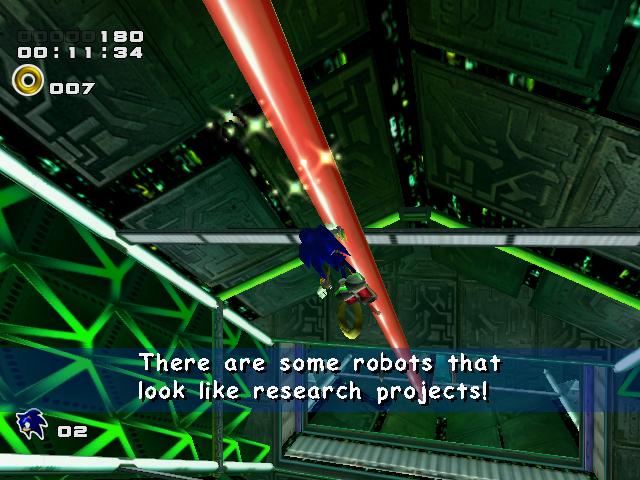
Crazy Gadget - Sonic Adventure 2 (DC)


Let's face what I perceive to be facts, shall we? Early 3D Sonics were hard enough to contend with due to their poor cameras, sloppy controls, and frustrating bugs and glitches. Factoring gravity shift mechanics into things makes for one mess of a level. That level is Sonic's penultimate stage in the Hero Story of Sonic Adventure 2, Crazy Gadget.


Crazy Gadget is devised of various gravity switches that change the flow of gravity, pulleys that rappel Sonic up large shafts, and of course, everyone's favorite enemy in the game, Artificial Chaos. These blue blob boobs can attack Sonic from afar with their huge extending reach via a pair of thin blue tentacles.


The problem with these obnoxious beings is that the lock-on mechanic to homing attack these enemies doesn't always work. Sometimes you homing attack them and their tentacles somehow wrap around and take you out. Then there's those Chaos that explode into dozens upon dozens of little Chaos orbs, which the player can only take out by slamming on the homing attack button, praying that the game actually locks onto each foe instead of sending Sonic straight, prone to injury and a resulting loss of all of his rings. Bye-bye, A rank!


Crazy Gadget exemplifies the early 3D Sonic series's grandest control and camera problems, making for a mighty frustrating level that was hard to love when I had more patience as a young high school student, and is now impossible to love now that I have less patience for wonky design.

Killer Croc's Lair - Batman: Arkham Asylum (PS3, 360, PC)


Batman: Arkham Asylum is a roller coaster ride from the very beginning of the game up to close to the end. Then the ride screeches to a halt when Batman enters Killer Croc's lair, a section of the game where slow and steady wins the race for survival, but loses in the contest for fun. The lair itself is a long, pitiful, repetitive sewer maze (even the combination of words to describe the place evokes feelings of tedium) where Batman must tiptoe his way across floating wooden planks.

Meanwhile, Killer Croc leaps out of the water so many times in attempt to scare you that it quickly becomes "the Croc That Cried Wolf." It stops being alarming or intense after about the fifth jump-scare out of around thirty or so. Each time Croc leaps out of the water, a simple throw of an automatically-targeted Batarang knocks old ugly back into the murky drink. Killer Croc's lair is a blight on what is otherwise a near-perfect action game.

Crystal Caves - Donkey Kong 64 (N64)


Donkey Kong 64 is arguably an immensely and overly bloated collect-a-thon that took the amount of objects and trinkets to gather that Banjo-Tooie had and ratcheted that number exponentially. That's a big part of why the game is so understandably overwhelming to many players. Another part of that is definitely the level design. While most of the levels are indeed large, they're at least designed well. Crystal Caves, one of the last areas of Donkey Kong 64, does not follow such a trend.


The problem with Crystal Caves is that so many areas look so similar to one another, and this is thanks to the abundance of brown and blue walls that fill the cavernous complex. It makes trying to navigate yourself around the level a chore. That's not to mention gigantic stalactites falling from the ceiling intermittently, though this is only upon the Kongs' first visit to the level. Not only all of this, but Crystal Caves easily has some of the most arduous and, dare I say, unfair challenges for Golden Bananas within the entire game. This all adds up to one very annoying and irritating level that despite its awesomely chill tune is anything but enjoyable.

The Black Throne - Darksiders (PS3, 360, PC)


It stands to reason that one of the most difficult dungeons in an action-adventure game like Darksiders would be near the end of the game. That is remarkably and definitely true for Darksiders' Black Throne dungeon.

The dungeon's aim is to use the area's special item to redirect a trio of beams of light in the dungeon's central chamber. This can have you gnashing your teeth, pulling your hair out, and smashing your controller against your knee (perhaps that's just me) as you try to wrap your head around the convoluted portal puzzles being presented to you. Don't feel bad if you need to consult a guide or walkthrough just to make it through these puzzles.


Even then, a guide will only help with the puzzling aspects of the Black Throne. There's still plenty of ridiculously powerful foes to contend with, a lack of health pick-ups to nab, and an unrelenting amount of checkpoints. There's a point in a level where its challenge goes from fair and difficult to cheap and agonizing. The Black Throne goes beyond the point of being the former and dives directly into the latter.