Showing posts with label sonic: lost world. Show all posts

Tuesday, March 21, 2017

Top Ten 3D Sonic Games

Sonic the Hedgehog's newest 3D entry, Sonic Forces, had debut footage last week at a SXSW panel. With the prospect of a new Sonic coming fresh in my mind, it seemed like an opportune time as any to take a look at past 3D Sonic games with a special SuperPhillip Central top ten list. Sonic the Hedgehog has had it rougher than most franchises trying to transition from 2D to 3D. Some of his attempts were quite good. Others? Not so much. This list details some of his best and brightest as well as some of his worst and wackiest.

10) Sonic and the Black Knight (Wii)


Let's start with an entry on this list that more closely walks the line between a good Sonic game and a bad one. Sonic and the Black Knight continued the fairy tale series of the games that was established Sonic and the Secret Rings. Unlike Secret Rings, however, Black Knight wasn't an on-rails game. It was controlled with both the Wii Remote and Nunchuk, using the analog stick for Sonic's movement and the Wii Remote to use Sonic's sword. Yes, Sonic had a sword in this game, which started off the "okay, this was probably a bad idea for a game" line of thought that most players had with Black Knight. While the level design offered more in the way of exploration, the controls themselves weren't as responsive as many would have liked. It made for a game that was sometimes frustrating and never quite as precise as players craved.

9) Shadow the Hedgehog (PS2, GCN, XBX)


Here's a game that's a bit of a guilty pleasure for me, or at least it was back when I originally played Shadow the Hedgehog. It's a game in the darkest era of the 3D Sonic games, coming out near the 2006 abomination on then-next gen consoles. What can you say about a game with a hedgehog with enough edge to be a Gillette razor using guns, driving motorcycles, and with a story that takes itself way too seriously? You can say a lot of things, all really bad (like wow, how edgy, how cringe-inducing), but overall, Shadow the Hedgehog wasn't overly awful. The level structure had players choosing between doing one of two tasks (one good, one evil), which determined which level they would move onto next. With multiple endings to the game based on these choices, Shadow the Hedgehog certainly contained lots of longevity for those that could stomach the game.

8) Sonic Adventure (DC)


The developers behind Sonic Adventure had a good amount of pressure when developing this game. Not only did they have to create a competent transition from 2D to 3D for Sonic much like Nintendo did with Mario with Super Mario 64, but they had to make a killer app to debut with Sega's Dreamcast. Overall, they nailed the latter point. The former? Maybe not so much, especially now that a lot of time has passed since. Sonic Adventure featured six characters to play as, each with their own level goals and play styles. While Sonic was a speedy trip through levels, Knuckles needed to search 3D areas for rare treasure, and Omega was required to lock on and blast foes through linear levels. What was impressive then isn't so much now, and even then, Sonic Adventure possessed plenty of problems such as an annoying camera, various bugs and glitches, and having to play as Big, which made the pace of Adventure slow to an almost full stop.

7) Sonic and the Secret Rings (Wii)


I mentioned Sonic the Hedgehog (2006) earlier. Sonic and the Secret Rings had part of that game's development team picked from it to work on this Wii exclusive title. The story took Sonic into the fairy tale world of the Arabian Nights, doing his best to save the magical world from being erased by a djinn tyrant. Taking the Wii Remote's motion control functionality and using it to craft a unique Sonic game, players tilted the controller to move left and right down on-rails style levels, making Sonic's mobility a lot more limited than in other games on this list. Still, levels played out relatively well, and with the customization system available in the game, Sonic could get updated to feel extraordinarily nice (he's a bit sluggish in the beginning). Sonic and the Secret Rings doesn't have the traditional feel or freedom of a 3D Sonic, but that doesn't make it a bad game by any stretch of the imagination.

6) Sonic Heroes (PS2, GCN, XBX)


Anything's possible through the power of teamwork! That's the mantra of Sonic Heroes, the first all-new 3D Sonic game in what was a good while after Sonic Adventure 2. Sonic Heroes contained four teams of three to play through the game's dozen+ levels. Each team had a character of these types: speed, power, and flight, and players could switch between these characters on the fly when the necessity presented itself. The teams consisted of Team Sonic (Sonic, Tails, and Knuckles), Team Dark (Shadow, Rouge, and Omega), Team Rose (Amy, Cream, and Big), and Team Chaotix (Vector, Espio, and Charmy). Sonic Heroes sort of possessed the two act system from the 2D Sonic games, as there were two levels with a common aesthetic theme followed by a boss battle, and then a new set of two levels were played. Despite the new team-based mechanic, old haunts from the series remained, such as a poor camera and numerous bugs. Still, I hold fond memories of my time with Sonic Heroes.

5) Sonic: Lost World (Wii U, PC)


At first glance, Sonic: Lost World seemed like an attempt by Sega and Sonic Team to have level d
esign based off Nintendo's Super Mario Galaxy games with floating platforms of varying curved dimensions in the skies of each level. Unfortunately, the execution of Lost World was nowhere near as good as the Galaxy games gameplay-wise. A parkour-like system of movement for Sonic was available, and it took a lot of practice to nail it down. Really, the first half of Sonic: Lost World was quite good and held a great deal of promise, but by the second half, half-cooked or totally uncooked ideas made for a rough go of it. I'm looking at you, Frozen Factory pinball stage, Lava Mountain boss fight against Zavoc, and more! While I enjoyed the game overall, there was definitely room for improvement.

4) Sonic Adventure 2 (DC)


Sonic Adventure laid the foundation for many of the 3D Sonic games that followed. The direct sequel of that game, Sonic Adventure 2, took the foundation and ran with it, offering an abundant amount of content and gameplay. Instead of six gameplay types, there were a more reasonable three, meaning that these were more nuanced in feel and design, though still somewhat problematic at times. There were your standard speedy Sonic levels (sporting some of the most memorable levels in Sonic series history); there were levels where Tails or Eggman piloted mechs, locking onto and blasting away at foes; and there were treasure hunting levels where Knuckles or newcomer Rouge moved through 3D arenas searching for pieces of the Master Emerald. Combine these two stories, the hero and the dark sides, and a highly addicting Chao Garden attraction with mini-games, and you have a popular game within the Sonic fandom.

3) Sonic Unleashed (PS3, 360, Wii)


What could have been a truly masterful 3D Sonic game was brought down by the need to add some kind of gimmick to it. Sonic Unleashed's daytime stages, where Sonic rushed and platformed through gorgeous levels, were absolutely divine gameplay experiences. What brought the entire Sonic Unleashed experience down, however, was the gameplay seen in the nighttime stages, the dreaded Werehog. This brought the fast pacing of Unleashed down to sluggish at best levels. It turned the game into a slow brawler with some very frustrating platforming portions. That said, it says something about Sonic Unleashed that the daytime Sonic levels are so good and enjoyable that they keep the game from being bad despite the Werehog portions of the game, and they are portions that I truly dreaded playing. The HD versions of Unleashed and the Wii version have different levels to them-- all named the same but different in design-- so it's worth checking out both games if you have the time.

2) Sonic Colors (Wii)


After Sonic Team tripped themselves up with the Werehog mechanic in Sonic Unleashed, the team's next title managed to be a seriously good game-- and that's without any asterisks like "seriously good for a Sonic game"-- it was just seriously good in general. Sonic Colors saw an impressive blend of 3D Sonic with some 2.5D design brought in for pleasant measure. There was some fear there when Sega and Sonic Team announced the implementation of a new feature called Wisps, as in the past, any new feature generally brought the overall game. However, Wisps lent themselves well to the overall game, allowing Sonic a myriad of powers and abilities based on the Wisp type. The level design featured a mix of short and sweet levels as well as lengthier, traditional affairs. Sonic Colors also wasn't overly serious to a point of being absolutely ridiculous. Overall, Colors was a terrific 3D Sonic game, something that Sonic Team hadn't been consistent at making.

1) Sonic Generations (PS3, 360, PC)


A 20th anniversary Sonic the Hedgehog game, Sonic Generations brought the worlds of Classic Sonic and Modern Sonic into one stellar and speedy experience. Taking levels and zones from Sonic's past and present, Sonic Generations was a wonderful love letter to Sonic series fans, many who had been disappointed time and time again by Sonic Team's efforts. Thankfully, this effort was hardly a disappointment, offering mostly 2D gameplay with Classic Sonic and more 3D-style gameplay with Modern Sonic. Whichever Sonic was controlled by the player, they were going to get a highly capable, highly competent Sonic the Hedgehog game more than worthy for the 20th anniversary. Here's hoping that Sonic's upcoming entry, Sonic Forces, gives the franchise the game both the fans and the franchise deserve.

Monday, November 21, 2016

SuperPhillip Central's Favorite VGMs - "Once Again Thankful for Good VGMs" Edition

A new week is upon us at SuperPhillip Central, thus SuperPhillip Central's Favorite VGMs are here to make the beginning of your week all the nicer to ease into. It's a shorter work week for many thanks to Thanksgiving this Thursday! Gobble, gobble to you all!

We kick things off in a big way with a bombastic tune from Shadow of the Colossus. Then, we go peppy and jaunty with music from Kirby 64: The Crystal Shards. Following that is the return of the Blue Blur in Sonic: Lost World. We then go futuristic with F-Zero: Maximum Velocity, and then cap things off with a song from de Blob 2, an underrated gem from last generation.

Just click on the VGM volume name to hear the song, and for past VGMs featured on this weekly-recurring segment, look no further than the VGM Database. Now, let's get onto the music!

v1271. Shadow of the Colossus (PS2) - Revived Power ~Battle with the Colossus~


With The Last Guardian finally, and I do mean FINALLY, releasing on a PlayStation platform next month, it seemed like a good time as any to look back at the developer's previous work, Shadow of the Colossus. Kou Otani composed the music of the game, and he's well known for his work on certain anime series such as Gundam Wing and Outlaw Star, where did just as phenomenal of a job as he did on Shadow of the Colossus.

v1272. Kirby 64: The Crystal Shards (N64) - Pop Star


Kirby 64: The Crystal Shards released relatively late in the Nintendo 64's life, thus it didn't receive the same magnitude of hype or love as more recognizable Kirby games. However, Kirby 64 is no slouch. It's a fantastic 2.5-D adventure that uses a clever ability-combining mechanic that has yet to be seen in any other Kirby game. The music is also as wonderfully charming as any other Kirby game as well, as evidenced by this first level theme, Pop Star.

v1273. Sonic: Lost World (Wii U, PC) - Sea Bottom Segue


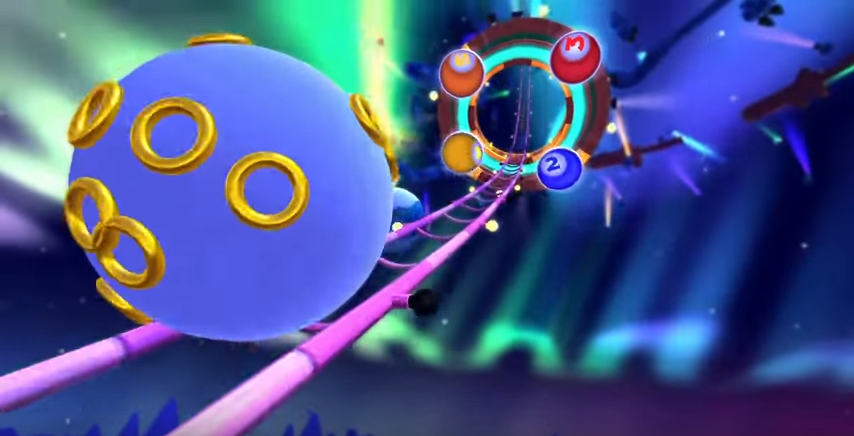
Sonic: Lost World may have been a game that started out strong but fell apart by the end of the game, but one facet of the title that remained great from beginning to end is the soundtrack, composed mostly by Tomoya Ohtani. Sea Bottom Segue is first heard in Tropical Coast Zone 3. The second time it's heard is in the final world, also in a rail grinding level. It's a suitably chill piece, accentuated by piano and soothing strings.

v1274. F-Zero: Maximum Velocity (GBA) - Bianca City


Bianca City is the first track in F-Zero: Maximum Velocity, one of the titles that was available at the launch of the Game Boy Advance. The game was different compared to past F-Zero games as it starred a completely new cast of characters and courses. There was no Captain Falcon or Mute City to speak of. However, the music was as catchy and energizing as ever.

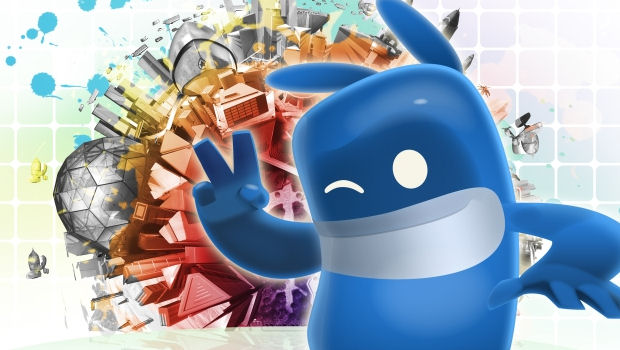
v1275. de Blob 2 (PS3, 360, Wii) - Prisman Holiday


Before going bankrupt and folding, THQ was home to a lot of smaller budget games that wouldn't otherwise get a chance in the AAA market. de Blob was one of these, and it was successful enough on the Wii to earn a multiplatform sequel, smartly titled de Blob 2. The music, once again by John Guscott, had that splendidly jazzy sound to it, making playing the already enjoyable game all the more enjoyable.

Thursday, April 7, 2016

Bad Levels in Gaming History - Volume Nine

You can have a nearly flawless game-- great action, great set pieces, great combat, great narrative, great characters, great gun play (if you're a shooter), etc., but if your level design is poor, your game is going nowhere fast. While the games featured on this volume's list of Bad Levels in Gaming History generally have fantastic level design, there are some sections, areas, levels, or whatever that do nothing but annoy, whether they be poorly designed, a slog to go through, or what have you. After you've scoped out my picks for bad levels in this ninth volume of Bad Levels in Gaming History, list your own in the comments section.

And if you want to catch up on past installments, look no further than these links:


The Drowned City - Uncharted: Drake's Fortune (PS4, PS3)


For my first "level" pick, we find treasure lover and dashing gentleman in his own right, Nathan Drake and his female accomplice Elena aboard a jet ski in a flooded ancient city setting. While Drake drives, Elena has a grenade launcher to fend off enemies. Sounds fine enough so far, right?


Well, that's until you factor in the usually cramped channels filled with explosive barrels that if Nate and Elena's jet ski touches them, they'll get blown to smithereens. This is all the while having to navigate very carefully through the water to get the perfect viewpoint on oncoming enemies that await in the various architecture of the ancient city.


It's all too easy to accidentally run into a barrel or drive too far ahead, getting filled with enemy lead, because most of the enemies, whether hiding on rooftops or within the architecture of the ruins, can be very hard to spot until it's too late. Add into the fact that jet ski doesn't control the best, and you have a recipe for frustration that is the Drowned City chapter of the original Uncharted.

Great Bay Temple - The Legend of Zelda: Majora's Mask (3DS, N64)


When most players and fans of Nintendo's historic series think of a water-themed dungeon in a 3D Zelda game that is highly annoying, they tend to think of the Water Temple from The Legend of Zelda: Ocarina of Time. For good reason, as in the Nintendo 64 original, having to pause the game constantly to equip and remove the Iron Boots was highly annoying. Thankfully, this was amended in the Nintendo 3DS remake.


However, a dungeon in the 3D Zelda games that I find irritating to play without the help of a guide comes from Majora's Mask. It's the third dungeon of the game, and it's none other than the Great Bay Temple. This waterlogged dungeon's main claim to fame is that Link has to push switches to change the flow of water in the dungeon. This makes the current go absolutely crazy fast, making it difficult to swim to the desired room.


Couple that with a labyrinthine design full of rooms that can only be reached by making the flow of water move in the correct direction, and the Great Bay Temple can make you crazy in a jiffy, especially when you have impending doom coming with a moon in the sky that doesn't care if you don't finish this complicated dungeon on time.

The Labyrinth Zone - Sonic the Hedgehog (GEN)


We seem to have a theme here of aquatic themed levels so far with this edition of Bad Levels in Gaming History. Well, this continues with a classic zone from the original Sonic the Hedgehog, the Labyrinth Zone. Sonic the Hedgehog's first outing has a pattern in its zones. The first, third, and fifth are faster experiences, while the even numbered zones are much slower affairs. The Labyrinth Zone is the fourth zone in Sonic the Hedgehog, so yep, it's quite a slow slog. ...And quite the annoying one at that!

The Labyrinth Zone isn't just a maze like its name suggests, it's also a massively underwater zone that requires slow trudging movement through the water that permeates throughout the zone's three acts. Filled with obnoxious enemies, traps like spears that poke out of walls, and the constant need to be near an air supply or else hear the wrath of this immensely intense jingle,


While the Marble Zone is also slow going, the fact that there is so many easy ways to drown, annoying traps, and ways to die, makes the Labyrinth Zone my pick as most annoying zone in the original Sonic the Hedgehog.

Frozen Factory Zone 2 - Sonic: Lost World (Wii U)


Poor Sonic. Bad Levels in Gaming History just seems to keep picking on you! Nevertheless, a competent game overall, Sonic: Lost World isn't an overtly bad game per se. In fact, many of its levels and ideas are quite good. Frozen Factory Zone 2 borderlines on good, but it ends up being bad overall.


The concept of this level is that Sonic is trapped in a snowball and must navigate the narrow platforms and pathways of the level or risk falling off into the abyss. While this is a novel idea, the execution leaves something to be desired.


You see, the snowball moves very slow and has clunky movement. It makes moving around with any kind of perfect accuracy just a daydream. Factor in enemies that can blow you away just from touching them, and you have a recipe for disaster, and that's what a good portion of this second level in the Frozen Factory is, a disaster.

Chapter 21: Chaos Vortex - Kid Icarus: Uprising (3DS)


A chapter the near the end of Kid Icarus: Uprising, Chaos Vortex is a two part level which has a first part that is perfectly fine. It's the game's typical on-rails flight level that has our protagonist Pit following the creature that controlled Palutena for several chapters, causing havoc unto the world.

It's the second portion of Chaos Vortex, Chaos Island, that is one of the weakest parts of the game. It has Pit on a singular island combating enemy after enemy in wave after wave. It's not the most fun experience in Uprising, and it feels like it goes on for an eternity.


There's nothing like going through multiple waves, upwards of a dozen or so, only to take too much damage and fail the level. This is especially easy to do when the Orne enemy shows up, a foe that if Pit touches, it's instant death. Thus, the second part of Chaos Vortex brings the entire chapter down, and makes it one of my least favorite chapters to play. I appreciate the need to mix things up, but here the idea didn't work out so well.

Thursday, January 14, 2016

Underrated Games With Even More Underrated Soundtracks - Part Two

Generally on Mondays, I share five of my favorite themes from video games, whether old or new, retro or modern, popular or less appreciated. This series of articles focuses on the less appreciated. Not just games, but underrated games with even more underrated soundtracks. Perhaps these six new additions to this list will persuade you to try out these games, or at least give you some new soundtracks to enjoy!

For part one of this series of articles, look no further than this link.

Banjo-Kazooie: Nuts & Bolts (360)


After Rare's teasing of a new 3D platformer featuring the lovable pair of Banjo and Kazooie, what fans like myself got instead was not what was expected. Rather than a game filled with platforming action, we received a much different game. Not to say Banjo-Kazooie: Nuts & Bolts was a bad game by any stretch of the imagination. It was actually great, offering vehicle customization with the only limits being one's imagination, and varied objectives that could be handled in a multitude of ways. It just wasn't what fans were expecting of the bear and bird or Rare in general. The music was a welcomed collection of orchestrated Banjo-Kazooie medleys and new material, all done remarkably well.


Perfect Dark Zero (360)


The original Perfect Dark is my favorite first-person shooter of all time. I dig the old school, multi-layered level design with different approaches available for the different objectives each mission requires. Thus, you can probably imagine how hyped I was for the game's successor, Perfect Dark Zero. Single player-wise it disappointed, but the multiplayer, though not as good as the N64 game, offered expansive, layered maps, awesome team-based modes, a wide assortment of high-powered weaponry, and an announcer that might want to switch to decaf. The soundtrack had a different feel to it as well, whether it was the hard rock of some levels, the trance music inside a dance club, or the Arabian feel of later levels.


Sonic: Lost World (Wii U, Steam)


Sonic the Hedgehog entered the current generation with both a boom and a bust. Actually, those two words refer to Sonic Boom: Rise of Lyric. I'm referring to Sonic: Lost World, a game that once again had Sonic Team reinventing the wheel instead of settling on a gameplay style that had a proven track record (looking at you, Sonic Colors and Sonic Generations). Regardless, Lost World ended up being an enjoyable romp for me, but it's hard to ignore its late game annoyances and control eccentricities. What is also hard to ignore is just how great the soundtrack is, a menagerie of catchy and locale-specific tunes. This is one soundtrack that gets regular plays in iTunes for me.


Mario Tennis Open (3DS)


While this game started the "less is less" approach with the Mario Tennis series that recently saw the extreme of such approach with the Wii U's Mario Tennis: Ultra Smash, the Nintendo 3DS title Mario Tennis Open offered some attractive tennis action mired for many by the inclusion of chance shots. Chance shots made it so when your opponent relayed a shot of yours, a colored cursor would appear on your side of the court, signaling where the ball would land and what kind of shot you should use to hit the ball back. Though turning the tennis gameplay into something more dumbed down, what wasn't dumbed down was the Motoi Sakuraba soundtrack, consisting of all-new themes and remixes from the Nintendo 64 version of Mario Tennis, my favorite tennis game to this day.


Star Fox: Assault (GCN)


This next soundtrack is for a game that gets a lot of flak from Star Fox enthusiasts. It makes sense, after waiting many years for a follow-up to Star Fox 64, what we got was a much more linear game with unwanted out-of-cockpit on-foot sections. That said, I happened to enjoy Star Fox: Assault for what it was, and something that made the game all the more amazing to me was hearing many familiar themes from Star Fox 64 and brand-new compositions given the orchestral treatment, something that was one of the first Nintendo titles to feature a full orchestra at the time.


Teenage Mutant Ninja Turtles: Tournament Fighters (SNES)


A fighting game starring characters from the Teenage Mutant Ninja Turtles comic series? Yes, there was actually a thing back in the 90's, and it wasn't too shabby either! By far the most impressive part of Teenage Mutant Ninja Turtles: Tournament Fighters aside from the competent gameplay and sick graphics was the excellently done soundtrack, full of great tunes to rock out and clobber opponents to. Nothing like giving a beefed up Rat King his just desserts while a rocking track plays in the background!

Thursday, November 27, 2014

Bad Levels in Gaming History - Volume Six

Today is Thanksgiving for the United States. It's the day where we gorge ourselves on a massive-sized meal and partake in watching football. For this holiday, I'd like to talk turkeys. No, not the actual birds-- I'm talking about levels that are so bad that I consider them to be turkeys. Har-har!

These levels are frustrating, annoying, poorly conceived, have a certain segment in them that lead to nothing but tears, or are otherwise just plain bad. This sixth volume has games both recent and retro, such as Super Mario Sunshine, Sonic: Lost World, and Double Dragon II. If you are ready, let's dive in to some bad levels on this fine Turkey Day! Gobble-gobble!

Corona Mountain - Super Mario Sunshine (GCN)

Let's get this out of the way-- Super Mario Sunshine is my least favorite 3D Mario title. That said, it's not a bad game by any stretch of the imagination; it just features more annoyances (i.e. blue coins, annoying levels, a poor camera at times, etc.) than other 3D Mario games have let loose on me as the player.

Outside of picks like the Pachinko bonus level, the bonus level where you have to guide a leaf on a poison river to collect eight red coins (and getting to said level), that one Yoshi mission in Ricco Harbor, among others, one of the worst challenges in Super Mario Sunshine is the final level, a trek through the sultry and dangerous hot Corona Mountain, the volcano that sits right in the middle of Isle Defino.


From the very start, Corona Mountain is a genuine pain in Mario's tuchus. The first part of the level requires Mario to smartly use the hover function of the FLUDD to move from platform to platform. However, these platforms have intermittent spikes that protrude from each platform and flames, both of which will kill Mario in one hit if he even so much as touches them. This is an annoyance all to itself.


Nonetheless, the most taxing part of Corona Mountain is its second portion, navigating a boat along the channel of lava. This is performed by using the FLUDD to spray water to push the boat along. Spraying to the right will move the boat towards the left, for instance. Crashing into ANYTHING, and there's a lot of potential hazards to crash into, will result in the boat sinking, along with Mario. The boat handles so poorly, which nine times out of ten will be the reason for Mario's death in the level.


After the boat ride comes a section where Mario needs to propel himself into the air with the FLUDD's rocket nozzle, carefully rocketing himself onto the surfaces of clouds both stationary and moving. What is your reward for getting through this fairly ho-hum and frustrating final level? Why, an anti-climactic boss fight against Bowser, one of the worst in Super Mario history.

Frozen Factory Zone 3 - Sonic: Lost World (Wii U)


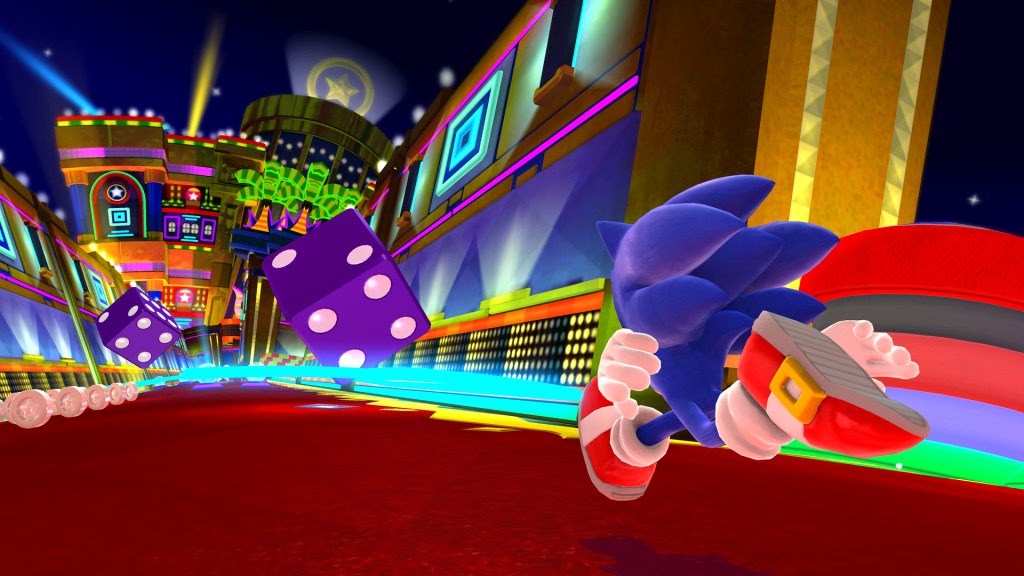
The first of two level picks from the Sonic the Hedgehog series, we deal with a level from Sonic: Lost World first. Sonic Team has a bad habit of working so much on the first level of its games to make a great first impression on players that it doesn't let later levels have enough time in the oven to be made wonderfully. This is the case with the third level in the Frozen Factory Zone, a casino level.


The level itself is essentially one long hall with multiple springs, split paths, and enemies to contend with. This by itself is just fine. There is nothing wrong at all with these segments of the level.

No, the major issue comes from the handful of segments where Sonic is transported into a pinball table. These sections are absolute hell. The ball physics are terrible, resulting in many cheap deaths, as falling off the table counts as a loss of life.


Unfortunately, one of the pinball tables is home to one of the game's many red rings, a collectible used to unlock extra content in Sonic: Lost World. It's at the very top of one of the three pinball tables. Not only is that problematic and infuriating to try to attempt to collect, but for every five or so times you lose a life, a little portal is created within the pinball table. Touching it makes you skip past the problem spot. The issue here is that the portal is so difficult to avoid that most players will hit it, thus unintentionally skipping the pinball table with the red ring. Talk about adding insult to injury! This means you need to kill Sonic just to get to a point before the portal, but heaven help you if you hit a checkpoint after that pinball table first!

Sky Canyon Zone - Sonic Advance 2 (GBA)


We move from one Sonic the Hedgehog game to another, though this time it's a 2D affair with Sonic Advance 2. Unlike its predecessor, Sonic Advance 2 started the whole "boost to win" level design of the handheld Sonic the Hedgehog games. While this essentially automatic gameplay where boost pads, springs, and grind rails directed players without much need for player control was not a problem in the more open zones of Sonic Advance 2, when the Blue Blur arrives at the Sky Canyon Zone, an issue rears its unfriendly head.


You see, Sky Canyon Zone, like its name implies, takes places in the sky. Therefore, there are plenty of points in the level where bottomless pits position themselves to gobble up the uninitiated. Needless to say, Sonic Advance 2's constant high speeds and bottomless pit placements do not mix well. You're constantly being forced to speed through the level thanks to boost pads and the like, and because of this you do not have a firm grasp on what lies ahead, making running into a row of spikes or worse yet, a bottomless pit, very easy to do.


Then there's the Dr. Eggman encounter at the end of the zone. If you're unaware of how most of Sonic Advance 2's boss fights go, you're always on the run in these battles, chasing after Eggman's latest machine. However, momentum plays a big part in each battle, making it so jumping or otherwise not running slows you down. With Sky Canyon's boss, made up of three unique parts moving in a circular pattern, not only do you have to dodge the boss' advances, but you are required to attack each part of the robot and destroy it. The latter is difficult, as you don't have a lot of real estate on the Game Boy Advance's screen to see which part of the boss is currently facing you're on top of it. Did I mention the boss has a one-hit kill move as well?

Mansion of Terror - Double Dragon II (NES)

Double Dragon II is one of those classic "NES hard" games that begs of its players to constantly get game overs while simultaneously improving and having its players get a little bit further in the game with each try. Soon, you become so skillful at the game that you know how to take down every grunt and boss that stands in your way.

However, even with the most skill, there is one sticking point in Double Dragon II that follows a no-no I have in game design. The Mansion of Terror turns a 95% beat-em-up into a 95% platformer near the end. This wouldn't be so bad if the mechanics of Double Dragon II lent themselves well to jumping with great precision. Double Dragon II's jumping mechanics absolutely, positively do not.


No, what you get is a game that was all about beating up foes for the most part and has it transform into a problematic platformer with plenty of cheap deaths that will result from falling into pits. Get used to having a full set of lives in your collection only to see them fall one by one as you miss jumps, get hit in midair, resulting in you falling to your death, and other incredibly cheap pit-related deaths.


Double Dragon II's Mansion of Terror is a level that requires the player to use a mechanic that the game was not based off of, adding up to an immense amount of frustration. It wouldn't be so bad if the penalty for messing up jumps wasn't so severe. However, seeing your tally of lives go from a high amount to zero because the game decided to throw in ill-conceived platforming for a gameplay system that doesn't handle it well is a game design sin from my position.

Infinity - Breath of Fire II (SNES, GBA)

RPG fans have it much easier nowadays than they did back in 8-bit and 16-bit eras. Breath of Fire II is a product of the 16-bit era, and it definitely possesses that old school, kick-you-in-the-butt type sensibilities. Its final dungeon, Infinity, puts players through the game's ultimate test.

Infinity is little more than an absurd endurance run through a labyrinth of many floors, many dead ends, and an abundant amount of random encounters. It really says something poorly about the random encounter rate when less than five steps results in a new battle and monsters to contend with.


It wouldn't be so obnoxious if the battles themselves didn't take so long, but even at the recommended level for your party, fights with enemies can take a(n) (un)fair while to complete. That isn't even considering many of the harder enemies are HP tanks and some can even cast a death spell that automatically kills one party member. This means that if you have a party member that has been fused with magical power to become stronger in battle and allowing said battles to be won more easily, this fusion is removed upon death.


Infinity is split up within two parts. The first part is actually the most difficult of the two, as it has zero save points. Don't be surprised to spend upwards of 45 minutes in a hellish dungeon with no opportunity to save your progress. This means one battle can undo 45 minutes of hard work.


Thankfully, there is a town that splits up the two halves of Infinity, and it contains a place to rest and a save point. However, upon entering the town, you're greeted with a very long conversation with one of the town's denizens, making that upwards of 45 minutes without saving stretch out even further. The impatient and weak-hearted need not apply to the absurd insanity that is playing through the incredibly exhausting Infinity dungeon in Breath of Fire II.