Showing posts with label xenoblade chronicles. Show all posts

Monday, December 28, 2020

SuperPhillip Central Best of 2020 Awards - Top Five Remakes & Remasters

Remakes and remasters are common in this industry more often than in others.  It makes sense as games end up being lost to history and stuck on old platforms. Technology also allows older games to rise from their ashes like a Phoenix and present players with new visuals and perhaps even new takes on beloved classics. This countdown and awards category as part of SuperPhillip Central's Best of 2020 Awards lists the greatest of these types of games that launched in 2020. Note: Some particular gaming outlets didn't get their hands on a PlayStation 5 or Xbox Series console, so certain games might not be on their lists... Not naming any names, though! 

Let's get to the countdown with the Top Five Remakes & Remasters!

5) Resident Evil 3 (PS4, XB1, PC)

Despite removing some content from the original, I argue that Resident Evil 3 is still a remarkable remake. It's similarly an intense, pulse-pounding, adrenaline-pumping thrill ride filled with scares and fun alike. In that sense it's just like Resident Evil 2, a game I listed as one of SPC's Games of 2019. The only difference is that while RE2 got a little long in the tooth on repeated playthroughs, Resident Evil 3's remake was a shorter experience, encouraging multiple playthroughs that were more enjoyable--at least for me. There is a fair number of downsides to Resident Evil 3's remake, but for me, the positives far outweighed the negatives, making for a truly terrifying survival horror shooter that made my heart pound and hands sweat from beginning to end, especially on the higher difficulties!

4) Trials of Mana (PS4, NSW, PC)

Whereas many remakes on this list changed things up considerably compared to their originals, Square Enix's Trials of Mana played it a bit more cautiously, remaking a game that feels like a relic of the golden age of gaming. This time, though, the major difference being that the beautiful 2D sprites and worlds of the original Trials of Mana were fully realized in glorious, colorful, vivid 3D. The action on display offered simple but effective--and most importantly fun--combat that required paying attention to enemy tells and red area of effect targets to avoid damage. Exploring the world was an immense joy and pleasure, searching for hidden treasures and secrets alike. Being able to choose from the cast of six protagonists to join your three-person party meant that multiple playthroughs were encouraged to fully enjoy this already exciting and engaging remake. And, that's exactly what I did with Trials of Mana, a remake that didn't reinvent the wheel, but what there was already was so good that it didn't need to do so.

3) Tony Hawk's Pro Skater 1 + 2 (PS4, XB1, PC)

It's time to trick out with Tony Hawk with the remake of both Tony Hawk's Pro Skater 1 and Pro Skater 2 with the appropriately titled Tony Hawk's Pro Skater 1 + 2. Like past remakes from Activision's team of developers (Crash Bandicoot: N. Sane Trilogy, Spyro Reignited Trilogy, Crash Team Racing: Nitro Fueled), so much love and care was poured into this game. Right away my muscle memory from decades ago came back almost immediately, as the controls are just as tight, precise, responsive, and feel as good as they ever have. The levels were also lovingly restored with new visual touches, making old, familiar playgrounds (or in this case, skate parks) feel brand spankin' new. Tony Hawk's Pro Skater 1 + 2 finally gave the Birdman prominence in gaming once more and is a true testament to the developers for making a game that lives up to the legacy of the originals.

2) Xenoblade Chronicles: Definitive Edition (NSW)

Getting SuperPhillip Central's coveted (your mileage may vary on that) Game of 2012 back when this awards ceremony was structured differently, Xenoblade Chronicles returns to SuperPhillip Central's Best of Awards with a definitive edition releasing this year on the Nintendo Switch. With updated character models and environments, looking absolutely fabulous and more beautiful than ever before, as well as remixed and rearranged music, Xenoblade Chronicles has never looked or sounded better. The quality of life improvements added to the game's menus and systems made a great game even better as well! The addition of Future Connected, an epilogue story with a previously cut area from the original game, featured the same "wow" factor and sense of discovery as the main Xenoblade adventure. All in all, it was a true treasure and wonderful pleasure to be able to have an excuse to play through Xenoblade Chronicles all over again, this time with the definitely definitive version of the game.

1) Final Fantasy VII Remake (PS4)

So many of the remakes of 2020 stayed true to the formulas that the original games constructed--and I no doubt adore them for that--but one game--one remake--that totally took a tremendous risk that ultimately paid off for most players like myself was Final Fantasy VII's glorious remake. I was hesitant to learn (but understood the reason) that the legendary RPG was being split up into parts and that the first part would only take place in Midgar. While some of my hesitation was well founded due to some padding in some chapters of the game, Final Fantasy VII Remake ultimately works because of the additional character interactions and story content the developers included with the game. No spoilers here, but like the decision with the game's story, it was also so very bold of the developers to create an action-RPG focus first with Final Fantasy VII Remake's combat. It overall worked out in the end, as Final Fantasy VII Remake wasn't just a magnificent achievement, but it unquestionably earns the right to be listed among the top remakes of the year--or in this case, at the very top as the best remake of 2020.

===

Tomorrow evening, the SuperPhillip Central Best of 2020 Awards continues on with more categories and more winners (and some losers, too)! I hope you'll join in on the fun!

Friday, September 18, 2020

[950th Review!] Xenoblade Chronicles: Definitive Edition (NSW) Review

It's here! It's SuperPhillip Central's 950th review, and boy, is it a big one! I don't just mean big as in a big-name game, or big as in a big review, either. It's more like, "this game took a long time to beat because it was so big" type of big! Xenoblade Chronicles: Definitive Edition launched this past May, and I finally completed both the base game and the all-new epilogue, Future Connected. Here is my review on the game.

A Vision of Beauty

There's always these games that you play, you love, but you never get the chance to finish. For nearly ten years, Xenoblade Chronicles was my Moby Dick, a great gaming whale that I just couldn't overcome. I played a decent way through the Wii original, and then with the hope of the game coming to a handheld with the New Nintendo 3DS version, I failed to even touch the game. Now, Xenoblade Chronicles arrives on the Nintendo Switch with Xenoblade Chronicles: Definitive Edition. Complete with a new epilogue (as if I needed more game to play), new quality of life features, and the same stuff I adored about the original game, could I finally play through Xenoblade Chronicles completely? The answer is yes. Not only that, but I absolutely LOVED it.

Xenoblade Chronicles: Definitive Edition is set in a fantasy world where a long time ago, two titans clashed blades in battle, the Bionis and the Mechonis. Eventually they critically injured one another in combat and grew dormant. Afterwards, life began flourishing on their colossal bodies, and becoming home to various races of people and creatures. It is on Bionis that intrepid engineer Shulk, his best friend Reyn, and longtime acquaintance Fiora live peacefully at Colony 9, a village surrounded by beauty and peace. However, one day that peace turns into violence when the mechanical and robotic Mechon invade and attack the colony. During a skirmish with the Mechon, Shulk harnesses the power of a sword called the Monado to engage with the enemy and helps repel them. Now, with revenge fresh on their minds for the Mechon's attack on their home, Shulk and Reyn set out from Colony 9 to explore the Bionis, seek justice against the Mechon, and further understand the mysterious power of the Monado.

Shulk answers the question, "Did Phil really enjoy Xenoblade Chronicles: Definitive Edition?"

It's hard not to grow enamored with the world and characters of Xenoblade Chronicles. Shulk is a hard worker who is always willing to lend a hand and help out when the going gets tough. His ability to wield the Monado comes up as one of the main focal points of the story, especially when he witnesses a vision yet cannot help with the outcome regardless of the fact. There is a particular moment early on in the story that serves as a catalyst for the adventure. Meanwhile, his best bud Reyn is a cheeky chap, headstrong, bold, and a bit of a numbskull sometimes, but you can bet he's always looking out for Shulk. The rest of the party members that join Shulk's cause are similarly likable. Better yet, they each serve a purpose in and out of battle, too, so there's no superfluous party members to speak of in Xenoblade Chronicles.

You can say that again, Reyn.

The world of Xenoblade Chronicles is extraordinarily vast and expansive, and most of the time in the game is spent exploring the huge, open-world-esque areas of the Bionis and later Mechonis. Your curiosity is generally rewarded, too, either by finding new discoveries like landmarks that can be warped to at any time and other points of interest, or encountering impressive vistas. And believe me, there are a lot of great views to take in. One of the first major areas of the game, Gaur Plain, offers beautiful, natural land bridges, while the Satorl Marsh is unassumingly dreary during the day, but by nightfall it glows with tremendous brilliance. 

Gaur Plain is an early delight to explore and find new discoveries in.

Of course, it pays to be careful while exploring as if you get too close to a particular strong enemy, they won't be as shy in coming after you. It's quite normal to be wandering about with your party at level 10 while some parts of areas feature monsters well in the 80s. Thankfully, dying doesn't have a tremendous penalty, other than taking up some of your time. You're placed at the last warp point you reached, and you can pick yourself up, dust yourself off, and pick up from there.

Battles play out in real time in Xenoblade Chronicles. They begin either by you locking onto a foe and engaging in combat or an enemy becoming aware of you and attacking. Normal attacks happen automatically as your characters are in close proximity to enemies. You can select specific Battle Arts that work best when positioned correctly in relation to a targeted enemy. For instance, Shulk's Back Slash attack understandably works best when a foe is facing away from you with their back towards Shulk. Each move possesses a "cool down" period before they can be used again. When you auto-attack an enemy enough times, you can eventually use your character's Talent Arts, which are specific moves tied to that character. Shulk utilizes his Monado for all of his, performing feats like allowing the other party members to damage Mechon-based foes, or defending characters against enemy Battle Arts. 

Position yourself well in battle to deal more damage to foes.

As you successfully use Arts in battle, a blue Party Gauge at the top left corner slowly builds up, up to three segments. If a character falls in battle, you can pick them up using one of these three gauge segments. If all three segments are empty and all characters die, it's game over. The Party Gauge isn't just for defense, however; it's also used to perform a Chain Attack, allowing you to use multiple party members' moves one after the other to inflict heavy damage at once to an enemy. This depletes the Party Gauge completely, though. In harder battles, it becomes a strategy and choice between keeping the Party Gauge full in case you need to revive a party member or going for a full offensive on a boss, for instance.

Speaking of boss battles and just tough battles in general, when a party member is about to hit with a devastating attack, many times Shulk will have a vision during the battle. This allows him to alert a party member, which in turn grants them the ability to prepare a defense or way to counter it, or gives Shulk the opportunity to put the brakes on the enemy's impending assault with Shulk's own Monado Art. Like reviving allies and performing Chain Attacks, warning other characters costs a segment of the Party Gauge. The only big issue with this mechanic, however novel and cool it is, is that it can happen way too often in certain battles. Sometimes visions can happen multiple times within a short time span, really breaking the flow of battle, especially because you have to watch the enemies' foreseen attack play out in real time. Still, though, it's a small gripe to an awesome and otherwise well executed concept.

Early on, the Monado is the only effective weapon against the Mechon.

When you're not engaged with epic battles or exploring the expansive lands of Xenoblade Chronicles, you're probably going to have your hand in quests. There are a tremendous number of side quests in the game, which might make a completionist go insane, but for everyone else, they're a terrific way of gaining experience points, money, and equipment. Side quests generally fall into one of three categories: eliminating a certain monster or monsters, collecting specific materials, or conversing back and forth with various NPCs. Thankfully, Monolithsoft has made tracking quests much less of headache than compared to the Wii original and even the New Nintendo 3DS port of the game thanks to being able to track quests, see exclamation points on the map to see where you need to go, among other helpful information that was lacking in past iterations of the game. It's also all easily accessible with a simple press of the down direction on the D-Pad to instantly pop open the Quest Log. 

Exclamation points on the mini-map indicate where quest items and enemies are located.

The Quest Log isn't the only place that things have been streamlined for a better, higher quality, more efficient experience. The menus in general are simple to use, conveying information that is readily available and accessible at any time. It was an utter pain in the original Wii game to view how equipment changes would affect your character. No longer so in the Definitive Edition. Not only can you see the detailed effects of newly equipped weapons, armor and crafted gems in an easier way, but you do so without as much menu-surfing. It's especially cool that you can set a base armor set for your character, so no matter what you equip to them, they'll stay visually in the same outfit. Though I preferred to change things up for aesthetic purposes, myself.

The quality of life improvements don't stop there, either, as the Affinity Chart provides an abundance of info that the past Xenoblade Chronicles incarnations failed to share. For example, the location of characters is properly displayed, so there's no running to a FAQ or making your own out-of-game Excel spreadsheet to keep track of things. Plus, each glimpse of an NPC provides a look at what materials, gems, weapons, and armor they are up for trading. All of these changes make for a much more enhanced experience, so much so that I can't imagine going back to the old versions of the game--even for novelty reasons. If only they were there in the previous versions, but I guess the old saying is true--the third time IS the charm!

Other changes to this new and improved edition of Xenoblade Chronicles include "super quick" fast travel, allowing you to warp to locations across an area quickly, or change areas entirely in a speedy manner. It makes clearing side quests a less laborious and most importantly timely effort than in the Wii original. There's also difficulty options, such as Casual mode, where enemies deal less damage and you have a sporting chance against enemies that are twenty levels ahead of you. There's also Expert mode, which allows you to lower your party's individual experience levels to make the game more challenging, yes, but also to give your characters more experience from defeated enemies. Either way, with Casual and Expert, now the need to grind and boost your party's levels to reasonable heights for end-game quests and areas is also a less laborious and more time-saving one.

There's far less clutter on screen in battle, and it's easier to read everything, too.

Finally, there's a 10-15 hour epilogue to the main adventure of Xenoblade Chronicles in this Definitive Version with Future Connected. It sees a new area of the Bionis to explore, as well as a snappily paced story that features Shulk, Melia, and two Nopon companions, Nene and Keno. It's a satisfying cap to the adventure, offering a start at level 60 for the party, as well as an engaging story with new characters and the wonderful exploration and discoveries of the new Bionis Shoulder. The latter is especially enjoyable thanks to all of the unique areas spread about the relatively small region. There's plenty to see and do across the shoulder, and it's particularly great to have Quiet Moment interactions between party members be fully voiced this time around unlike the main game. To be fair, the main game featured a heck of a ton of a lot more of these events, so that would have been an obvious logistical nightmare to voice them all on top of the utterly immense script. 

The gameplay is similar to Xenoblade Chronicles' main game, save for some aspects, such as Shulk not having his visionary Monado abilities, for instance. Additionally, the main side quest this time around is the search for various Nopon Ponspectors, who after you perform a mission for them, they join your team and form a nice line of miniature attackers in battle and as you explore. Instead of a Chain Attack when the Party Gauge is full, you can unleash a Ponspector Union Strike, granting one of three different abilities. These are regen, de-buffing the enemy, or an all-out heavy attack on the enemy. These attacks are a great reward for acquiring every Ponspector on your team, not just for the destination of having a powerful team on your side, but because the journey is fun, too.

I'm quite impressed by how good Xenoblade Chronicles: Definitive Edition looks on the Nintendo Switch compared to the Wii original. The characters and enemies have the most sensational enhancements, looking absolutely fantastic in both detail and animation. Meanwhile, environments are even more jaw-dropping than they were on the Wii, and they were also amazing to look at then. From the added shaders in play to the new lighting and improved textures, this game looks gorgeous. The voicework is excellent, too, and quite possibly one of my favorite dubs period. Meanwhile, the music has been rearranged to fantastic effect, harnessing even more emotion than before. 

Don't mind me. Just admiring the vegetation here while running around in Eryth Sea.

The "Definitive" part of Xenoblade Chronicles: Definitive Edition isn't just there to make for a fancier game title. It's there because it's absolutely true. This is the best version you can play of Xenoblade Chronicles, one of the absolute greatest JRPGs on not just a Nintendo console, but any platform. The epic 70+ hour journey will delight, surprise and mystify you with its excellence, the exploration and sense of discovery will constantly reward you, the battle system will engage you from beginning to end, and the new QoL features will make you wonder how you ever enjoyed the Wii original. Even the epilogue in Future Connected delivers on more terrific goodness if the base game isn't enough for you. Xenoblade Chronicles: Definitive Edition makes a great game from the Wii an even better game now on the Nintendo Switch.

[SPC Says: A]

Friday, May 8, 2020

Double-Dipped: Games I've Purchased More Than Once Over the Years

Welcome to the beginning of a brand new series of articles on SuperPhillip Central. Can you believe that after nearly 12 years of this blog being online that I can still come up with new ideas for article series? If you do, then you have more faith in me than I do!

This is Double-Dipped, an article series that talks about games that I enjoyed so much that I couldn't help but take a second or sometimes third plunge on purchasing. These games fill me with such unadulterated joy that I like to play them on any new platform I can--but at the same time, some of these games were bought again for the same exact console. Those stories and more will be shared in this regularly reoccurring series. Let's dive in with the first of six games for this inaugural edition of Double-Dipped!

Animal Crossing: New Horizons (NSW)


I was talking about buying a game twice on the same system, and speak of the devil (and no, I'm not alluding to Tom Nook--he's cool in my book), here we are! With Animal Crossing: New Horizons, recently revealed to be the best selling entry in the Animal Crossing series yet, we decided to buy the same game two times: one for myself and one for my brother. This way both of us could maintain our own islands and not at all become limited in our mutual enjoyment of the game. Otherwise, I'd be the one in charge of the main island development while my brother would take a much undesired backseat role, very much ruining the experience for him like it has for others with only one Switch and one copy of the game. Hmm... I'm starting to partly see how New Horizons became the best-selling entry in the series if more siblings or family members were placed in the same precarious situation! Partly, though, mind you, as between the two of us, my brother and I nearly 300 hours of playtime. I'd say the addicting gameplay brings forth a good argument as to why Animal Crossing: New Horizons is selling so well, too!

Xenoblade Chronicles (Wii, N3DS)


Do you remember Project Rainfall? Of course not. Because it was called Operation Rainfall. (I originally had this written as "Project Rainfall" in my first draft, so I'm glad I caught it before I hit "Publish".) For North Americans, getting Xenoblade Chronicles released on this side of the world was like fighting a level 60 unique encounter with a level 1 Reyn--it was a difficult battle. Perhaps that isn't the greatest of analogies, as unlike an underleveled Reyn and his fight, we actually won our battle as Xenoblade Chronicles released in North America--though not without some stipulations. Today, Xenoblade Chronicles is a fantastic selling series for Nintendo, and quite an important one. The game saw two sequels with the Wii U's Xenoblade Chronicles X and the Switch's Xenoblade Chronicles 2. The latter received its own successful DLC side story as well.

I originally picked up Xenoblade Chronicles for the Wii, like many hungry Wii owners in search of a meaty role-playing game to enjoy during the Wii's leaner years of top-notch releases. I made it rather far, but unfortunately, other games got in the way that I, who was a much younger, more inexperienced blogger at the time, covered. Picking up Xenoblade Chronicles 3D on the New Nintendo 3DS seemed like a great choice, as I could enjoy a mammoth-sized JRPG from the luxury of anywhere, courtesy of handheld gaming. However, I never even put it in my New Nintendo 3DS for a second, as the thought of starting a 100-hour RPG at the time was a daunting one. Now, they say the third time is the charm, and you can bet I'll be picking up the Definitive Edition's release on the Switch at the end of this month. Here's hoping with quarantine that I'll have a reason to not get so distracted this time around!

Spyro: Reignited Trilogy (PS4, NSW)


So many developers pull this trick on Nintendo fans: release a game a year or more after the original launch date on other consoles so foolish gamers will double dip and purchase it a second time around. Well, as you can tell by the name of this article series, you're looking at such a gamer! Spyro: Reignited Trilogy is a collection of the first three Spyro the Dragon games from the original PlayStation that have been completely remade for a new generation of consoles (and a new generation of fans, perhaps, too, at that). As someone who only played parts of the first Spyro the Dragon (and got a major headache from the game in motion), being able to finally enjoy the entire trilogy in such a glorious and gorgeous way gave me the desire to get the Platinum trophy on the entire trilogy of games. When the Switch version was announced and released, it gave me a second lease on the life of this trilogy, and just like my first go 'round, playing the games in both docked and undocked mode was an experience to remember.

Donkey Kong Country: Tropical Freeze (Wii U, NSW)


Nintendo is not gun-shy about porting over its catalog of games from the Wii U to the Nintendo Switch. In fact, a good half or so (an approximate figure) of Nintendo's first-party output comes from the Wii U. While this might stink for Wii U fans (all 100 of us), an entirely new audience gets to play these games for the very first time with these Switch ports. Donkey Kong Country: Tropical Freeze is but one of these games, and you can imagine that future installments of Double-Dipped with touch on other Wii U-to-Switch ports. Tropical Freeze is an absolute delight and near-platforming perfection. The addition of Funky Kong serves as a nice "easy mode" to a game notorious for its challenge and difficulty. Sure, Funky Mode tends to push the game's challenge the opposite way into "too easy" territory, but for beginning players who wish to enjoy Tropical Freeze their way, who are we to thumb our noses down? Despite originally releasing in 2014, Donkey Kong Country: Tropical Freeze remains Retro Studios' latest all-new release, which begs the question: What the banana-loving heck is going on at Retro Studios?

Rayman Legends (Wii U, Vita, NSW)


Like Rayman 2, Rayman Legends was a game that felt like it was ported to every current gen platform under the sun. It sure feels like I've played the game on every platform under the sun as I've gotten the game three times now, each feeling like a different experience. The original Wii U version's use of the Wii U GamePad for the Murfy sections, where you maneuver objects, slide platforms, and the like to guide a smartly-controlled AI character through a gauntlet of enemies and dangers, was a blast and quite unique and innovative. Unlike the PlayStation Vita version that used similar touch-based controls for these sections, with the Wii U version, multiplayer was possible here. The Nintendo Switch version saw somewhat of a "best of both worlds" approach. While the original Wii U version remains my favorite of the bunch, the need to use archaic hardware to play it makes it less than attractive for me, so my preferred way to play is on the Nintendo Switch. Regardless, whichever platform you play Rayman Legends on, you're going to get a tremendous-looking, stellar-playing 2D platformer.

LEGO City Undercover (Wii U, NSW, PS4)


Oh, goodness. Another three-peat here for yours truly. LEGO City Undercover wasn't my first LEGO game from Tt Games, but it is my absolute favorite. I guess that's obvious when you see how many times I've purchased and played through the game. The Wii U original saw smart GamePad usages, such as a helpful mini-map on the second screen, a communicator that NPCs used to contact our hero Chase McCain, and a means to scan the environment for subjects and various points of interest. Like many games on the Wii U, LEGO City Undercover thankfully made the trip to the Nintendo Switch, where it kept all of the Mario references but lost the unique GamePad functionality. This version isn't optimized to the best of the developer's ability, resulting in some nasty frame-rate drops, particularly in undocked mode. Still, playing the game on a system with a better controller and on just a better designed system made for a--forgive me for using this word a third time in the same sentence--better experience. I then moved on to the PlayStation 4 version due to a sale price and because I wanted an easy enough Platinum. Yes, that is sad, but I loved playing through LEGO City Undercover for a third time despite that fact.

===

I hope you enjoyed this inaugural installment of Double-Dipped! What games have you bought more than once? Why did you do it? Let the SPC community know in the comments below!

Monday, November 11, 2019

The Ten Best Video Game Soundtracks of the Past Decade

The past ten years of gaming showed us impressive new tech, fantastic new games, and as far as this writer's concerned, some of the best music ever put to games. While most sites look back and debate about the best games of the past decade, SuperPhillip Central takes a different approach. We're going to look at (or is it listen to?) the best video game soundtracks of the past ten years (subjectively speaking, of course). There is but one main rule: the soundtrack cannot be a licensed one. It must be comprised of original or remixed/rearranged tunes made for a video game. At any rate, this list is quite literally music to my ears (and it hopefully will be to yours as well!). Let's begin with this alphabetically ordered list!

Bravely Default (3DS)


Japanese musician and composer Revo, alongside his group Sound Horizon, performed plenty of the music within 2012's Bravely Default for the Nintendo 3DS. The entirety of the Bravely Default soundtrack can be described as progressive rock with a fantasy approach. It's essentially a classical suite of marvelous melodies, sophisticated rhythms, and catchy themes, whether they're during traditional fields and dungeons, the fast-paced, rockin' battle songs, or the well done character themes for each of the four protagonists within Bravely Default. The latter is incorporated beautifully into the game's wondrous final boss theme, Serpent Eating the Ground.


Gravity Rush 2 (PS4)


We turn our attention (and our ears) to Gravity Rush 2, a supremely overlooked PlayStation 4 exclusive with a fantastic soundtrack attached to it. Kohei Tanaka composed the music for the game, and much like his other works, including a certain anime called One Piece, Gravity Rush 2's soundtrack is a fine mix of boisterous big band brass, symphonic sweetness, and a touch of melancholy thrown in for added effect. From the sultry and hyperactive sax heard in Night Gale, to the oriental delights one can appreciate in Yin & Yang, whether it's the batch of brand-new compositions heard in the game or remixed and rearranged familiar tunes from the first game, Gravity Rush 2's soundtrack is a stellar one. 


Kid Icarus: Uprising (3DS)


Imagine if you will, taking some of the very best and prominent video game composers in the land of the rising sun and bringing them together to create one of the finest soundtracks of not just the past ten years, but also in Nintendo's history. Big words from me, but when you have the talents of proficient composers like Yasunori Mitsuda, Yuzo Koshiro, Motoi Sakuraba, just to name a few, then you can see (and hear) what I mean.

The soundtrack of Kid Icarus: Uprising brings together this all-star parade of composers, something that's become a bit of a trademark with game director Masahiro Sakurai, and sees it syncing up with the action of the game brilliantly, most notably in the heavily cinematic, but still fully playable flying sections of the game. You can bet that Kid Icarus: Uprising won't be the last venture led by director Masahiro Sakurai on this list.


Kingdom Hearts III (PS4, XB1)


While we still await an official soundtrack release (perhaps Square Enix waits for the DLC to come out first before bundling everything together for prospective purchasers of an official soundtrack), Kingdom Hearts III was a glorious return of familiar themes from the entire series redone in a way that they never sounded better, and wholly new themes that became instant classics. Yoko Shimomura, longtime series composer and just longtime video game music composer in general, channeled her greatest strengths in creating memorable melodies and emotional, heart-tugging themes to create the series's best soundtrack. It's truly one of the greats of the past decade, and this comes from someone without much emotional investment in Kingdom Hearts as a series.


Mario Kart 8 Deluxe (NSW)


Nintendo certainly knows how to crank out quality games (for the most part), and most who play said games know how enormously creative, catchy, and well composed many of these soundtracks are. The sound team behind Mario Kart 8 and for the sake of it being a catch-all to make it easier for discussion, Mario Kart 8 Deluxe, crafted an insanely energetic soundtrack to drift, boost, and chuck items at other players to during the frantic races. Shiho Fuiji, Atsuko Asahi, Ryo Nagamatsu, and Yasuaki Iwata brought plenty of original content to the table musically, but the remixed music from other Mario Kart games from the racetracks from past titles never sounded better. Overall, Mario Kart 8 Deluxe is another essential soundtrack for any music lover of the past decade.


Octopath Traveler (NSW, PC)


The music for our next game was composed by a relative newcomer to making music for video games, Yasunori Nishiki--but you certainly wouldn't be able to tell from listening to the actual soundtrack to Octopath Traveler! It's a masterful, often majestic, always spectacular, never dull soundtrack that comes from this novel and original RPG on the Nintendo Switch and PC. From the constant uses of leitmotif that permeate throughout the soundtrack, especially the eight character themes, various locales visited in each of their individual journeys, and all wrapping up nicely and neatly with the touching, tear-inducing ending theme, Octopath Traveler's soundtrack is simply sensational.


Super Mario Galaxy 2 (Wii)


It's time for some more Mario! One of the two games on this list, both on the Wii, that both almost don't qualify for this list by virtue of releasing in 2010, Super Mario Galaxy 2 has a soundtrack that is like the game it serves as the successor of--it serves as a nice expansion of ideas from the original Super Mario Galaxy. With Mahito Yokota as the lead composer, and the rest of the composition talent doing a bang up job, the the majority of Super Mario Galaxy 2's symphonic, orchestrated soundtrack is most definitely superb and fitting for the out of this world adventure and gigantic stakes Mario faced on his 2010 galactic adventure.


Super Smash Bros. Ultimate (NSW)


Now, I must admit myself that this pick for one of the ten best video game soundtracks of the past decade is cheating quite a bit. Okay, maybe MORE than quite a bit, at that. However, when you have what is basically a "best of" or "greatest hits" soundtrack of gaming that will most likely never be seen or heard again, it's hard to omit. Hence, why Super Smash Bros. Ultimate, a collection of who's who of video game composers in both the east and the west, the likes of which came together for one purpose, to celebrate gaming's illustrious history, sports an impressive, ever-expanding lineup of game tracks. Picking just six musical examples to represent the soundtrack was a challenge enough, but what isn't so much of a challenge is to say just how important and wonderful hearing classic, retro gaming themes--especially all of the more obscure ones--remixed and rearranged really is to my--and so many others'--ears.


Xenoblade Chronicles (Wii, 3DS)


From the brilliant musical minds of Yoko Shimomura and the team of ACE+ comes the Xenoblade Chronicles soundtrack, a game which just got in with its 2010 launch (Japan), then its European launch in 2011... and then finally its 2012 launch in North America. Phew! What a staggered release, no thanks to Nintendo of America, of course. It's a good thing that the game finally came out on this side of the Pacific (and this side of the Atlantic in the case of our PAL pals), as North Americans would have not only missed out on an excellent game but wouldn't have gotten to allow our ears to experience this stellar and sensational soundtrack.


Ys VIII: Lacrimosa of Dana (PS4, NSW, PC, Vita)


For Ys fans, it's no real surprise to see the soundtracks of the game held to such a high standard. The series continues to put out some of the best music within the industry. Ys VIII: Lacrimosa of Dana somehow managed to rise above its already stellar predecessors and contemporaries with an engaging, emotionally-charged, sensationally put together soundtrack that touches on so many emotions. Between the melancholy and moving opening theme of the game, the intense and catchy battle themes inspired by progressive rock, and the field and dungeons pieces heard throughout, there's never a dull moment with the Ys VIII: Lacrimosa of Dana soundtrack, and it's certainly up to the massive pedigree brought forth by the Falcom Sound Team.


 ===

Now that you've read and heard SuperPhillip Central's picks, which game soundtracks of the past ten years are your favorites that you consider to be the best of the best? Let the SPC community know in the comments section below!

Monday, August 29, 2016

SuperPhillip Central's Favorite VGMs - Sci-Fi, Pokemon, and Lombaxes Edition

Welcome to a new installment of SuperPhillip Central's Favorite VGMs. This week we have a trio of science fiction-related games kicking things off with Phantasy Star Online, the mighty Xenoblade Chronicles, and the platforming fun of Ratchet & Clank: Up Your Arsenal. We then wrap things up with Pokemon HeartGold and Pokemon SoulSilver, as well as Half-Minute Hero: The Second Coming.

For those who want to listen to past VGM volumes featured on this weekly segment, look no further than the VGM Database. Now, on to the music!

v1216. Phantasy Star Online (DC) - Song for Eternal Story


We begin this edition of SuperPhillip Central's Favorite VGMs with a fantastical, ethereal title screen theme song for Phantasy Star Online known as Song for Eternal Story. What epic adventure with your friends awaits in the mystical world of Phantasy Star Online? The answer is always "a fantastic one", and being backed by a superb soundtrack is always a good thing.

v1217. Xenoblade Chronicles (Wii, 3DS) - Mechanical Rhythm


Rock out with this boss theme from Xenoblade Chronicles, one of the greatest JRPGs to release in quite some time, at least in this writer's opinion. While its successor, Xenoblade Chronicles X was much grander in scope, it was a bit more overwhelming, and if you've played the original on Wii or 3DS, you know that Xenoblade Chronicles was already quite overwhelming for those trying to do all the side quests, so X being even more overwhelming is quite the feat.

v1218. Ratchet & Clank: Up Your Arsenal (PS2) - Starship Phoenix


The third entry in the Ratchet & Clank series saw the lombax and robot pair joining the Q-Force and Galactic Rangers to take down Dr. Nefarious. The Starship Phoenix was the base of operations for both the Q-Force and Galactic Rangers, serving as a nice, safe place to return after a long, hard-fought mission in the game.

v1219. Pokemon HeartGold / Pokemon SoulSilver (DS) - Route 29


A quaint theme to trek along Route 29 to, this theme has a nice, homey feel to it. Pokemon HeartGold and Pokemon SoulSilver were Nintendo DS remakes of the Game Boy's Pokemon Gold and Pokemon Silver, the second generation of Pokemon games. Good luck finding these games for a nice price, as they go for a pretty penny for even a used copy-- especially after the release of Pokemon GO.

v1220. Half-Minute Hero: The Second Coming (PSP, PC) - The Legend of Hero


It wouldn't be a JRPG without a hardcore rock song for the battle theme. Okay, okay. That's not how it always works, but a fair amount of the time it is-- even for a totally atypical role-playing adventure like Half-Minute Hero: The Second Coming, which released on the PlayStation Portable in Japan while releasing worldwide on Steam.

Thursday, November 26, 2015

Best Levels in Gaming History - Volume Fifteen

Happy Thanksgiving from SuperPhillip Central! If you recall last Thanksgiving, SuperPhillip Central did talk about levels, but they were turkeys of levels instead of good ones. This year, we're going to delve into some of the best levels in gaming history with this long-running series, so long-running that we've hit volume fifteen! The levels featured this volume are greatly designed, memorable, and feature some awesome mechanics to them. If you missed a previous volume and want to get caught up, check out the following links:

Volume One
Volume Two
Volume Three
Volume Four
Volume Five
Volume Six
Volume Seven
Volume Eight
Volume Nine
Volume Ten
Volume Eleven
Volume Twelve
Volume Thirteen
Volume Fourteen

Gaur Plains - Xenoblade Chronicles (Wii, 3DS)


With Xenoblade Chronicles X for the Wii U releasing in just over a week in North America, it makes sense to talk about a grand area within its predecessor. In Xenoblade Chronicles for the Wii and later ported to the New Nintendo 3DS, early on in the game you arrive at a special locale. Before reaching Gaur Plains, Shulk and friends head through smaller contained areas like Tephra Cave and Colony 9. These smaller locations make the player's arrival at Gaur Plains all the more special. It is here at this location on the lower Bionis leg that Xenoblade Chronicles opens up immensely, offering the largest expanse in the game for players to journey and adventure in.


Gaur Plains connects a large variety of areas together, such as the Refugee Camp, where an important progression to the Xenoblade Chronicles story takes place, Volff Lair, Rho Oasis, and Viliera Hill. A gigantic enemy marches through the main field of Gaur Plains, easily able to wipe out Shulk's party if they engage with the omnipotent monstrosity. Still, if you're interested in exploring a massive and marvelous place, Gaur Plains from Xenoblade Chronicles is a terrific spot.

Wild Woods - Mario Kart 8 (Wii U)


My favorite of the all-new tracks seen in the downloadable content packs of Mario Kart 8, Wild Woods is a magnificent race through the treetops and a series of treehouses that the Shy Guy characters in this track call their home.

Right away Mario Kart 8's anti-gravity central gimmick comes into play, having the racers line up vertically on a piece of track that stretches towards the sky. After the initial turn, racers choose from one of two short rail-less paths that converge on a curved wooden bridge where avoiding the gaps in the track and the barrels is recommended.


This leads to a brief flight section, where Shy Guys ride down lines in the background and distance, making way for a ride down a water chute with plenty of twists, turns, and opportunities to perform tricks off small jumps. The water leads down to a pond where large lily pads housing boosts float along the top of the water. Finally, an S curve heads to the finish line so the race can be enjoyed for two more laps.


Wild Woods is a marvelous track that contains some amazing beauty, a great location and scenery to boot, and impressive curves that require mighty skill to complete. It is SuperPhillip Central's favorite DLC track in Mario Kart 8 for these reasons.

Chapter 14: Lightning Battle - Kid Icarus: Uprising (3DS)


Chapter 14 of Kid Icarus: Uprising is so action-packed, that the action begins immediately, even before Pit can exit Palutena's gateway! Uprising is host to two different types of gameplay in each mission, usually beginning with an on-rails flight portion. This is no different with Lightning Battle, the fourteenth of twenty-five mission in Kid Icarus; Uprising


A massive battle between Hades, the leader of the Underworld forces and Viridi, the leader of the forces of nature, have enemies flying from all over the place. Thanatos from an earlier chapter returns as head of the Underworld forces in battle while Phosphora heads Viridi's minions. Meanwhile, Pit is thrown into the middle of things, soaring through the tumultuous winds of the chapter's flying section. It's all while this amazing, rocking theme plays.


After this section of level is successfully completed, Pit heads into the on-foot portion of the chapter, the Thunder Cloud Temple, a temple with electrified walls in certain places, elevators, secret passages, and ends with an enlightening (literally) battle with Phosphora. It's a tricky place to survive, but one that makes the player proud to complete after surviving the temple's various trials. Both the flying and on-foot sections of Chapter 14 make for one of SuperPhillip Central's favorite chapters in Kid Icarus: Uprising.

Blackout Basement - Donkey Kong Country (SNES)


One of the final levels in Donkey Kong Country, Blackout Basement is a great level not just for its central gimmick, a level where the lights intermittently turn on and off, but because of its progression as a level in general. What I mean by this is that the level is a brilliant example of having a simple level concept and introducing more complexity and challenge to it to make for an interesting and memorable level.


Without much knowledge of the level's design ahead of time, players starting off in this level will take it slow and steady, being unaware of what dangers in the form of enemies and bottomless pits lay ahead. There are a plethora of challenges to worry about in Blackout Basement that would otherwise be easy to pass if the lights didn't go off and on at a consistent pace. There are small platforms hovering above gaps, there are swinging ropes that allow Donkey Kong and Diddy Kong to travel across giant bottomless pits, and there are enemies like Kritters, Klaptraps, Klomps, and barrel-throwing monkeys that will trip up any Kong foolhardy enough to not look before they leap.

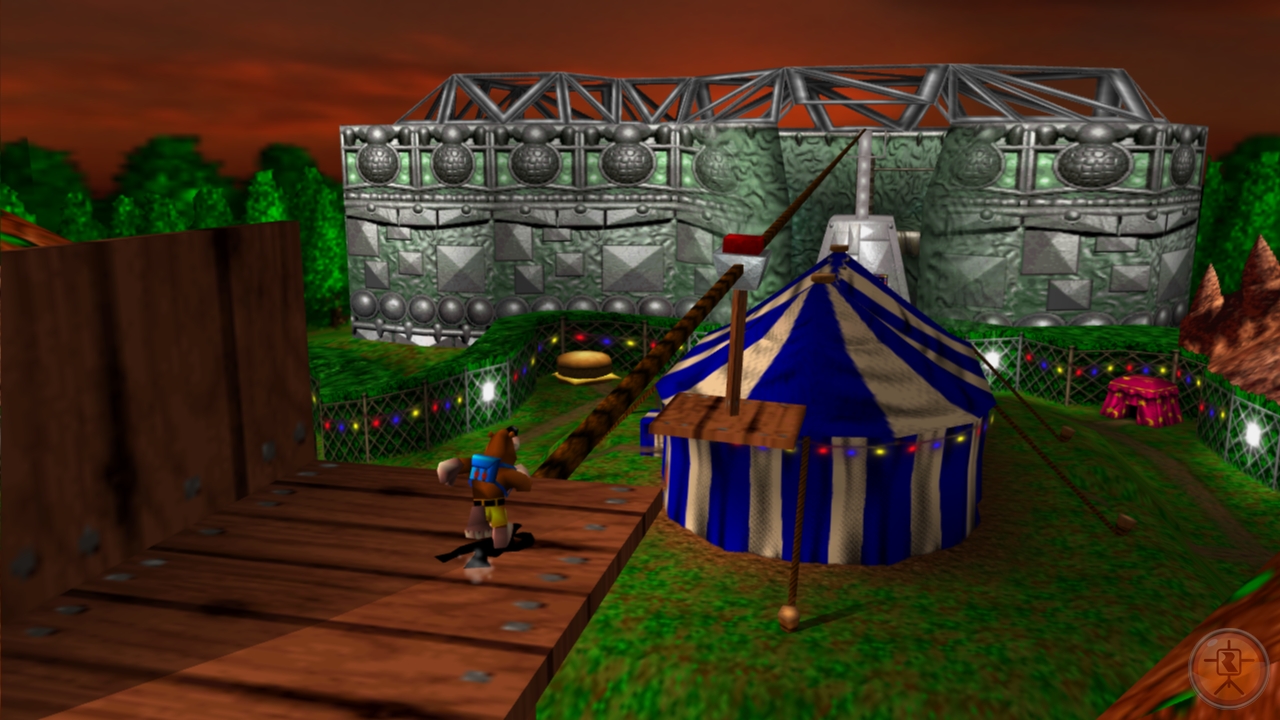
Witchyworld - Banjo-Tooie (N64, XBLA)


A most unwelcome to Witchyworld, the third level within Banjo-Tooie, the sequel to SuperPhillip Central's favorite 3D platformer of all time, the original Banjo-Kazooie. Unlike your Disney World or your Six Flags, Witchyworld is a rundown theme park that houses a cavalcade of hazards, and that's just the food served in the vendors! Alongside the food is the dangerous rides that will for sure take a few years off a bear or bird's life.

Grunty's hostile theme park contains four sections in the main compass directions of the park, Area 51, the Wild West Zone, the Space Zone, and the Haunted Zone. Each area encompasses a different theme and series of of attractions. The rides in each section are mostly broken down and out of service, requiring the player to change into Mumbo Jumbo to recharge them.

The main attraction in the center of Witchyworld is the Big Top. Here is where the boss of the level dwells, a giant inflatable dinosaur named Mr. Patch, who was featured in an edition of Best Boss Battles in Gaming History.


All in all, Banjo Tooie's Witchyworld sports plenty of variety to it through the various sections of the theme park, making it one of SuperPhillip Central's favorite levels in the game.