As promised by The Pokémon Company and Nintendo, a new trailer full of announcements is here for Pokémon Sun and Pokémon Moon. From new Alola forms of familiar Pokémon to brand-new, ultra-powerful Z-Moves, this trailer is packed to the gills with goodness!

Monday, August 1, 2016

Sunday, July 31, 2016
Ultimate Ghosts 'N Goblins (PSP) Retro Review
The final review of the month of July is a retro review for a PlayStation Portable game, a re-imagining of the Ghosts 'n Goblins series from 2006. It's Ultimate Ghosts 'n Goblins, and here is my review.

When the PlayStation Portable originally came out, Capcom was one of the biggest third-party proponents to the system, releasing everything from Mega Man to Monster Hunter on the system. As the success of its titles wasn't to the publisher's liking on the PSP, Capcom soon invested much less game-wise to the system. However, before just contributing loads of Monster Hunter games on the PSP, Capcom released a new version of its classic Ghosts 'n Goblins series in the form of Ultimate Ghosts 'n Goblins. While an overall worthwhile game to play, Ultimate Ghosts 'n Goblins shows that a developer can stray too close to antiquated old school sensibilities.
One of the biggest problems with Ultimate Ghosts 'n Goblins is how controlling Arthur feels as antiquated as back in the '80s and '90s. Arthur's jumps are extremely stiff, not even allowing the player to control the undead-slaying knight while in midair. This makes for an amazingly frustrating experience, especially as there are many times when precision jumping is required. Furthermore, Arthur can only attack in four directions whereas enemies can in from all 360 degrees. Arthur's movement is slow and prodding, even when he attacks, and while it's nice that Capcom decided to stay true to the Ghosts 'n Goblins series' roots, this would have been one area where improving the controls to something out of the year this PSP sequel was released instead of back in the '80s would have been very much appreciated. Ultimate Ghosts 'n Goblins is always difficult as a game, as you're ambushed constantly by hordes of monsters; it didn't need to be artificially more frustrating because of its controls.
Thankfully, this edition of Ghosts 'n Goblins comes complete with multiple difficulties for beginners as well as those who hates themselves. Novice/Standard mode gives you a number of lives to use, multiple hits to your armor, and the ability to re-spawn nearby from where you die, whether if you take damage while Arthur is in his skivvies or fall into one of the many bottomless pits in the game. Meanwhile, Ultimate mode is a nightmare-level difficulty where no matter what level of armor Arthur is wearing, one hit results in him breaking out into his boxers, and death means you have to start back at the beginning of the level you're currently in. Novice and Standard modes are recommended for all players, as there is still a great level of challenge posed. The inclusion of a helpful save system, allowing you to save your progress after each level, gives this hard game more semblance of fairness.
Ultimate Ghosts 'n Goblins has the boxer-toting knight Arthur setting out on a quest to take down the kidnapper of a princess, a nefarious emperor of the Dark Realm. The tale is as simple as "beat the big bad, save the princess", and the narrative doesn't expand from the opening cutscene, but that is just fine for a game of the platforming genre, especially one hearkening back to the classics.
Starting off on his quest, Arthur has a suit of armor, the ability to jump, and an unlimited arsenal of lances to throw. Upon coming in contact with an enemy, Arthur's armor falls into a pile off his body, revealing nothing but him in his vulnerable heart-covered boxers. Taking damage then results in Arthur turning into a skeleton and falling down into a collection of bones. However, there are multiple levels of armor to be collected, granting Arthur the ability to be hit more than once before entering his skivvies. In addition to that, the ability to double jump is earned early on in the game, a feature that you won't know how you lived without after getting it.
Besides using a myriad of sharp, pointy lances, Arthur can grab a wide assortment of weapons. When one is picked up, the weapon Arthur currently has is replaced. These range from old standbys like daggers and bombs to new weapons like rose whips and scythes that fly in a boomerang pattern, allowing Arthur to scoop up faraway items in the process.
The five worlds of Ultimate Ghosts 'n Goblins throw the book at you in terms of challenge, sights, and obstacles. From venturing through the traditional Ghosts 'n Goblins-style graveyard teeming with the undead to exploring the inner workings of a castle, full of moving platforms and deteriorating staircases, Ultimate Ghosts 'n Goblins keeps you on your toes.
The initial time it takes to reach the final level for players will take but a couple of hours or so. Then, the game throws a wrench into things, making note that if you haven't collected 21 gold rings, a collectable that most players would think nothing of on their initial journey through the game, you aren't getting through the final door to face the game's boss. This results in you being thrown back to the beginning of the game, tasked with not only acquiring 21 gold rings (there are over 30 to collect, and collecting all of them gives you the best ending of the game), but acquiring various spells hidden in levels to acquire many of these hidden rings.
This can make for a tedious time for some players, as the idea of playing through the same levels repeatedly, picking up new spells and rings might not be the most appealing. Plus, many rings and spells are hidden in secret treasure chests that only trigger and spawn upon touching a specific space in a given level. Unless you're a masochist, very determined and unrelenting, you'll most likely need to take up a walk-through posted somewhere on the Web to find the locations of all the hidden "goodies" to be found in Ultimate Ghosts 'n Goblins.
One thing I haven't yet mentioned regarding Arthur's most recent adventure is that of the boss battles. These feats of bravery and strength have you taking on demonic entities both small and large, each with their own patterns to be on the look out for. Predictable, yes, but challenging all the same.
The presentation of Ultimate Ghosts 'n Goblins features 3D models and environments, bringing a sense of depth to the visuals. The amount of detail in the environments and levels is astonishing, and it's all done without looking or being too busy. The performance of the game is solid, offering seldom occurrences of slowdown. Meanwhile, the music features glorious remixed music from past Ghosts 'n Goblins games as well as all-new arrangements. Overall, Capcom went all out with the presentation of Ultimate Ghosts 'n Goblins.
Without question, if you're a lover of immensely hard old school games, Ultimate Ghosts 'n Goblins will give you lots to love and lots of monsters to maul. What it won't give you is tight platforming, controls that aren't stiff, jumps where you can always see where you're going to land, enjoyment from playing the same levels over and over again, and an easy time of things. This is where some gamers might absolutely love Ultimate Ghosts 'n Goblins for these things while others will only get the cold shoulder.
[SPC Says: C]

Fun for all the right reasons, challenging for all the wrong reasons.

When the PlayStation Portable originally came out, Capcom was one of the biggest third-party proponents to the system, releasing everything from Mega Man to Monster Hunter on the system. As the success of its titles wasn't to the publisher's liking on the PSP, Capcom soon invested much less game-wise to the system. However, before just contributing loads of Monster Hunter games on the PSP, Capcom released a new version of its classic Ghosts 'n Goblins series in the form of Ultimate Ghosts 'n Goblins. While an overall worthwhile game to play, Ultimate Ghosts 'n Goblins shows that a developer can stray too close to antiquated old school sensibilities.
One of the biggest problems with Ultimate Ghosts 'n Goblins is how controlling Arthur feels as antiquated as back in the '80s and '90s. Arthur's jumps are extremely stiff, not even allowing the player to control the undead-slaying knight while in midair. This makes for an amazingly frustrating experience, especially as there are many times when precision jumping is required. Furthermore, Arthur can only attack in four directions whereas enemies can in from all 360 degrees. Arthur's movement is slow and prodding, even when he attacks, and while it's nice that Capcom decided to stay true to the Ghosts 'n Goblins series' roots, this would have been one area where improving the controls to something out of the year this PSP sequel was released instead of back in the '80s would have been very much appreciated. Ultimate Ghosts 'n Goblins is always difficult as a game, as you're ambushed constantly by hordes of monsters; it didn't need to be artificially more frustrating because of its controls.
 |
| Yikes. This doesn't look like it is going to end well for Arthur. |
Ultimate Ghosts 'n Goblins has the boxer-toting knight Arthur setting out on a quest to take down the kidnapper of a princess, a nefarious emperor of the Dark Realm. The tale is as simple as "beat the big bad, save the princess", and the narrative doesn't expand from the opening cutscene, but that is just fine for a game of the platforming genre, especially one hearkening back to the classics.
Starting off on his quest, Arthur has a suit of armor, the ability to jump, and an unlimited arsenal of lances to throw. Upon coming in contact with an enemy, Arthur's armor falls into a pile off his body, revealing nothing but him in his vulnerable heart-covered boxers. Taking damage then results in Arthur turning into a skeleton and falling down into a collection of bones. However, there are multiple levels of armor to be collected, granting Arthur the ability to be hit more than once before entering his skivvies. In addition to that, the ability to double jump is earned early on in the game, a feature that you won't know how you lived without after getting it.
 |
| Even just down to his heart-covered skivvies, Arthur is brave against the forces of evil. |
 |
| From lances to whips, Arthur's arsenal can be ever-changing. |
The initial time it takes to reach the final level for players will take but a couple of hours or so. Then, the game throws a wrench into things, making note that if you haven't collected 21 gold rings, a collectable that most players would think nothing of on their initial journey through the game, you aren't getting through the final door to face the game's boss. This results in you being thrown back to the beginning of the game, tasked with not only acquiring 21 gold rings (there are over 30 to collect, and collecting all of them gives you the best ending of the game), but acquiring various spells hidden in levels to acquire many of these hidden rings.
This can make for a tedious time for some players, as the idea of playing through the same levels repeatedly, picking up new spells and rings might not be the most appealing. Plus, many rings and spells are hidden in secret treasure chests that only trigger and spawn upon touching a specific space in a given level. Unless you're a masochist, very determined and unrelenting, you'll most likely need to take up a walk-through posted somewhere on the Web to find the locations of all the hidden "goodies" to be found in Ultimate Ghosts 'n Goblins.
One thing I haven't yet mentioned regarding Arthur's most recent adventure is that of the boss battles. These feats of bravery and strength have you taking on demonic entities both small and large, each with their own patterns to be on the look out for. Predictable, yes, but challenging all the same.
 |
| Speaking of bosses, this bony baddie is the first Arthur comes up against. |
Without question, if you're a lover of immensely hard old school games, Ultimate Ghosts 'n Goblins will give you lots to love and lots of monsters to maul. What it won't give you is tight platforming, controls that aren't stiff, jumps where you can always see where you're going to land, enjoyment from playing the same levels over and over again, and an easy time of things. This is where some gamers might absolutely love Ultimate Ghosts 'n Goblins for these things while others will only get the cold shoulder.
[SPC Says: C]

Saturday, July 30, 2016
Mighty No. 9 (Multi) Review
Before we close out the month of July, two more reviews are coming. The first of which is for Mighty No. 9, a game which has a development story that I would pay to read about because of how many controversies plagued it. Regardless, the game ended up being rather fun overall. Check out the SuperPhillip Central opinion with my in-depth review.

One of the most infamous Kickstarter projects started out so innocently and with a lot of hope. Keiji Inafune, one of main minds behind the Mega Man franchise of old, put a lot of passion behind a Mega Man-like game called Mighty No. 9. With a beautiful piece of concept art, fans quickly backed the project, contributing more than four million dollars total.
Following this was a lot of controversy, from Inafune asking for even more money, multiple delays, the launch of a second Kickstarter before Mighty No. 9 even released, and community manager mishaps. While the final product of Mighty No. 9 is hardly what I'd say awful, for a four million dollar Kickstarter-backed game, most of us can easily expect more from this project.
The story of Mighty No. 9 follows Beck, the ninth robot of a unit of warriors known as the Mighty Numbers. When an unknown virus infects numerous machines as well as the other Mighty Numbers, the unaffected Beck must combat against the threat by taking down each corrupted Mighty Number and discover the reason for the virus breakout.
Being a game created by former Mega Man mastermind Keiji Inafune, it only makes sense that Mighty No. 9 would take a lot of concepts and mechanics from his past works. This is seen throughout the gameplay, where you control Beck as he shoots, runs, jumps, and dashes through one of a dozen or so side-scrolling platforming levels. The levels don't have as much in the way of secrets, as they're linear just like many of the classic Mega Man series games. However, many levels do reward points for completing certain challenges, such as getting a Sprinter bonus for moving quickly through a specific area of a level, or a Quick Clear bonus for taking out a room full of enemies with swift timing.
The majority of levels are decently designed, though there are numerous instances of bad design here and there. One level has a place where you are required to carefully floor dash underneath two purple spinning turbines. The timing here is so strict that failing to perform floor dashes with the correct precision results in immediate death. In another level, the goal is to pursue a far off sniper. Coming into contact with him results in the Mighty Number retreating to another area. This game of cat and mouse goes on for a ridiculously long time, and the fact that death results in you being forced to start the level from the beginning makes for a needlessly tedious time.
However, when Mighty No. 9's levels do shine, it's a lot of fun. I particularly enjoyed a level where Beck is moving across the tops of vehicles in a fast-paced highway level, though the frame-rate isn't always the smoothest, slightly diminishing some of the enjoyment I had. Another level has Beck scaling a radio tower to reach a Mighty Number to battle. The vertical nature of the level and the fierce winds make it one of the most interesting in Mighty No. 9.
Mighty No. 9 adds to the Mega Man formula with a dash mechanic that is put to use on weakened enemies. When a foe has been pelted with enough of Beck's bullets, they enter a weakened state where Beck can then dash into them, defeating them while gaining points. Depending on how fast Beck dashes into a baddie after they've been weakened, the enemy gives him a boost as well as the player a specific percentage. Keeping a combo going by dashing into weakened enemies while getting 100%'s is a lot of fun and is the main way of earning high scores in levels. This even goes into boss battles, where giving one of the Mighty Numbers enough damage will present them with a weakened state, allowing Beck to dash into them to not only deal permanent damage to their life bar, but also allow Beck to continue his combo, pending he's fast enough to dash into them when a boss has become weak.
Speaking of the boss battles, Mighty No. 9 shines in this aspect, creating battles that are both memorable and challenging for the most part. Just like with normal enemies throughout the game, the Mighty Number bosses as well as other stronger enemies can be weakened when enough damage has been dished out to them. However, bosses will regain the health Beck just gave them if he doesn't dash into them while they're weakened within a relatively small window of time. Usually bosses add a more powerful attack and change to their patterns when their health has been lessened to about halfway, making these fights quite dynamic and quite fun.
Continuing to borrow from ideas from the Mega Man franchise, defeated Mighty Numbers give Beck their signature special weapon that he can use in levels and against other bosses to make for an easier time of things. While it's not as enjoyable as the Mega Man series to figure out which Mighty Number weapon works best against which boss, as the effects aren't nearly as drastic against a boss's health, it's still pretty fun all the same.
Alongside the main campaign, you can unlock new challenge missions for either solo or cooperative play. These missions have you doing everything from getting to the goal with various caveats such as one that has you being unable to use your dash or attack abilities, destroying all the targets as a particular character within the time limit, and the hardest of the hard challenges, playing through all of Mighty No. 9's stages without dying. Yeah, I don't think I'll be getting to that one any time soon! In addition to the challenge missions, once you initially beat Mighty No. 9, you unlock a boss rush, pitting you against all of the Mighty Numbers in succession.
Mighty No. 9's budget certainly didn't go to its presentation... or if it did, then Inafune and his team certainly botched it considerably. The environments are sterile, bland, and mostly lacking personality. The characters in story sequences pantomime to one another, never moving their mouths, and talk so slowly that it's difficult to stay interested in the story, even with a vested interest like I started out with. The frame-rate also leaves something to be desired, sometimes sinking to embarrassing levels in more action-oriented sections of the game.
On the sound front, part of the Kickstarter budget went towards hiring voice actors to deliver the game's lines. The voice acting is generally very dull at best and incredibly grating at worst, especially Mighty No. 2, Cryogen's high pitched voice and ice puns that would give Arnold Schwarzenegger's Mister Freeze a headache. Musically, what is featured is hard to hear thanks to the repeated lines of dialogue that is featured in each level. Sometimes the dialogue boxes actually detract from the experience as they can cover up hazards in levels such as one-touch-and-Beck-is-dead floor spikes.
All in all, Mighty No. 9 isn't an absolutely horrid experience by any stretch of the imagination. It's, dare I say, a good deal of fun. However, some design decisions especially in some levels, dull environments, and unappealing voice acting make for a game that is good but not great. In total, Mighty No. 9 is an average platformer, but considering the game somehow took four million dollars to create, "average" is simply not good enough.
[SPC Says: C]

Totally NOT a Mega Man Clone

One of the most infamous Kickstarter projects started out so innocently and with a lot of hope. Keiji Inafune, one of main minds behind the Mega Man franchise of old, put a lot of passion behind a Mega Man-like game called Mighty No. 9. With a beautiful piece of concept art, fans quickly backed the project, contributing more than four million dollars total.
Following this was a lot of controversy, from Inafune asking for even more money, multiple delays, the launch of a second Kickstarter before Mighty No. 9 even released, and community manager mishaps. While the final product of Mighty No. 9 is hardly what I'd say awful, for a four million dollar Kickstarter-backed game, most of us can easily expect more from this project.
The story of Mighty No. 9 follows Beck, the ninth robot of a unit of warriors known as the Mighty Numbers. When an unknown virus infects numerous machines as well as the other Mighty Numbers, the unaffected Beck must combat against the threat by taking down each corrupted Mighty Number and discover the reason for the virus breakout.
Being a game created by former Mega Man mastermind Keiji Inafune, it only makes sense that Mighty No. 9 would take a lot of concepts and mechanics from his past works. This is seen throughout the gameplay, where you control Beck as he shoots, runs, jumps, and dashes through one of a dozen or so side-scrolling platforming levels. The levels don't have as much in the way of secrets, as they're linear just like many of the classic Mega Man series games. However, many levels do reward points for completing certain challenges, such as getting a Sprinter bonus for moving quickly through a specific area of a level, or a Quick Clear bonus for taking out a room full of enemies with swift timing.
 |
| Take out all of these foes within a fast enough amount of time to receive a Quick Clear bonus. |
However, when Mighty No. 9's levels do shine, it's a lot of fun. I particularly enjoyed a level where Beck is moving across the tops of vehicles in a fast-paced highway level, though the frame-rate isn't always the smoothest, slightly diminishing some of the enjoyment I had. Another level has Beck scaling a radio tower to reach a Mighty Number to battle. The vertical nature of the level and the fierce winds make it one of the most interesting in Mighty No. 9.
 |
| The highway is one of the more interesting levels featured in Mighty No. 9. |
 |
| The true enemy of Cryogen's level is that of the ice puns that will leave you out in the cold. |
Continuing to borrow from ideas from the Mega Man franchise, defeated Mighty Numbers give Beck their signature special weapon that he can use in levels and against other bosses to make for an easier time of things. While it's not as enjoyable as the Mega Man series to figure out which Mighty Number weapon works best against which boss, as the effects aren't nearly as drastic against a boss's health, it's still pretty fun all the same.
Alongside the main campaign, you can unlock new challenge missions for either solo or cooperative play. These missions have you doing everything from getting to the goal with various caveats such as one that has you being unable to use your dash or attack abilities, destroying all the targets as a particular character within the time limit, and the hardest of the hard challenges, playing through all of Mighty No. 9's stages without dying. Yeah, I don't think I'll be getting to that one any time soon! In addition to the challenge missions, once you initially beat Mighty No. 9, you unlock a boss rush, pitting you against all of the Mighty Numbers in succession.
 |
| The feel of controlling Beck is one of the highlights of Mighty No. 9 that the development team got right. |
 |
| Watch out for those pink spikes. They will end your run if Beck even so much makes contact with them. |
All in all, Mighty No. 9 isn't an absolutely horrid experience by any stretch of the imagination. It's, dare I say, a good deal of fun. However, some design decisions especially in some levels, dull environments, and unappealing voice acting make for a game that is good but not great. In total, Mighty No. 9 is an average platformer, but considering the game somehow took four million dollars to create, "average" is simply not good enough.
[SPC Says: C]

Friday, July 29, 2016
Trine: Enchanted Edition (PS4) Review
I enjoyed Trine: Enchanted Edition so much on the Wii U that I couldn't help but jump on the game again when it was on sale this past month during a PSN Flash Sale. Now, the PlayStation 4 version gets due coverage with this in-depth SuperPhillip Central review.

The original Trine released in 2008. Its sequel, Trine 2, released several years later. As 2014 arrived, Frozenbyte, the developer behind the Trine series, released Trine: Enhanced Edition, a remodeled version of the original Trine, given Trine 2's graphical upgrades. What you get with this edition is an magnificently fun puzzle-platformer that doesn't outwear its welcome.
The fun comes from having three characters to play as, being able to freely switch between them at any time. This proves necessary as each of the three protagonists of Trine have their own special abilities that only they can use. The knight is great for brute force situations, the thief can pick off faraway targets with her arrows as well as swing across chasms, and the wizard can conjure up magical boxes and planks to help reach new areas and cross otherwise impossible chasms.
Trine: Enchanted Edition sports fifteen story levels, each taking the trio of heroes across many a unique locale, from thorny forests to dark crypts and dingy dungeons to sparkling caverns. Each level contains a set number of experience bottles sprinkled throughout in both (well) hidden locations and in plain sight. Experience points can be used to upgrade abilities, such as giving the wizard the privilege of being able to have two summoned boxes be on the screen at once, or giving the thief a quicker charge up time for her to shoot arrows.
Experience is also recovered occasionally from fallen enemies. The combat of Trine itself is one of the weakest parts of the game, oftentimes having you flail around while mashing the attack button as the knight to deal damage to foes. It doesn't take any thought to do, and it feels fine at best and clumsy at worst.
Generally, what makes up most of Trine's levels are various traversal-based challenges. It's all about surveying the environment and coming up with a way to reach your destination. Trine's levels are so captivating because of the fact that you can take many of the challenges that the game presents to you and take them on in more than one way. Paths that can be crossed by placing planks and boxes down by the wizard can also be crossed by swinging across the way with well timed swings of the thief.
Being a physics-based puzzle game of sorts, Trine has you interacting with the environment in a grand variety of ways. With the thief, you can flip light platforms over by striking them with a shot of her arrows. With the wizard, you can grab onto a wide assortment of objects and platforms and levitate them to create a way for you to cross a chasm or reach a higher platform. The greatest test of your patience will not be with the physics of Trine, which work wonderfully, but instead the floaty jumping your characters perform.
I previously reviewed the Wii U version of Trine: Enchanted Edition, and the ability as the wizard to summon magical boxes and planks into play by drawing shapes on the GamePad screen was a godsend. The PlayStation 4 version gives you the ability to draw shapes with the PS4 DualShock's touch pad, but also just concocting shapes with the analog stick is just as easy. You don't have to be perfectly precise, as I found that as long as you make a shape that resembles a square to summon a box such as a circle, the box would appear.
I gushed over the visuals of Trine: Enchanted Edition on the Wii U, and the game looks even better with the PS4 hardware powering it. Using the same visual style as Trine 2, delivering super impressive lighting, jaw-dropping detail, and other notable effects, Trine: Enchanted Edition is a treat for the eyes, one that will glaze your eyes over with its visual awesomeness. The saturated look of the game can result in sometimes it being hard to make note of where you need to go or where a certain collectable is, but overall, the visuals are absolutely lovely.
Trine: Enhanced Edition is a remarkable puzzle-platformer which has exquisite level design and marvelous visuals. What it lacks in tight platforming and polished combat, it more than makes up for in giving players a constant stream of clever puzzles and obstacles. It's another success story from Frozenbyte that makes me very much want to play the third game in the series that I've yet to trine... er, try.
[SPC Says: B+]
A knight, a thief, and a wizard walk into a Trine...

The original Trine released in 2008. Its sequel, Trine 2, released several years later. As 2014 arrived, Frozenbyte, the developer behind the Trine series, released Trine: Enhanced Edition, a remodeled version of the original Trine, given Trine 2's graphical upgrades. What you get with this edition is an magnificently fun puzzle-platformer that doesn't outwear its welcome.
The fun comes from having three characters to play as, being able to freely switch between them at any time. This proves necessary as each of the three protagonists of Trine have their own special abilities that only they can use. The knight is great for brute force situations, the thief can pick off faraway targets with her arrows as well as swing across chasms, and the wizard can conjure up magical boxes and planks to help reach new areas and cross otherwise impossible chasms.
 |
| The wizard can use summoned boxes in a multitude of ways, from platforms to shields against enemies. |
 |
| Pontius the Knight is perfect for most close combat situations. |
Generally, what makes up most of Trine's levels are various traversal-based challenges. It's all about surveying the environment and coming up with a way to reach your destination. Trine's levels are so captivating because of the fact that you can take many of the challenges that the game presents to you and take them on in more than one way. Paths that can be crossed by placing planks and boxes down by the wizard can also be crossed by swinging across the way with well timed swings of the thief.
 |
| After a day of summoning magical boxes and planks, a wizard needs some time to himself. |
I previously reviewed the Wii U version of Trine: Enchanted Edition, and the ability as the wizard to summon magical boxes and planks into play by drawing shapes on the GamePad screen was a godsend. The PlayStation 4 version gives you the ability to draw shapes with the PS4 DualShock's touch pad, but also just concocting shapes with the analog stick is just as easy. You don't have to be perfectly precise, as I found that as long as you make a shape that resembles a square to summon a box such as a circle, the box would appear.
 |
| Not mentioned in the review text, but multiplayer is also available in Trine: Enchanted Edition. |
Trine: Enhanced Edition is a remarkable puzzle-platformer which has exquisite level design and marvelous visuals. What it lacks in tight platforming and polished combat, it more than makes up for in giving players a constant stream of clever puzzles and obstacles. It's another success story from Frozenbyte that makes me very much want to play the third game in the series that I've yet to trine... er, try.
[SPC Says: B+]
Wednesday, July 27, 2016
Top Ten Multiplayer Wii U Games
With the focus of Nintendo and a lot of gamers on the NX, SuperPhillip Central would be remiss if it didn't look back on Nintendo's current system that is now in its twilight years. Despite lacking sales, Nintendo's Wii U certainly did not lack appealing games. However, as we've seen, appealing games isn't enough to sell a console nowadays.
Regardless, Nintendo's failed console was one of the last bastions for couch multiplayer gaming. The system was an embarrassment of riches in the multiplayer scene, both online and off. Today's top ten list delves into just some of these impressive multiplayer titles that are best played together than alone.
After you've read the SuperPhillip Central list, what multiplayer titles on the Wii U were your favorites?
10) Pokken Tournament


Our first game on this top ten list of the best multiplayer Wii U games gives us a concept that seemed like a no-brainer, yet we only got it this year in the west. I'm referring, of course, about a Pokemon fighting game. That is exactly what you get with Pokken Tournament, a fast and frenetic 3D fighter from the makers of Tekken. The game features a motley crew of Pokemon of various fighting styles, sizes, and Pokemon types to create a great roster of fighters. Other Pokemon are represented as assists, being able to be called in mid-match to help turn the tide of battle. Whether online (which performs really well with minimal lag, which is obviously important for a precision and timing-based fighter) or off, Pokken Tournament delivers engaging action and entertaining fights no matter your skill level.
9) Wii Party U
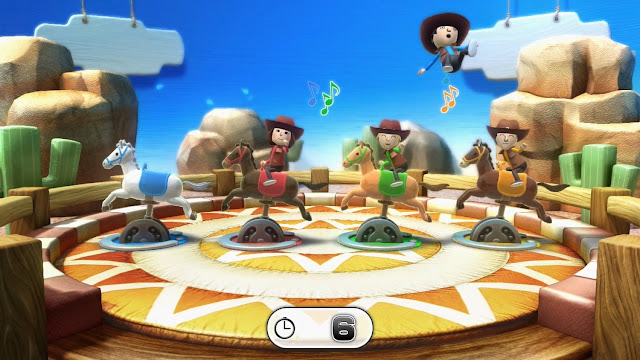

I wouldn't have guessed that the Mii-focused Wii Party U would out-party the Wii U version of a Mario Party, but it honestly did. With a myriad of modes like an island treasure hunt, a clothes-shopping adventure around the city, or a race to the goal across a multi-mile long highway where multiple dice are used, Wii Party U brought the party many a time at the Stortzum household. The mini-games used the Wii Remote well, whether it was trying to stay on a bucking bronco, trying to pop the balloons on the opposing players' helmets with a giant mallet, or trying to perform the perfect pole vault. The added GamePad-centric modes such as the table top games included, such as the marvelously fun baseball meant that two friends could have an intimate gameplay experience together. Wii Party U featured so many modes and mini-games that it was a fantastic party package all in all.
8) New Super Mario Bros. U + New Super Luigi U


One of the two launch titles on the Wii U that are featured on this list, New Super Mario Bros. U and its downloadable content (also in retail form) New Super Luigi U brought the multiplayer mayhem that originated in New Super Mario Bros. Wii, and added the ability for a player to use the Wii U GamePad to summon temporary platforms for the other players. This could be a blessing or a curse depending on how mischievous the player adding platforms was. Nothing like blocking a player's jump over a bottomless pit by putting a bunch of platforms in their way! Even without the GamePad player, up to four players running and jumping through the duo of games' masterfully designed levels was a blast and made for a much different experience than just playing either New Super Mario Bros. U or New Super Luigi U alone.
7) Monster Hunter 3 Ultimate


While also releasing on the Nintendo 3DS, the Wii U version of Monster Hunter 3 Ultimate was the only one with online multiplayer, allowing a crew of up to four players to hunt a monster together. However, if you owned both versions of the game, you could transport your hunter between versions, so essentially you could play on the go when needed and at home for some online monster hunting action. Being able to set up hunts with both friends and strangers, engage in battles with behemoth beasts, and team up to overcome the odds were all incredibly fun. It made each hunt take much less time as multiple people were taking on a monster at once, and made it so the odds were more in your favor. Monster Hunter 3 Ultimate still has a dedicated community to it, even though both Monster Hunter 4 Ultimate and now Monster Hunter Generations on the 3DS have taken many players away from this Wii U game.
6) Runbow


The sole indie game on this list of multiplayer Wii U titles (though don't get the impression that the Wii U was lacking in engaging multiplayer indie games), Runbow focused on multiplayer platforming which had a goal of having players be the first to reach and collect a trophy. This is all the while running, jumping, and defeating enemies while the level background constantly changed in a cavalcade of colors. This color-changing mechanic in levels meant that some obstacles and platforms in the foreground would appear and disappear based on the color of the background. Thus, careful attention and timing were necessary to win. Up to nine players could play at once, pending enough Wii Remotes and Wii Classic Controllers or Nunchuks were available. Runbow will be receiving a retail version this fall for both the Wii and the New Nintendo 3DS, so if you've slept on Runbow now, you should definitely wake up and jump on the retail version when it releases.
5) Super Mario 3D World


The New Super Mario Bros. series as of the Wii iteration introduced multiplayer to the 2D line of Mario games. Super Mario 3D World finally brought multiplayer to the 3D games with fantastic results. Of course, the game could be played solo, and it was a pleasure to play that way. However, the true fun came from having up to four friends in the same room assist one another through the obstacle and enemy-laden courses that Super Mario 3D World was positively packed with. The level design of Super Mario 3D World featured a start and goal, much like the 2D series of Super Mario games and Super Mario 3D Land on the Nintendo 3DS. The game remains one of the best gameplay experiences on the Wii U, and it's an absolute blast with multiple players, showing that not only Super Mario 3D World is aces alone, but also aces with friends.
4) Nintendo Land


Another launch title for the Wii U, but this one better exuded the promise and potential of the Wii U GamePad and the system itself that unfortunately was left unfulfilled. Nintendo Land brought asymmetrical gameplay to the forefront, having a multitude of multiplayer attractions based on various Nintendo IP, such as Mario, The Legend of Zelda, and Metroid, for starters. Having one player use the GamePad screen while other players used Wii Remotes and a television screen meant that players could take on different roles with the gameplay. For instance, in Mario Chase, players with Wii Remotes pursued the GamePad player, who had the luxury of their own screen as well as a map to determine the best route to escape his or her pursuers. The promise of asymmetrical gameplay might not have been expanded as much in later years with the Wii U, but for a moment, Nintendo Land gave a somewhat bright future for this type of gameplay.
3) Splatoon


Many of us ate crow when Splatoon, Nintendo's new franchise for the Wii U, sold amazingly and became an immediate hit on the system. Many thought the game would be DOA since it was a new IP on a failing system. However, Splatoon is one of the big success stories on the Wii U, and that is thanks in part to its astonishingly funky and (to borrow a word from the actual game) fresh gameplay mechanics. Shooting paint at the floors and walls of maps meant your squid kid could swim through the paint, reaching new areas of the map that would otherwise be inaccessible to them. The goal of covering the most map with your team's paint is a highly original concept that quickly made Splatoon stand out with the other third-person shooting competition. Splatoon is one of the only games on this list whose multiplayer is best experienced online. While the Splatfest competitions are officially over, Splatoon is still very much worth hopping online and playing, as the player base is as strong as ever.
2) Mario Kart 8


What I consider the best and most complete Mario Kart package yet, Mario Kart 8 was a great game already with its standard 32 tracks, 16 new and 16 remixed from past Mario Kart games. Then, two DLC packages released, containing 8 courses each. Now, Mario Kart 8 is packed with tracks that added to the game's already massive amount of entertaining gameplay. The tracks themselves feature some of the best design the series has ever seen, and this is thanks in part to the F-Zero-like twists and turns that the anti-gravity mechanic of tracks have incorporated. Even the retro tracks from past Mario Kart games have been remixed with anti-gravity portions, making them wild rides from beginning to end. Up to four players locally can engage in Grand Prix races, VS. mode, or Battle mode. Up to 12 players can race online with lag-free racing goodness. Mario Kart 8 remains a fixture in many a Wii U players' rotation, and it's amazingly easy to see why.
1) Super Smash Bros. for Wii U


The all-star brawl is on, even two years after its initial release. Masahiro Sakurai and the rest of the team behind Super Smash Bros. for Wii U continued a fine and constant stream of quality content to players, whether it was new characters, stages, Mii costumes, or modes. The game itself can be played as both a party fighter (where I find it is the most fun with up to eight friends in a specific mode, while up to four players elsewhere) and a competitive fighter, as seen at EVO and other events. The roster of characters allows players to pick the Nintendo or third-party all-star that best suits their play style, or if you're like me, you just play as everyone as you're a casual player. Super Smash Bros. for Wii U has a plethora of modes to choose from, and the gameplay is so engaging that many players will be seeing themselves keeping the game close by to play for years to come. It's all these reasons why SuperPhillip Central has selected Super Smash Bros. for Wii U as the top multiplayer game for the Wii U.
Honorable Mentions:
Donkey Kong Country: Tropical Freeze
Hyrule Warriors
Mario Party 10
Pikmin 3
Rayman Legends
Yoshi's Woolly World
Regardless, Nintendo's failed console was one of the last bastions for couch multiplayer gaming. The system was an embarrassment of riches in the multiplayer scene, both online and off. Today's top ten list delves into just some of these impressive multiplayer titles that are best played together than alone.
After you've read the SuperPhillip Central list, what multiplayer titles on the Wii U were your favorites?
10) Pokken Tournament


Our first game on this top ten list of the best multiplayer Wii U games gives us a concept that seemed like a no-brainer, yet we only got it this year in the west. I'm referring, of course, about a Pokemon fighting game. That is exactly what you get with Pokken Tournament, a fast and frenetic 3D fighter from the makers of Tekken. The game features a motley crew of Pokemon of various fighting styles, sizes, and Pokemon types to create a great roster of fighters. Other Pokemon are represented as assists, being able to be called in mid-match to help turn the tide of battle. Whether online (which performs really well with minimal lag, which is obviously important for a precision and timing-based fighter) or off, Pokken Tournament delivers engaging action and entertaining fights no matter your skill level.
9) Wii Party U
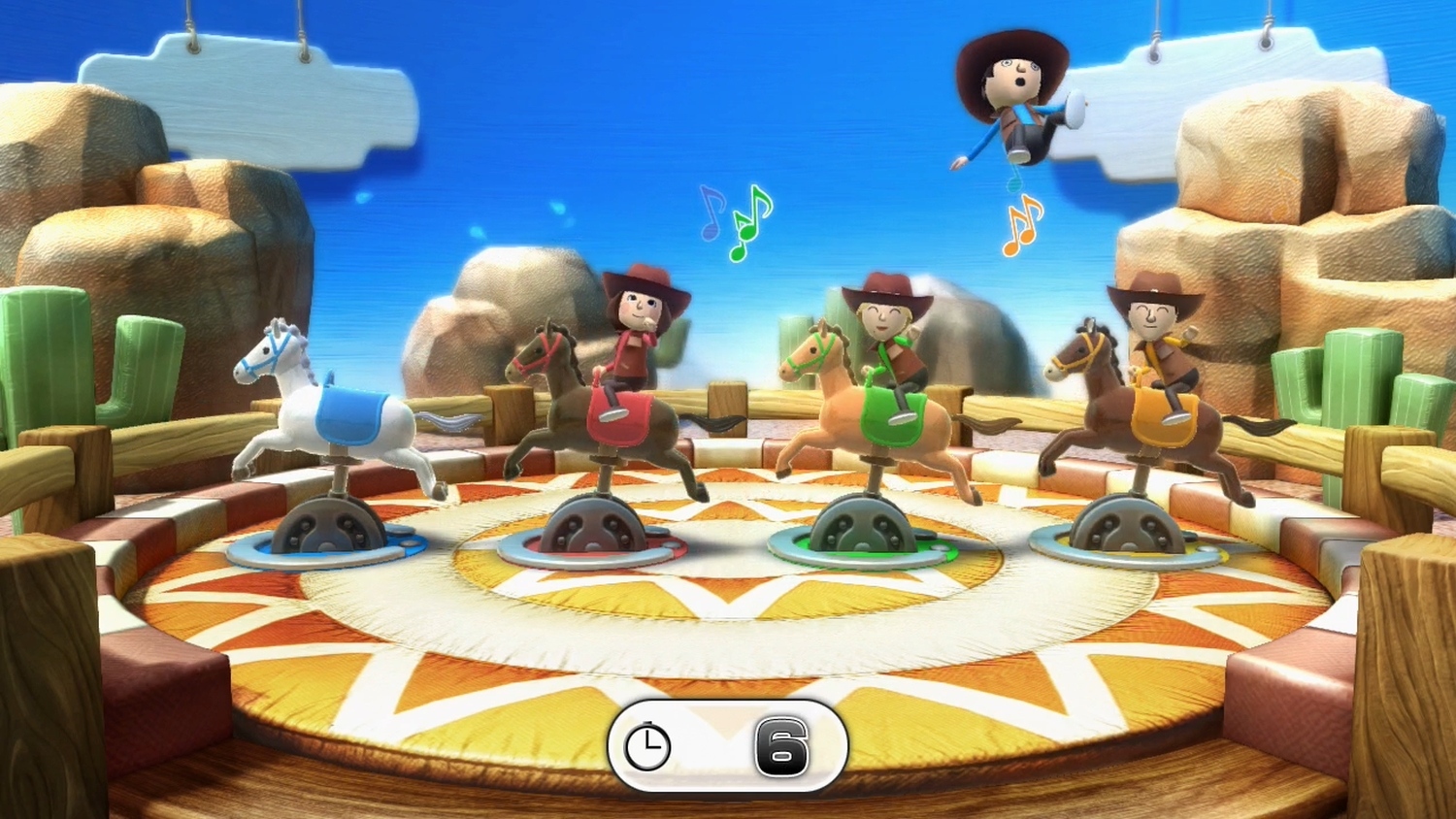

I wouldn't have guessed that the Mii-focused Wii Party U would out-party the Wii U version of a Mario Party, but it honestly did. With a myriad of modes like an island treasure hunt, a clothes-shopping adventure around the city, or a race to the goal across a multi-mile long highway where multiple dice are used, Wii Party U brought the party many a time at the Stortzum household. The mini-games used the Wii Remote well, whether it was trying to stay on a bucking bronco, trying to pop the balloons on the opposing players' helmets with a giant mallet, or trying to perform the perfect pole vault. The added GamePad-centric modes such as the table top games included, such as the marvelously fun baseball meant that two friends could have an intimate gameplay experience together. Wii Party U featured so many modes and mini-games that it was a fantastic party package all in all.
8) New Super Mario Bros. U + New Super Luigi U


One of the two launch titles on the Wii U that are featured on this list, New Super Mario Bros. U and its downloadable content (also in retail form) New Super Luigi U brought the multiplayer mayhem that originated in New Super Mario Bros. Wii, and added the ability for a player to use the Wii U GamePad to summon temporary platforms for the other players. This could be a blessing or a curse depending on how mischievous the player adding platforms was. Nothing like blocking a player's jump over a bottomless pit by putting a bunch of platforms in their way! Even without the GamePad player, up to four players running and jumping through the duo of games' masterfully designed levels was a blast and made for a much different experience than just playing either New Super Mario Bros. U or New Super Luigi U alone.
7) Monster Hunter 3 Ultimate


While also releasing on the Nintendo 3DS, the Wii U version of Monster Hunter 3 Ultimate was the only one with online multiplayer, allowing a crew of up to four players to hunt a monster together. However, if you owned both versions of the game, you could transport your hunter between versions, so essentially you could play on the go when needed and at home for some online monster hunting action. Being able to set up hunts with both friends and strangers, engage in battles with behemoth beasts, and team up to overcome the odds were all incredibly fun. It made each hunt take much less time as multiple people were taking on a monster at once, and made it so the odds were more in your favor. Monster Hunter 3 Ultimate still has a dedicated community to it, even though both Monster Hunter 4 Ultimate and now Monster Hunter Generations on the 3DS have taken many players away from this Wii U game.
6) Runbow


The sole indie game on this list of multiplayer Wii U titles (though don't get the impression that the Wii U was lacking in engaging multiplayer indie games), Runbow focused on multiplayer platforming which had a goal of having players be the first to reach and collect a trophy. This is all the while running, jumping, and defeating enemies while the level background constantly changed in a cavalcade of colors. This color-changing mechanic in levels meant that some obstacles and platforms in the foreground would appear and disappear based on the color of the background. Thus, careful attention and timing were necessary to win. Up to nine players could play at once, pending enough Wii Remotes and Wii Classic Controllers or Nunchuks were available. Runbow will be receiving a retail version this fall for both the Wii and the New Nintendo 3DS, so if you've slept on Runbow now, you should definitely wake up and jump on the retail version when it releases.
5) Super Mario 3D World


The New Super Mario Bros. series as of the Wii iteration introduced multiplayer to the 2D line of Mario games. Super Mario 3D World finally brought multiplayer to the 3D games with fantastic results. Of course, the game could be played solo, and it was a pleasure to play that way. However, the true fun came from having up to four friends in the same room assist one another through the obstacle and enemy-laden courses that Super Mario 3D World was positively packed with. The level design of Super Mario 3D World featured a start and goal, much like the 2D series of Super Mario games and Super Mario 3D Land on the Nintendo 3DS. The game remains one of the best gameplay experiences on the Wii U, and it's an absolute blast with multiple players, showing that not only Super Mario 3D World is aces alone, but also aces with friends.
4) Nintendo Land


Another launch title for the Wii U, but this one better exuded the promise and potential of the Wii U GamePad and the system itself that unfortunately was left unfulfilled. Nintendo Land brought asymmetrical gameplay to the forefront, having a multitude of multiplayer attractions based on various Nintendo IP, such as Mario, The Legend of Zelda, and Metroid, for starters. Having one player use the GamePad screen while other players used Wii Remotes and a television screen meant that players could take on different roles with the gameplay. For instance, in Mario Chase, players with Wii Remotes pursued the GamePad player, who had the luxury of their own screen as well as a map to determine the best route to escape his or her pursuers. The promise of asymmetrical gameplay might not have been expanded as much in later years with the Wii U, but for a moment, Nintendo Land gave a somewhat bright future for this type of gameplay.
3) Splatoon


Many of us ate crow when Splatoon, Nintendo's new franchise for the Wii U, sold amazingly and became an immediate hit on the system. Many thought the game would be DOA since it was a new IP on a failing system. However, Splatoon is one of the big success stories on the Wii U, and that is thanks in part to its astonishingly funky and (to borrow a word from the actual game) fresh gameplay mechanics. Shooting paint at the floors and walls of maps meant your squid kid could swim through the paint, reaching new areas of the map that would otherwise be inaccessible to them. The goal of covering the most map with your team's paint is a highly original concept that quickly made Splatoon stand out with the other third-person shooting competition. Splatoon is one of the only games on this list whose multiplayer is best experienced online. While the Splatfest competitions are officially over, Splatoon is still very much worth hopping online and playing, as the player base is as strong as ever.
2) Mario Kart 8


What I consider the best and most complete Mario Kart package yet, Mario Kart 8 was a great game already with its standard 32 tracks, 16 new and 16 remixed from past Mario Kart games. Then, two DLC packages released, containing 8 courses each. Now, Mario Kart 8 is packed with tracks that added to the game's already massive amount of entertaining gameplay. The tracks themselves feature some of the best design the series has ever seen, and this is thanks in part to the F-Zero-like twists and turns that the anti-gravity mechanic of tracks have incorporated. Even the retro tracks from past Mario Kart games have been remixed with anti-gravity portions, making them wild rides from beginning to end. Up to four players locally can engage in Grand Prix races, VS. mode, or Battle mode. Up to 12 players can race online with lag-free racing goodness. Mario Kart 8 remains a fixture in many a Wii U players' rotation, and it's amazingly easy to see why.
1) Super Smash Bros. for Wii U


The all-star brawl is on, even two years after its initial release. Masahiro Sakurai and the rest of the team behind Super Smash Bros. for Wii U continued a fine and constant stream of quality content to players, whether it was new characters, stages, Mii costumes, or modes. The game itself can be played as both a party fighter (where I find it is the most fun with up to eight friends in a specific mode, while up to four players elsewhere) and a competitive fighter, as seen at EVO and other events. The roster of characters allows players to pick the Nintendo or third-party all-star that best suits their play style, or if you're like me, you just play as everyone as you're a casual player. Super Smash Bros. for Wii U has a plethora of modes to choose from, and the gameplay is so engaging that many players will be seeing themselves keeping the game close by to play for years to come. It's all these reasons why SuperPhillip Central has selected Super Smash Bros. for Wii U as the top multiplayer game for the Wii U.
Honorable Mentions:
Donkey Kong Country: Tropical Freeze
Hyrule Warriors
Mario Party 10
Pikmin 3
Rayman Legends
Yoshi's Woolly World
Subscribe to:
Posts (Atom)