Showing posts with label metroid fusion. Show all posts

Thursday, August 6, 2015

Top Five Metroid Games

29 years ago, the original Metroid released on the Famicom in Japan. It seems like there is no better opportunity to celebrate the series than with an in-depth top five list discussing the best the Metroid series has to offer. Despite having a modest selection of entries compared to other franchises of the same time span and age, it was very difficult coming up with the five Metroid games that best represent the glorious bounty hunter Samus Aran's galactic exploits. After you've checked out my order of titles, hit me up with your faves in the comments below.

5) Metroid Fusion (GBA)

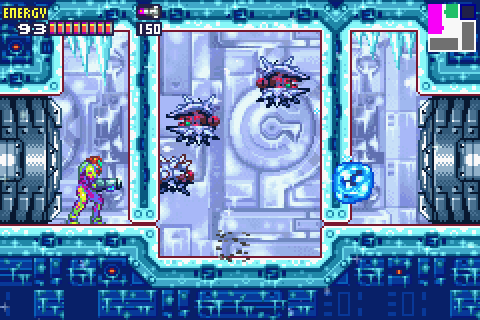
A much more linear Metroid compared to most games in the series, Metroid Fusion saw Samus Aran heading to a space station to eliminate the threat of the X Parasites. This was all the while occasionally encountering the mysterious and highly deadly SA-X, taking the form of Samus. Through intense chase sequences, players have to quickly retreat from the persistent SA-X pest or else suffer fast defeat. The gameplay of Metroid Fusion was quite similar to past 2D games, particularly Super Metroid. New abilities came in the form of Core-X from defeated bosses and from various download stations across the space station. A higher emphasis on story was presented as well to the more linear affair that the game presented players. It all ended with a much deserved beat-down of the SA-X, retreating the destructing space station before it exploded, wiping out all of the X Parasites on board from existence.

4) Metroid Prime 2: Echoes (GCN)


After the grand success of Metroid Prime, developer Retro Studios decided to take the series into a different direction. Now, by no means, was the gameplay greatly affected by this. Instead, Retro went with a heavier emphasis on story with Metroid Prime 2: Echoes, taking place in two different dimensions, Light Aether and Dark Aether, as Samus Aran not only deals with the menacing Ing, but also her own doppelganger in the form of Dark Samus. Many critics argued that Metroid Prime 2 suffered with its higher difficulty, but for me personally, it was just right. Many times Metroid games were easy affairs unless you were speedrunning them, so the increased difficulty suited me just fine. What didn't work so well that would work with the later released Metroid Prime Hunters was the multiplayer component which felt shoehorned in. That said, Metroid Prime 2: Echoes is an incredible entry in the series that should not be passed on.

3) Metroid: Zero Mission (GBA)


An enhanced remake of the original Metroid, which was a game that definitely needed some enhancing due to its obtuse level design and lack of helpful map, Metroid: Zero Mission launched on the Game Boy Advance with gameplay very reminiscent of the superb Super Metroid. Not only that, but the visuals were beefed up supremely compared to the original Metroid, and an entire bonus section of the game where Samus Aran is without her Power Suit, forcing her to stealthily move through a Space Pirate ship with a mere stun pistol. While Metroid: Zero Mission is a bit short even with this new content, the game, like many others in the series, demands multiple play-throughs to experience everything the game has to offer. Doing something like getting 100% game completion within a set amount of time is an objective proficient players can shoot for.

2) Super Metroid (SNES)


One of the greatest 2D titles of all time, Super Metroid delivered fantastic level design, near perfect pacing, and killer ambiance with its myriad marvelous environments. The brand-new auto-mapping feature meant even beginners could have a fighting chance at exploring planet Zebes without hitting too many roadblocks. Super Metroid was the first Metroid game to have fully realized environments, meaning that unlike the original Metroid and Metroid II: Return of Samus on the original Game Boy, you could easily tell the difference between rooms, making getting lost much less of a problem. Perhaps my only reason for not sticking Super Metroid as number one on this list of top five Metroid titles is the first visit to Maridia, where movement is sluggish underwater thanks to the lack of the Gravity Suit, which isn't earned until later in the game. Other than that, Super Metroid has withstood the test of time and deserves not just one play-through but several.

1) Metroid Prime (GCN)


Originally a mess of a project before some divine intervention in the form of gaming god Shigeru Miyamoto stepped in to lend the folks at Retro Studios some direction, Metroid Prime went from what was looking like a failed experiment to bring the Metroid franchise into a first-person perspective to becoming not just what I perceive to the best that Metroid as a series has to offer, but one of the best games of all time. With a story that allows players to dive as deeply into it as they want to by scanning the environment for added narrative to impeccably designed areas that felt like you were in a living, breathing world, Metroid Prime took everything that players loved about the 2D games and made it work wonderfully in 3D.

Tuesday, May 15, 2012

Metroid Fusion (GBA) Retro Review

Metroid Fusion is another 3DS Ambassador game given to early buyers of the Nintendo 3DS. I have been enjoying my time playing through one of my favorite eras of gaming. See how well Metroid Fusion fares with this in-depth review.

Metroid and Handhelds Fuse Together
Once More for an Incredible Ride.


Famous bounty hunter Samus Aran skipped the Nintendo 64 generation, but she came back in style with two new Metroid games within the same day in North America: one of my favorite games of all time, Metroid Prime, and the subject of this review, Metroid Fusion on the Game Boy Advance. With Nintendo's lackluster sales of the 3DS, the price of the system went down, and people who had purchased the platform prior to the price cut received a total of twenty free games-- Ambassador titles, ten NES and ten GBA. Metroid Fusion was but one of those games to play. It's well worth one's time, too, so curl up in your morph ball and get ready to engross yourself in the world of Metroid Fusion.

New suit, same attitude.
During a routine support mission on the not-so-eloquent-to-pronounce planet SR388, Samus Aran gets more than she bargained for when she is assaulted by the mysterious but highly hazardous X parasite. This parasite has the ability to copy the genetic makeup of its host, gaining its powers and appearance. Samus nears death, but at the last possible moment a vaccine from the DNA of the baby Metroid that saved the beautiful bounty hunter back in the finale of Super Metroid allows Samus to survive. The X parasite has now spread to a nearby station that circles around SR388, and Samus, without most of her powers, must take them all out. Assisting her in this perilous mission is a computer which tells Samus mission objectives in every navigation room. Metroid Fusion is much more story-focused than previous entries in the franchise. There are tons of moments where Samus has inner monologues where she questions taking orders from a cold and calculating computer and references her past commanding officer, Adam Malkovich, a name that would appear once more in the controversial Metroid: Other M on the Wii.

There are more story elements than your average Metroid.
If you are new to the Metroid series, here's how it normally unfolds. You basically have parts of areas which you cannot explore until you acquire new powers. As you get new powers, previously unreachable areas become accessible, so new portions of the world become available for exploration. Starting off, Ms. Aran has a pithy amount of powers. She slowly gains new ones usually through beating bosses. Such powers include the ability to roll up into a ball and go through tiny spaces via the Morph Ball power, the ability to shoot off Missiles, the ability to charge her beam cannon, the ability to jump higher to reach once impossible-to-get-to platforms, the ability to freeze foes with the Ice Beam, the infamous Screw Attack which allows our heroine to spin in the air infinitely while damaging enemies that come close to her, and new suits like the Varia and Gravity Suits, giving Samus access to areas that would damage her like severely hot or cold places and the ability to move normally underwater respectively.

Like I said, generally to acquire a new power, a boss must be slain. They usually guard a power, or they even use the power themselves in battle to give you a taste of what you can look forward to. The baddies range from big to small. You'll be facing giant plants of peril, horrible scientific monstrosities gone wrong, and creatures like bats and water snakes that dish out plenty of damage. Some encounters are easier than others, and occasionally you'll have to redo a fight in order to ascertain the proper plan to defeat the foe. After a boss has been defeated, you still aren't finished. A core flies around the battlefield in hopes of hurting Samus as she tries to break it open with missiles or shots from her beam cannon. When it breaks open, the power is hers for the taking.

Beat the boss to acquire a new ability.
There are a total of six sectors on the research station not including the main area where Samus docks her ship. They are connected via a horizontal pathway and a series of six rooms with one elevator apiece, each leading to a different sector. The sectors have various themes to them such as a water and oceanic area, a lava-filled, heat-based area, a nocturnal cavern area, a tropical forested area, an icy area, and a normal area. You go from one sector to another by request of the computer, solving problems aboard the research station such as turning on the power, investigating facilities where creatures have broken free from, and flipping on switches which open up specifically colored hatches, allowing Samus to explore new areas of the vessel.

Even bounty hunters sometimes need to chill out.
Because of the mission-based structure, Fusion is more linear than your usual Metroid game, but that doesn't mean there isn't a lot of exploration to be had. There really is a lot of discovery and wonder to behold. Hidden inside walls, inside secret rooms, and usually in out of the way areas are Missile upgrades, Energy Tanks, and Power Bomb upgrades. Each Missile upgrade gives Samus five extra missiles to work with. Each Energy Tank bestows Samus with 100 extra health while Power Bomb upgrades allow Samus to hold two more super-useful Power Bombs (used in Morph Ball form to explode and destroy walls that would otherwise be impenetrable).

By far the most intense moments in Metroid Fusion are when the SA-X (Samus Aran X parasite) appears and the real Samus must flee as she is no match for her copy. The SA-X can take away Samus's life in an instant, so speed is key. Don't be surprised if you have many deaths as you figure out the best plan of escape. It just makes the experience near the end of the game of being at full power and taking out the SA-X much more fulfilling after being stalked and almost preyed upon for 90% of the game.

Sh! Don't make a sound!
Metroid Fusion isn't a long game. It can honestly be beaten in less than two hours. However, that is an impossible feat for a first-time player. (Most players will probably finish the game in 3-5 hours.) Moreover, the game counts how many upgrades you've collected, and it totals your earning percentage after the credits have rolled. Perfectionists and/or completionists will want to strive for 100%. However, there's a special end game bonus for earning 100% in less than two hours. This means being perfect throughout the game, knowing where to go, when to go, and doing it in a swift fashion. This makes the replay value relatively high as you continue to shoot for a fast time and high completion percentage. For those like me who only care about getting 100%, you probably won't return to this game after beating it once until many moons later.

Metroid Fusion is a good looking GBA game. The character and enemy designs are impressive, the still-frame cutscenes look very nice, and the backgrounds are greatly detailed. The music fills players with a sense of dread at one time, then sends them with a sense of havoc at other times. The atmospheric soundtrack is perfect for this type of title. Sound effects come across well, too, but some like the screeching and shrieking of certain bosses don't come across as nice on the small speakers of the system. Regardless, Metroid Fusion has an outstanding presentation.

Ridley just doesn't know when to quit, does he?
Metroid Fusion permeates with that typical Metroid formula. It might be more linear than most Metroid fans are used to, but there is still a fair amount of freedom to be had. Yes, the story elements bog down the pace of the game significantly, but at least the story is interesting from beginning to end. The level design constantly engages the player to try out their newest abilities to discover upgrades and other secrets, the boss battles are entertaining, and the SA-X chase segments will make a sane player sweat. My biggest gripe with the game is that it is over too soon, though some players will find satisfaction in playing the game over and over as they aim for a fast time and high completion percentage. Despite my problem with the length of the game, Metroid Fusion is still a must-have for Game Boy Advance owners. Don your Varia Suit, equip your beam cannon, and commence your mission.

[SuperPhillip Says: 9.25/10]

Wednesday, June 29, 2011

The Top Ten Original Game Boy Advance Games

Yesterday, in celebration of ten years of the Game Boy Advance, we took a brief glimpse at five of the best GBA ports in the portable's mighty collection. Today we're taking a look at original titles might they be brand-new journeys or remakes. Let's get it started then!

10) Pokemon Ruby and Sapphire Versions


A new generation of Pokemon brought with it a cavalcade of new collectible Pokemon, a new region to explore, all-new trainers and Elite Four to battle, and new towns to rest up and conquer gyms at. Don't forget bonus material like legendary Pokemon and the aquatic islands which could be visited both above and below sea level.

9) Mega Man Zero


A brand-new Mega Man franchise was born on the Game Boy Advance, and it brought with it a high difficulty. If one managed to perform admirably on missions, they could inherit the boss abilities of the various bad guys Zero took on. A simple mission structure where Zero could choose which objectives to tackle went along with this game making it feel like a whole 'nother Mega Man game of which it technically was.

8) Sonic Advance


Sonic had meandering scores when it came to his 3D outings on the Dreamcast and Gamecube. Sonic Team opted to create the first 2D Sonic title in years exclusively for the Game Boy Advance (although this game would be ported to multiple devices afterward including the Nokia N-Gage). Fast-paced action, run and jump platforming, and a myriad of colorful and well-designed zones marked this above-average return-to-form for Sonic the Hedgehog.

7) Metroid Fusion


The first Metroid in a few years off from a decade's time was Metroid Fusion bringing new gameplay elements including a horror portion of the game. When the ultra-powerful SA-X Samus arrived, you better devise an escape plan ASAP. The virus was stronger than regular Samus Aran, and could vaporize her in seconds. The fact that it could show up anywhere only added to the tense atmosphere of the game. Though the game was more linear than past efforts, there was still plenty of adventure for Samus in Metroid Fusion.

6) Golden Sun


One of the few original RPGs for the Game Boy Advance, I chose Golden Sun over its sequel, The Lost Age, as I found the original to be a more harrowing experience. It was easier to follow with less babble and unnecessary text, a hallmark for Camelot RPGs. The battle scenes were breathtaking for the time, the in-dungeon puzzles were brilliant and clever, and the music is once again a compelling masterpiece thanks to Motoi Sakuraba's efforts. If there's but one traditional RPG to play on the GBA, make it Golden Sun.

5) Advance Wars


War. Uh. Good god, y'all. What is it good for? In the world of Advance Wars, apparently everything. You have children as commanding officers for heaven's sake, put in charge of leading men out to die if not taken seriously. This strategy RPG takes the colorful Nintendo charm and adds the brutality of war to make one addicting and complex experience. With multiple troop types, COs and CO powers, maps, and modes, Advance Wars is a game with a napalm's worth of replay value.

4) Mario & Luigi: Superstar Saga


The very first Mario & Luigi was an interesting experiment. In the overworld one button controlled Mario while the other was in charge of Luigi. The same concept occurred in battle where timed jumps or strikes would negate more or bestow more damage. Even the dialogue poked fun at several cliches and tropes of the Mario franchise. Then there's Fawful which is one of the wackiest characters ever seen in a game period. This isn't your ordinary RPG. Far from it, and it's a much better game for that.

3) Castlevania: Aria of Sorrow


Soma Cruz is the lead hero in this Castlevania/Metroidvania title. By defeating enemies sometimes they would drop new abilities for Soma to possess. Who doesn't like clobbering baddies with a beyond-from-this-world scythe or deck of cards? If you've played a Metroid game, you should be familiar with this type of game. As you learn new abilities, you can access newer portions of the main castle. Not only the best Castlevania on the Game Boy Advance, just one of the great games of all time on the system in general.

2) Metroid Zero Mission


The original Metroid was a frustrating experience. There was no map, areas all looked the same, and the game was punishingly difficult. Nintendo opted to changed all of that with a remake entitled Metroid Zero Mission. Adding in new content such as beastly bosses, power-ups, and intriguing post-game content where a suitless Samus must escape from the Space Pirates, this Metroid is one of the best in the series' illustrious history.

1) The Legend of Zelda: The Minish Cap


Developed by the non-defunct Flagship of Capcom fame, The Legend of Zelda: The Minish Cap was an adventure full of things to do, places to see, items to collect, and baddies to beat down. While the game was but five or six dungeons long, the overworld itself was as complicated as any dungeon offering tons of exploration. The addition of Kinstones to link up with the NPCs of the game added even more replay value and time added to your playtime. The shrinking mechanic of the game was ingenious and opened up the game considerably. One of the more looked down upon Zelda games, this one happens to be one of my favorites.

===

Tomorrow we're continuing our celebration of all things GBA with a retro review! Put your helmets on, snap your seat belts as we're going to have a bumpy go of it. Stay tuned, followers!