Showing posts with label the minish cap. Show all posts

Friday, March 18, 2016

Top Ten Legend of Zelda Games

The Legend of Zelda franchise celebrates its 30th anniversary this year, and it has already seen the release of The Legend of Zelda: Twilight Princess HD on Wii U (which I'll be reviewing this weekend), will see the release of Hyrule Warriors Legends on the Nintendo 3DS, and we eagerly anticipate the release of the brand-new Legend of Zelda due out on the Wii U and perhaps the NX later this year.

Continuing this Zelda-themed weekend, let's get simple here. The Legend of Zelda is one of my favorite franchises of all time, and the series has seen a myriad of releases throughout its 30 year lifespan. This top ten list counts down the best of the best when it comes to the adventures involving Link, Zelda, Ganon, the Triforce, the Master Sword, and any other of the profusion of iconic Zelda imagery the series is known for.

10) The Legend of Zelda: The Wind Waker (Wii U, GCN)


Even when I consider it to be my least favorite 3D Zelda, The Legend of Zelda: The Wind Waker still surpasses a great deal of its competition out there. The Wind Waker is one of the most charming Zelda games out there, having Link at his most animated with his immense amount of facial animations. Sailing the land of Hyrule was great fun, even if the process was slow. However, the HD remaster on the Wii U solved this problem with the Speed Sail, allowing for faster sea travel. The dreaded Triforce quest was also updated to be less tedious. Still, The Wind Waker suffered from having only five main dungeons, and the majority of these don't do much to impress.

9) The Legend of Zelda: The Minish Cap (GBA)


Capcom worked on this portable Zelda, one that is often overlooked with most Zelda fans. That's a shame as The Legend of Zelda: The Minish Cap has so much to offer, whether it's the amazing shrinking mechanic that gives Link a new perspective on the land of Hyrule, the impressive six dungeons that Link must overcome, the tremendous boss battles, the fine collection of items, and the enjoyable Kinstone quest used to make bonds with various NPCs in Hyrule. All of this was coated with a beautiful sprite-based 2D art style that really delivered a sight to behold visual-wise. Plus, it was nice having a main villain that wasn't related to Ganon this time around.

8) The Legend of Zelda: Skyward Sword (Wii)


A game that is hotly contested within the Zelda fanbase, The Legend of Zelda: Skyward Sword, for me, possessed the best combat the series has yet to know. The motion controls worked next to flawlessly, aiding in adding some complexity to battle. Depending on the foe, you'd have to use a certain direction of slash to deal damage. The new items like the Whip and Beetle had some very clever and ingenious uses, and old standbys like the Bow and Arrow and Bombs felt fresher than even due to the motion controls. However, cool the motion controls, items, and bosses were, Skyward Sword suffered from severe pacing issues that stop it from being truly amazing. Oh heck, it IS amazing, but not as amazing as it could have been if some of the needless fat had been trimmed from the game.

7) The Legend of Zelda: Twilight Princess, (Wii U, Wii, GCN)


Recently given a remaster on the Wii U (and will be reviewed later this weekend), The Legend of Zelda: Twilight Princess definitely admittedly starts off slow with an extended tutorial and amount of exposition. If you're one who wants all dungeons, all the time, then Twilight Princess probably isn't right for you. It does take a while for the game to get into its groove, but once it does, Twilight Princess makes for an excellent and quite memorable adventure. The dungeons are some of the best within the 3D Zelda games, with favorites of mine being the Goron Mines, Arbiter's Grounds, and Snowpeak Mountain. Though the overworld is quite bare and full of empty, unused space, it's a joy to explore and ride horseback through. With the Wii U remaster, many things that troubled fans like myself, such as not being able to keep rupees from chests if you didn't have room in your wallet for them, have been fixed, making for a less arduous and tedious Zelda adventure.

6) The Legend of Zelda: Majora's Mask (3DS, N64)


A Zelda adventure unlike any other, The Legend of Zelda: Majora's Mask takes place in the mysterious and dark world of Termina, which has a horrible fate thrust upon it. In three days' time, a savage moon will collide into the world, obliterating everything into dust. Enter Link, who in this adventure uses his ocarina to transport back into time and beginning the three day cycle again and again. By collecting new items, the need to redo specific actions in the world is lessened, and through collecting masks, new powers are bestowed unto Link, such as being able to transform into a Deku, a Goron, or a Zora. Although there are but four major dungeons in Majora's Mask, they are creatively and cleverly designed. However, the real star of Majora's Mask is the various interactions Link has with the daily lives of the people of Termina. Depending on the hour and the day, each denizen will be living out their own schedules. The 3DS version allows for a Bomber's Notebook to better manage Link's time and note where and when people will be. A unique Zelda, Majora's Mask is a fantastic experience.

5) The Legend of Zelda: Oracle of Ages/Oracle of Seasons (GBC)


A duo of related adventures that I'm calling one game, The Legend of Zelda: Oracle of Ages and The Legend of Zelda: Oracle of Seasons was a pair of Game Boy Color games that had Link arrive in two different worlds. Oracle of Ages was much more puzzle-focused and relied on time travel to move from the present to the past and vice versa. Oracle of Seasons relied more combat and had Link changing the seasons to progress through the game's world. Each adventure possessed eight main dungeons each, and these were masterfully made. You could tell the developers at Capcom really researched or knew Zelda well and knew what made the series so beloved. Through multiple digit codes, you could transfer data across either game, so when you beat the second (it didn't matter which you played first and beat second), you'd have a final scenario where you'd take on the true villains behind the evil across both games.

4) The Legend of Zelda: Link's Awakening (GB, GBC)


Starting off as a project to see if Zelda could be transported to the Game Boy, The Legend of Zelda: Link's Awakening became a full adventure. Link shipwrecked on Koholint Island, needing to find the eight instruments from eight different dungeons to awaken to Wind Fish. Along the way, Link would need to journey across the island, facing enemies, solving puzzles in the game's well crafted dungeons in both top-down and side-scrolling fashion, and collecting items to aid in his quest. Link's Awakening brought many facets of the preceding Zelda games with it, as well as adding brand-new content like the aforementioned side-scrolling areas to the fold. While Link's first handheld adventure set the bar for his future portable outings, it actually isn't my favorite handheld Zelda game surprisingly enough. A much more recent game usurped it from the top of the list.

3) The Legend of Zelda: A Link Between Worlds (3DS)


Yes, this Legend of Zelda game surprised me and bowled me over with its astonishing amount of quality. Giving players much more freedom than had been seen in a long time in a Zelda game, A Link Between Worlds allowed players to choose which dungeons they wanted to tackle and in which order once they reached the game's version of the Dark World, Lorule. The item rental system might not have put a lot on the line (having Link lose all rented items upon death, which wasn't too much fo a danger in the normal mode, but did so in the game's Hero Mode), but it was an interesting take on receiving new items. The wall merging mechanic, where Link enters a 2D phase and moves along walls, opened up the exploration and variety of venturing through the world immensely. A Link Between Worlds gave players an amazing adventure full of crafty dungeons with smartly devised puzzles, fierce enemies, lovely treasure, and behemoths of bosses to defeat. It is without a doubt my favorite top-down handheld Zelda.

2) The Legend of Zelda: A Link to the Past (SNES, GBA)


The Legend of Zelda: A Link to the Past was such an important game to me personally. It bolstered my love for level, world, and dungeon design; it made me want to play it over 20 times now; and it helped shape my love for The Legend of Zelda series in general. Although the original Legend of Zelda (which is notably not on this list) paved the way for games like A Link to the Past, which felt like a much evolved version of what Shigeru Miyamoto's team accomplished with the NES original, this SNES classic simply beat it in every regard. The world was more interesting to explore, the dungeons felt different from one another and much more complicated, the bosses and enemies were fun to defeat, the secrets were myriad and didn't require a guide or walkthrough to uncover for the most part, and the story was more complex, giving some mystique and mythos to the franchise. I play this magnificent Zelda game on a yearly basis, and still I'm finding new things to appreciate about it.

1) The Legend of Zelda: Ocarina of Time (3DS, N64)


While not the most creative pick for a favorite Legend of Zelda game, Ocarina of Time continues to delight me long after its initial release in 1998. The world was full of interesting characters, exquisite sights and breathtaking vistas to behold, astonishing secrets, dangerous foes both enemy and boss, puzzle-filled dungeons with some of the best design in the series, and so much more. I was in middle school when this game came out, and I was immensely engrossed in this incarnation's land of Hyrule. The moment where Link turns from a boy to a full fledged man, stepping out from the Temple of Time to see a destroyed and demented version of Hyrule was a moment that sticks with me. Or how about jumping over Lon Lon Ranch's fence with Link's new trusty companion Epona? The memories of these moments still run through my mind. The 3DS remake not only improved the visuals and frame-rate, but made item choosing a much more streamlined process, making Water Temple memories of pausing the game, equipping and then unequipping the Iron Boots, and then unpausing the game a thing of the past. The Legend of Zelda: Ocarina of Time is still one of the most impressive Zelda games of all time, and one of the most important games of all time as well.

Wednesday, July 3, 2013

SuperPhillip Central's Top 100 Games of All Time (60-51)

On June 5, SuperPhillip Central turned five years old. We're celebrating big the only way we know how, with a list of our favorite 100 games of all time. SuperPhillip Central's staff has come together to come up with this list. These don't necessarily have to be the best, but they are indeed our favorites. Coming up with an order for these games has been an immense challenge. We're sure you won't agree with our order-- heck, we don't even agree with our order. That said, we hope you'll at least agree with our picks, and if you don't, at least you can read our rationale for our choices. Regardless, for ten weeks, we will be counting down our favorite games of all time. Please join us for this great undertaking.

If you missed a previous edition of our countdown, look no further than these links:

Games of All Time (100-91)
Games of All Time (90-81)
Games of All Time (80-71)
Games of All Time (70-61)

 Let's get to the countdown!

60) Mario Kart: Double Dash!! (GCN)


We kick off this week's list of ten games with Mario Kart: Double Dash!! No, we didn't add in two exclamation points for effect-- that's how the title of the game is officially written as by Nintendo. Regardless, onto the game itself-- what we consider the greatest kart racer of the PS2 era. The cooperative nature of having two racers per kart added a new dimension to the gameplay, and working in tandem to achieve the same goal-- first place-- made for some very fun and hilarious exchanges between both opponents and partners! Double Dash!! featured a great amount of new tracks, including Baby Park, Mushroom City, Bowser's Castle, Dino Dino Jungle, Wario Colosseum, and Rainbow Road, to name a handful. It's a game that still delivers to this day, Mario Kart: Double Dash!! is a local multiplayer juggernaut.

59) Sly Cooper and the Thievius Raccoonus (PS2)


Out of the four Sly Cooper games that have been released thus far, we still have our hearts pilfered by the first game in the series, Sly Cooper and the Thievius Raccoonus. Emotional gibberish aside, Sly 1 introduced the world to that thieving raccoon and his accomplices, a brawny hippo and a tech-savvy turtle. It also put Sucker Punch (now working on the PS4 launch window title InFAMOUS: Second Son) into the gaming public's collective eye. We rate this Sly Cooper above the rest because of how it was structured. There wasn't much in the way of an open world setting, and each mission was an actual full-fledged level-- something we enjoyed and preferred greatly. Yes, there have been better boss battles in the series since, but no Sly Cooper game has enthralled us more than the Thievius Raccoonus.

58) ExciteBots: Trick Racing (Wii) 


Quite possibly our favorite racer of the past generation was a severely overlooked title from Monster Games called ExciteBots: Trick Racing. It was absolutely crazy, manic, wild and highly enjoyable. You see, you didn't just race to the finish in the game. No, you had to do it with some style. Performing tricks in the air, carefully driving through tree-lined paths and kicking field goals were just three of the many ways to earn stars. At the end of the race, the player with the most stars was considered the winner. In the solo mode, depending on how many stars you earned, you were awarded a letter grade. Getting the top grade meant unlocking an abundance of new tracks, content, and bots. The motion controlled driving worked great on the wide tracks ExciteBots was full of, and the level of insanity crammed into the game disc still hasn't been topped by any racer. You can nab ExciteBots: Trick Racing (at least in North America and Japan) on the very cheap, and it's an absolute steal. You'll be ready to make Super Sandwiches while you perform Super Tree Runs shortly thereafter!

57) The Legend of Zelda: The Minish Cap (GBA)


Size matters, especially in the world of The Legend of Zelda: The Minish Cap. While Link appeared in a title before Minish Cap, Capcom's take on the Zelda series was a wholly original one, taking Link and allowing him to shrink down to Minish people size. This ability granted him access to new locations, and made ordinary-sized objects in the real world dangerous and possibly deadly in the Minish world. The game's six dungeons were fantastically designed, showing that Capcom had not lost a step since Oracles of Ages and Oracle of Seasons (speaking of which.... later on this list...). The bright and colorful graphics looked absolutely wonderful on the Game Boy Advance's screen, and the music beautifully blended old and new, bringing remixes and totally new tracks to the table. Nintendo 3DS Ambassadors have this game on their handhelds already, so here's hoping more people get to experience The Legend of Zelda: The Minish Cap if the Ambassador games are made public.

56) F-Zero GX (GCN)


Do you like high velocity races? Do you like futuristic settings? Do you like anti-gravity? Do you like fiendishly difficult games? Do you like loop-de-loops, twists, turns, and swirls in your track design? Will Captain Falcon forever be your hero, and not just only for tonight? If you said "yes" to any one of these questions, then F-Zero GX is the title for you. This GameCube exclusive was the last F-Zero game to hit a home console, and it contained over 30 unique racers, 30 participant races, mind-blowing graphics, a sensational soundtrack comprised of electronic, techno and rock music, and some of the greatest racing to ever hit a Nintendo system-- nay, any video game system. F-Zero GX is a technological marvel, but it also has the heart of an exciting and ultimately really rewarding racer.

55) Donkey Kong Country (SNES)


In the Super Nintendo era, we were but young kids. We didn't know much then, but we know now how much we miss that generation of gaming, if only for the copious amounts of platformers that popped up at the time. Rare's Donkey Kong Country brought Shigeru Miyamoto's main monkey back into the spotlight, this time in heroic form and a snazzy, new, red tie. Many were wowed by the well done visuals, genius music and tech of the game, but Donkey Kong Country also had the gameplay to back the whole package up. Cartwheeling across chasms, blasting out from barrel to barrel, and beating the crud of those cursed Kremlings made for an excellent ride. The amount of secrets in the game made for a highly replay-able platforming adventure that has since stood the test of time.

54) Batman: Arkham City (PS3, 360, PC)


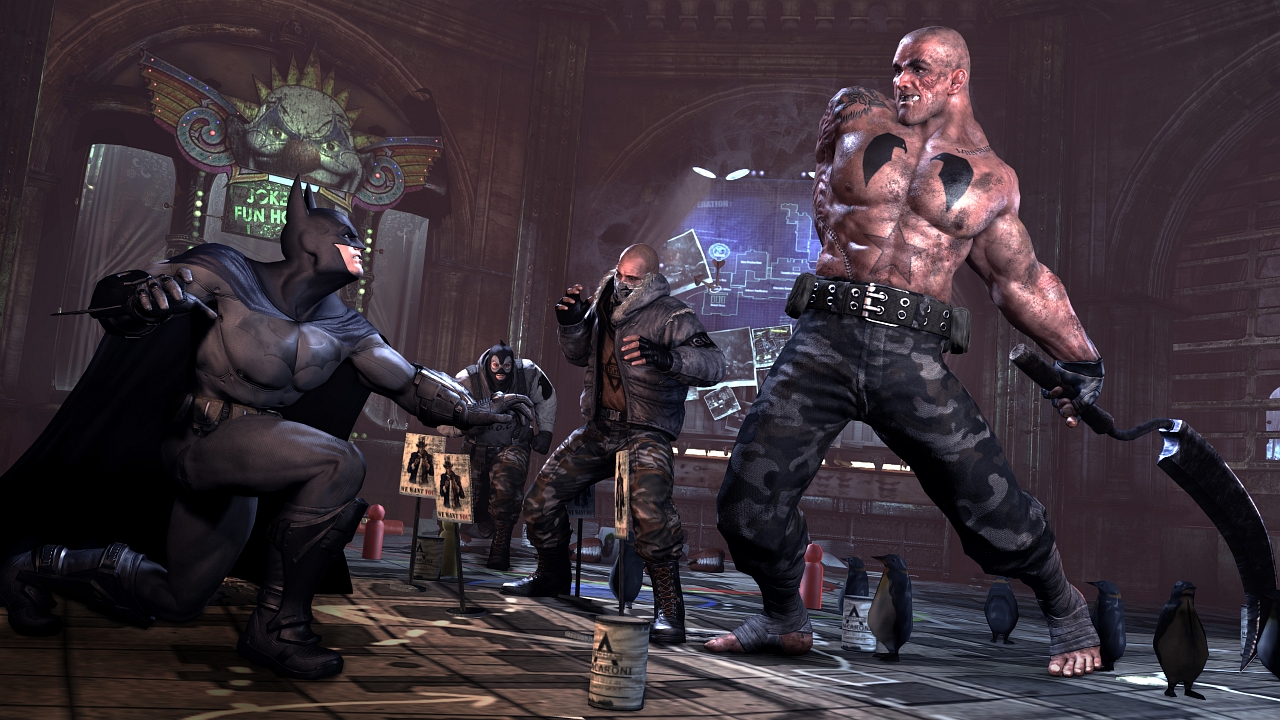
It is not a stretch to call Batman: Arkham City one of the best superhero games ever devised. It is not simply a great superhero game, but it is a great game in general. Arkham City introduced a more open world setting to players, which was an entertaining to glide and grapple across. The combat system made for battles that were seldom a chore and took some ingenuity and finesse to perfect for the developers (and to master for the players). The story of Arkham City was exciting from beginning to end, constantly having us play more extra minutes than we should have been just to see what happened next. Exploration of Arkham City was a joy to do, and the walled off dystopia held many side quests among its main missions, showcasing new characters seemingly at every turn. Batman: Arkham City successfully was the ultimate superhero experience, and we're excited to see where a new developer takes us with Batman: Arkham Origins.

53) The Legend of Zelda: Oracle of Ages/Oracle of Seasons (GBC)


We recently revisited both of these Game Boy Color Legend of Zelda games when they released on the Nintendo 3DS Virtual Console. The pair of Zelda adventures both had their own overworld gimmicks (and we don't say that in a negative way) to change how Link explored each game's respective world. For Oracle of Ages, it was transporting from the present to the past and vice versa. For Oracle of Seasons, it was cycling between the four seasons to pass environmental obstructions and progress through the game. Both games contained eight unique and well designed dungeons that were so good you wouldn't know that an outside studio made them and not Nintendo themselves. After one game was beaten, a password could be inputted into the other to continue Link's quest on the other game. Through beating both, you would be introduced to the real villain behind both game worlds' problems. If you have yet to play either Oracle of Ages or Oracle of Seasons, you are truly missing out.

52) Shadow of the Colossus (PS2)


We probably have this game listed too low on this list for a lot of PlayStation fans, but that's okay. Just know that we do love Team ICO's second PlayStation 2 effort a whole lot. While at first glance Shadow of the Colossus comes off as an action-adventure game, there are no towns or dungeons to visit, and no other enemies to take down besides the colossi within the game. Each colossi boss towers over Wander, the protagonist, and this is where Shadow of the Colossus almost reaches puzzle game levels. The tact and approach to taking down each colossi, figuring out and then exploiting their weakness(es) is what you, as the player, must do. However, the game isn't perfect, which is why we have it listed at #52. The camera and controls can be a bit clumsy, which detracts from the experience. That said, the experience that Shadow of the Colossus gives players is one that most should not go without having for themselves.

51) Final Fantasy IX (PS1)


After the two Final Fantasy games that preceded it went with a more modern approach, Final Fantasy IX went back to its roots with a more classical, medieval setting, with cartoon proportioned characters. This traditional Final Fantasy approach made those of us nostalgic for the old days of the series jiggle around with glee. Final Fantasy IX's world was a marvel to behold, offering wondrous location after location, the Active Time Battle system made it so players had to act fast or get beaten down, and the cast of characters were some of the most endearing ones of the PlayStation era. Final Fantasy IX may not be the best that Squaresoft had to offer PlayStation owners, but it certainly rings true for us as one of the better mainline installments in the series.

===

You. Us. Same day next week. We'll have ten more titles on our list of favorites (50-41 to be exact), as we hit the second half of our monumental countdown. We hope you continue to enjoy what we have to say about each game. (If not, please pretend.)

Monday, March 19, 2012

SuperPhillip's Favorite VGMs - March Madness Edition

Welcome to an all-new week here at SuperPhillip Central. As it is now customary of Mondays, it is time for SuperPhillip's Favorite VGMs. This week we have music from games like Killer7, Kirby Air Ride, and Star Ocean: The Second Story. The lineup is there, so let's get to the music.

v66. Killer7 (PS2, GCN) - Dissociative Identity


I had not heard of Suda 51 until Killer7, originally one of the Capcom Five. We know what happened with that... Killer7 was a game where you had a limited range of movement. You could only walk on specified linear paths. This is all the while gunning down temporarily invisible Heaven's Smile infected. Dissociative Identity is the credits theme of Killer7, and it is a smooth tune that is accented by an easy piano melody and a percussive series of beats.

v67. Kirby Air Ride (GCN) - Checker Knights


Masahiro Sakurai's latest game, Kid Icarus: Uprising, is set to release in North America this Friday. Today, however, we listen to a theme from his GameCube cult classic, Kirby Air Ride. The game was simplistic in its controls, but fun as all get out. Kirby Air Ride introduced a challenge wall, something that would be seen in one of Sakurai's later games, Super Smash Bros. Brawl. You would complete tasks and receive unlockables based on what task you completed. Checker Knights is one of two or so orchestrated themes in Kirby Air Ride. It is particularly peppy and lovely.

v68. The Legend of Zelda: The Minish Cap (GBA) - Minish Village


The Legend of Zelda: The Minish Cap was Capcom's final brush up with the fabled Zelda franchise. Capcom's Flagship studio would later be dissolved much like Clover Studios. Who needs quality studios when you could hand your properties off to Ninja Theory and Slant Six? I'm sure they'll do a great job with Devil May Cry and Resident Evil (this is sarcasm). The Minish Cap is a charming adventure featuring one of my favorite of Link's traveling companions, a Minish sorcerer turned talking hat, Ezlo.

v69. Star Ocean: The Second Story (PS1) - Theme of RENA


A hauntingly beautiful, sad theme for Rena, one of the two selectable main characters for Star Ocean: The Second Story (PS1) or Star Ocean: Second Evolution (PSP), Theme of RENA chimes in eerie female vocalizations. Star Ocean 2 remains one of my favorite RPGs to this day. Its combination of memorable characters, sci-fi/medieval setting, and marvelous music all add up to make one sensational game. If you have a PlayStation Portable, pick up a copy of Second Evolution, an enhanced version of The Second Story.

v70. MadWorld (Wii) - Come With It


Warning: This song contains explicit lyrics. As for everyone else, Come With It is a song by Doujah Raze who feels that they have to say their name at the beginning of every song that they contributed to the MadWorld soundtrack. I am not generally a fan of rap, but MadWorld's music gelled with me regardless. The catchy beats and the infectious rhythms add up to one unforgettable soundtrack. Add together some visceral action with it, and you have an interesting albeit violent game.

===

This week's quota of quality VGMs has been filled. Next week we will have five more themes from video games to listen to. Until then, two new reviews will be posted this week, and we might even see another installment of the SPC Mailbag. Stay tuned, SPC faithful, stay tuned!

Friday, January 6, 2012

The Legend of Zelda: The Minish Cap (GBA) Retro Review

3DS Ambassadors are able to download the following game for free via the eShop. It was listed in my Rank Up! segment in the top half of Zelda titles, so you can be rest assured that this game is good. But wait! Don't skip this review and go to the score! Read the entire thing and relive this Game Boy Advance classic as this is the first review of 2012! It's The Legend of Zelda: The Minish Cap, the only original Zelda game on Nintendo's final entry in the Game Boy line.

Big Things Come in Minish Packages


Capcom is no stranger to the Zelda franchise. Their first effort was the terrific pair of Game Boy Color titles in The Legend of Zelda: Oracle of Seasons and The Legend of Zelda: Oracle of Ages. Then they helped to co-develop the Game Boy Advance port of my favorite 2D Zelda, A Link to the Past. Flagship, the main company within Capcom that assisted in the creation of the above mentioned games, might now be defunct, but their memory lives on and continues to do so. Their final game is perhaps their most fantastic masterpiece-- forgive any hints of hyperbole-- The Legend of Zelda: The Minish Cap. This big adventure performs well on the small screen.

It is the day of the Picori Festival in Hyrule, and Princess Zelda meets with our hero Link at his home. Link's grandfather asks him to deliver a sword to the king as the prize for the festival's swordsman tournament. After seeing the sights and sounds of the festival, Link and Zelda meet up with the king and Link delivers the specially honed blade. The winner of the tournament, Vaati, arrives and uses the sword to open a box that unleashes monsters all over Hyrule. Vaati is power-hungry and turns Zelda to stone. Leaving the scene in ruins, Vaati vanishes in search of a fabled light power. Meanwhile, the clad in green boy Link agrees to search in the Minish Woods for the Picori people, small denizens of Hyrule that can only be seen by children, who can help him figure out how to restore Zelda to her natural stoneless state. It is there he meets a talking cap named Ezlo, one of the most entertaining and humorous companions Link has ever had. Ezlo was transformed into a cap by Vaati, and wants nothing more to right all of the wrongs of his former apprentice. The story is unobtrusive, charming, and delightful overall.

With evil intentions in mind, Vaati strikes while the iron's hot.

The Minish Cap follows the standard Zelda formula, so those wanting a fresh experience should look into Majora's Mask or Skyward Sword as they mix things up better. However, for a tried and true structure, you cannot go wrong with Minish Cap. The formula goes like this: you venture through an overworld finding clues on where to go next, you talk to NPCs, you do quests both optional and mandatory, and you enter treacherous dungeons full of monsters, puzzles, and traps to receive elemental pieces to power up your sword.

The main mechanic introduced to The Minish Cap is only possible thanks to the titular headgear and your faithful and ever-complaining partner Ezlo. Certain objects like tree trunks, vases, and rocks can be stood upon. A crack in the center (and the power of the Minish Cap) can shrink Link to Minish size. Formerly inaccessible areas can be reached in small form, and plenty of puzzles require you to switch between both sizes to clear obstacles and areas. You can explore the rafters of houses, pass through paths infested with Minish-sized monsters, and enter rooms too tiny for regular-sized Link. However, it is important to note that even the most normal-sized nonthreatening enemy can be dangerous in Minish form. Also, household cats don't take too kindly to the Minish people. Such prejudice!

See the world through Minish eyes.

Hyrule is divided up between many sections. There's Hyrule Town in the center of the overworld which you will be continually returning to for new items to buy, mini-games to play, and NPCs to help, the Minish Woods to the southeast, Lon Lon Ranch and Lake Hylia to the east, Castor Wilds to the southwest, Mt. Crenel to the west and northwest, Veil Falls to the northeast, and a myriad of other unique areas. Monsters such as Octoroks, Moblins, and Chu Chu call Hyrule their home, too, so take them out when necessary.

Mt. Crenel is a rugged and rocky area.

There are six dungeons total in Minish Cap, a meager amount compared to other 2D Zeldas like Link's Awakening, A Link to the Past, and the Oracle games. However, in this instance it is quality over quantity. Forgive the cliched phrase. You will be trekking inside the deepest of dungeons, searching for keys, looting treasure chests, fending off monsters, solving puzzles-- some of which are spread out among more than one room, and battling bosses to the death. As is customary for every Zelda, there are small keys that unlock doors, big keys that open the doors leading to the boss, treasure maps that show the layout of the dungeon, compasses that reveal the locations of treasure chests and where the boss resides, and treasures, from rupees to important items. These items include things like the Cave of Pacci that flips certain enemies and objects over on their back, the Flame Lantern that sets flammable objects on fire and lights torches, the Gust Jar that blows away dust on floors and spider webs as well as sucks up enemies and objects (one puzzle has you sucking up a grounded mushroom to fling you to the other side of a chasm), and Roc's Cape that is similar to Link's Awakening's Roc's Feather, but it allows you to glide after leaping into the air. Meanwhile, puzzles consist of small things like clearing out a room full of enemies to larger challenges like hitting every switch with one well-timed swing of your sword.

At the conclusion of every dungeon comes a boss encounter. These are the meanest of the mean and the deadliest of the deadly when it comes to enemies. Some fights are large versions of normal enemies, but to a Minish-sized hero, they're gigantic. As is tradition, the item you acquire in the boss's dungeon is generally needed to fight the crooked creature you are facing off against. For instance, the first battle has Link taking on a giant Chu Chu. With the Gust Jar found in the dungeon, you can suck up the slime at the base of the boss. This causes the green Chu Chu to lose its balance and topple over, setting you up to slash it repeatedly with your sword before it stands back up and the process starts all over again.

From abnormally large Chu Chus to
shelled monstrosities, Link has got it rough.

Most dungeons award you with an elemental fragment (Earth, Wind, Fire, and Water). When returned to the Elemental Sanctuary in Hyrule Castle, your sword gets upgraded. You can then stand on specially marked panels, charge up your blade, and produce copies of Link. These copies are paramount for pushing large blocks out of the way that a lone Link couldn't do by himself. Additionally, you earn a full Heart Container for beating the dungeon's boss. This ups your health by one heart.

Speaking of which, there are an abundance of Heart Container pieces hidden throughout Hyrule. Collecting four gives you an increase to your heatlh. Some are found sitting in caves and dungeons, some are handed out by NPCs for helping them out, and some are unlocked by performing a Kinstone Fusion. Kinstone Fusions are the main side quest of The Minish Cap. Throughout Link's journey you'll no doubt come across Kinstone pieces (either blue, red, or most commonly and found dropped by monsters, in blades of grass, or in bushes, green). When you come across an NPC with a bubble over their head, you can press the L button to start a fusion. You must piece together two Kinstone fragments that fit together to complete a fusion. The effects are immediate. Sometimes a cave or a passageway will open, leading to a Heart Container or other treasure, sometimes a certain NPC will react differently, sometimes a golden enemy (a faster, harder version of a normal enemy) will spawn in a select location, while other times a treasure chest will pop up in the overworld for you to find and open. It's an enjoyable side quest, and there are nearly 200 different fusions to complete.

Another side quest consists of collecting Mysterious Shells, found in treasure chests, purchased in Hyrule Town's shop, and discovered in the wild through cutting down grass and bushes. These can be traded in the figurine shop. Each time you get a new figurine (these are dioramas, characters, monsters, bosses, etc.), the probability of you earning a new figurine the next time to pull the switch to receive one goes down unless you pay more Mysterious Shells. Perhaps a certain goodie will occur if you collect all 130+ figurines...

While we're talking about certain goodies, The Legend of Zelda: The Minish Cap is certainly a nice looking game. The 2D art style looks well, the environments are detailed and pleasing to glance at, and the characters mesh well with the world. Everything runs at a steady framerate as well. The music of Minish Cap is full of memorable melodies, remixed classic tunes, and a mass amount of original works. It may sound tinny to some, but I found it to be quite spectacular all-in-all. Patches of voice work in the form of grunts, yells, and gibberish are natural parts of Zelda games, and that tradition continues with this title, too.

Unfortunately for Link there is no booze in that barrel.

The Legend of Zelda: The Minish Cap is a tremendous portable entry in this illustrious franchise. There is little in the way of filler, the dungeons are remarkably designed, there is an extensive amount of side content in the form of Kinstone Fusions, figurine collecting, Heart Container finding, and sword ability upgrades, the characters (especially Ezlo) are charming, and the world is a joy to explore. If you own a Game Boy Advance, The Minish Cap is a must-have game for your collection. If for some reason this game is to ever be for sale on the eShop's Virtual Console service, this should be one of your definite downloads. Just like viewing Hyrule between regular-sized and small Link, your enjoyment of this hand-held Zelda will all be a matter of perspective.

[SuperPhillip Says: 9.5/10]

Wednesday, June 29, 2011

The Top Ten Original Game Boy Advance Games

Yesterday, in celebration of ten years of the Game Boy Advance, we took a brief glimpse at five of the best GBA ports in the portable's mighty collection. Today we're taking a look at original titles might they be brand-new journeys or remakes. Let's get it started then!

10) Pokemon Ruby and Sapphire Versions


A new generation of Pokemon brought with it a cavalcade of new collectible Pokemon, a new region to explore, all-new trainers and Elite Four to battle, and new towns to rest up and conquer gyms at. Don't forget bonus material like legendary Pokemon and the aquatic islands which could be visited both above and below sea level.

9) Mega Man Zero


A brand-new Mega Man franchise was born on the Game Boy Advance, and it brought with it a high difficulty. If one managed to perform admirably on missions, they could inherit the boss abilities of the various bad guys Zero took on. A simple mission structure where Zero could choose which objectives to tackle went along with this game making it feel like a whole 'nother Mega Man game of which it technically was.

8) Sonic Advance


Sonic had meandering scores when it came to his 3D outings on the Dreamcast and Gamecube. Sonic Team opted to create the first 2D Sonic title in years exclusively for the Game Boy Advance (although this game would be ported to multiple devices afterward including the Nokia N-Gage). Fast-paced action, run and jump platforming, and a myriad of colorful and well-designed zones marked this above-average return-to-form for Sonic the Hedgehog.

7) Metroid Fusion


The first Metroid in a few years off from a decade's time was Metroid Fusion bringing new gameplay elements including a horror portion of the game. When the ultra-powerful SA-X Samus arrived, you better devise an escape plan ASAP. The virus was stronger than regular Samus Aran, and could vaporize her in seconds. The fact that it could show up anywhere only added to the tense atmosphere of the game. Though the game was more linear than past efforts, there was still plenty of adventure for Samus in Metroid Fusion.

6) Golden Sun


One of the few original RPGs for the Game Boy Advance, I chose Golden Sun over its sequel, The Lost Age, as I found the original to be a more harrowing experience. It was easier to follow with less babble and unnecessary text, a hallmark for Camelot RPGs. The battle scenes were breathtaking for the time, the in-dungeon puzzles were brilliant and clever, and the music is once again a compelling masterpiece thanks to Motoi Sakuraba's efforts. If there's but one traditional RPG to play on the GBA, make it Golden Sun.

5) Advance Wars


War. Uh. Good god, y'all. What is it good for? In the world of Advance Wars, apparently everything. You have children as commanding officers for heaven's sake, put in charge of leading men out to die if not taken seriously. This strategy RPG takes the colorful Nintendo charm and adds the brutality of war to make one addicting and complex experience. With multiple troop types, COs and CO powers, maps, and modes, Advance Wars is a game with a napalm's worth of replay value.

4) Mario & Luigi: Superstar Saga


The very first Mario & Luigi was an interesting experiment. In the overworld one button controlled Mario while the other was in charge of Luigi. The same concept occurred in battle where timed jumps or strikes would negate more or bestow more damage. Even the dialogue poked fun at several cliches and tropes of the Mario franchise. Then there's Fawful which is one of the wackiest characters ever seen in a game period. This isn't your ordinary RPG. Far from it, and it's a much better game for that.

3) Castlevania: Aria of Sorrow


Soma Cruz is the lead hero in this Castlevania/Metroidvania title. By defeating enemies sometimes they would drop new abilities for Soma to possess. Who doesn't like clobbering baddies with a beyond-from-this-world scythe or deck of cards? If you've played a Metroid game, you should be familiar with this type of game. As you learn new abilities, you can access newer portions of the main castle. Not only the best Castlevania on the Game Boy Advance, just one of the great games of all time on the system in general.

2) Metroid Zero Mission


The original Metroid was a frustrating experience. There was no map, areas all looked the same, and the game was punishingly difficult. Nintendo opted to changed all of that with a remake entitled Metroid Zero Mission. Adding in new content such as beastly bosses, power-ups, and intriguing post-game content where a suitless Samus must escape from the Space Pirates, this Metroid is one of the best in the series' illustrious history.

1) The Legend of Zelda: The Minish Cap


Developed by the non-defunct Flagship of Capcom fame, The Legend of Zelda: The Minish Cap was an adventure full of things to do, places to see, items to collect, and baddies to beat down. While the game was but five or six dungeons long, the overworld itself was as complicated as any dungeon offering tons of exploration. The addition of Kinstones to link up with the NPCs of the game added even more replay value and time added to your playtime. The shrinking mechanic of the game was ingenious and opened up the game considerably. One of the more looked down upon Zelda games, this one happens to be one of my favorites.

===

Tomorrow we're continuing our celebration of all things GBA with a retro review! Put your helmets on, snap your seat belts as we're going to have a bumpy go of it. Stay tuned, followers!