Tuesday, September 10, 2013

Rayman Legends (Wii U, PS3, 360, PC, Vita) Review

Last Tuesday Rayman Legends finally released in North America. We've been waiting for the game for a long time. Is it worth the wait? Phil has the review.

Rayman Rising


Originally planned to be a Wii U exclusive, Rayman Legends was delayed from its late February release date and given an August (for Europe) and September (for North America) one. The purpose of this delay was to make the game multiplatform. This decision was made after Ubisoft's biggest exclusive launch title for the Wii U, ZombiU, sold horribly to the system's user base. Whether or not that decision was smart is up in the air. Regardless, as a lover of platformers, I finally got my hands on Rayman Legends, and it certainly lived up to my personal hype.

As a 2D platformer, Rayman Legends doesn't bog down the experience with a heavy-handed story. No, the game's plot is very simple. Blue characters known as Teensies have been kidnapped by a group of creatures known as the Nightmares. Murfy is called upon to wake Rayman, Globox, and the others out of their usual sleeping routine to save all of the Teensies across five main worlds.

That'd wake even the deepest sleeper!
Rather than have a world map like in Rayman Origins, Rayman Legends has a series of rooms that house a plethora of paintings that Rayman can leap into. As more and more Teensies are saved, more paintings open up. You need not go in order of levels as long as you recover enough Teensies, as worlds and their levels are unlocked by how many Teensies you have.

Rayman Legends constantly throws new gameplay styles, mechanics, and challenges at the player. One level you'll be floating in the wind while shooting down enemies, another you'll be running from a rampaging luchadore, and then there's a level where you'll swim stealthily through the water, dodging the trap lasers and lights that wish to cook Rayman's goose.

"I'm sorry I said wrestling was fake!
Stop chasing after me already!"
At the end of the each world is a seriously fun boss battle. The combination of platforming, evading and taking down each boss makes for an insanely good time. After each boss, there is a musical level. What these include are dynamic songs that perfectly sync with your platforming. The first level, Castle Rock, uses a Rayman-ified cover of Black Betty that has enemies popping their heads out on cue with the music. They're glorious and highly creative levels that are an absolute blast to play.

Just don't put Rayman in a headlock!
In addition to the all-new levels, which there are certainly plenty, by scratching Lucky Tickets you can unlock many classic Rayman Origins levels recreated in the Legends graphical style. Not all levels make a return, but the majority of them do.

What's old is new(er) in these
Back to Origins levels.
Each level, both new and from Origins, contains an amount of Teensies that are ordinarily well hidden throughout. The majority of Rayman Legends's levels contain ten Teensies to find, two of which are found in bonus rooms. These bonus rooms contain a type of platforming challenge that you need to survive to obtain the Teensie in question. As stated, the more Teensies you save, the more levels you unlock. (There are 700 Teensies total.)

Captive Teensies are located in
every corner of each level in Legends.
Legends is an overall easier game than its predecessor, Rayman Origins. Part of this is due to the abundance of checkpoints that the game gives you. In Origins, checkpoints would generally only come from entering doorways. In Legends, checkpoints come after almost every obstacle. Additionally, after successfully completing a bonus room, the Teensie you rescued will give you a heart (i.e. an extra hit to take).  These are great alterations for beginning players to have a more accessible game to enjoy, but veteran players might feel like the game's difficulty is too dumbed down in comparison to Origins.

That's not to say all of Rayman Legends is a cakewalk. No, no. There are some later levels that will definitely have your palms sweating profusely. Add in Invasion levels (currently missing in the PlayStation Vita version, but they will be patched in for free), which have you making a mad dash through a hazard and enemy-filled obstacle course to save three Teensies before they are rocketed away, make for optional content that is truly challenging. I shouldn't forget about the last world, another optional task, that features 8-bit versions of the game's musical levels. Though, these are sometimes hard for all the wrong reasons. I won't spoil any more.

Beat an Invasion level in under forty
seconds to rescue all three Teensie captives.
Perhaps the most asked about feature of Rayman Legends is the Murfy levels of gameplay. Obviously, the game and these levels were built with the Wii U GamePad in mind. If playing by your lonesome, you control Murfy, interacting with objects to allow the AI player to progress. These are things like switches, levers, tilting the controller to move platforms or entire rooms around, and so forth. In the beginning levels, the AI is pretty smart. Later levels will have you getting frustrated until you realize the intended path the AI will always take. Unlike a human player, the AI doesn't do much in the way of platforming improvisation. It has a set intelligence for certain sections of the game, and if you don't follow its logic, you will make the AI die. In cooperative play, which for the Wii U version supports five players, one player uses the Wii U GamePad to control Murfy and interact with the scenery while the other players go through the levels normally.

Murray can tickle these larger foes
while Globox smacks them into defeat.
The ports of the Wii U version behave differently. In the Murfy levels, you are in control of both the character and Murfy. Murfy will come across objects automatically, and all you have to do is press a button to activate them. It's definitely not as fun as the Wii U version, but if you're playing the game solo, it might be a preferred method of play. Ultimately, for the (subjectively) best single-player experience, I would go with the PlayStation 3 and Xbox 360 versions, while cooperative players should definitely invest in the Wii U version.

If you get tired of going through the campaign's levels, or you've taken the 10-15 hours to complete the game, there are always challenges to try out. Each day there is a new challenge to try out. Doing well in them rewards you with a trophy: either bronze, silver, gold, or platinum. However, you're always competing with the world. The top percentage of players earn a platinum, the next percentage a gold, and so on. This means that you could have earned a gold trophy during the afternoon only to get bumped to a silver trophy when other players beat your time or score for that given challenge. There are four unique challenges at any one time: a daily challenge, a weekly challenge, an expert daily challenge, and an expert weekly challenge.

Rayman and friends have a more floatiness (that's not a word, but work with me here) to their jumping. It's nowhere near as problematic as LittleBigPlanet, but it does take some getting used to. Unlike Rayman Origins, Rayman and company already have their whole move set unlocked from the get-go. All the wall jumps, slaps, and glides are their for your amusement and platforming prowess.

Not such a great shot, are you?
Rayman Legends is like a cartoon come to life. Rayman Origins had a bit of a flat feeling to it. Legends corrects that by having great contrast on characters via shading. Speaking of characters, they are incredibly expressive in both sight and sound. Levels are visual treats, too, offering a stunning amount of eye candy and beauty. This is all while running without a hint of slowdown. The music in Rayman Origins was phenomenal, and Christophe Heral delivers a sensational soundtrack yet again for Rayman Legends. There's tense tracks, happy-go-lucky tracks, and a great number of them are highly memorable.

Someone give this dragon a breath mint.
Overall, Rayman Legends is without a doubt one of the better 2D platformers that has released in the past decade. Almost everything about it is coated with excellence and charm. The Murfy levels might not be everyone's personal preference, but they do work well the majority of the time. With Grand Theft Auto V and other big titles looming this fall and holiday season, it's a shame Rayman Legends will probably get overlooked. Still, if you're searching for a platformer that rivals and sometimes even surpasses Nintendo's New Super Mario Bros. U, then Rayman Legends will be a satisfying and worthwhile addition to your game library, regardless of which system you get it on.

[SPC Says: 9.0/10]

Monday, September 9, 2013

SuperPhillip Central's Favorite VGM - The Dreamcast Anniversary Edition

Today is the anniversary of the Sega Dreamcast. To celebrate, we have zero themes from Dreamcast games. Yeah... we didn't realize that the Dreamcast was having its birthday until today, so we already had some video game themes planned for today. Still, happy birthday, Sega Dreamcast. The memories you've given us will not soon be forgotten. Neither will these video game tracks chosen for today either!

v456. Pikmin 2 (GCN) - Awakening Wood


The long awaited Pikmin 3 finally released on the Wii U last month, but we're going to focus on the second game in the franchise. Pikmin 2 was everything that one would expect from a true sequel-- it was bigger, it was better, and it got rid of that thirty days to beat the game hassle. The music continued to complement each area well, as evidenced by Awakening Wood.

v457. Mario Kart DS (DS) - Delfino Square


If you've read SuperPhillip Central, you know our love for Mario Kart DS and its Delfino Square. We love city courses, after all. The race through alleyways, by the pier, and around the main fountain will forever be ingrained into our memories. Oh, and the song that plays during it isn't too shabby either!

v458. Mega Man (NES) - Cut Man Stage


All series have to start somewhere, and with the Blue Bomber that game was Mega Man on the NES and Famicom. Cut Man's level is a nice introduction for beginners. It doesn't have much in the way of danger or difficulty like the Guts Man and Ice Man stages possess. With the stage comes this memorable melody and track that has stood the test of time.

v459. The Magical Quest Starring Mickey Mouse (SNES) - Snow Valley


One of our favorite Disney games from the past is The Magical Quest Starring Mickey Mouse. We enjoyed changing costumes in each of the different lands of the game, such as Magician Mickey and Firefighter Mickey. The music is pure classic Capcom, and it fills us with such immense nostalgia. That's not the only reason for us liking this track-- it's just really chill, no?

v460. Kingdom Hearts II (PS2) - Fantasia alla marcia for piano


Kingdom Hearts II culminates with this closing credits theme, fabulously crafted by the terrific Yoko Shimomura. Fantasia alla marcia for piano features piano, a full orchestra, and a tremendous choir. It is the perfect way to cap off Sora and friends' adventure to save the world.

Thursday, September 5, 2013

Top Ten Platforms Released in the Past Twenty Years

EDGE Magazine recently released a list of the "best" consoles from the past twenty years. We definitely did not agree with their order of the consoles. The list did give us inspiration for our own article. "Hey, let's just take EDGE's idea and do it SuperPhillip Central-style!" That's exactly what we did. Many gaming platforms, both handheld and home, have been released in the past twenty years. Our list does its best to encompass our favorites and give our rationale as to why we have placed them where we have. From 1993 to 2013, here are our picks for the greatest gaming platforms to have released during that time. What are your favorites?

10) Dreamcast


The Dreamcast was an innovator in the online field, including a modem that was built into the system and allowing online play. One of the greatest titles available to play through the internet with friends was the fantastic Phantasy Star Online. The Dreamcast had a bounty of other brilliant titles, including the game that made cel-shading popular, Jet Grind Radio, Sonic Adventure 1 and 2, Skies of Arcadia, Power Stone 1 and 2, Crazy Taxi, Soulcalibur, Samba de Amigo, Shenmue, and many more. The Dreamcast was when Sega's internal studios seemingly could do no wrong. A system that was truly ahead of its time, Sega's swan song console, the Dreamcast, kicks off our countdown.

9) Xbox 360


Microsoft's second attempt at taking marketshare from Sony was their Xbox 360. However, there are several things that hold the Xbox 360 from greatness. For one, the initial systems were all prone to overheating, leading to the infamous Red Ring of Death fiasco. Next, Microsoft's first-party studios do not hold a candle to those of its competitors. Third, while competitors had free online play, the Xbox 360 held online multiplayer behind a paywall, and you were still bombarded with ads. That said, the Xbox 360 pioneered achievements, brought forth the best online experience available on home consoles (though, as stated, for a price), and was a third-party paradise. While the Xbox 360 started off well with exclusives (games like Rare's output, Halo 3, Tales of Vesperia, Lost Odyssey, etc., Microsoft seemingly abandoned their target market with the appearance of Kinect, throwing scraps to the user base that made the Xbox 360 so successful. You can sort of see why we're not amazingly keen on the Xbox One yet, can't you?

8) GameCube


While obtaining the title of third place in the sixth generation of gaming consoles, coming a few million shy of Microsoft's Xbox, Nintendo's GameCube was still highly profitable for the company. That said, the GameCube was a fantastic little system that actually started out with a grand amount of third-party support, even getting some exclusives from Capcom in the form of many Resident Evil titles and the then-exclusive Capcom Five. It also gained support from Sega who put longtime rival to Mario, Sonic the Hedgehog, on a Nintendo system for the first time ever. Nintendo's output wasn't too shabby. Sure, we don't really care for Super Mario Sunshine (but we do appreciate its willingness to change up the gameplay by a good margin), Nintendo gave us The Legend of Zelda: The Wind Waker, Super Smash Bros. Melee, Metroid Prime 1 and 2, Mario Kart: Double Dash!!, and F-Zero GX. The publisher also delivered new franchises such as Shigeru Miyamoto's Pikmin, Custom Robo, Animal Crossing (for the first time in the West at least), Chibi Robo, and more. The Nintendo GameCube might have been the only sixth generation home console without a dedicated online system, and third-parties might have shied away from the system later in its life, but overall, the system is a remarkable reminder of Nintendo making a system that competed in power with its competition.

7) PSP


Despite being outsold by the Nintendo DS, the PlayStation Portable, Sony's first foray into handheld gaming sold a respectable amount. It's an amount that many platforms would love to reach worldwide. There's a good reason for it selling well, too. It had the games that appealed to many. Well, mostly pirates in the West, but what are you gonna do. Regardless, the PSP had an abundance of titles in many genres, featuring many classic and all-new series. For classics you had Final Fantasy, Ratchet & Clank, Mega Man, Sonic the Hedgehog, Star Ocean, Tactics Ogre, Metal Gear, God of War, Hot Shots Golf, Kingdom Hearts, Ys, and the list goes on. All-new series that either debuted that generation or exclusively on PSP included LittleBigPlanet, Resistance, Patapon, Jeanne D'Arc, Gods Eater, LocoRoco, and the one that made the system do extremely well in Japan, Monster Hunter. Some claim the PSP's lineup is made up of a variety of ports, but as you can see, there's tons of original content, one of the greatest collections of RPGs on any platform in the seventh generation of systems, and games aplenty to play.

6) Nintendo 64


The Nintendo 64 isolated a lot of third-parties from Nintendo due to its continued reliance on expensive cartridges. That notwithstanding, the Nintendo 64, all droughts disregarded, delivered some of the most memorable games of all time. Nintendo and Rare's relationship was never better, and this allowed said droughts to not occur as often. Games like Banjo-Kazooie, GoldenEye 007 (which made it clear that first-person shooters could work somewhere besides PCs), Perfect Dark, Jet Force Gemini, Blast Corps, Conker's Bad Fur Day, Diddy Kong Racing, Donkey Kong 64, among others. The Nintendo 64 was also a local multiplayer fan's dream come true, offering four controller inputs for games like Mario Kart 64, Diddy Kong Racing, Bomberman 64, Mario Golf, Star Fox 64, Super Smash Bros., GoldenEye 007, and a load of other titles. The Nintendo 64 gave us some of our most cherished gaming memories, and it delivered some spectacular titles, showed how 3D gaming should work with iterations of Super Mario and The Legend of Zelda transferring well into three-dimensions splendidly. It was a choice of getting in or getting out, and we definitely were happy to get in with the Nintendo 64.

5) PlayStation


Many third-parties abandoned the Nintendo ship when the company revealed it would be using cartridges for its new system. These companies flocked to Sony's new machine, the PlayStation. Without a doubt the most varied software lineup for the fifth generation of gaming consoles, the PlayStation possessed games from a multitude of genres, platformers with games like Crash Bandicoot, Spyro the Dragon, Tomba!, and Mega Man; a paradise of RPGs with games like Final Fantasy VII, Chrono Cross, Xenogears, Final Fantasy Tactics, Dragon Warrior VII, and Star Ocean: The Second Story; and a myriad of other genres. As stated many companies abandoned ship with Nintendo, and their series followed. Capcom gave Sony Mega Man and created an all-new series called Resident Evil. Squaresoft gave PlayStation owners Final Fantasy and the sequel to Chrono Trigger. Konami introduced the Metal Gear series to Sony console owners with Metal Gear Solid. All-in-all, the original PlayStation was a tremendous way for Sony to enter the gaming console market space, containing games for the widest audience possible.

4) Wii


There is no denying the impact of this next console. The Wii introduced millions of new gamers across the world to our hobby, and contrary to popular belief, most Wii owners continued to purchase games other than Wii Sports. Just look at attach ratios for proof. Regardless, competing against the HD twins that shared a lot of games with one another, the Wii had a much more varied lineup of titles. Sure, it still had the shooter genre represented, but the main draw of the Wii was Nintendo's own software, which featured some of the company's best efforts. Super Mario Galaxy 1 and 2 are easily some of the best games ever created. The Legend of Zelda: Skyward Sword introduced competent motion controls for combat, justifying their use totally. Mario Kart Wii sold incredible amounts, New Super Mario Bros. Wii brought cooperative multiplayer to 2D Mario, Super Smash Bros. Brawl was a love letter to Nintendo fans, Punch-Out!! was a beaut to look at and play, Donkey Kong Country Returns made us giddy with excitement, and Metroid Prime 3: Corruption showed us that pointing and shooting with the Wii Remote was much better (to us) than old dual analog controls. In addition to all of the games both popular and overlooked, Nintendo implemented a Virtual Console, a collection of retro titles from the original NES to the Nintendo 64. The Wii deserved its sales without a doubt, as it had the games, it had the content, and it had titles that appealed to everyone.

3) PlayStation 3


Our favorite console of the seventh generation of the video game console cycle, the PlayStation 3 had a very rocky start. A price announcement of five hundred and ninety-nine dollars will do that to a system. Despite this, the PlayStation 3 has eventually gone on to become a must-have system for any self-respecting gamer. This generation alone Sony's first-party studios have turned the dial up to 11 in their output, creating many new IPs like Resistance, LittleBigPlanet, Uncharted, The Last of Us, and inFamous. They also continued support for past franchises, like Ratchet & Clank, God of War, Killzone, Twisted Metal, and Sly Cooper. Third-party support was excellent as well, giving the majority of the same games that the Xbox 360 received. Then, there's the online, allowing players to freely play multiplayer with friends and total strangers. With the optional PlayStation Plus, Sony has delivered an amazing value by giving subscribers cloud storage and free digital games every month. Is it any wonder why the PlayStation 3 is our favorite current gen console?

2) Nintendo DS


It's purely coincidental that the top two systems on our list are also the best-selling ones of all time. Nonetheless, that isn't our reason for picking both of them. In the case of the Nintendo DS, it contained some of the greatest games we've ever played. It also has an immensely varied library, offering platformers, RPGs, action games, puzzle games, sports, and more. The addition of two screens, with the second being a touch screen, was ingenious, and gave us many wonderful gameplay sessions. This was used to great benefit in games like Kirby Canvas Curse, Yoshi Touch and Go, both Legend of Zelda games, Soul Bubbles, Metroid Prime Hunters, Meteos, or used as something as simple as a map in Mario Kart DS. The Nintendo DS gained a lot of third-party support, bringing their heavy hitters to the system. The handheld was also Nintendo's first (read: archaic) attempt at an online infrastructure of some type. Despite the method being a headache, we cannot help but still love the Nintendo DS, purely for its amount of fantastic software for both beginning gamers and veterans to our hobby.

1) PlayStation 2 


The greatest console released in the past twenty years might not surprise you. It's the PlayStation 2, a console which sales made its competition look like student films in comparison. It also possessed a hugely diverse lineup of software. The system had everything-- epic RPGs like Final Fantasy X, Dragon Quest VIII, Star Ocean: Till the End of Time, and more; platformers like Ratchet & Clank, Jak and Daxter, and Sly Cooper; action games like God of War, Shadow of the Colossus, Onimusha, and Devil May Cry; and sports games like Madden, Hot Shots Golf Fore!, Sega Soccer Slam, and FIFA. The system gained hallmark titles like Grand Theft Auto III, Gran Turismo 3, and the aforementioned God of War. To say that the PlayStation 2 was popular would be an understatement. Its successor has been out for years, yet the PS2 is still receiving new games. It's a system that just won't call it quits, and frankly, it doesn't need or have to. It deserves to have as much time in the sun as possible. It's that masterful of a system.

Wednesday, September 4, 2013

Best Boss Battles in Gaming History - Part Nine

WARNING: SPOILERS AHEAD!

Bosses-- some say they are a gaming relic that are best left forgotten. Sure, for a game that is narrative-based or attempting to mirror a Hollywood film, they really don't serve a proper purpose. However, many genres like platformers, RPGs, action games, among others have boss battles that are absolutely well placed and properly executed. Best Boss Battles in Gaming History celebrates these, having reached its ninth part, and as always, we list five of our favorite fights against some of the mightiest of tyrants. This edition's selections include bosses from Metroid Prime, inFamous, and Teenage Mutant Ninja Turtles IV: Turtles in Time, for starters.

Tuesday, September 3, 2013

Most Overlooked PlayStation 3 Games - Part Seven

It's been over a year since we've looked at some of the more overlooked titles in the PlayStation 3's very impressive arsenal of games. As always, SuperPhillip Central desires to showcase some games that didn't get their due time in the sun. These next five games are ones that did not sell to their potential, were not talked about a lot, or were simply dismissed by critics or the gaming public at large. If you're ready to read, then we're ready to spotlight some overlooked games! Read on, dear friends!

PlayStation All-Stars Battle Royale


There were plenty of rumors surrounding Sony having a developer create its own rival to Nintendo's popular Super Smash Bros. series. At the time, Sony neither confirmed nor denied these rumors, simply saying that don't comment on rumor or speculation. The game was finally revealed on an episode of GTTV in April of last year. The final product released that November to sales that were disappointing at best. It's a shame, too, as PlayStation All-Stars Battle Royale isn't a mere imitator to Super Smash Bros.; it has its own identity, with characters using special moves called Supers to score points by obliterating opponents with them. Sure, the roster of characters wasn't the best, but the amount of love for Sony fans and faithfuls alike was incredibly apparent.

Sonic & All-Stars Racing Transformed


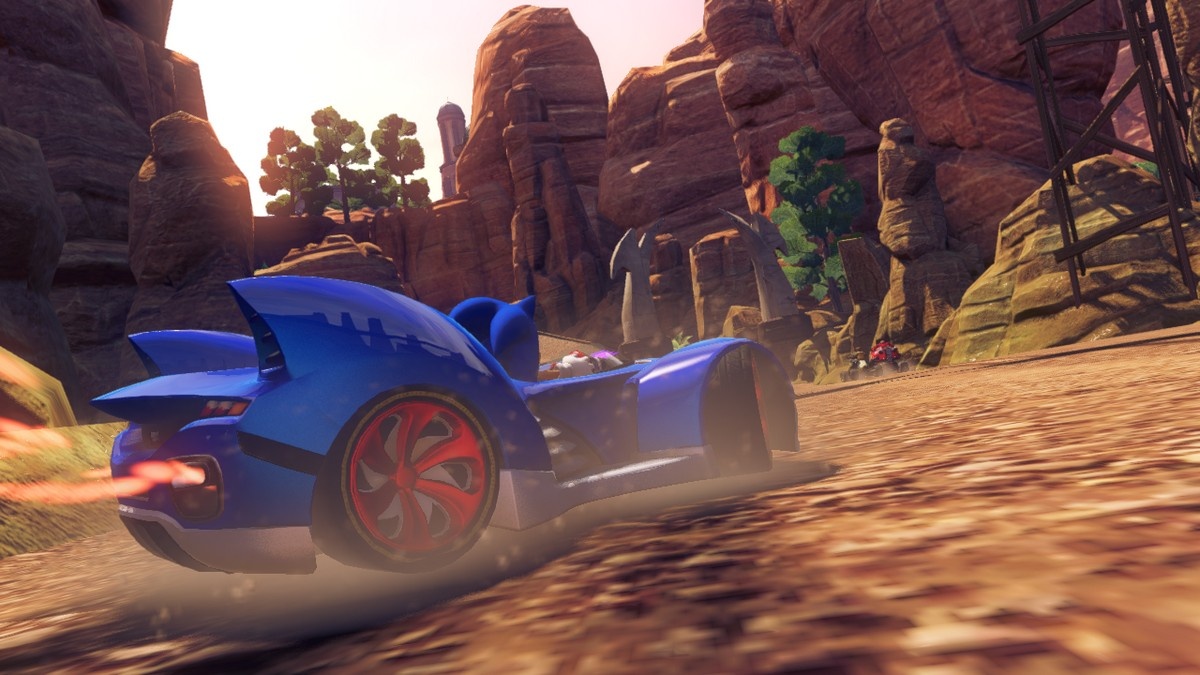
The original Sonic & SEGA All-Stars Racing is one of our favorite kart racers of the generation, easily beating out Mario Kart. Its sequel, Sonic & All-Stars Racing Transformed, released last year with lots of critical claim. We here at SuperPhillip Central still prefer the original, as that game didn't have as many annoying glitches or problems with knowing where to go on a given track, but there's no denying that the game was a fun, exhilarating ride. The initial sales were sluggish, prompting the game to quickly drop towards budget price. It's unfortunate, as Sonic & All-Stars Racing Transformed is definitely worth full price, as it's a heavily competent kart racer.

LittleBigPlanet Karting


Oriented more towards children and young teens, LittleBigPlanet Karting found a following with the LBP community, having them create some insanely good tracks with the in-game track creator. The creator allowed players to customize their own tracks to almost OCD-levels of great detail. The actual kart racing was something that a lot of players could take or leave, being difficult even on the so-called Easy Mode. Unfortunately, many PlayStation 3 owners did not have a need for speed with Sackboy and the crew, leaving LittleBigPlanet Karting to be discounted quite quickly.

Anarchy Reigns


As Platinum Games's latest project, The Wonderful 101, has released in several territories already, why not look back at one of their projects from earlier this year. Anarchy Reigns was the follow-up to the Nintendo Wii's MadWorld, offering a mayhem-filled multiplayer mode for online fun. The game had two storylines to follow, with each character's tale overlapping with the other until the final conclusion. Sadly, like MadWorld before it, Anarchy Reigns failed to find an audience on the platforms it was released on, the PlayStation 3 and Xbox 360. It seems like Jack Cayman and the gang are forever fated to fall through the cracks and languish on retail shelves.

Nier


Released to middling reviews, Nier is actually a rather excellent action-RPG that forgoes the need to have a weird-garbed teenager as the primary protagonist and instead goes with a middle-aged man. His quest was to find a cure for the disease his young daughter was suffering the ill effects of. Along the way he explored a fully traversible world, battled monsters of all shapes and sizes, and participated in an immense number of optional side quests. While selling relatively well in its homeland of Japan, Nier failed to capture the attention of Western audiences, leading the game to be quickly discounted or taken off shelves entirely. Those who do take the plunge with Nier will find a journey that is quite unlike anything they have experienced.