In the vein of HD re-releases like The Wind Waker and Twilight Princess, The Legend of Zelda: Skyward Sword receives an HD version, though this time on the Nintendo Switch. With similar motion control to the Wii original, plus the ability to use full button controls depending on one's preference and Switch model, there are two ways to play this entry. That's probably not all of the enhanced features available in The Legend of Zelda: Skyward Sword HD, either, but we'll have to wait to find out more leading up to this remaster's release on July 16th.

Showing posts with label wii. Show all posts
Showing posts with label wii. Show all posts
Wednesday, February 17, 2021

Tuesday, December 3, 2019
One & Done: Games Without Sequels - Part Three
After a year's absence, "One & Done" is back, talking about those games that didn't receive sequels of any kind--whether spiritual or straight-out sequels. There could be multiple reasons for this: a game just didn't sell well, isn't marketable anymore, or the creator/development team simply wanted to move on to something else. We have games from a variety of eras on this edition of "One & Done", so sit back, get comfortable, and prepare yourself for a trip down memory lane.
For a look at SPC's previous two editions of "One & Done", check out part one and part two.
Tearaway (PS4, Vita)


Media Molecule became well known for a plethora of PlayStation fans for its work on the LittleBigPlanet series and have gone on to work on an even more ambitious creative gaming suite with Dreams. However, in between these two projects came a game that didn't receive as much buzz by virtue of being on the PlayStation Vita. That game was Tearaway, a charming 3D platformer that utilized the Vita hardware in glorious and ingenious ways. From using the rear touch screen to raise up platforms from below to utilizing the camera to take a picture, thus using the image to colorize a papercraft creature in need of color, Tearaway remains one of the best games to feature the Vita's various knickknacks and tools. A PlayStation 4 version would release--Tearaway Unfolded--adding new content and retooling the controls to work with the PS4's DualShock. Here's hoping that some day Sony brings back Tearaway in some shape or form.
The Bouncer (PS2)


Squaresoft's first game for the PlayStation 2 was little more than a title to get its proverbial feet wet with development on the system, and while the end result, The Bouncer, was gorgeous game for its time, it left a lot to be desired. The main point of contention critics and players of this 3D brawler was that the game was ridiculously short. In fact, the generous helping of cutscenes fattened the length of the game up tremendously, and without those, you were left with a quick romp for a full priced game. Still, The Bouncer was something of a project that I would have loved to have seen expanded upon, fleshed out more, and made into a fuller experience. This obviously did not happen as Square's attention understandably turned to its Final Fantasy games, its cash cow of sorts. That said, there's always a part of me that wonders what could and would have been had The Bouncer been more than a mere tech demo under the guise of a full game.
Code Name: S.T.E.A.M. (3DS)


If one were to give an elevator pitch to Intelligent Systems' Code Name: S.T.E.A.M., it could be given as such: "Historic and storybook figures like Abraham Lincoln and the Lion from the Wizard of Oz take on an alien threat in a game with Valkyria Chronicles-like combat." Of course, if one were to give such a pitch, hopefully the person they were giving the pitch to wasn't drinking a cup of coffee, as they would be sure to spit it out in surprise. It's quite an odd premise, but Intelligent Systems managed to make it work with tactical gameplay, focusing on a steam mechanic that is exhausted as players move and attack enemies. Efficiently managing their steam to an effective degree is all the difference between a mission's success and a total failure. Battles were unpredictable and kept players on their toes with their stiff challenge, making for one "One & Done" game that makes this strategy RPG fan lament that we won't be seeing a sequel any time soon.
Dewy's Adventure (Wii)


We conclude this edition of "One & Done" with a trio of Wii titles beginning with Konami's Dewy's Adventure, a delightful fixed camera 3D platformer with a unique control scheme. In Dewy's Adventure, players held the Wii Remote NES controller-style and tilted it forward, backward, leftward and rightward to move the water droplet protagonist through eight worlds of unique challenges and perils. Dewy himself could take on new forms by being frozen or being exposed to heat to solve puzzles and take down enemies that were otherwise invincible in his normal dewdrop form. Dewy's Adventure entered and exited the gaming sphere like morning dew, only to have what little hype it had evaporate into nothingness as many looked past the game. While Konami's other all-new Wii-centered exclusive, Elebits, managed to find enough success for a sequel--though on the Nintendo DS--Dewy's Adventure, unfortunately, did not.
Zack & Wiki: Quest for Barbaros' Treasure (Wii)


Despite struggling with the motion controls (and sometimes to the point of utter frustration) in this next game on this list, Zack & Wiki: Quest for Barbaros' Treasure brought with it a charming art style, set of characters, and gorgeous, colorful art style that suited the weak Wii hardware quite well. The game itself was a puzzle adventure game where players needed to find and use tools correctly in order to complete each level, and some of these tools required the use of the Wii Remote's motion and gyro control functionality. Most of the time these worked well, but when they didn't--woo boy! Regardless, part of why I'm devoting three spaces on this edition of "One & Done" to Wii games is because I'm nostalgic for that era of experimental gaming--damning to hell the poorly implemented motion controls that plagued the system notwithstanding. It was an era where we saw some really "out there" ideas and games put forth by big publishers--something in this HD era that is mostly left for indies nowadays (though still appreciated).
We Love Golf! (Wii)


Speaking of Capcom and loosely tied with Zack & Wiki is We Love Golf! Nintendo didn't develop a Mario Golf game for the Wii/DS generation, so instead, its usual golf game partner Camelot turned to Capcom to create We Love Golf! While the assortment of golfers were vanilla and generic as all get out, one could unlock Capcom-inspired costumes from such series like Street Fighter, Resident Evil, Phoenix Wright, and yes, Zack & Wiki. The actual golfing was inspired, and while players didn't swing the Wii Remote like an actual club, a swing motion was required to drive, putt, and otherwise hit the ball through the game's eight 18-hole courses and three unique par 3 courses. I spent so much time with We Love Golf!, and it's a shame that the series didn't continue, though sales show the obvious reason why it didn't. At least we'll always have Mario Golf to look forward to with Camelot and Nintendo.
For a look at SPC's previous two editions of "One & Done", check out part one and part two.
Tearaway (PS4, Vita)

Media Molecule became well known for a plethora of PlayStation fans for its work on the LittleBigPlanet series and have gone on to work on an even more ambitious creative gaming suite with Dreams. However, in between these two projects came a game that didn't receive as much buzz by virtue of being on the PlayStation Vita. That game was Tearaway, a charming 3D platformer that utilized the Vita hardware in glorious and ingenious ways. From using the rear touch screen to raise up platforms from below to utilizing the camera to take a picture, thus using the image to colorize a papercraft creature in need of color, Tearaway remains one of the best games to feature the Vita's various knickknacks and tools. A PlayStation 4 version would release--Tearaway Unfolded--adding new content and retooling the controls to work with the PS4's DualShock. Here's hoping that some day Sony brings back Tearaway in some shape or form.
The Bouncer (PS2)


Squaresoft's first game for the PlayStation 2 was little more than a title to get its proverbial feet wet with development on the system, and while the end result, The Bouncer, was gorgeous game for its time, it left a lot to be desired. The main point of contention critics and players of this 3D brawler was that the game was ridiculously short. In fact, the generous helping of cutscenes fattened the length of the game up tremendously, and without those, you were left with a quick romp for a full priced game. Still, The Bouncer was something of a project that I would have loved to have seen expanded upon, fleshed out more, and made into a fuller experience. This obviously did not happen as Square's attention understandably turned to its Final Fantasy games, its cash cow of sorts. That said, there's always a part of me that wonders what could and would have been had The Bouncer been more than a mere tech demo under the guise of a full game.
Code Name: S.T.E.A.M. (3DS)


If one were to give an elevator pitch to Intelligent Systems' Code Name: S.T.E.A.M., it could be given as such: "Historic and storybook figures like Abraham Lincoln and the Lion from the Wizard of Oz take on an alien threat in a game with Valkyria Chronicles-like combat." Of course, if one were to give such a pitch, hopefully the person they were giving the pitch to wasn't drinking a cup of coffee, as they would be sure to spit it out in surprise. It's quite an odd premise, but Intelligent Systems managed to make it work with tactical gameplay, focusing on a steam mechanic that is exhausted as players move and attack enemies. Efficiently managing their steam to an effective degree is all the difference between a mission's success and a total failure. Battles were unpredictable and kept players on their toes with their stiff challenge, making for one "One & Done" game that makes this strategy RPG fan lament that we won't be seeing a sequel any time soon.
Dewy's Adventure (Wii)


We conclude this edition of "One & Done" with a trio of Wii titles beginning with Konami's Dewy's Adventure, a delightful fixed camera 3D platformer with a unique control scheme. In Dewy's Adventure, players held the Wii Remote NES controller-style and tilted it forward, backward, leftward and rightward to move the water droplet protagonist through eight worlds of unique challenges and perils. Dewy himself could take on new forms by being frozen or being exposed to heat to solve puzzles and take down enemies that were otherwise invincible in his normal dewdrop form. Dewy's Adventure entered and exited the gaming sphere like morning dew, only to have what little hype it had evaporate into nothingness as many looked past the game. While Konami's other all-new Wii-centered exclusive, Elebits, managed to find enough success for a sequel--though on the Nintendo DS--Dewy's Adventure, unfortunately, did not.
Zack & Wiki: Quest for Barbaros' Treasure (Wii)


Despite struggling with the motion controls (and sometimes to the point of utter frustration) in this next game on this list, Zack & Wiki: Quest for Barbaros' Treasure brought with it a charming art style, set of characters, and gorgeous, colorful art style that suited the weak Wii hardware quite well. The game itself was a puzzle adventure game where players needed to find and use tools correctly in order to complete each level, and some of these tools required the use of the Wii Remote's motion and gyro control functionality. Most of the time these worked well, but when they didn't--woo boy! Regardless, part of why I'm devoting three spaces on this edition of "One & Done" to Wii games is because I'm nostalgic for that era of experimental gaming--damning to hell the poorly implemented motion controls that plagued the system notwithstanding. It was an era where we saw some really "out there" ideas and games put forth by big publishers--something in this HD era that is mostly left for indies nowadays (though still appreciated).
We Love Golf! (Wii)


Speaking of Capcom and loosely tied with Zack & Wiki is We Love Golf! Nintendo didn't develop a Mario Golf game for the Wii/DS generation, so instead, its usual golf game partner Camelot turned to Capcom to create We Love Golf! While the assortment of golfers were vanilla and generic as all get out, one could unlock Capcom-inspired costumes from such series like Street Fighter, Resident Evil, Phoenix Wright, and yes, Zack & Wiki. The actual golfing was inspired, and while players didn't swing the Wii Remote like an actual club, a swing motion was required to drive, putt, and otherwise hit the ball through the game's eight 18-hole courses and three unique par 3 courses. I spent so much time with We Love Golf!, and it's a shame that the series didn't continue, though sales show the obvious reason why it didn't. At least we'll always have Mario Golf to look forward to with Camelot and Nintendo.
Sunday, September 8, 2019
Even the Big "N" Has Some Big Duds: The Worst Games from Nintendo
Even the greatest of titans in the gaming industry let loose the occasional stinkers. Perhaps there was a more elegant way of putting that, but at any rate, for the next few weeks, SuperPhillip Central is eyeing the big three first parties of gaming and taking a look at their (very much subjectively speaking) "worst" games.
We begin on this Sunday evening by examining a handful of the blemishes on Nintendo's record, whether it be as a developer, co-developer, or publisher. For the longest-running player in the industry that still makes consoles and games, you can bet we'll be revisiting Nintendo someday. However, for now, let's take a glimpse at some less than favorably viewed games from the Big "N" and its partners.
Animal Crossing: Amiibo Festival (Wii U)
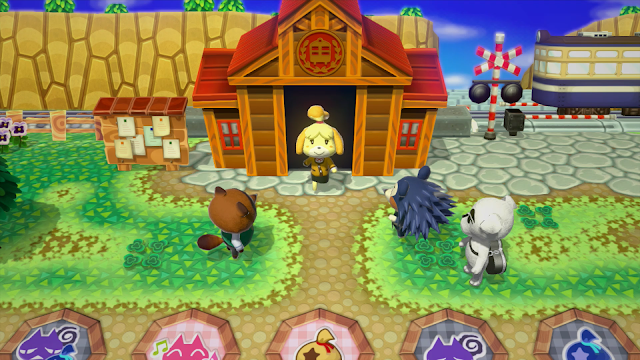
Nintendo was in a very bad way with the Wii U. Not only did the system fail to capitalize on its predecessor's massive success, but most of Nintendo's developers realized something that most developers had realized many years prior: HD development is tough! The sluggish, drought-heavy release schedule that the Wii U saw brought back memories of the Nintendo 64, but it was somehow even worse than those days! The holiday season of 2015 was a time of heavy thirst for Wii U owners, and in Nintendo's desperate struggle to have a decent series of releases for the Nintendo faithful, it served this dud as well as the next game on this list to Wii U owners.
Amiibo (technically, amiibo in all lowercase for proper brand marketing) was extremely popular for Nintendo with its launch of these figures that were made of various Nintendo-related characters. For some, the ability to have data on a figure be read by the Wii U, 3DS, and now Switch, made for some clever unlocks and implementations. For others, amiibo is merely a form of physical DLC that locks content behind figures.

Nowhere did the usage of amiibo leave more of a bad taste in people's mouths than with Animal Crossing: Amiibo Festival, which takes the wholesome and highly adorable world of Animal Crossing and turns it into a board game. Incidentally, you could spell the "board" in "board game" B-O-R-E-D, because that's what Amiibo Festival was--an incredibly boring game meant to squeeze more money out of consumers to purchase amiibo figures. The level of interactivity in Amiibo Festival was the complete opposite of something like Mario Party. There's plenty of sitting around, waiting for something interesting to happen. Perhaps the most interesting part of Amiibo Festival is that it is a great cure for insomnia.
Mario Tennis: Ultra Smash (Wii U)

For a while now, the duo of Nintendo and Camelot has struggled to create a stirring and riveting Mario Tennis together. Mario Tennis Open was an enjoyable romp, but its use of Chance Shots (which many argued made matches play out more like games of Simon Says) annoyed a good portion of players. The first HD entry in the Mario Tennis series excited lots of potential players... until information began trickling out about the depth (or lack thereof) regarding the game.
Mario Tennis: Ultra Smash has the mechanics of an excellent tennis game. The oft-criticized Chance Shots were placed in an optional mode, replaced with the standard tennis that fans of the Mario Tennis franchise came to love throughout the years. So, while the gameplay was almost better than ever, what stopped Mario Tennis: Ultra Smash from being a--pardon me for this lazy pun--smashing success?

Quite simply, Mario Tennis: Ultra Smash had the content of a $15-$20 game but was a full priced $60 entry in the franchise. The amount of modes was lackluster at best (and even that is being charitable), and the most prominent example of the lack of content in Ultra Smash was that there was but one stadium total in the game. Every tennis match took place here, and the only changeable option was the court type. A desperate Nintendo is not necessarily a great one, as evidenced by many of the Wii U games on this list.
Mario Party Advance (GBA)

Back in 2005, the Game Boy Advance was a successful portable for Nintendo, bringing with it Super Nintendo-esque visuals (and enough SNES ports to make it a second coming of Nintendo's 16-bit system at the very least). However, aside from the copious amounts of Super Nintendo classics making a repeat appearance but this time in portable form, Nintendo also brought with it new franchises and fresh takes on familiar franchises. Mario Party was one of those.

However, Mario Party Advance was far from the best transposition of Mario Party to a portable. It wouldn't be until the Nintendo DS's Mario Party DS that the familiar formula would be implemented well. Still, with Mario Party Advance, Nintendo and developer Hudson attempted to provide a Mario Party for the solitary player with its single-player campaign. Unfortunately, a party for one is as much fun as it sounds, as Mario Party Advance featured a bland story mode, showcased by one board, NPCs that loved to chit and chat endlessly, non-inventive mini-games, and quick tedium setting in. While points are given for originality, as we've seen with Mario Party 9 and 10, originality only goes so far if the actual Mario Party game isn't really entertaining.
Hey You, Pikachu! (N64)

As we've seen, not even Mario is immune to having some stinkers in his catalog of games. While we move on from the portly plumber, we look towards another behemoth gaming and multimedia franchise--Pokemon! With such a sprawling series of diverse characters and creatures, it's no wonder why The Pokemon Company decided to stretch out from the traditional Pokemon RPGs and try out other genres. Some have been great successes, but as we'll see with these next three entries on this list: plenty are just plain Poke-bombs.

Hey You, Pikachu! was one of the first home console Pokemon spin-offs. While Pokemon Stadium and Pokemon Snap successfully spun off the franchise in stellar directions, Hey You, Pikachu! decidedly did not. While the concept of earning Pikachu's trust, playing with the series mascot, and giving voice commands seemed clever at first, Hey You, Pikachu! isn't the deepest game. Most players found themselves getting bored with the shallowness of the game, including a middle school me.
Pokemon Dash (DS)

Racing games are generally one of the first genres that mascot-driven game franchises spin off towards, so it was a long time coming for Pokemon to get its need for speed. Unfortunately, Pokemon Dash gave less the need for speed and more the need for pain medication for the throbbing hand cramps and eventual arthritis you'd get from playing the game.
An atypical racing game, Pokemon Dash required players to vigorously swipe the DS stylus across the touch screen to speed your Pokemon up as they crossed different relay points on the open race course. Yes, you'd get those aforementioned hand cramps, but you'd also have insult added to injury by seeing that Nintendo DS touch screen of yours scratched to heck and back from merely playing Pokemon Dash as instructed!
Pokemon Rumble U (Wii U)

One last Pokemon entry to skewer over an open flame! Before amiibo, Nintendo and The Pokemon Company put out GameStop-exclusive NFC (near-field communication) figures based off of Pokemon. These were very rudimentary in their designs, and meant to look just like the basic toy models seen in the Pokemon Rumble franchise. While I enjoyed the WiiWare dungeon-crawling and button-mashing real-time battles of Pokemon Rumble, the Wii U entry basically simplified a game that was already simple enough.

The succinctly named Pokemon Rumble U took out the simplistic dungeon-crawling and just had arena-based battles, where your toy Pokemon of choice took on a parade of Pokemon. That was about the extent of the game's depth. The insult to injury was essentially being required to spend money on these physical pre-amiibo prototypes to enjoy--and enjoying the game wasn't a certainty due to how basic the gameplay was--seeing your toy "come to life" in the game. Pokemon Rumble U failed to entice many players, and for the rather crooked money system it incorporated, that's a good thing.
Steel Diver (3DS)

Steel Diver?! More like... Sleep Diver! Ha! ...Okay, I'll stick to analyzing and talking about games and not so much worrying about a stand-up comic career. At any rate, Steel Diver was a brand-new franchise from Nintendo that brought with it slow-paced submarine gameplay where players used the touch screen to spin a knob to guide their piloted submarine around 2D levels. The sluggish pace of Steel Diver combined with the need for precision with not-so-precise controls made for a frustrating at some times, and just plain yawn-inducing other times, experience.
Steel Diver would release in North America as part of Nintendo's anemic launch lineup for the Nintendo 3DS, and the game would reach bargain bins relatively quickly--and that's something first-party Nintendo titles seldom do in the first place--reach bargain bins in the first place. Fortunately, the Steel Diver franchise would get a chance at redemption with the much more enjoyable first-person perspective online multiplayer combat game, Steel Diver: Sub Wars, also for the Nintendo 3DS.
Spirit Camera: The Cursed Memoir (3DS)

Nintendo is a game company that enjoys trying out new ideas and innovating. Some of these ideas work out well and advance the medium, or at least make for a great deal of fun. Other times, the ideas come off as ones that had the best of intentions, but not quite the tech or the execution to back them up. Spirit Camera: The Cursed Memoir is one of these games, co-developed by Koei Tecmo.

Using the augmented reality feature of the Nintendo 3DS seemed like a cool enough idea, using it to point the camera at a "book" that came packaged with the game to reveal ghosts to battle in real time. However, this was definitely an instance where that aforementioned notion that the tech and execution weren't quite there rears its ugly head. The Nintendo 3DS's camera was one of low quality, and even in the best of lighting conditions, the experience of tracking down and battling AR ghosts made for a severely frustrating experience with constant interruptions and the loss of tracking. Even as someone who got Spirit Camera: The Cursed Memoir for free, the time I invested into this failed experiment of a game will never be refunded to me.
Devil's Third (Wii U)

It's always a good sign (see: it's never a good sign) for a game to be in development hell for years before finding a publisher, and then that publisher essentially releasing the game out of obligation with no fanfare whatsoever. At least instead, Nintendo of America pretty much buried the release of Devil's Third by sending out no review copies and shipping out an extremely (heavy emphasis on that word) limited amount of physical copies to store shelves.

Technical issues were abundant in the final Wii U version, as was the amount of absolutely clumsy and clunky gameplay. From a game directed by the creator of Dead or Alive and the man who brought Ninja Gaiden back from the grave, Tomonobu Itagaki, Devil's Third is a story of abject failure in every sense of the word. It's a game that was better off not existing, at least not with the help of Nintendo, and serves as blight on the big N's publishing record.
Urban Champion (NES)

We're going back in time with a blast from the past. Urban Champion is an atypical fighting game where two players duke it out with the goal of hitting the other into a sewer manhole. Really, the only fascinating things about Urban Champion are: 1) Its historic value as Nintendo's first one-on-one competitive fighting game, and 2) How many times Nintendo has found value in re-releasing it, despite how poor and shallow it is. Games on the NES aren't exactly the deepest games around, especially in the genre of fighting games, so when you consider that Urban Champion is considered too shallow for even the NES, then you can get an idea of just how poor the game truly is. There are plenty of NES classics from Nintendo's illustrious history to look back fondly on; Urban Champion is not one of those.
We begin on this Sunday evening by examining a handful of the blemishes on Nintendo's record, whether it be as a developer, co-developer, or publisher. For the longest-running player in the industry that still makes consoles and games, you can bet we'll be revisiting Nintendo someday. However, for now, let's take a glimpse at some less than favorably viewed games from the Big "N" and its partners.
Animal Crossing: Amiibo Festival (Wii U)

Nintendo was in a very bad way with the Wii U. Not only did the system fail to capitalize on its predecessor's massive success, but most of Nintendo's developers realized something that most developers had realized many years prior: HD development is tough! The sluggish, drought-heavy release schedule that the Wii U saw brought back memories of the Nintendo 64, but it was somehow even worse than those days! The holiday season of 2015 was a time of heavy thirst for Wii U owners, and in Nintendo's desperate struggle to have a decent series of releases for the Nintendo faithful, it served this dud as well as the next game on this list to Wii U owners.
Amiibo (technically, amiibo in all lowercase for proper brand marketing) was extremely popular for Nintendo with its launch of these figures that were made of various Nintendo-related characters. For some, the ability to have data on a figure be read by the Wii U, 3DS, and now Switch, made for some clever unlocks and implementations. For others, amiibo is merely a form of physical DLC that locks content behind figures.

Nowhere did the usage of amiibo leave more of a bad taste in people's mouths than with Animal Crossing: Amiibo Festival, which takes the wholesome and highly adorable world of Animal Crossing and turns it into a board game. Incidentally, you could spell the "board" in "board game" B-O-R-E-D, because that's what Amiibo Festival was--an incredibly boring game meant to squeeze more money out of consumers to purchase amiibo figures. The level of interactivity in Amiibo Festival was the complete opposite of something like Mario Party. There's plenty of sitting around, waiting for something interesting to happen. Perhaps the most interesting part of Amiibo Festival is that it is a great cure for insomnia.
Mario Tennis: Ultra Smash (Wii U)

For a while now, the duo of Nintendo and Camelot has struggled to create a stirring and riveting Mario Tennis together. Mario Tennis Open was an enjoyable romp, but its use of Chance Shots (which many argued made matches play out more like games of Simon Says) annoyed a good portion of players. The first HD entry in the Mario Tennis series excited lots of potential players... until information began trickling out about the depth (or lack thereof) regarding the game.
Mario Tennis: Ultra Smash has the mechanics of an excellent tennis game. The oft-criticized Chance Shots were placed in an optional mode, replaced with the standard tennis that fans of the Mario Tennis franchise came to love throughout the years. So, while the gameplay was almost better than ever, what stopped Mario Tennis: Ultra Smash from being a--pardon me for this lazy pun--smashing success?

Quite simply, Mario Tennis: Ultra Smash had the content of a $15-$20 game but was a full priced $60 entry in the franchise. The amount of modes was lackluster at best (and even that is being charitable), and the most prominent example of the lack of content in Ultra Smash was that there was but one stadium total in the game. Every tennis match took place here, and the only changeable option was the court type. A desperate Nintendo is not necessarily a great one, as evidenced by many of the Wii U games on this list.
Mario Party Advance (GBA)

Back in 2005, the Game Boy Advance was a successful portable for Nintendo, bringing with it Super Nintendo-esque visuals (and enough SNES ports to make it a second coming of Nintendo's 16-bit system at the very least). However, aside from the copious amounts of Super Nintendo classics making a repeat appearance but this time in portable form, Nintendo also brought with it new franchises and fresh takes on familiar franchises. Mario Party was one of those.

However, Mario Party Advance was far from the best transposition of Mario Party to a portable. It wouldn't be until the Nintendo DS's Mario Party DS that the familiar formula would be implemented well. Still, with Mario Party Advance, Nintendo and developer Hudson attempted to provide a Mario Party for the solitary player with its single-player campaign. Unfortunately, a party for one is as much fun as it sounds, as Mario Party Advance featured a bland story mode, showcased by one board, NPCs that loved to chit and chat endlessly, non-inventive mini-games, and quick tedium setting in. While points are given for originality, as we've seen with Mario Party 9 and 10, originality only goes so far if the actual Mario Party game isn't really entertaining.
Hey You, Pikachu! (N64)

As we've seen, not even Mario is immune to having some stinkers in his catalog of games. While we move on from the portly plumber, we look towards another behemoth gaming and multimedia franchise--Pokemon! With such a sprawling series of diverse characters and creatures, it's no wonder why The Pokemon Company decided to stretch out from the traditional Pokemon RPGs and try out other genres. Some have been great successes, but as we'll see with these next three entries on this list: plenty are just plain Poke-bombs.

Hey You, Pikachu! was one of the first home console Pokemon spin-offs. While Pokemon Stadium and Pokemon Snap successfully spun off the franchise in stellar directions, Hey You, Pikachu! decidedly did not. While the concept of earning Pikachu's trust, playing with the series mascot, and giving voice commands seemed clever at first, Hey You, Pikachu! isn't the deepest game. Most players found themselves getting bored with the shallowness of the game, including a middle school me.
Pokemon Dash (DS)

Racing games are generally one of the first genres that mascot-driven game franchises spin off towards, so it was a long time coming for Pokemon to get its need for speed. Unfortunately, Pokemon Dash gave less the need for speed and more the need for pain medication for the throbbing hand cramps and eventual arthritis you'd get from playing the game.
An atypical racing game, Pokemon Dash required players to vigorously swipe the DS stylus across the touch screen to speed your Pokemon up as they crossed different relay points on the open race course. Yes, you'd get those aforementioned hand cramps, but you'd also have insult added to injury by seeing that Nintendo DS touch screen of yours scratched to heck and back from merely playing Pokemon Dash as instructed!
Pokemon Rumble U (Wii U)

One last Pokemon entry to skewer over an open flame! Before amiibo, Nintendo and The Pokemon Company put out GameStop-exclusive NFC (near-field communication) figures based off of Pokemon. These were very rudimentary in their designs, and meant to look just like the basic toy models seen in the Pokemon Rumble franchise. While I enjoyed the WiiWare dungeon-crawling and button-mashing real-time battles of Pokemon Rumble, the Wii U entry basically simplified a game that was already simple enough.

The succinctly named Pokemon Rumble U took out the simplistic dungeon-crawling and just had arena-based battles, where your toy Pokemon of choice took on a parade of Pokemon. That was about the extent of the game's depth. The insult to injury was essentially being required to spend money on these physical pre-amiibo prototypes to enjoy--and enjoying the game wasn't a certainty due to how basic the gameplay was--seeing your toy "come to life" in the game. Pokemon Rumble U failed to entice many players, and for the rather crooked money system it incorporated, that's a good thing.
Steel Diver (3DS)

Steel Diver?! More like... Sleep Diver! Ha! ...Okay, I'll stick to analyzing and talking about games and not so much worrying about a stand-up comic career. At any rate, Steel Diver was a brand-new franchise from Nintendo that brought with it slow-paced submarine gameplay where players used the touch screen to spin a knob to guide their piloted submarine around 2D levels. The sluggish pace of Steel Diver combined with the need for precision with not-so-precise controls made for a frustrating at some times, and just plain yawn-inducing other times, experience.
Steel Diver would release in North America as part of Nintendo's anemic launch lineup for the Nintendo 3DS, and the game would reach bargain bins relatively quickly--and that's something first-party Nintendo titles seldom do in the first place--reach bargain bins in the first place. Fortunately, the Steel Diver franchise would get a chance at redemption with the much more enjoyable first-person perspective online multiplayer combat game, Steel Diver: Sub Wars, also for the Nintendo 3DS.
Spirit Camera: The Cursed Memoir (3DS)

Nintendo is a game company that enjoys trying out new ideas and innovating. Some of these ideas work out well and advance the medium, or at least make for a great deal of fun. Other times, the ideas come off as ones that had the best of intentions, but not quite the tech or the execution to back them up. Spirit Camera: The Cursed Memoir is one of these games, co-developed by Koei Tecmo.
Using the augmented reality feature of the Nintendo 3DS seemed like a cool enough idea, using it to point the camera at a "book" that came packaged with the game to reveal ghosts to battle in real time. However, this was definitely an instance where that aforementioned notion that the tech and execution weren't quite there rears its ugly head. The Nintendo 3DS's camera was one of low quality, and even in the best of lighting conditions, the experience of tracking down and battling AR ghosts made for a severely frustrating experience with constant interruptions and the loss of tracking. Even as someone who got Spirit Camera: The Cursed Memoir for free, the time I invested into this failed experiment of a game will never be refunded to me.
Devil's Third (Wii U)

It's always a good sign (see: it's never a good sign) for a game to be in development hell for years before finding a publisher, and then that publisher essentially releasing the game out of obligation with no fanfare whatsoever. At least instead, Nintendo of America pretty much buried the release of Devil's Third by sending out no review copies and shipping out an extremely (heavy emphasis on that word) limited amount of physical copies to store shelves.

Technical issues were abundant in the final Wii U version, as was the amount of absolutely clumsy and clunky gameplay. From a game directed by the creator of Dead or Alive and the man who brought Ninja Gaiden back from the grave, Tomonobu Itagaki, Devil's Third is a story of abject failure in every sense of the word. It's a game that was better off not existing, at least not with the help of Nintendo, and serves as blight on the big N's publishing record.
Urban Champion (NES)

We're going back in time with a blast from the past. Urban Champion is an atypical fighting game where two players duke it out with the goal of hitting the other into a sewer manhole. Really, the only fascinating things about Urban Champion are: 1) Its historic value as Nintendo's first one-on-one competitive fighting game, and 2) How many times Nintendo has found value in re-releasing it, despite how poor and shallow it is. Games on the NES aren't exactly the deepest games around, especially in the genre of fighting games, so when you consider that Urban Champion is considered too shallow for even the NES, then you can get an idea of just how poor the game truly is. There are plenty of NES classics from Nintendo's illustrious history to look back fondly on; Urban Champion is not one of those.
Sunday, January 29, 2017
Need for Speed: Nitro (Wii) Retro Review
Sunday is this week's kickoff of SuperPhillip Central content, and with it we see a retro review. The announcement of Mario Kart 8 Deluxe to the Nintendo Switch saw the site developing a vested interest in arcade racing games. Last week, we took a look at Pac-Man World Rally, a kart racer. Now, we look at a different kind of racer with this retro review of the Wii version of Need for Speed: Nitro.
Stylistic street racing meets the Wii with great results.

With its lack of power compared to the HD twins, the Xbox 360 and PlayStation 3, third party developers were tasked with creating different versions of their popular franchises for Nintendo's Wii hardware. Some of these experiments turned out horribly, but others turned out quite well. Such was the case with the Need for Speed franchise. Instead of focusing on realism, Need for Speed: Nitro focused on stylistic arcade action, making for a racing game that burned some serious rubber.
Career mode offers the most satisfying experience for solo players, delivering three classes of cars, each with their own challenges, around five world cities like Rio, Dubai, and Singapore. Each city possesses a selection of challenges in them ranging from traditional circuit races against the AI, elimination racers where after every 30 seconds the racer in last gets eliminated until there is one car left, time trials, drift challenges, and special traffic camera challenges where the goal is to drive as fast as possible through speed traps. All races have stars to earn, and these unlock even more Career mode events as well as new customization parts for your rides. The circuit and elimination races have up to five stars to earn (three for placement in races, one for beating a race's best lap time, and one for earning enough style points through drifting, drafting other racers, boosting, and "owning it" or remaining in first place).
 |
| Races in Need for Speed: Nitro are adrenaline-inducing experiences. |
"Owning It" not only gives you a good amount of style points, but it paints the track and environments in your car's color as well as emblem for an amazing and astoundingly cool effect. It gives incentive to stay in first place as well as allowing you to brag to your friends when competing in multiplayer, which unfortunately never received online play of any kind. Though, a silver lining is that you can play the Career mode with up to three other friends, which makes it a lot more exciting than it already is.
The five cities in Need for Speed: Nitro each feature two tracks apiece. These have you drifting through long turns, speeding through the city streets, and many have notable standout moments such as riding along the tops of shipping yard containers for a shortcut, launching from a ramp into a construction site, and passing through parking garages. Each track usually sports up to two shortcuts, and these are marked on the map on the side of the screen, and each lap generally takes about a minute to complete. Despite the decent track variety, you might grow sick of racing on the same ten tracks since the Career mode's plentiful challenges make you race on them ad nauseum.
 |
| The various locales and tracks to race on are highly varied. |
It wouldn't be a Need for Speed game without some police chasing down your naughty street racing self, and the boys in blue are certainly up to the challenge in Need for Speed: Nitro. Many races have police cruisers that chase after racers disobeying the rules of the road. A new twist here is the ability to drive through badge pickups which allow you to stick the cops on an opposing racer, or if you're in first place, it allows you to draw less heat to yourself. With a five star warning on you, cops can become insanely aggressive, running directly into you, plowing you into a wall, and can stall your progress immediately due to their large Hummer-like cruisers. This can be very frustrating during certain races.
In addition to badge pickups, there are also wrench ones that automatically repair your vehicle. As your vehicle takes damage from other racers, the police, or through mistakenly running into traffic or crashing into walls, the available space in your nitro boost bar will lessen. At maximum damage, not only will you not be able to pull off a nitro boost, but your car's max speed will be limited, so always being on the look out for repair pickups is paramount to winning later, more difficult races.
 |
| There's no such thing as sunshine slowdown in this rush hour. |
Need for Speed: Nitro sports an impressive array of customizable vehicles, over 30 licensed vehicles in all, from Ford to Chevy. The amount of customization is appreciated, allowing you to alter the color of your car through one of dozens of different color combinations as well as spraying the car with various pre-made emblems or your own custom one. It adds a degree of creativity and a personal touch to your vehicle, which is really cool. Each vehicle has its own set of stats in categories like speed, acceleration, drifting, handling, and defense, and in Career mode, you earn money to buy new vehicles to add to your garage.
Nitro also sports a wide amount of available control options, such as the Wii Remote and Nunchuk, the Wii Wheel or Wii Remote by itself for motion-controlled driving (fun for easier races, but not as precise as necessary for harder ones), and the GameCube controller. Perhaps the most novel one is the ability to play with the Wii Remote in one hand, twisting the remote to make turns.
Of course, all the control options in the world don't matter if Need for Speed: Nitro's cars all handled poorly. Thankfully, this is far from the case. Nitro's cars feel sensational to control, offering precise turning, cornering, and handling. Drifting is next to effortless, just require the player to hold down a button while turning the car. The only real problem with drifting is that the button to do so is the same as braking. If you're going below a certain speed, your car will brake instead of entering into a drift, which can quite the frustration in a heated race.
 |
| Drifting feels smooth, though if you're not driving fast enough, you can enter into a brake instead. |
As stated, the Wii is obviously much weaker hardware when compared to both its competitors at the time, the Xbox 360 and PlayStation 3. Because of this, instead of going for a realistic approach to the visuals, EA went for a stylized one. Cars and characters have a fantastical degree to them, sporting a cartoon-like art style that isn't nearly as serious as the HD twins' version of Need for Speed. This is actually pretty pleasant to the eye, mixing realism and highly stylized art to tremendous effect. The game also runs at a steady clip, so feel free to feel your need for speed to the fullest. On the sound side, you get a funky and rock-filled soundtrack of licensed music. There are about ten songs total, and they cycle through enough so you don't get bored of them too quickly.
 |
| Feeling the need for speed along the Dubai coast. |
Need for Speed: Nitro is an underrated arcade racer to add to the lineup of wonderful Wii games. It might not have had the online of Mario Kart Wii or ExciteBots: Trick Racing, but it does still have superb arcade handling and gameplay, stellar stylized visuals, and enough content to keep those with a need for speed coming back for more.
[SPC Says: B]
Tuesday, August 25, 2015
Underrated Games With Even More Underrated Soundtracks - Part One
I do my best to listen to the suggestions of the sizable (at least more than I thought there would be seven years ago when I started this site) reader base of SuperPhillip Central. Frequent commenter CM30 let me know of an idea for a series of articles that he desired to see on the site. Well, here it is!
Weekly, usually on Mondays, SuperPhillip Central shares five of its favorite video game music tracks. The list is quickly approaching 1,000 songs! Anyway, while I do cover relatively unknown songs and games at times, I've never made a habit out of putting those relatively unknown and/or underrated games with great soundtracks into their own article. Until now. This series of articles is dedicated to those of us who love video game music and to those underrated gems with even more underrated soundtracks. After you've taken a look at the first batch of underrated games and soundtracks, why not suggest your own in the comments?
LEGO City Undercover (Wii U)


What I consider to be the very best LEGO game by far from Tt Games, LEGO City Undercover on the Wii U is essentially a Grand Theft Auto-Lite game. Instead of delving into criminal actions for personal gain, you play as Chase McCain who goes, appropriately enough, undercover into the seamy underbelly of the LEGO City crime world. The sizable city is absolutely packed with things to do-- collectibles to find, ATMs to destroy, objectives to complete, and so much more. The soundtrack fits the game perfectly, offering a score that would fit with any late 1960s and 1970s cop show or film. Then there are epic themes for chases of criminals and tracking down the sinister Rex Fury.
Kirby and the Rainbow Curse (Wii U)


Although inferior to the original Canvas Curse Kirby adventure in the early life of the Nintendo DS, the Wii U's Kirby and the Rainbow Curse is by no means a poor product. Yes, it's a shame that one must keep their eyes glued to the GamePad screen instead of a glorious HD TV screen instead, but the gameplay of Rainbow Curse more than makes up for it. Drawing lines to guide Kirby through a wide number of obstacle-laden courses filled with enemies and secrets is always a good time. The soundtrack by Shogo Sakai and Megumi Ohara is filled with catchy, jaunty, and peppy tunes perfect for playing the game as these examples show.
Viva Pinata series (360)


Grant Kirkhope, a longtime Rare composer, lent his marvelous music composition abilities to the sometimes majestic, sometimes poignant, always wonderful Viva Pinata series of games. Unfortunately, the games didn't overly fit the demographic of the Xbox user base, who more typically seek out more action-oriented games such as shooters and racers, for instance. With the recent release of Rare Replay on the Xbox One, I'm confident that these two games, the original Viva Pinata and its sequel Trouble in Paradise, will find a captive audience after all of this time.
Go Vacation (Wii)


Released near the end of the Wii's life, Go Vacation is more than just a mini-game collection. It is more of an attraction collection with over 30 unique activities to join in on, as well as four unique zones on the island that could be fully explored, searching for well hidden treasure chests, finding new events to participate in, and plenty of NPCs to interact with. This party game brings the single player content well, and the multiplayer is a blast, too. The music is suitably chipper and cheery, great for exploring the island on ATVs, jet skis, or horseback, getting involved in a game of tennis or a water gun fight, or just having a grand old time in general.
We Love Golf! (Wii)


Designed by the same team behind the early Hot Shots Golf and currently the Mario Golf and Tennis games, Camelot Software Planning, We Love Golf! was a Capcom-published arcade golf game that flew under the radar for a lot of Wii owners. The game has a selection of seven 18 championship-length holes and three short par 3 courses. In addition to that, there are multiple mini-games to enhance your short game and approach skills, as well as a host of Capcom-related costumes for the otherwise generic characters within the game. Who wouldn't want to dress up as Apollo Justice, Arthur from Ghost 'n Goblins, or Street Fighter's Ryu and Ken? Motoi Sakuraba delivered a suitably cheerful soundtrack, a perfect companion to score under par with.
Ys I & II Chronicles (PSP, Steam)


Ys I & II Chronicles is a remake of the original duo of Ys games from decades ago. The combat remains the same in the regard that you run up to enemies and your character automatically attacks them. There's a degree of skill in how you approach foes, as to not take damage yourself. While these two games have an aged feeling to them compared to more recent entries of the Ys franchise, one thing that is a fantastic upgrade aside from the graphics is the soundtrack, composed of melodic marvels, heavy metal awesomeness, and orchestral wonders.
Weekly, usually on Mondays, SuperPhillip Central shares five of its favorite video game music tracks. The list is quickly approaching 1,000 songs! Anyway, while I do cover relatively unknown songs and games at times, I've never made a habit out of putting those relatively unknown and/or underrated games with great soundtracks into their own article. Until now. This series of articles is dedicated to those of us who love video game music and to those underrated gems with even more underrated soundtracks. After you've taken a look at the first batch of underrated games and soundtracks, why not suggest your own in the comments?
LEGO City Undercover (Wii U)


What I consider to be the very best LEGO game by far from Tt Games, LEGO City Undercover on the Wii U is essentially a Grand Theft Auto-Lite game. Instead of delving into criminal actions for personal gain, you play as Chase McCain who goes, appropriately enough, undercover into the seamy underbelly of the LEGO City crime world. The sizable city is absolutely packed with things to do-- collectibles to find, ATMs to destroy, objectives to complete, and so much more. The soundtrack fits the game perfectly, offering a score that would fit with any late 1960s and 1970s cop show or film. Then there are epic themes for chases of criminals and tracking down the sinister Rex Fury.
Kirby and the Rainbow Curse (Wii U)


Although inferior to the original Canvas Curse Kirby adventure in the early life of the Nintendo DS, the Wii U's Kirby and the Rainbow Curse is by no means a poor product. Yes, it's a shame that one must keep their eyes glued to the GamePad screen instead of a glorious HD TV screen instead, but the gameplay of Rainbow Curse more than makes up for it. Drawing lines to guide Kirby through a wide number of obstacle-laden courses filled with enemies and secrets is always a good time. The soundtrack by Shogo Sakai and Megumi Ohara is filled with catchy, jaunty, and peppy tunes perfect for playing the game as these examples show.
Viva Pinata series (360)


Grant Kirkhope, a longtime Rare composer, lent his marvelous music composition abilities to the sometimes majestic, sometimes poignant, always wonderful Viva Pinata series of games. Unfortunately, the games didn't overly fit the demographic of the Xbox user base, who more typically seek out more action-oriented games such as shooters and racers, for instance. With the recent release of Rare Replay on the Xbox One, I'm confident that these two games, the original Viva Pinata and its sequel Trouble in Paradise, will find a captive audience after all of this time.
Go Vacation (Wii)


Released near the end of the Wii's life, Go Vacation is more than just a mini-game collection. It is more of an attraction collection with over 30 unique activities to join in on, as well as four unique zones on the island that could be fully explored, searching for well hidden treasure chests, finding new events to participate in, and plenty of NPCs to interact with. This party game brings the single player content well, and the multiplayer is a blast, too. The music is suitably chipper and cheery, great for exploring the island on ATVs, jet skis, or horseback, getting involved in a game of tennis or a water gun fight, or just having a grand old time in general.
We Love Golf! (Wii)


Designed by the same team behind the early Hot Shots Golf and currently the Mario Golf and Tennis games, Camelot Software Planning, We Love Golf! was a Capcom-published arcade golf game that flew under the radar for a lot of Wii owners. The game has a selection of seven 18 championship-length holes and three short par 3 courses. In addition to that, there are multiple mini-games to enhance your short game and approach skills, as well as a host of Capcom-related costumes for the otherwise generic characters within the game. Who wouldn't want to dress up as Apollo Justice, Arthur from Ghost 'n Goblins, or Street Fighter's Ryu and Ken? Motoi Sakuraba delivered a suitably cheerful soundtrack, a perfect companion to score under par with.
Ys I & II Chronicles (PSP, Steam)


Ys I & II Chronicles is a remake of the original duo of Ys games from decades ago. The combat remains the same in the regard that you run up to enemies and your character automatically attacks them. There's a degree of skill in how you approach foes, as to not take damage yourself. While these two games have an aged feeling to them compared to more recent entries of the Ys franchise, one thing that is a fantastic upgrade aside from the graphics is the soundtrack, composed of melodic marvels, heavy metal awesomeness, and orchestral wonders.
Friday, May 15, 2015
Localizations: Denied! When Games Don't Cross Over the Pond
SuperPhillip Central's "Localizations, Please!" series of articles has gotten lucky with how most of the games I've wished for have received localizations or localization announcements. However, there are the occasional moments where a game stays in its native homeland, never to be translated and played by the rest of the world. This article delves into those specific games with the first segment of "Localizations: Denied!"
Dragon Quest X (Wii U, Wii)

The first game to not be released in the West is one that all of the odds against it. It was released near the end of the Wii's life, the system's successor that the game also was on sold like sand to a man in the desert, and it was a massively multiplayer online RPG. That hat trick of negative aspects meant that the tenth mainline installment of a series that already didn't have much selling power compared to, say, Final Fantasy, which has seen two MMORPG entries released on this side of the Pacific, would not find it crossing over the pond.
Dragon Quest VII (3DS)

Silence is golden, but not for localization news. It makes sense that Dragon Quest fans are wanting the eleventh installment of the series to arrive on a Sony platform because then the odds of it being localized are much stronger. After all, Dragon Quest Heroes recently released in the land of the rising sun, and it's already set for localization, though only on the PS4 instead of the PS3 as well. Dragon Quest VII's Nintendo 3DS form is a full fledged 3D remake. As prices for the PS1 original fetch a high price and so many missed out on it, it would have been nice to have received word of localization.
Disaster: Day of Crisis (Wii)

Xenoblade creator Monolith Soft's Disaster: Day of Crisis is the odd gem in this batch of six unlocalized games, as it was the only one that actually reached the West. It released in PAL territories, but unfortunately, it never hit North America. Filled with action, rail-shooting sections utilizing the Wii Remotes, jumping puzzles, mini-games, and quick time events, Disaster: Day of Crisis had players trying to survive a city caught in a nasty mix of natural disasters and terrorism. The biggest disaster, ironically enough, was sales, as the game did horribly in retail, leading to Nintendo of America deciding not to bring it across either the Pacific or the Atlantic.
Zangeki no Reginleiv (Wii)

Returning to the Japan-only lineup of games on this list, Zangeki no Reginleiv (or as it was originally called "Dynamic Slash") featured copious amounts of violence through the form of slicing and chopping off enemy extremities with the Wii MotionPlus peripheral, offering precise sword slashing action with one of over 300 weapons. Up to four players could hop onto the Nintendo Wi-Fi Connection to participate in group beast slaying. No doubt both Nintendo of Europe and Nintendo of America felt that the demographics for Zangeki no Reginleiv didn't fit in with the ones they had in their respective regions. It's a shame, as the game looked like a mighty amount of simplistic and savage fun.
Soma Bringer (DS)

Another title that most likely didn't get localized due to demographics was the Nintendo DS' Soma Bringer, also developed by Monolith Soft. The game was deemed a cooperation RPG by the developers, favored by players for its combat system, visuals, and music. In a time where Nintendo was localizing the Dragon Quest series, and third parties were releasing a wide variety of RPGs such as Final Fantasy, Radiant Historia, Etrian Odyssey, Rune Factory, and more, it remains disappointing that Nintendo itself didn't bring over Soma Bringer or allow another studio to do the duties for them like XSeed Games did with the Wii's Pandora's Tower.
Mother 3 (GBA)

A commercial and critical success in Japan, Mother 3, the sequel to EarthBound, released at the end of the Game Boy Advance's life. This was at a time when the GBA was slowly entering the old folks' home and the Nintendo DS was taking its spot on center stage. Due to this, Mother 3 did not get localized in the West to an official capacity. Instead, a fan translation is available for download via emulator, but it would have been a lovely treat to have the game released in some aspect in the West.
What games that never released where you live do you feel bummed you missed out on? Drop me a note in the comments section below.
Dragon Quest X (Wii U, Wii)

The first game to not be released in the West is one that all of the odds against it. It was released near the end of the Wii's life, the system's successor that the game also was on sold like sand to a man in the desert, and it was a massively multiplayer online RPG. That hat trick of negative aspects meant that the tenth mainline installment of a series that already didn't have much selling power compared to, say, Final Fantasy, which has seen two MMORPG entries released on this side of the Pacific, would not find it crossing over the pond.
Dragon Quest VII (3DS)

Silence is golden, but not for localization news. It makes sense that Dragon Quest fans are wanting the eleventh installment of the series to arrive on a Sony platform because then the odds of it being localized are much stronger. After all, Dragon Quest Heroes recently released in the land of the rising sun, and it's already set for localization, though only on the PS4 instead of the PS3 as well. Dragon Quest VII's Nintendo 3DS form is a full fledged 3D remake. As prices for the PS1 original fetch a high price and so many missed out on it, it would have been nice to have received word of localization.
Disaster: Day of Crisis (Wii)

Xenoblade creator Monolith Soft's Disaster: Day of Crisis is the odd gem in this batch of six unlocalized games, as it was the only one that actually reached the West. It released in PAL territories, but unfortunately, it never hit North America. Filled with action, rail-shooting sections utilizing the Wii Remotes, jumping puzzles, mini-games, and quick time events, Disaster: Day of Crisis had players trying to survive a city caught in a nasty mix of natural disasters and terrorism. The biggest disaster, ironically enough, was sales, as the game did horribly in retail, leading to Nintendo of America deciding not to bring it across either the Pacific or the Atlantic.
Zangeki no Reginleiv (Wii)

Returning to the Japan-only lineup of games on this list, Zangeki no Reginleiv (or as it was originally called "Dynamic Slash") featured copious amounts of violence through the form of slicing and chopping off enemy extremities with the Wii MotionPlus peripheral, offering precise sword slashing action with one of over 300 weapons. Up to four players could hop onto the Nintendo Wi-Fi Connection to participate in group beast slaying. No doubt both Nintendo of Europe and Nintendo of America felt that the demographics for Zangeki no Reginleiv didn't fit in with the ones they had in their respective regions. It's a shame, as the game looked like a mighty amount of simplistic and savage fun.
Soma Bringer (DS)

Another title that most likely didn't get localized due to demographics was the Nintendo DS' Soma Bringer, also developed by Monolith Soft. The game was deemed a cooperation RPG by the developers, favored by players for its combat system, visuals, and music. In a time where Nintendo was localizing the Dragon Quest series, and third parties were releasing a wide variety of RPGs such as Final Fantasy, Radiant Historia, Etrian Odyssey, Rune Factory, and more, it remains disappointing that Nintendo itself didn't bring over Soma Bringer or allow another studio to do the duties for them like XSeed Games did with the Wii's Pandora's Tower.
Mother 3 (GBA)

A commercial and critical success in Japan, Mother 3, the sequel to EarthBound, released at the end of the Game Boy Advance's life. This was at a time when the GBA was slowly entering the old folks' home and the Nintendo DS was taking its spot on center stage. Due to this, Mother 3 did not get localized in the West to an official capacity. Instead, a fan translation is available for download via emulator, but it would have been a lovely treat to have the game released in some aspect in the West.
===
What games that never released where you live do you feel bummed you missed out on? Drop me a note in the comments section below.
Subscribe to:
Comments (Atom)