Thursday, May 28, 2015

Code Name: S.T.E.A.M. (3DS) Review

After reviewing Fossil Fighters: Frontier yesterday, I have another new review for you guys and gals. Code Name: S.T.E.A.M. got a mixed reception at launch, and that was primarily due to the very slow enemy turns. Now that a patch is available, does that make Code Name: S.T.E.A.M. a contender to watch out for? Find out with my review.

This game definitely doesn't run on fumes, 
but it might make you a bit steamed at times.


From the minds behind Fire Emblem and Advance Wars, Intelligent Systems has not been resting on its laurels recently, what, with releasing a new and successful IP on Nintendo's digital platforms with its Pushmo line of games. Now, Intelligent Systems has an even larger scale new IP on the Nintendo 3DS with the pulp comic-esque Code Name: S.T.E.A.M. Sticking to the developer's tied and true strategic roots, Intelligent Systems might just have another winner on its hands in a gameplay sense.

Code Name: S.T.E.A.M.'s story has you going through over a dozen chapters with multiple battles against an alien force that has just infiltrated and attacked the planet earth. As part of the S.T.E.A.M. squadron, also known as the Strike Team Eliminating the Alien Menace, your task is to obliterate this aforementioned menace from the world. The group is led by none other than 16th president of the United States, Abraham Lincoln, and it features a ragtag collection of characters from famous literature, fairy tales, and folklore, such as Henry Fleming from The Red Badge of Courage, John Henry of the eponymous African-American folk tale, the Cowardly Lion from The Wizard of Oz, Tiger Lily from Peter Pan, among many others.

Henry Fleming and John Henry spring into action.
Most missions in Code Name: S.T.E.A.M. take place on expansive battlefields with the objective of making it to the goal while contending with enemy threats in the form of aliens who deal in both melee and long range attacks. Unlike a Fire Emblem or Advance Wars game, however, it doesn't really behoove you to defeat every possible enemy on the map. Instead, that can actually be a detriment to your cause, as you can easily be overwhelmed by the amount of foes that can quickly close in on your position on the battlefield. Many times enemy reinforcements arrive from behind, making it so your group of up to four characters should always be pushing forward.

Not only are missions possessing a main objective to complete, but they also have some side content to them for repeated playing. Coins dropped by foes when they are defeated can not only be used for a one-time-per-save-station healing of one character or, for a greater price, the whole team, but after each chapter is complete, your total coins collected in that chapter are tallied up. It's not only fun to compete for better coin totals, but doing so unlocks new weapons and abilities at new coin plateaus. Each battle also has three hidden gears on the map to collect, which further unlocks content.

Use your steam wisely. There's only so
 much a character can use per turn!
All of that notwithstanding, Code Name: S.T.E.A.M. doesn't play like Intelligent Systems past strategy RPGs, where you can clearly see where every enemy is located and plan your moves accordingly. Instead, with each character you control, you are in a third-person perspective. What the perspective shows is what you can see. Thus, enemies can appear from around corners, catch you off-guard, and attack if you utilize poor planning. The inability to see the entire battlefield lends to the difficulty of Code Name: S.T.E.A.M. The game definitely isn't for the feint of heart.

Before I get into that, however, let me talk about your turns and enemy turns. When it's your turn, you can switch between up to four characters, situating them around and through the map to take up (hopefully) advantageous positions in battle. Each character uses steam to move, attack, and use abilities. Every square that a character moves exhausts one slither of steam from that character. When a foe is in their sights, they can attack pending their primary or secondary weapon has the proper range. Most enemies have a weak point, which when attacked, allows for greater damage. You're able to aim and fire as each character, making it beneficial to aim for a foe's weak point. Attacking and using special abilities expends more steam than normal.

This lion is no coward. Would a coward launch his own body
into enemies to take them out? I don't think so.
It's also advantageous in battle to sometimes leave some steam in reserve for when you end your turn and sit through the enemy's turn. If you have enough steam in reserve for when an enemy crosses into your line of fire, you can hit them and sometimes stun them completely with an Overwatch attack. However, make it well known that enemies can also use Overwatch attacks, making it so if you are surprised by an enemy and enter their attack range, they can do damage to you, and possibly put an immediate halt to the character you were controlling's progress.

At Code Name: S.T.E.A.M.'s launch, players had to sit through the enemy's turn, which had each unit of the enemy moving one at a time in a super slow fashion. This made missions where many enemies were moving one after the other last a long time. Enemy turns could last for over a minute. Now, there has been a patch which allows for the fast-forwarding of enemy turns. It's 2X the normal speed for the regular Nintendo 3DS and 3DS XL, and 3X the normal speed for the New Nintendo 3DS XL. This is a remarkable improvement that made me really glad that I waited to play Code Name: S.T.E.A.M. until the game's enemy turns were sped up significantly. It makes this game so much better.

Talk about a strawman battle!
Regardless, even with the improvement provided by the patch, Code Name: S.T.E.A.M. is still a hugely difficult game. Once the difficulty sets in around the third or fourth mission, Code Name: S.T.E.A.M. does not let up with arduous maps, powerful enemies, and ways to make you go mad. Don't be surprised to have to redo entire missions after your team is decimated, or have to retry from your last save. As the game goes on, this becomes more and more commonplace, which was a bit of a put-off for me personally, and I usually dig intense strategy games.

Still, if you need to take a breather from the steadily more arduous single player campaign, there are some versus options for players, either locally or online. There is a standard Deathmatch mode, where you and another player control a number of units on one of a number of maps available, with the goal of wiping out the other player's forces before they do the same to you. There's also a Medal match. This is a contest where two players try to collect medals, with the winner being the one who has all three in their possession. Finally, you get a nice rock-em, sock-em, gigantic Abraham Lincoln robot affair where two bots battle until one of your health bars reaches zero. Compared to the tricky single player campaign, these versus mode match types are a nice distraction and way to relax oneself.

Each character has a special ability that they can let
loose to try to change the tide of battle.
Code Name: S.T.E.A.M. possesses an awesome art style that appealed to me greatly. It's obviously not for everyone, sporting a Silver Age era comic book art style. However, the cel shaded look is quite impressive, as is the stereoscopic 3D. The frame-rate is rather fluid, and the animations are pretty stellar too. Voice work is done very well, offering an '80s cartoon show feel. The music is mostly devised up of hard rock and grunge metal. It's pretty forgettable considering Nintendo-published games usually contain at least a handful of memorable themes at the very minimum.

All things considered, Code Name: S.T.E.A.M. is successful as a new IP from Intelligent Systems in, yes, that the game is difficult, but it's oh-so rewarding when a tough mission is finally conquered by the player. S.T.E.A.M. features a glorious cast of characters and mythos, engaging strategic gameplay, and plenty of side content to come back to. Whether you'll want to with the rather high difficulty depends on the type of player you are. If you think you can push through the pain of retrying the same mission and getting steamed again and again, then Code Name: S.T.E.A.M. is a worthy game to add to your library.

[SPC Says: B-]

Wednesday, May 27, 2015

Fossil Fighters: Frontier (3DS) Review

Fossil Fighters: Frontier released in Japan back in February of last year. It only just released in North America in March of this year, and it releases in PAL territories later this week. As we continue this Nintendo 3DS-themed month, I review the game with as much depth as the dirt between a shovel and a fossil buried deep within the earth. Did that analogy make any sense? While I ponder this, you check out my review!

Dig, battle and explore until you're vivo-sore.


It's been a lengthy localization journey, but more than a year later, the third entry in the under-appreciated Fossil Fighters series has hit the West. An uptempo and endearingly cheesy theme song begins a quest to become a warden in the Fossil Parks all around the world. This leads to taking down the return of a sinister group which uses dinosaur-like vivosaurs for their own evil plans. Thankfully, you have a crew of helpful NPCs and vivosaurs of your own to combat this threat.

Contrasting greatly with the catchy and fast-paced theme song of the game, Fossil Fighters: Frontier begins with a very slow pace, getting you accustomed to the game's systems, the concept of exploring Fossil Park dig sites, selecting and upgrading your buggy to travel in said dig sites, digging for fossils, and battling other vivosaurs. Fortunately, after a couple of hours, the game takes off the training wheels and allows you almost total freedom.

You can also select a female avatar to play as.
That said, grinding is an issue with Fossil Fighters: Frontier. It's not just doing combat to gain experience points to level up individual vivosaurs-- it's grinding for money to upgrade your bone buggy, the vehicle used to travel in the dig sites. At the beginning of the game, your selection of bone buggies is limited, but as you progress in the game, you can upgrade your buggies as you see fit-- upgrading the battery, digging tools to make digging up fossils all the quicker and easier, and engine to make the buggy go much faster. The latter enables it to not only drive with greater speed, but it also assists in going off ramps and catching bigger air, reaching otherwise inaccessible locations with rarer fossils to excavate.

Thankfully, these vivosaurs aren't deadly like
the ones in the upcoming film Jurassic World.
There are three main Fossil Parks in Fossil Fighters: Frontier: Asia, America, and Europe. Each has their own leader and head warden that hands out orders to complete tasks within the various dig sites, of which there are three in each Fossil Park. These range from rescuing a stalled buggy to encountering and doing battle with troublemakers in the park. Along the way to these locations at dig sites, you're free to explore and find digging locations to excavate fossils.

Excavating fossils is a simple enough process, and as stated, as you upgrade your buggy's digging tools, fossil excavation becomes quicker and easier to accomplish. As you play through the game, the selection of hammers and drills used to dig up fossils grows. Each excavation requires you to use the combination of hammers and drills to remove dirt from fossil all the while taking caution in not damaging the fossil itself. You will see damage to the fossil by purple marks left on the bones where you went a little to hardcore in your excavation.

Use your stylus with grace and precision to
unearth fossils of all shapes and sizes.
You can score up to 100 points on an excavation of a fossil type, and this score is finalized by how much of the fossil is freed and if any damage was done to it. The more damage you do to a fossil, the less your max point score on it can be. This is all the while you racing against the clock to unearth a given fossil. When you upgrade your bone buggy's battery, you also increase the amount of time you have to work with.

When a fossil is unearthed, it gets revitalized into a living vivosaur. There are four parts to a given vivosaur-- head, body, arms, and legs. Each part excavated of a vivosaur gives it experience points (the same number as the amount of points you earned in excavating it) and a new move to use in battle. Since a vivosaur is made up of four parts, each part is a different move to utilize in combat.

Combat in Fossil Fighters: Frontier can be a bit confusing the first few hours you play. However, after some practice and understanding of the game's combat system, you can quickly learn the ins and outs soon enough. There are five elemental types of vivosaur, and each aside from the neutral type, is weak against another. Water beats fire, fire beats air (yeah, I don't know why either), air beats earth, and earth beats water.

Battles can be highly contested whether you're
with a Paleo Pal or by your lonesome.
Not only this, but each vivosaur variety has a physical stance where they are strongest and weakest when standing in. These stances are entered by performing and taking attacks. For example, one vivosaur might use an attack that allows it to stand upright, boosting its offense. Meanwhile, an attack on it from a rival vivosaur might make it turn around backwards, making it much more vulnerable to enemy vivosaur strikes.

You can have up to three party members, including yourself. The other two are Paleo Pals, AI-controlled teammates that you can select from before embarking in your bone buggy to a dig site. Not only are they a big help to take down enemies that would otherwise be too strong for your lone vivosaur to take down alone, they can also use support shots to beef up your vivosaur during and attack or defensive phase of battle. You can also stock up your bone buggy with support shots to help your teammates in battle. An example of this is if your opponent is attacking your side. As every attack shows the amount of LP (life points, the health attribute in Fossil Fighters) that the attack is set to take off, as well as the percentage chance the attack with make contact and the percentage chance of a critical hit, you can use an evasion shot (or several) to lower the likelihood that the enemy's attack will hit the vivosaur it is aiming for on your side.

That yellow and orange mark displays where a fossil is in hiding.
Aside from exploring Fossil Park dig sites, excavating fossils and doing battle with other vivosaurs, at each Fossil Park headquarters is a set of points of interest that add even more longevity to Fossil Fighters: Frontier. For one, there's a machine called the Missionator 4000 in each park's HQ that awards you money and other goods for capturing roaming vivosaurs through defeating them in battle and digging up specific fossils in the various dig sites. Additionally, there are daily tournaments at the local stadium that you can enter to win money and boost your warden ranking, a special rank that gives you certain benefits in battle.

So, I'll get the trophy on odd days, and you two
can battle over who gets it on even days.
The performance of Fossil Fighters: Frontier is pretty good overall. While the environments are full of rather gnarly textures when viewed up close, the areas look nice to the eye. The combat is the highlight of the presentation package, offering well animated vivosaurs that look as slippery with their wet skin as you'd expect from a prehistoric creature. Sure, there are lots of vivosaurs to collect, but a lot of them are simple pallet swaps with a few added geometric features. The music isn't much to take note of, but it's serviceable enough and it doesn't get grating.

Fossil Fighters: Frontier offers a lot of fun gameplay and a Pokemon-style story that features plenty of humorous dialogue and some laughs. Yes, there is some grinding to be had, and the game is slow to begin. However, once it lets go of holding your hand, things pick up and pick up rather fast. Despite having old school issues like excessive grinding and a lot of tutorials in the beginning, Fossil Fighters: Frontier doesn't feel at all like a game stuck in the prehistoric era of gaming.

[SPC Says: B-]

Monday, May 25, 2015

SuperPhillip Central's Favorite VGMs - Memorial Day 2015 Edition

In the United States, today is Memorial Day, where we honor our troops both living and dead for the sacrifices they've given their country. For everyone else, it's just a regular day. However, it's never a regular day when SuperPhillip Central's Favorite VGMs are here! We start off with three first-person shooters to get your week going guns blazing. There's GoldenEye 007, TimeSplitters, and Perfect Dark Zero. Then we end things with Star Fox Assault and Viewtiful Joe. If you have no objections, let's get to the music!

v881. GoldenEye 007 (N64) - Frigate


The classic James Bond 007 theme gets a modern industrial take on it with the Frigate level theme from GoldenEye 007. The game was revolutionary for making a successful first-person shooter on a console in both sales and creation in the first place. It played well, which most games around that time in the same genre on consoles couldn't really say.

v882. TimeSplitters (PS2) - Castle


From a fair portion of the makers of GoldenEye 007, TimeSplitters was a PlayStation 2 exclusive. Future sequels would end up as multiplatform, available on the GameCube and Xbox as well. If you're looking for a first-person shooter similar in scope and feeling of Rareware's GoldenEye 007 and Perfect Dark, look no further than Free Radical Design's TimeSplitters series.

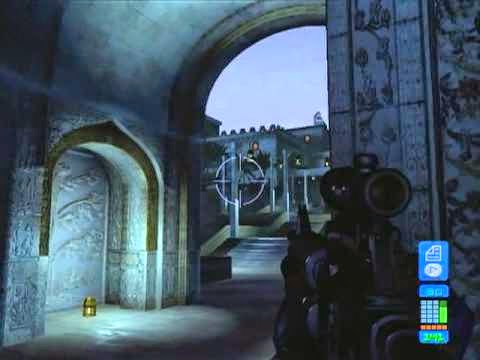
v883. Perfect Dark Zero (360) - Outpost Rescue: Main Theme


Outpost Rescue is the penultimate mission in Perfect Dark Zero's campaign. It takes place in the Middle East, featuring a theme that is relatively mellow. Say what you want about Perfect Dark Zero's campaign, which I actually did enjoy, but I will not allow anyone to diss the game's amazing multiplayer, offering up to 32 people in one room across huge, sprawling maps. Many of my favorite online multiplayer memories come from Rare's Perfect Dark Zero.

v884. Star Fox Assault (GCN) - Aparoid Queen 2


The final boss of Star Fox Assault is an intense chase after the Aparoid Queen that is accentuated by this great theme. Star Fox Assault was an underrated entry in the Star Fox series that was a bit polarizing in the fandom of the series. Some loathed the on-foot parts and wanted Fox in an Arwing in on-rails sections for the entirety of the game, while others like me appreciated the variety offered in the game.

v885. Viewtiful Joe (PS2, GCN) - Joe & Sylvia


We end this Memorial Day edition of SuperPhillip Central's Favorite VGMs with an intergalactic theme that plays during the final of seven stages in Viewitful Joe. Not only does Viewtiful Joe have a terrific soundtrack, but it has a brilliant combat system, tremendous puzzles based off of Joe's abilities, and a myriad of other things that makes it one of my favorite games Capcom has ever released.

Saturday, May 23, 2015

Splatoon (Wii U) Extended Cut Trailer

The final Splatoon Global Testfire was today, and it started off rocky with huge traffic and connection issues. However, this was solved by Nintendo, and because of the problems, the company offered an extra hour of play. I personally did not touch any of the stress test demos because I want Splatoon to be 100% fresh for me this Friday. That and I'd suffer withdrawal symptoms if I played a testfire session and had to wait until the 29th to play the full game. Check out this trailer for Splatoon which features a catchy ditty to go along with the action.

Thursday, May 21, 2015

Pokemon Rumble World (3DS eShop) Review

Hey everyone! Hope your Thursday treated you well. I have a brand-new review to share, continuing this month of Nintendo 3DS reviews. Coming next week are two retail release reviews for games that came out earlier in the year for the 3DS. For the time being, though, let's focus our attention on a free-to-play game of all things with Pokemon Rumble World.

Hear the rumblings of a free-to-play game done right.


Back in 1999, critics of Pokemon called it nothing but a fad. More than 15 years later, this supposed "fad" is still going strong, seeing new game releases on a steady basis and plenty of spin-off titles apart from the main series of games. Pokemon Rumble is one of those, and it originated as a Wii game on Nintendo's WiiWare digital service. After a retail Nintendo 3DS release and a more battle royale-focused Wii U eShop release, a new Pokemon Rumble game hits the 3DS eShop, but with a twist.

Pokemon Rumble World is another game that has Nintendo experimenting with the free-to-play model that is most prevalent with mobile gaming. However, this experiment is one that feels like a steal for the player, and it only requires additional funds from the most hardcore and fanatical of the game's players. It all adds up to a game that although simple to play and lacking in great depth, makes up for it with addicting gameplay and features.

You can travel without a Pokemon helper, so
the king lends you his Pikachu to start off with.
There are two currencies in Pokemon Rumble World: game money and Pokediamonds. Game money is used to purchase new outfits for your Mii, background images for taking photos of your Mii, and various trees that are planted within the hub area of the game, which grant attack, defense, speed, and other types of bonuses to your Pokemon in battle. Meanwhile, Pokediamonds are used for a myriad of things: purchasing hot air balloons to venture to new dungeons where a healthy heaping of new Pokemon species can be fought and captured, special houses that increase the maximum amount of Pokemon you can hold in your collection, and using them as a means to skip the time you have to wait until you can reuse a hot air balloon.

Pokediamonds are the currency that is the most important in Pokemon Rumble World. At the beginning of the game, it's quite easy to earn enough to purchase new hot air balloons, but as you continue to buy new ones and gain ranks for collecting more and more species of Pokemon, the balloons tend to cost a lot more Pokediamonds. For example, early balloons only cost about 10 Pokediamonds, which is easily attainable by simply playing the game. However, if you like the game enough that you want to catch them all, then you better be ready to spend upwards of 100 Pokediamonds to buy one hot air balloon and collect as many Pokediamonds as possible.

Capture more species of Pokemon to increase your rank,
allowing you more things to buy with in-game money.
Pokediamonds are handed out in a number of ways. The major way is through completing daily tasks that the king of the Pokemon kingdom you're in asks you to do. These include participating in Pokemon Battle Royales, where you have a set amount of seconds to defeat all of the Pokemon in an arena setting; as well as tasks like protecting a Mii character for the duration of the level. Not only can you earn Pokediamonds from simply successfully completing the king's tasks, but each task has a checklist of sub-goals to try to check off, such as beating the level without changing Pokemon, or using a Pokemon type that is weak against the enemy forces.

It's a Treecko and Sceptile hootenanny! Yee-haw!
In a sense, you can theoretically keep playing each new challenge the king dishes out to you each day to earn Pokediamonds in an albeit very slow fashion. However, to help speed up the process of gaining new hot air balloons, which again, take you to new dungeons with new Pokemon varieties to capture, players are able to purchase Pokediamonds with real world money. The great thing about this, if the word "great" should even be used in a free-to-play sense, is that Nintendo has it capped where you can only spend up to thirty dollars total on the game. Basically, if you spend the full thirty, you're cut off from any further purchases, and that's quite alright because you'll have more than enough diamonds to see all of the content Pokemon Rumble World has to offer. Personally, I've spent all but five dollars on Pokediamonds and have had enough to purchase a multitude of hot air balloons, expanding my selection of dungeons I can go to.

As stated, hot air balloons take you to a plethora of locations where you can battle and collect Pokemon. Each hot air balloon takes you to a region where one of a handful of locations is chosen by a roulette. Each location has its own set of native Pokemon you'll encounter, as well as a boss Pokemon at the end to battle. Sometimes when you're using your best luck to select a location in the roulette, a time period known as "Fever" will occur. This makes it so locations have a higher chance of capturing Pokemon, as well as changing the boss Pokemon you'll face to a rarer species.

Face Pokemon both common and legendary in Rumble World.
The actual gameplay of Pokemon Rumble World should be easy to jump right into, whether you're a longtime Pokemon Rumble fan or completely new to this spin-off series' style. You play as a toy Pokemon, going through linear stages, fighting masses of Pokemon. You have upwards of two moves to use, one with the A button and one with the B button. Defeated Pokemon drop money, but they can also sometimes shrink and fall onto the battlefield, allowing you to pick them up and essentially "capture" them, having them join your side. It's totally random whether a Pokemon defeated will become able to be captured, but there is one way to ensure it. However, this is also random-- having the Pokemon wobble from an attack. If you defeat it while it's in its wobbling state, it will automatically, 100% of the time be able to get captured.

Poor Andy. You invested all your money in the dot-com
bubble and now you're wearing a barrel...
Occasionally, other Mii characters seen through SpotPass or StreetPass will show up in a dungeon, usually requiring your help to save them from a band of Pokemon. Doing so will have them follow you around, giving you the occasional stat bonus as long as their HP doesn't get wiped out in a skirmish. Through SpotPass and StreetPass, you can earn Pokediamonds, one for every five Miis met, and some larger bonuses for satisfying other conditions.

Help a Mii out in battle, and he or she will help you out in return!
The free-to-play model rears its head into things after a hot air balloon has been used. The game will have a timer that counts down the next time you can utilize that same balloon. With the payment of a Pokediamond or two, you can bypass this and use the balloon all over again without waiting. You can even spend a Pokediamond to get the exact location you want without dealing with the roulette's luck-based results.

Pokemon Rumble World is a very satisfying game which has plenty of enjoyable, albeit simplistic battling and capturing of Pokemon. The limit on what you can spend means Nintendo isn't using dirty tactics to suck money from its most vulnerable market, kids. Even if you don't spend a dime on Pokediamonds, the experience is fulfilling enough that you don't feel like you're really missing out by not spending cash on the game. Regardless, those that do are probably the ones that enjoy the game so much that it's worth it, and indeed I did find it worth spending money on if only to further enjoy the game. Pokemon Rumble World could have been an experiment gone quite nasty for Nintendo, but in the end, it turns out to have a mighty satisfying end result.

[SPC Says: A-]