Live from Central City, USA, it's Late Night with David VGMan! Tonight: Dave welcomes X and Zero from Marvel vs. Capcom: Infinite, Link starring in The Legend of Zelda: A Link Between Worlds, dragon lady Lilac from Freedom Planet, the limbless wonder Rayman in Rayman 2: The Great Escape, and last but not least, one of the most recognizable characters in pop culture today, Spider-Man!
Musical guest: Counting Crows. Also, Paul Shaffer and the World's Most Dangerous Band!
And now... after you've perused SuperPhillip Central's Favorite VGMs' VGM Database for all past video game songs featured on this weekly recurring series, let's get on to the music!
v1541, Marvel vs. Capcom: Infinite (PS4, XB1, PC) - X vs. Zero
While a constricted budget and a limited roster took a lot of the pizzazz out of Marvel vs. Capcom: Infinite, the fighting system stood strongly and more than held up its end of the game. I can't really say the same about the soundtrack, other than a couple notable remixes, such as this one from Mega Man X5. It's played in the source material in one of the final stages of the game where, as the title would suggest, X faces off against Zero. Within the game, it serves as a theme for both Mega Man X and Zero, the first of which finally got on a Marvel vs. Capcom roster after all this time!
v1542. The Legend of Zelda: A Link Between Worlds (3DS) - Final Battle
I won't spoil the actual final boss battle myself, but if you're at all familiar with the two main melodies heard during the theme that plays during the fight, one of them will give away who you're facing. It's a climactic final battle against the scourge of both Hyrule and Lorule, and only Link can raise his sword and vanquish evil once more. The reprise of Zelda's Theme in this song, played through once with angelic synth and then blasted out by bold, brass instruments, makes for an uplifting and motivating part of the piece. A wonderful addition to a glorious Nintendo 3DS soundtrack.
v1543. Freedom Planet (Multi) - Dragon Valley 2
Before there was Sonic Mania, a different game by a team of Sonic fans worked together to create a fan game. That turned into a wholly original project known as Freedom Planet. Though the levels occasionally overstay their welcome, everything from the fast and flowing gameplay, to the presentation nail the overall feel and aesthetic of the 2D Sonic games of Sega Genesis past. Freedom Planet is just a rewarding game in general, worthy of a purchase even if you don't have a nostalgic or grand affinity for the Sonic the Hedgehog games of yore.
v1544. Rayman 2: The Great Escape (Multi) - The Iron Mountain
From one 2D platformer to a 3D platformer in a series that started off as a 2D platformer (I make things confusing, don't I?), it's Rayman 2: The Great Escape, the often ported game that some say rival the 3D platforming genre's best. I'm not of that opinion myself, but Rayman 2 has a lot going for it, with its humor, wacky characters, superb level designs, tight controls, and smooth gameplay. The music is also a worthwhile aspect to note, with many of its tunes being great for listening to either inside or outside of the game.
v1545. Spider-Man (2002) (PS2, GCN, XBX, PC) - A Hero's Origin
Our final guest this late night edition of SuperPhillip Central's Favorite VGMs is none other than your friendly neighborhood Spider-Man. Specifically, it's his 2002 video game based off of the movie of the same name. It follows the story of the movie while also adding in some other thrills like villains such as the Shocker and Vulture to beef up to playtime and enjoyment of the game. The orchestrated soundtrack is mesmerizing, particularly this first track, heard as Spidey starts off with but a ski mask and a hoodie in the first mission of the game. A Hero's Origin delivers a theme that exudes the feeling of freedom presented to players as they swing from rooftop to rooftop in the then-incredible playing area as a beginning Spider-Man.

Showing posts with label marvel vs capcom: infinite. Show all posts
Showing posts with label marvel vs capcom: infinite. Show all posts
Monday, January 15, 2018

Tuesday, December 12, 2017
The Most Disappointing Video Game Sequels - Part Four
Getting one of these games in your stocking might make most of you wish you would have gotten coal instead! Games disappoint for all sorts of reasons, whether they're low quality, broken either mechanically or technically -- whatever you can think of, but the ones that follow up games that you really enjoyed might be the toughest to swallow. Imagine loving a game so much that you yearn for a sequel, and the sequel given to you is... less than spectacular -- and that's putting it mildly. That's what The Most Disappointing Video Game Sequels is all about, and we've reached Part Four of our tour of mediocre sequels. This edition we delve in to three 2017 releases as well as some ghosts of game sequels past.
Once you check out the latest entries on this list, explore the past three parts of this ongoing series, and sound off on which games you'd like to see added to future installments.
Part One
Part Two
Part Three
Star Wars Battlefront II (PS4, XB1, PC)
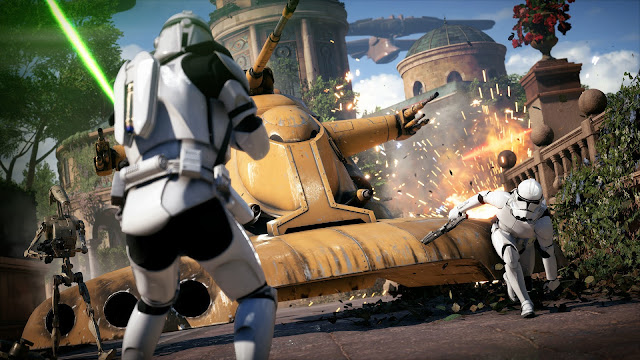

One's hype can be vanquished in an instant due to someone or somebody's greed. I was seriously hyped for Star Wars Battlefront II from EA and DICE due to the original PS2 Star Wars Battlefront games being my favorite Star Wars-related games of all time, next to Rogue Squadron. But like I said, hype can come crashing down to the ground in an instant like an AT-AT tied up by a snowspeeder's cable.
I have a select few multiplayer games I enjoy playing online. Star Wars Battlefront II looked to be one of them, but EA wanted players like me to fork out not just $60 to own the game, but even more money just to stand a fighting chance online. With pay-to-win loot boxes, that is exactly what EA had in store for players. It's a case of greed at its most distilled in gaming -- putting spending money over the actual balance of gameplay.
It was a decision that made me completely forgo looking into getting Star Wars Battlefront II, and I certainly wasn't alone in that decision either. The situation got so bad for EA that it decided to take loot boxes out of the game temporarily. To my cynical mind, it's merely to buy time for EA to decide a "better" solution that doesn't draw the publisher as much ire and bad publicity. Despite knowing that the actual gameplay of the newest Star Wars Battlefront is of good quality, I also know that I can't trust EA with its handling of this game.
Mass Effect: Andromeda (PS4, XB1, PC)


Together, EA and BioWare have seen a lot of success with the Mass Effect franchise. The trilogy sold remarkably well and was a critical darling. Until Mass Effect: Andromeda, the last Mass Effect game released was Mass Effect 3 in 2012. All the waiting, all the excitement, and all of the hype around the newest game in the Mass Effect franchise led to...
A dud. Mass Effect: Andromeda has become one of the big jokes of 2017, unfortunately, and primarily so due to being mired with a look of inconsistency. The game isn't broken from a gameplay metric, thankfully, but it can definitely be argued that it was initially from a technical one. From its one-week-early release to EA Origin members, myriad clips, videos, and GIFs poked fun at a plethora of creepy and bizarre facial animations that brought up some serious uncanny valley imagery. Bugs, glitches, and freezes plagued Andromeda from its release as well, making the massively budgeted Mass Effect: Andromeda another tale of an AAA game that was too big of a production for its own good.
As a series now, Mass Effect is in a state of limbo as a result of the negative commercial and critical reception to Andromeda. It would be quite a shame to see a franchise that seemed to always be of high quality get put on a long hiatus because of just one game. Then again, as we've seen with studios closing and franchises ending, all it takes is one game in this era of the video games industry.
Marvel vs. Capcom: Infinite (PS4, XB1, PC)


With this next game on the edition of Most Disappointing Video Game Sequels, we finally leave EA alone and focus on Capcom. Well, Marvel and Capcom, to be exact. The latest game in the fabled fighting game crossover, Marvel vs. Capcom: Infinite released this past fall, and it has a lot of good parts to it. The new improvements to the core mechanics of the series, such as the updated means to tag in allies, meant new means in increasing combos and damage output. The addition of the Infinity Stones added some new ways of interacting with opposing fighters and incorporating differing strategies as well.
However, not all was well with the new Marvel vs. Capcom, as evident by Infinite being on a list of most disappointing video game sequels. The most obvious of issues plagued every trailer and screenshot of the game. It was its presentation, offering drab visuals, "off" character designs, and just a flat look to it -- completely spitting in the face of what past Marvel vs. Capcom games possessed, whether the sharp 2D visuals and animations in Marvel vs. Capcom 2, or even the most release, the gorgeous cel-shaded comic book graphics of Ultimate Marvel vs. Capcom 3.
Then, there was the starting roster that was just begging to be ripped to shreds by critics and fans alike. Notable omissions like the 20th Century Fox-owned characters and even those Marvel vs. Capcom characters that were present in Ultimate Marvel vs. Capcom 3 but mysteriously absent from Infinite's roster also disappointed. Marvel vs. Capcom: Infinite made for a package that was not hard to take a pass on at launch with its full MSRP, and it seems that many did just that according to Capcom's missed projected sales target for the game.
Star Fox Zero (Wii U)


Now this one hurts for me to add to this list. While I personally enjoyed Star Fox Zero on the Wii U, it's no question that many people couldn't get their heads around using both a TV screen and the Wii U GamePad for different viewing angles. With the TV, Fox McCloud's vehicle such as the flight-based Arwing was shown, and with the GamePad, the vehicle's line of sight could be altered in a way otherwise impossible with a standard control setup. You could physically (and slightly) move the Wii U GamePad to alter the aim of your Arwing, Landmaster, or what have you. No longer did you have to point the tip of your ship towards enemies. You could unleash missiles and laser fire on them even if they were off the TV screen, a difficult proposition in Star Fox 64.
However, in using such a complex control, movement, and aiming scheme, Nintendo and Platinum Games really isolated many players from having full enjoyment with Star Fox Zero. This led to not only poor critical and fan feedback but also less than stellar sales, and we're already talking about a game that released on the already struggling Wii U that was furthermore on its way out.
Thus, not only may the Star Fox series not get a new sequel in the near future due to low sales, but what we even got out of Star Fox Zero was yet another retelling of the original Star Fox's story. It was hardly uncharted territory for the series, and going through the same story meant that no major new plot threads were expanded on. Now, we'll have to hope Shigeru Miyamoto and whomever else at Nintendo have a will to continue on with the series. So while I might have enjoyed Star Fox Zero personally, it wasn't worth taking on a brand-new, highly controversial control scheme to put the series' future in possible jeopardy.
Mega Man X7 (PS2)


One thing you can count on with the classic Mega Man series is that each entry is of assured quality. Sure, I might have my reservations with Mega Man 9's penchant for throwing spikes and pits everywhere as a means to make the game more difficult in a cheaper way, but all in all, the series is consistent in quality. I wish I could say the same about Mega Man X. That's a sub-series of games that I prefer over classic Mega Man, but it also has two stinkers in the bunch. I'm going to focus on X's jump into the third dimension and the PlayStation 2 generation with Mega Man X7.
X7 is a project of poor design and even worse execution. It attempted to bring the Mega Man X series from 2D to 3D, and in using both as the design foundation, it failed at doing either competently. In 2D sections, the gameplay and level design are substandard compared to the fluidity and placement of objects, enemies, and obstacles in the traditional sprite-based Mega Man X games. Meanwhile, the 3D portions are harmed by a wonky camera, the same camera that isn't serviceable enough to make the transition between 2D and 3D segments of levels without some hangups.
Then, there's the fact that the titular character isn't even available right from the start. You actually have to unlock X as a playable character, instead using a duo of Zero and newcomer Axl, who got bombarded with hate for taking X's place early on in the game, as well as being associated with the "Mega Man X7" name in the first place. It's commendable that Capcom tried to do something new with the Mega Man X sub-series, but the company wouldn't find a better solution until the game installment after.
Bomberman: Act Zero (360)


Sometimes trying new things with old franchises is good. Sometimes it's not. Definitely not. When you try to take a colorful cartoon mascot like Bomberman and turn him into a mature character meant to excite edgy teens or whoever, the end result is Bomberman: Act Zero, rated "T" for "Totally idiotic." Retro gaming fans know all about the world and characters of the Bomberman series: cute animals, explosive gameplay, terrific multiplayer, tight controls, dystopian future, dark hero with realistic proportions... Wait. What the heck did you folks do to Bomberman!?
"Negative" is almost too kind to describe what people who played Bomberman: Act Zero actually thought of the game. With load times long enough to write a comprehensive list of better Bomberman games you could playing at the moment instead of Act Zero, solid characters and objects that can pass through one another with no regard for collision detection, repetitive textures that make being stuck in the middle of the Atlantic Ocean looking at vast amounts of water seem more exciting, AI that is too good in one moment and just plain awful the next, and the inability to save your progress -- as if Konami was laughing at you for wasting your time on its game -- and you have a Bomberman game that was a total misfire. It was on a console where Konami perhaps thought maybe a Bomberman title could work if the game completely stripped itself of its own identity and followed the dark, gritty nonsense of the time. Thank goodness that Xbox 360 owners still had Bomberman Live!
Once you check out the latest entries on this list, explore the past three parts of this ongoing series, and sound off on which games you'd like to see added to future installments.
Part One
Part Two
Part Three
Star Wars Battlefront II (PS4, XB1, PC)


One's hype can be vanquished in an instant due to someone or somebody's greed. I was seriously hyped for Star Wars Battlefront II from EA and DICE due to the original PS2 Star Wars Battlefront games being my favorite Star Wars-related games of all time, next to Rogue Squadron. But like I said, hype can come crashing down to the ground in an instant like an AT-AT tied up by a snowspeeder's cable.
I have a select few multiplayer games I enjoy playing online. Star Wars Battlefront II looked to be one of them, but EA wanted players like me to fork out not just $60 to own the game, but even more money just to stand a fighting chance online. With pay-to-win loot boxes, that is exactly what EA had in store for players. It's a case of greed at its most distilled in gaming -- putting spending money over the actual balance of gameplay.
It was a decision that made me completely forgo looking into getting Star Wars Battlefront II, and I certainly wasn't alone in that decision either. The situation got so bad for EA that it decided to take loot boxes out of the game temporarily. To my cynical mind, it's merely to buy time for EA to decide a "better" solution that doesn't draw the publisher as much ire and bad publicity. Despite knowing that the actual gameplay of the newest Star Wars Battlefront is of good quality, I also know that I can't trust EA with its handling of this game.
Mass Effect: Andromeda (PS4, XB1, PC)


Together, EA and BioWare have seen a lot of success with the Mass Effect franchise. The trilogy sold remarkably well and was a critical darling. Until Mass Effect: Andromeda, the last Mass Effect game released was Mass Effect 3 in 2012. All the waiting, all the excitement, and all of the hype around the newest game in the Mass Effect franchise led to...
A dud. Mass Effect: Andromeda has become one of the big jokes of 2017, unfortunately, and primarily so due to being mired with a look of inconsistency. The game isn't broken from a gameplay metric, thankfully, but it can definitely be argued that it was initially from a technical one. From its one-week-early release to EA Origin members, myriad clips, videos, and GIFs poked fun at a plethora of creepy and bizarre facial animations that brought up some serious uncanny valley imagery. Bugs, glitches, and freezes plagued Andromeda from its release as well, making the massively budgeted Mass Effect: Andromeda another tale of an AAA game that was too big of a production for its own good.
As a series now, Mass Effect is in a state of limbo as a result of the negative commercial and critical reception to Andromeda. It would be quite a shame to see a franchise that seemed to always be of high quality get put on a long hiatus because of just one game. Then again, as we've seen with studios closing and franchises ending, all it takes is one game in this era of the video games industry.
Marvel vs. Capcom: Infinite (PS4, XB1, PC)

With this next game on the edition of Most Disappointing Video Game Sequels, we finally leave EA alone and focus on Capcom. Well, Marvel and Capcom, to be exact. The latest game in the fabled fighting game crossover, Marvel vs. Capcom: Infinite released this past fall, and it has a lot of good parts to it. The new improvements to the core mechanics of the series, such as the updated means to tag in allies, meant new means in increasing combos and damage output. The addition of the Infinity Stones added some new ways of interacting with opposing fighters and incorporating differing strategies as well.
However, not all was well with the new Marvel vs. Capcom, as evident by Infinite being on a list of most disappointing video game sequels. The most obvious of issues plagued every trailer and screenshot of the game. It was its presentation, offering drab visuals, "off" character designs, and just a flat look to it -- completely spitting in the face of what past Marvel vs. Capcom games possessed, whether the sharp 2D visuals and animations in Marvel vs. Capcom 2, or even the most release, the gorgeous cel-shaded comic book graphics of Ultimate Marvel vs. Capcom 3.
Then, there was the starting roster that was just begging to be ripped to shreds by critics and fans alike. Notable omissions like the 20th Century Fox-owned characters and even those Marvel vs. Capcom characters that were present in Ultimate Marvel vs. Capcom 3 but mysteriously absent from Infinite's roster also disappointed. Marvel vs. Capcom: Infinite made for a package that was not hard to take a pass on at launch with its full MSRP, and it seems that many did just that according to Capcom's missed projected sales target for the game.
Star Fox Zero (Wii U)


Now this one hurts for me to add to this list. While I personally enjoyed Star Fox Zero on the Wii U, it's no question that many people couldn't get their heads around using both a TV screen and the Wii U GamePad for different viewing angles. With the TV, Fox McCloud's vehicle such as the flight-based Arwing was shown, and with the GamePad, the vehicle's line of sight could be altered in a way otherwise impossible with a standard control setup. You could physically (and slightly) move the Wii U GamePad to alter the aim of your Arwing, Landmaster, or what have you. No longer did you have to point the tip of your ship towards enemies. You could unleash missiles and laser fire on them even if they were off the TV screen, a difficult proposition in Star Fox 64.
However, in using such a complex control, movement, and aiming scheme, Nintendo and Platinum Games really isolated many players from having full enjoyment with Star Fox Zero. This led to not only poor critical and fan feedback but also less than stellar sales, and we're already talking about a game that released on the already struggling Wii U that was furthermore on its way out.
Thus, not only may the Star Fox series not get a new sequel in the near future due to low sales, but what we even got out of Star Fox Zero was yet another retelling of the original Star Fox's story. It was hardly uncharted territory for the series, and going through the same story meant that no major new plot threads were expanded on. Now, we'll have to hope Shigeru Miyamoto and whomever else at Nintendo have a will to continue on with the series. So while I might have enjoyed Star Fox Zero personally, it wasn't worth taking on a brand-new, highly controversial control scheme to put the series' future in possible jeopardy.
Mega Man X7 (PS2)


One thing you can count on with the classic Mega Man series is that each entry is of assured quality. Sure, I might have my reservations with Mega Man 9's penchant for throwing spikes and pits everywhere as a means to make the game more difficult in a cheaper way, but all in all, the series is consistent in quality. I wish I could say the same about Mega Man X. That's a sub-series of games that I prefer over classic Mega Man, but it also has two stinkers in the bunch. I'm going to focus on X's jump into the third dimension and the PlayStation 2 generation with Mega Man X7.
X7 is a project of poor design and even worse execution. It attempted to bring the Mega Man X series from 2D to 3D, and in using both as the design foundation, it failed at doing either competently. In 2D sections, the gameplay and level design are substandard compared to the fluidity and placement of objects, enemies, and obstacles in the traditional sprite-based Mega Man X games. Meanwhile, the 3D portions are harmed by a wonky camera, the same camera that isn't serviceable enough to make the transition between 2D and 3D segments of levels without some hangups.
Then, there's the fact that the titular character isn't even available right from the start. You actually have to unlock X as a playable character, instead using a duo of Zero and newcomer Axl, who got bombarded with hate for taking X's place early on in the game, as well as being associated with the "Mega Man X7" name in the first place. It's commendable that Capcom tried to do something new with the Mega Man X sub-series, but the company wouldn't find a better solution until the game installment after.
Bomberman: Act Zero (360)


Sometimes trying new things with old franchises is good. Sometimes it's not. Definitely not. When you try to take a colorful cartoon mascot like Bomberman and turn him into a mature character meant to excite edgy teens or whoever, the end result is Bomberman: Act Zero, rated "T" for "Totally idiotic." Retro gaming fans know all about the world and characters of the Bomberman series: cute animals, explosive gameplay, terrific multiplayer, tight controls, dystopian future, dark hero with realistic proportions... Wait. What the heck did you folks do to Bomberman!?
"Negative" is almost too kind to describe what people who played Bomberman: Act Zero actually thought of the game. With load times long enough to write a comprehensive list of better Bomberman games you could playing at the moment instead of Act Zero, solid characters and objects that can pass through one another with no regard for collision detection, repetitive textures that make being stuck in the middle of the Atlantic Ocean looking at vast amounts of water seem more exciting, AI that is too good in one moment and just plain awful the next, and the inability to save your progress -- as if Konami was laughing at you for wasting your time on its game -- and you have a Bomberman game that was a total misfire. It was on a console where Konami perhaps thought maybe a Bomberman title could work if the game completely stripped itself of its own identity and followed the dark, gritty nonsense of the time. Thank goodness that Xbox 360 owners still had Bomberman Live!
Wednesday, November 1, 2017
Review Round-Up - October 2017
 |
| The month of Halloween dug up some treats with indie darling and SPC Game of the Month SteamWorld Dig 2. |
Things kicked off with one of my favorite indie games in a long while, SteamWorld Dig 2, digging up a terrific A grade. Continuing the indie theme, three more digital downloads were reviewed: Yono and the Celestial Elephants (C), Squareboy vs. Bullies: Arena Edition (D), and Earth Atlantis (C+).
Moving on from digital-only releases, Mario & Luigi: Superstar Saga + Bowser's Minions earned itself a wonderful A-. Finally, two fighting game reviews posted on Halloween night, Dragon Ball Xenoverse 2 and Marvel vs. Capcom: Infinite, both scored a B- for varying reasons.
SteamWorld Dig 2 (NS, PS4, PC, Vita) - A
Yono and the Celestial Elephants (NS, PC) - C
Squareboy vs. Bullies: Arena Edition (NS, Vita) - D
Earth Atlantis (NS) - C+
Mario & Luigi: Superstar Saga + Bowser's Minions (3DS) - A-
Dragon Ball Xenoverse 2 (NS) - B-
Marvel vs. Capcom: Infinite (PS4, XB1, PC) - B-
 |
| The Capcom crossover returned this month to SuperPhillip Central with Marvel vs. Capcom: Infinite. |
Tuesday, October 31, 2017
Marvel vs. Capcom: Infinite (PS4, XB1, PC) Review
Our final fighting game of Halloween is Marvel vs. Capcom: Infinite, which also just so happens to be the final review of October for SuperPhillip Central. Stay tuned for the October 2017 Review Round-Up tomorrow, by the way! Here are my thoughts on the latest Marvel and Capcom fighting game crossover.

Of all of the fighting games that come out from Capcom, my favorite has to be the crossover ones between Capcom and other companies. I have a fondness for Tatsunoko vs. Capcom on the Wii, particularly. Now, a returning crossover sees a new game in its historic fighting game series, Marvel vs. Capcom: Infinite. From lackluster demos to bad impressions from the media, is there any chance for Infinite to actually be good?
Compared to past Marvel vs. Capcom games, Infinite has a much slower pace to its fighting. This presents a more strategic flow to battle rather than the super fast and fluid fighting of the previous entries in the Marvel vs. Capcom series. However, a new system has been added to complement the slower style of combat in the form of the Infinity Stones, not-so-coincidentally a big part of the narrative in the most recent Marvel blockbuster films.
Infinite moves from a 3 on 3 battle system to a 2 on 2 system. While the lack of an extra character to choose from for your team is a disappointing one, what it overall amounts to is giving you an added amount of strategy in choosing an Infinity Stone to equip to your team that will play well with their combat styles. These Infinity Stones augment abilities, restore health to characters, and more. Choosing which one to use for the given battle can be a stark difference between victory and defeat, especially if you're playing against a skilled opponent.
The controls of Infinite are relatively beginner-friendly, as each face button is assigned to a weak and strong attack, either a punch or a kick depending on the particular button pressed. All fighters have the same button combinations for attacks, which is also something nice and accessible for newbies. After all, Marvel vs. Capcom hasn't really been a friendly game for beginners compared to other fighting game franchises on the market. However, with all moves using simple button combos that are similar across all fighters, there's less necessity to remember different button configurations and more emphasis put on concocting killer combos. Setting up your opponent for a multiple hit combo is simple enough in easier difficulties, but as the challenge ramps up, you really need to learn how opponents will be impacted from your attacks so you can continue your combo in the right direction. Otherwise, you'll open yourself up to be attacked yourself.
A great thing about Infinite is that while it's accessible to new players, there is a markedly deep game here for series veterans and those wanting more advanced tactics. The more involved combat tactics allow you to really get inside your mains and preferred fighters, coming up with pro-level strategies that a beginner could only dream of plotting out and performing.
Thankfully, if you're not a seasoned vet, Marvel vs. Capcom: Infinite comes supplied with multiple modes to get into the fighting system before engaging in battles online, where no doubt most players' energy and time will be put in to. The most helpful of these modes is Training, where you learn the basics of battle and start out with simple button combos to use against an AI opponent. Each combo completed is a mission finished. You can learn the ins and outs of Infinite with some overview tutorials or do character-specific tutorials, teaching you the most pronounced and effective combos for that particular combatant. This is terrific for some deeper learning of and training with a fighter you might want to main. If you're a more casual player like myself, you might just want to check out the introductory set of tutorial missions for each character to get a taste of what's available, as these combos can get very complex with both the button combinations and specific timing windows required for them.
What Street Fighter V lacked when it originally released was a Story Mode, and Capcom seemed to have learned a lesson on this itself by including a mode within Marvel vs. Capcom: Infinite. Not much background is involved with the story to help players understand why folks in both Marvel and Capcom universes are together, but the story involves heroic forces made up of characters like Captain America, Iron Man, Thor, Mega Man X, Chris Redfield, and more taking on a new villain, a merge of Marvel's Ultron and Mega Man X's Sigma with the super powerful Ultron Sigma. After suffering a defeat by Ultron Sigma's hands, the resistance regroups and comes up with a plan to acquire the Infinity Stones, the only means to overcome their joint foe.
The story itself isn't too engaging plot-wise, but what really saves it for me is all of the clever interactions and banter between both Marvel's heroes and Capcom's. Though the latter understandably doesn't have as much importance due to Marvel being a household name and Capcom... well, being Capcom. Still, when you get scenes involving Spider-Man, Resident Evil's Chris Redfield, Dead Rising's Frank West, and Final Fight's Mike Haggar exploring a subterranean area owned by the Umbrella Corporation, it's pretty cool to see. While the story won't last you long, maybe 3-4 hours for most players, it is worthwhile to play through once, but maybe not again.
One of the biggest qualms many longtime fans of the Marvel vs. Capcom series have with Infinite is its roster selection, and I'm of the opinion that the complete roster has both pros and cons. To get the negatives out of the way, there are few completely new additions to the roster, as most are simply brought back from the previous game. Furthermore, a completely notable absence is that of the X-Men due to Marvel and Fox battling out rights for the characters, hence their exclusion in Infinite. It's still pretty lame to have a Marvel fighter without the likes of Wolverine, Magneto, and more included even if the legal situation is present.
However, on the positive side, past Marvel vs. Capcom games had a lot of fighters that played similarly to one another. With Infinite, this issue is no longer pronounced at all. Each fighter presents their own combat style and combo potential without feeling samey compared to other additions on the roster. While the limitations on the Marvel side are disappointing, Capcom added enough of their own characters to make up for it decently enough. Of course, I expect more people would rather have the likes of Deadpool and Storm rather than the likes of Mega Man X and Darkstalkers' Jedah. Still, DLC is coming for those who want it, but the sickening part of that is that the characters of this first season were ready before Infinite even came to market, so your mileage may vary on if you feel it's worth supporting such a business practice.
Moving on from roster-related disappointment to the disappointment seen in the visuals, Marvel vs. Capcom: Infinite does not continue the series' trend of impressive graphics. The backgrounds, though highly detailed, don't offer much visual engagement to the player, and especially the character models are a severe dislike to me, particularly the faces. Capcom already received a lot of flak for their interpretation of Street Fighter's Chun-Li, which was later remedied, but at the same time, the other characters' faces and expressions are a bit jarring at best. These type of faces make you wonder what is exactly off with them, which isn't a judgment I expected to ever say coming off brilliant looking entries like Marvel vs. Capcom 2 and then later on 3 and its Ultimate version. Even the music is less than stellar, offering ruined electronic versions of classic character theme songs. Overall, one can surmise that the budget for Infinite was unfortunately mightily toned down for this sequel.
Marvel vs. Capcom: Infinite gets the most important piece of a fighting game right, the actual fighting. It's everything else that seems a bit sub-par. Sure, the Story Mode is fun to play through once merely for the interactions between Marvel and Capcom all-stars, but the budget put into that mode could have gone to make the whole of Infinite better, such as creating a more interesting roster. Still, the content is there for those who want it and online play runs as expected for those who will desire to be the very best, or just rage quit a lot. Whichever, right?
[SPC Says: B-]
The fate of two worlds depends on you.

Compared to past Marvel vs. Capcom games, Infinite has a much slower pace to its fighting. This presents a more strategic flow to battle rather than the super fast and fluid fighting of the previous entries in the Marvel vs. Capcom series. However, a new system has been added to complement the slower style of combat in the form of the Infinity Stones, not-so-coincidentally a big part of the narrative in the most recent Marvel blockbuster films.
Infinite moves from a 3 on 3 battle system to a 2 on 2 system. While the lack of an extra character to choose from for your team is a disappointing one, what it overall amounts to is giving you an added amount of strategy in choosing an Infinity Stone to equip to your team that will play well with their combat styles. These Infinity Stones augment abilities, restore health to characters, and more. Choosing which one to use for the given battle can be a stark difference between victory and defeat, especially if you're playing against a skilled opponent.
 |
| After many cries and urges for his inclusion, Mega Man X is finally on a Marvel vs. Capcom roster. |
A great thing about Infinite is that while it's accessible to new players, there is a markedly deep game here for series veterans and those wanting more advanced tactics. The more involved combat tactics allow you to really get inside your mains and preferred fighters, coming up with pro-level strategies that a beginner could only dream of plotting out and performing.
Thankfully, if you're not a seasoned vet, Marvel vs. Capcom: Infinite comes supplied with multiple modes to get into the fighting system before engaging in battles online, where no doubt most players' energy and time will be put in to. The most helpful of these modes is Training, where you learn the basics of battle and start out with simple button combos to use against an AI opponent. Each combo completed is a mission finished. You can learn the ins and outs of Infinite with some overview tutorials or do character-specific tutorials, teaching you the most pronounced and effective combos for that particular combatant. This is terrific for some deeper learning of and training with a fighter you might want to main. If you're a more casual player like myself, you might just want to check out the introductory set of tutorial missions for each character to get a taste of what's available, as these combos can get very complex with both the button combinations and specific timing windows required for them.
 |
| Our two combatants zero in on one another for what is sure to be one exciting fight. |
The story itself isn't too engaging plot-wise, but what really saves it for me is all of the clever interactions and banter between both Marvel's heroes and Capcom's. Though the latter understandably doesn't have as much importance due to Marvel being a household name and Capcom... well, being Capcom. Still, when you get scenes involving Spider-Man, Resident Evil's Chris Redfield, Dead Rising's Frank West, and Final Fight's Mike Haggar exploring a subterranean area owned by the Umbrella Corporation, it's pretty cool to see. While the story won't last you long, maybe 3-4 hours for most players, it is worthwhile to play through once, but maybe not again.
One of the biggest qualms many longtime fans of the Marvel vs. Capcom series have with Infinite is its roster selection, and I'm of the opinion that the complete roster has both pros and cons. To get the negatives out of the way, there are few completely new additions to the roster, as most are simply brought back from the previous game. Furthermore, a completely notable absence is that of the X-Men due to Marvel and Fox battling out rights for the characters, hence their exclusion in Infinite. It's still pretty lame to have a Marvel fighter without the likes of Wolverine, Magneto, and more included even if the legal situation is present.
 |
| Thor's mighty hammer vs. the Hulk's powerful fist: Which will come out the victor? |
Moving on from roster-related disappointment to the disappointment seen in the visuals, Marvel vs. Capcom: Infinite does not continue the series' trend of impressive graphics. The backgrounds, though highly detailed, don't offer much visual engagement to the player, and especially the character models are a severe dislike to me, particularly the faces. Capcom already received a lot of flak for their interpretation of Street Fighter's Chun-Li, which was later remedied, but at the same time, the other characters' faces and expressions are a bit jarring at best. These type of faces make you wonder what is exactly off with them, which isn't a judgment I expected to ever say coming off brilliant looking entries like Marvel vs. Capcom 2 and then later on 3 and its Ultimate version. Even the music is less than stellar, offering ruined electronic versions of classic character theme songs. Overall, one can surmise that the budget for Infinite was unfortunately mightily toned down for this sequel.
 |
| Dante and Rocket Raccoon go out guns blazing. Could it have ended any other way between these two? |
[SPC Says: B-]
Wednesday, October 11, 2017
Most Overlooked Current Gen Games - Part Five
The "Most Overlooked" series of articles on SuperPhillip Central is one of the longest running in the site's nine-year history. The series continues with our fifth look together at some more of the most overlooked PlayStation 4, Xbox One, and Nintendo Switch games, the latter being the most recent console added to the current generation landscape. After you've looked at these five gaming picks, which do you agree and disagree with?
Check out all four past parts of Most Overlooked Current Gen Games with these links:
Current Gen - Part One
Current Gen - Part Two
Current Gen - Part Three
Current Gen - Part Four
Marvel vs. Capcom: Infinite (PS4, XB1, PC)


Perhaps "overlooked" isn't as much of the correct term to use here. Instead, Marvel vs. Capcom: Infinite may have just been intentionally ignored due to a combination of grievous errors on Capcom and Marvel's sides. I'm talking about every thing from the omission of the X-Men in the roster, the actual starting roster itself, and the disturbing downloadable content system Infinite uses to the low-budget look of the game and poor marketing leading up to Infinite's release. However, underneath all the bull comes a really worthwhile fighting game that takes some learning to play competently, but the reward for doing so is being able to perform astonishing combos on your enemies that will make onlookers gasp with surprise. Marvel vs. Capcom: Infinite isn't as empty of a release at launch as Street Fighter V was, but it's understandable still why so many in the gaming community (at least so far in Japan and Europe) avoided the latest edition of this famed crossover fighter all the same.
ReCore (XB1, PC)


Let's head specifically to the Microsoft corner of the gaming market with a game spearheaded by some well known minds within the industry, such as Armature Studio, devised up of many former Metroid Prime devs, as well as Keiji Inafune, whose reputation has recently been damaged, but before all that, he worked on the Mega Man franchise with Capcom. ReCore is an intriguing undertaking, and an original game that the Xbox One needs more of to strengthen its appeal. Exploring the open world surroundings of ReCore's realm, players take on the role of Joule as she wanders the world, battling enemies with heavy weaponry, entering mines and dungeons to solve puzzles and find materials, and discover what happened to the once great colony of Far Eden, her former home and what is now dangerous desert. ReCore: Definitive Edition recently released at the end of August, offering new areas and story elements. It's my hope that somehow this update on the game gets a new market for the game, as if not, it might teach Microsoft the long lesson about creating new franchises for its Xbox brand.
Knack II (PS4)


The original Knack launched with the PlayStation 4 several years ago, and even though it sold relatively well (especially in Japan, though the game was bundled with the system), the critic and fan opinion of Knack was anything but solid. In fact, it was pretty awful, resulting in ironic memes being posted on how Knack was the second coming and so forth. Despite the notoriety of Knack, a second game released, Knack II, and the opposite of the original game happened. While the critical opinion was greater, the sales were weak at best. A true shame as Knack II offers much more variety, enjoyable platforming, engaging combat, and stellar visuals to make one package that is both a pleasure to play and a joy to look at. Regardless of the sequel's poor sales, here's hoping a third game somehow gets greenlit in order to round out the series and provide context into Knack's mysterious past. (Yes, believe it or not, there are dozens of us wanting to see Knack as a series expand even further.)
Everybody's Golf (PS4)


Take to the links with Everybody's Golf, formerly known as Hot Shots Golf in North America. After several samey titles in the franchise, Everybody's Golf puts players from linear progression through tournaments and challenges to open courses to explore, play on, and enjoy. The better you perform on the courses, the quicker you can take on special AI challengers to improve your rank and reach new courses to traverse upon. Golf isn't just the only activity in town this time around, as fishing, golf cart driving, and collecting new outfit combinations for your custom golfer are here for you to partake in. Everybody's Golf took Japan by storm on its launch week, but in other regions of the world, the game failed to take off from the tee. Gamers loving arcade golf are already a niche themselves, making Everybody's Golf in Western territories a niche game, being overlooked by countless potential customers. Still, like Knack II, it only takes $40 to invest in one of the more creative and family friendly games on the PlayStation 4 this year.
Puyo Puyo Tetris (NS, PS4)


While Tetris is indeed world-renowned, the Japanese puzzler Puyo Puyo is decidedly not. Having players drop color coded Puyo blobs (each in a pair of two) to try to match four or more of the same color at once while aiming for successive combos, it's a puzzle game similar to Tetris. After all, you're clearing the board before the blobs reach the top, ending your game. Thus, it makes sense for Sega to team up with The Tetris Company to create Puyo Puyo Tetris, colorful and charming take on two popular puzzle games (one obviously more popular than the other). With a full story mode that teaches the basic of each games' rules and modes, multiplayer opportunities both local and online, and so much content outside of the story, Puyo Puyo Tetris sold admirably on the Nintendo Switch (but nothing astronomical), while the PlayStation 4 version didn't have as much success, due to so many other gaming offerings being released on the platform. Still, if you have an iota of love for Tetris, Puyo Puyo, or puzzle games, then Puyo Puyo Tetris should be on your wanted list sometime soon.
Check out all four past parts of Most Overlooked Current Gen Games with these links:
Current Gen - Part One
Current Gen - Part Two
Current Gen - Part Three
Current Gen - Part Four
Marvel vs. Capcom: Infinite (PS4, XB1, PC)


Perhaps "overlooked" isn't as much of the correct term to use here. Instead, Marvel vs. Capcom: Infinite may have just been intentionally ignored due to a combination of grievous errors on Capcom and Marvel's sides. I'm talking about every thing from the omission of the X-Men in the roster, the actual starting roster itself, and the disturbing downloadable content system Infinite uses to the low-budget look of the game and poor marketing leading up to Infinite's release. However, underneath all the bull comes a really worthwhile fighting game that takes some learning to play competently, but the reward for doing so is being able to perform astonishing combos on your enemies that will make onlookers gasp with surprise. Marvel vs. Capcom: Infinite isn't as empty of a release at launch as Street Fighter V was, but it's understandable still why so many in the gaming community (at least so far in Japan and Europe) avoided the latest edition of this famed crossover fighter all the same.
ReCore (XB1, PC)


Let's head specifically to the Microsoft corner of the gaming market with a game spearheaded by some well known minds within the industry, such as Armature Studio, devised up of many former Metroid Prime devs, as well as Keiji Inafune, whose reputation has recently been damaged, but before all that, he worked on the Mega Man franchise with Capcom. ReCore is an intriguing undertaking, and an original game that the Xbox One needs more of to strengthen its appeal. Exploring the open world surroundings of ReCore's realm, players take on the role of Joule as she wanders the world, battling enemies with heavy weaponry, entering mines and dungeons to solve puzzles and find materials, and discover what happened to the once great colony of Far Eden, her former home and what is now dangerous desert. ReCore: Definitive Edition recently released at the end of August, offering new areas and story elements. It's my hope that somehow this update on the game gets a new market for the game, as if not, it might teach Microsoft the long lesson about creating new franchises for its Xbox brand.
Knack II (PS4)

The original Knack launched with the PlayStation 4 several years ago, and even though it sold relatively well (especially in Japan, though the game was bundled with the system), the critic and fan opinion of Knack was anything but solid. In fact, it was pretty awful, resulting in ironic memes being posted on how Knack was the second coming and so forth. Despite the notoriety of Knack, a second game released, Knack II, and the opposite of the original game happened. While the critical opinion was greater, the sales were weak at best. A true shame as Knack II offers much more variety, enjoyable platforming, engaging combat, and stellar visuals to make one package that is both a pleasure to play and a joy to look at. Regardless of the sequel's poor sales, here's hoping a third game somehow gets greenlit in order to round out the series and provide context into Knack's mysterious past. (Yes, believe it or not, there are dozens of us wanting to see Knack as a series expand even further.)
Everybody's Golf (PS4)

Take to the links with Everybody's Golf, formerly known as Hot Shots Golf in North America. After several samey titles in the franchise, Everybody's Golf puts players from linear progression through tournaments and challenges to open courses to explore, play on, and enjoy. The better you perform on the courses, the quicker you can take on special AI challengers to improve your rank and reach new courses to traverse upon. Golf isn't just the only activity in town this time around, as fishing, golf cart driving, and collecting new outfit combinations for your custom golfer are here for you to partake in. Everybody's Golf took Japan by storm on its launch week, but in other regions of the world, the game failed to take off from the tee. Gamers loving arcade golf are already a niche themselves, making Everybody's Golf in Western territories a niche game, being overlooked by countless potential customers. Still, like Knack II, it only takes $40 to invest in one of the more creative and family friendly games on the PlayStation 4 this year.
Puyo Puyo Tetris (NS, PS4)


While Tetris is indeed world-renowned, the Japanese puzzler Puyo Puyo is decidedly not. Having players drop color coded Puyo blobs (each in a pair of two) to try to match four or more of the same color at once while aiming for successive combos, it's a puzzle game similar to Tetris. After all, you're clearing the board before the blobs reach the top, ending your game. Thus, it makes sense for Sega to team up with The Tetris Company to create Puyo Puyo Tetris, colorful and charming take on two popular puzzle games (one obviously more popular than the other). With a full story mode that teaches the basic of each games' rules and modes, multiplayer opportunities both local and online, and so much content outside of the story, Puyo Puyo Tetris sold admirably on the Nintendo Switch (but nothing astronomical), while the PlayStation 4 version didn't have as much success, due to so many other gaming offerings being released on the platform. Still, if you have an iota of love for Tetris, Puyo Puyo, or puzzle games, then Puyo Puyo Tetris should be on your wanted list sometime soon.
Subscribe to:
Posts (Atom)