Tuesday, August 27, 2013

Top Ten Open World Settings

We're fresh off the heels of the release of Saints Row IV, and many have fallen in love with the game. Of course, the big open world game is releasing in just a handful of weeks, Grand Theft Auto V. While we have a breather between those two games SuperPhillip Central has come up with a list of our favorite open world settings. These are ones that were a ton of fun to explore, ones we got absolute lost in (the good kind of lost), and ones that took our breaths away. Now, make note that these aren't necessarily the best-- they're simply our personal favorites. We hope this list is satisfactory, but if not, please set us straight in the comments section once you've read the rationale for our selections.

10) Willamette Mall - Dead Rising (360)


Many of the open worlds on this list will feature expansive areas. However, we're picking quality over quantity with this first pick, Willamette Mall from Dead Rising, one of the best Xbox 360 exclusives. What does one do in a town situated in Colorado that doesn't have much going for it? Why, you head to the mall for entertainment, and what a mall the quaint little town of Willamette has! If you can ignore the thousands of zombies eagerly awaiting to get a taste of your flesh, you can visit one of six unique areas (the North Plaza is under construction, so pardon the mess!), close to eighty incredible stores, a food court to give you that beer belly you've always been wanting, a movie theater (a great place for human sacrifices), and even a supermarket. Using every tool at Frank West's disposal, you could cut a swath through the zombie masses as you fought for your life to stay alive for that next news tip from Otis, to defeat that one nasty psychopath, or rescue that unlucky survivor. Willamette Mall has an immense amount of variety for such a [relatively] small space to work with. Who knew malls could be so much fun?

9) Stilwater - Saints Row 2 (PS3, 360, PC)


This pick might be favoritism, as it comes from one of our most loved GTA-inspired titles of the past two generations. It's Stilwater (that's with one "L") from Saints Row 2, offering a city of vices, gang activity, and crime. Fun for the whole family! Stilwater is divided up into two main islands, split up by a large river. The bottom half is where the player starts, and it is home to the titular Saints Row, contains decidedly lower-class buildings and communities, the airport, the stadium, and a refinery. Meanwhile, the top half of Stilwater encompasses a higher lifestyle with an urban skyscraper jungle in the central and eastern portions and suburban life in the western segments. Perhaps why we love Stilwater so much is because of the times we played online with friends and just screwed around, running into traffic, getting the po-po after us, and just going hog wild. Stilwater is truly a fun place.

8) Skyrim - The Elder Scrolls V: Skyrim (PS3, 360, PC)


Are you like us and have a strong resistance to frost? Then you will get along well with the Nords, the race of people that make up the majority of the population in the massive land of Skyrim. Skyrim is a region at the northmost point of the continent of Tamriel. It features a wide array of terrain, including frosty fjords, tundras, plains (mostly to the west), forests, and highlands. However, it's important to note that the majority of Skyrim is highly mountainous, featuring plenty of caverns, cliffs and other forms of verticality. Skyrim is full of interesting kingdoms, cities, and lesser towns to journey through, making coming across a new area all the more exciting. While Skyrim is, indeed, large, it can sometimes be a negative, as there is a lot of filler between points of interest. Still, the fine folks at Bethesda managed to create yet another engrossing world to explore.

7) Paradise City - Burnout Paradise (PS3, 360, PC)


Paradise City may be the site of Burnout Paradise, where the goal is to rev one's engine and race, but don't forget to take in the sites. Paradise City is split in two parts, the rural sections make up mountainous terrain in the west, and the urban sections make up the eastside of the city. These two sections are comprised of multiple districts, each with their own set of buildings and landmarks to separate themselves from the next. Those that might think that being a fast car will allow you to speed through all Paradise City has to offer in a few hours will be let known that their assumption is wrong. Paradise City spans approximately twenty-five square miles and over 200 miles of road. It's a playground for racing fans, Burnout Paradise's Paradise City is number seven on our list.

6) Bullworth - Bully (360, Wii, PC, PS2, XBX)


Bullworth is just your above average Northeastern coastal town, nestled in New Hampshire. There's of course Bullworth Academy, where Bully's protagonist Jimmy Hopkins struggles to get along with the faculty. There's the commercial district, full of sites to see, stores to shop, a fire station, a bank, a run-down movie theater, an off-limits porno shop, a comic book nook, a motel that the older set can stay for the night... or for an hour to do... grown-up things, and much more. Don't forget the prestigious Old Bullworth Vale, where the Preppies call their home. While Bullworth isn't the largest open world setting, it was absolutely enjoyable to ride around on Jimmy's bike, find rubber band collectibles, and just take in how perfectly Rockstar managed to convey a New England town.

5) Panau - Just Cause 2 (PS3, 360, PC)


The game world of the fictional island of Panau is a terrific open world sandbox setting, allowing players to tackle it any way they see fit. Some would make the option of doing anything impossible. While saying Just Cause 2's open world island allows literally anything possible is a faux pas, a lot can be done. The island has so many components to it: deserts, forests, a colorful city, arctic mountains, beaches, and if you get a bit dry parachuting off a skyscraper, oceans. Panau is a virtual playground where the goal is to create as much chaos as possible. You play Just Cause 2 your way on your terms, and exploring the massive isle of Panau will greatly give you that opportunity.

4) LEGO City - LEGO City Undercover (Wii U)


This selection will probably not be understood, as a lot of the gaming community does not have a Wii U. That's okay. Just let us explain. LEGO City is split up between two halves, much like Saints Row 2's Stilwater. However, instead of being split up horizontally, LEGO City is split up vertically in half. Regardless, there are a myriad amount of districts, each based off different cities around the globe. The first area of the game, Cherry Tree Hills, is heavily reminiscent of San Francisco, what, with its hills and cable car. There's the Times Square-esque Bright Lights Plaza, where we're sure they drop a LEGO stud on New Year's Eve rather than a ball. Then there's Fresco, a dead ringer for Venice, Italy. Nonetheless, that's not what makes LEGO City so great. What makes LEGO City so great is that there is literally something to do on every street corner, every block, every building, every rooftop. Secrets are everywhere, and while players just trying to beat the game and get LEGO City Undercover over with will overlook this, completionists will find an open world that is packed with content and a secret hidden behind every corner.

3) Liberty City - Grand Theft Auto IV (PS3, 360, PC)


There were many versions of Liberty City to sort through and figure out which we, as a group, figured would be the best representation of the New York City-inspired metropolis. We finally all agreed on Grand Theft Auto IV's interpretation, featuring the most elements from the Big Apple. This includes its four boroughs, its overreaching into a New Jersey-like area, a Statue of Liberty replacement, and so much more. While Grand Theft Auto IV felt like realism took over the steering wheel and shoved the former driver, fun, in a trunk, there is no denying just how fantastic and real the world of Grand Theft Auto IV feels. It's something few developers have been able to routinely do, and Rockstar North is one of those elite few.

2) Vice City - Grand Theft Auto: Vice City (PS2, PC, MAC, IOS)


We love the 80's. It's when Mario was born. It's when some of the greatest sitcoms of all time debuted. It's when some of the worst sitcoms of all time debuted. It's when some interesting music was created. Having an open world setting that took all the majesty and magic of the 80's and made it into a virtual city was no easy task, but if anyone was up to it, it was Rockstar North. They ultimately succeeded in a big way, delivering a Miami-like setting with cool cars, neon lights, and lots of frizzy hair. It was fun driving down the strip in a sports car with Hall and Oates blaring from the speakers. Vice City may be incredibly small in comparison to the other Grand Theft Auto worlds represented on this list, but it is certainly one of the most memorable ones.

1) San Andreas - Grand Theft Auto: San Andreas (PS2, XBX, PC)


Here it is, our choice for our favorite open world setting. It's San Andreas from none other than Grand Theft Auto: San Andreas. Somehow Rockstar North managed to not make just one, not two, but three separate cities that were fully-realized. Creating just one city that is fun to explore and seems realistic enough to feel lived in is a monumental task, yet somehow, on PS2-level hardware, they managed three. If having a miniature Los Angeles, San Francisco and Las Vegas isn't enough, the expanses in between the grand metropolises have their own interesting topography, including mountains, forests, plains and deserts. While our Dead Rising pick had to do with quality over quantity, San Andreas delivers on both ends of the spectrum, showcasing a world that is an absolute blast to mess around in, take in the sites, and hunt after that ever-elusive Bigfoot. Is it any wonder why the upcoming and much hyped Grand Theft Auto V will be taking us back to part of San Andreas?

Monday, August 26, 2013

SuperPhillip Central's Favorite VGM - Back to School Edition

For many children, teens and young adults, most are back in school. It seems like the gaming industry is taunting them due to releasing the biggest titles of the year while they're busy with school and not when they all this free time during the summer. We digress, however. This week's edition of SuperPhillip Central's Favorite VGM has a wonderful array of games represented, including Resident Evil 4, LEGO City Undercover, and Final Fantasy X. Once you're done perusing this week's VGM, take a look at all past VGM in our VGM Database.

v446. Resident Evil 4 (Multi) - Infiltration


While the rest of the themes on this week's edition are melodious, Resident Evil 4's Infiltration is meant to bring a sense of atmosphere. That's the track's main goal, and it does it splendidly.

v447. Ys Seven (PSP) - In the Bustling Square


Phil has been playing through Ys Seven recently and has been really enjoying it. He suggested we add In the Bustling Square, the theme of the Althago City, to the ever-expanding list of VGM. It's a theme perfect for the kingdom where sun shines on the docks, the main plaza, and of course the castle.

v448. Sonic Advance (GBA) - Casino Paradise Act 2


Do you like to swing? Do you have any class? Then you'll most likely love the Act 2 version of the melody of Casino Paradise. The casino level trope is no stranger to Sonic the Hedgehog games, and it made its return in Sonic's first Game Boy Advance adventure. It's a terrific track from an above average game.

v449. LEGO City Undercover (Wii U) - Rex Fury's Secret Base


LEGO City Undercover is one of our favorite Wii U games. Its open world is just a blast to explore, venturing through every nook, cranny and rooftop available. Its soundtrack isn't too shabby, sounding part 70's cop show and part spy movie. The latter is what Rex Fury's Secret Base sounds like.

v450. Final Fantasy X (PS2) - Besaid Island


Coming from Final Fantasy X's impressive soundtrack is the theme from Besaid Island. Starting off softly, the rhythm track comes in, as does the glorious catchy piano melody. Masashi Hamauzu composed this theme, and would go onto write the music for Final Fantasy XIII, one of the only excellent parts of that game, other than the visuals.

Friday, August 23, 2013

SPC Quickies - Volume Twelve: Over Thirty Nintendo 3DS Games Swiftly Reviewed

Phil here. It has been over a year since the SPC Quickies have been seen. To say they have been on a long hiatus would be no lie. Well they are back, and to celebrate I'm doing something wild, something crazy, something insane. I will be doing quickie reviews (one paragraph maximum reviews) for over thirty unique Nintendo 3DS games. If you recall, I've done such antics with the PS3, Xbox 360, Wii, Nintendo DS and PSP in past Quickie segments.

Regardless, this time around we're focusing on the Nintendo 3DS. As always, a 1 is the worst a game can be scored, while a 5 is the best. Many of these games have been reviewed already, some have not, but will have full reviews in the coming months (i.e. eventually). All right. The basics have been covered, so let's begin!

Ace Combat: Assault Horizon Legacy - The Ace Combat series jetted onto the Nintendo 3DS, and despite its title, Ace Combat: Assault Horizon Legacy had nothing to do with its console big brothers, Ace Combat: Assault Horizon. The game featured fantastic aerial combat, breathtaking environments, and excellent 3D. This remake of Ace Combat 2 really did things right. Perhaps the things it didn't get so right were the brevity of the main campaign and the lack of multiplayer. Still, if you want to soar with the eagles, there are few Nintendo 3DS titles like Ace Combat: Assault Horizon Legacy. 4/5

Animal Crossing: New Leaf - After not doing much to change the series with Animal Crossing: City Folk, Nintendo's Animal Crossing team vowed to create enough changes to make for a stellar new entry in the franchise with Animal Crossing: New Leaf. Can a paragraph possibly cover all there was to this wonderful life simulator? There was the ability to be mayor and control where public works projects would be built, as well as creating ordinances to make stores stay open later or earlier. The customization was absolutely sensational, offering nearly every facet of the game to be tailored to the player's whim. After 250 hours total play time, it's only now that I am feeling a little burned out with the game. That is simply amazing. 5/5


Art Academy: Lessons for Everyone! - A budget priced Nintendo 3DS game (well, as budget a price as $29.99 is), Art Academy: Lessons for Everyone! taught players the ins and outs of creating works of art through multiple step lessons. The software was an excellent teaching tool, going over paint, colored pencils, normal pencils, and pastels in the various lessons. One could hang their completed work in the interactive gallery, as well as share their works via Swapnote. An entertaining piece of software to show one's creativity and hone one's skills, Art Academy: Lessons for Everyone! is a stellar learning tool. 4/5

Crosswords Plus - Before you go thinking that Crosswords Plus was merely a game full of crosswords, know that the game also featured word searches and anagram puzzles. There was even a word of the day and free downloadable puzzles. The handwriting recognition wasn't too bad, the presentation and music wasn't offensive, and the whole package worked well. It was just a shame that this title wasn't released as a merely a lower-priced digital-only game, as that would have been perfect for this type of game. 3/5

Donkey Kong Country Returns 3D - Nintendo's main monkey returned into the spotlight, coming back with a platforming adventure from the Wii with Donkey Kong Country Returns 3D. This Nintendo 3DS port came with eight all-new levels, a new easy mode that had Donkey and Diddy able to be hit an additional time each, and stereoscopic 3D. Monster Games did a fantastic job with this game, and the lack of motion controls for rolling and performing other feats made for a better game, despite the lack of 60 frames per second. 5/5


Fire Emblem: Awakening - The strategy RPG series got a new installment, and according to rumors, had Fire Emblem: Awakening not sold well, we wouldn't have seen the franchise anymore. Thankfully, the game did great numbers on both sides of the Pacific. Regardless, Awakening was the perfect entry to introduce a new face to, as it had a casual mode, where a unit's death in battle didn't mean they were gone for good. The original mode was still present, but the casual mode allowed for more players to enjoy the more accessible version of Fire Emblem. Add in an intriguing story, great characters, fun maps, and tremendous tactical gameplay, and you have one of the best games on the Nintendo 3DS. 5/5

Harvest Moon 3D: A New Beginning - The first brand-new Harvest Moon to set up shop on the Nintendo 3DS, Harvest Moon 3D: A New Beginning brought with it a lot of fresh content, including better character customization, village customization and house customization. Speaking of beginnings, this edition of Harvest Moon started out very slow, with a wide array of tutorials that hampered the experience. Fortunately, once you got over that initial hump, A New Beginning gave players a grand sense of freedom to play however they wanted. 4/5

Heroes of Ruin - Disappointing is a word that aptly described n-Space's Heroes of Ruin. An attempt to bring a loot-based action-RPG to the Nintendo 3DS, Heroes of Ruin was a game that had technically sound social features for four players to hack and slash foes together online, but the actual gameplay was mediocre at best. There wasn't too much that was wholly original with Heroes of Ruin, and the end game left much to be desired, with little to do after the game had been completed. 3/5

Kid Icarus: Uprising - Masahiro Sakurai, creator of Kirby and the Super Smash Bros. series, chose Pit's universe to focus a game around. The end result was Kid Icarus: Uprising, one of my favorite Nintendo 3DS title bar-none. The controls are decidedly not for everyone (particularly if you're left handed), but overcoming that hurdle, you will find a game that was rich with action, content, and hilarity. Kid Icarus: Uprising was full of things to do, chapters to complete, bosses to defeat, goals to tidy up, and a presentation that was simply astonishing. 5/5


Kingdom Hearts 3D: Dream Drop Distance - The Kingdom Hearts returned to a Nintendo platform, but this time the final product was excellent. Kingdom Hearts 3D: Dream Drop Distance served as a bridge to the upcoming Kingdom Hearts III with Sora and Riku participating in a Mark of Mastery exam to determine who will become a Keyblade Master. This led to some intense combat thanks to the all-new Flowmotion ability, multiple brand-new Disney worlds to explore, and run-ins with the cast of The World Ends With You. Though the worlds are disturbingly empty, Kingdom Hearts 3D still delivered on its promise of a good time. 4/5

The Legend of Zelda: Ocarina of Time 3D - SuperPhillip Central listed The Legend of Zelda: Ocarina of Time as our favorite game of all time. The Nintendo 3DS remake that contained upgraded visuals, easier item management, and a harder Master Quest made this version the definitive one. Even after all of these years, The Legend of Zelda: Ocarina of Time is still a massive achievement in both game design and structure. Its influence is seen even to this day. If you've never played this amazing game, then the Nintendo 3DS version is a perfect pickup. 5/5

LEGO City Undercover: The Chase Begins - If you were like me and still weren't wanting to bid farewell to LEGO City after playing LEGO City Undercover on the Wii U, then you probably plopped down the cash for LEGO City Undercover: The Chase Begins. Despite all of the game's problems-- the loading times between areas, the poor draw distance, the pop in, the emptiness of the world, the less entertaining story, etc.-- the game was still a blast to play, finding collectibles, completing optional tasks, and exploring the world. It was just the LEGO City fix I needed. 3/5

Luigi's Mansion: Dark Moon - As part of the Year of Luigi, the green clad plumber returned to his ghost-busting days with Luigi's Mansion: Dark Moon, a notable improvement over the GameCube original. Not only was capturing ghosts made more accessible (and more fun), the mission-based structure was a more enjoyable alternative to simply exploring one grand mansion. Instead, Luigi trekked through multiple mansions, each with their own theme, creatures and puzzles. The online component, the Scarescraper, didn't feel like an afterthought either, making Luigi's Mansion: Dark Moon a terrific title, despite some bad boss battles. 4/5

Mario Kart 7 - The seventh mainline installment of the Mario Kart series sped onto its third handheld system with Mario Kart 7, a game that featured a glorious collection of new and retro tracks. The addition of kart customization (though randomly unlocking parts was tedious), air and underwater segments, and online communities made for a kart racer that multifaceted and massively fun. Unfortunately, the nasty blue shell reared its ugly head once again into the Mario Kart series, bringing with it races where you'd be leading the pack the whole time only to be thwarted at the last turn. 4/5


Mario Tennis Open - While nowhere near the stellar level that the Nintendo 64 and Game Boy Color iterations of the series have reached, Mario Tennis Open gave Nintendo 3DS a Simon Says-like approach to tennis. Through running to colored spots on the court where your opponent hit the ball and using the appropriate shot, you could take your rival to the cleaners. Many did not like this mechanic, but I happened to enjoy it. It was different, yes, and I wouldn't rate the game higher than past installments, sure, but Mario Tennis Open gave me plenty of entertainment. 4/5

New Super Mario Bros. 2 - The aesthetics of the New Super Mario Bros. series may not deliver the most jaw-dropping visuals or eye-pleasing graphics, but that's purely a cosmetic detail. Digging deeper, one will find that New Super Mario Bros. 2 offered the tight mechanics and terrific level design that Mario platformers routinely possess. The fact that the game was made by a more inexperienced team, just learning the ins and outs of making 2D Mario, is all the more impressive and gives me great hope in the future of the franchise, long after the old guard is gone. 4/5

Paper Mario: Sticker Star - Compared to previous Paper Mario entries, it was very easy to see why people were not pleased with Sticker Star. The game completely removed many of the features fans liked of past games, including partners, badges, and the ability to gain experience and levels. Instead, Paper Mario: Sticker Star focused on earning coins from battles to buy new stickers, the tools to Mario's arsenal. For a game designed for everyone in mind, the puzzles in Sticker Star seemed rather obtuse and hard to figure out without a guide. This led to some frustration-inducing moments, especially in boss battles, where you might have lacked the right sticker to deal serious damage to the enemy. 3/5

Pilotwings Resort - My favorite launch game from the Nintendo 3DS lineup was Pilotwings Resort. While the game only featured one island, Wii Sports Resort's Wuhu Island, the myriad missions and the variety of them more than made up for the lack of scenery. One mission you'd be diving downward in a squirrel suit, the next you'd be shooting at targets in a plane. Even still, Wuhu Island had plenty to explore, particularly in the fun free flight mode. Pilotwings Resort might have felt watered down compared to its Nintendo 64 predecessor, but the game was still a lot of fun. 4/5


Pokemon Mystery Dungeon: Gates to Infinity - I don't have much experience with the Pokemon Mystery Dungeon games. In fact, Gates to Infinity was my first foray into this type of Pokemon spin-off. The game had the player transformed into a Pokemon of their choosing (well, out of a small selection) and a partner to join them through a story full of mystery and wonder. Think of Pokemon Mystery Dungeon: Gates to Infinity as a roguelike for beginners. Even then, there were plenty of difficult optional areas to keep players interested, invested and challenged despite the cheery presentation. 4/5

Pokemon Rumble Blast - Repetition is sometimes a really bad thing, but in Pokemon Rumble Blast, the first Pokemon game to hit the Nintendo 3DS, it can sometimes be relaxing. Fighting through wave after wave of Pokemon through ultra-linear dungeons was something that I enjoyed greatly. There was always the hope that you'd defeat a powerful Pokemon and have them join your team. This made returning to past dungeons a must for a completionist like myself. Regardless, there wasn't much to the gameplay, which meant for most players, Pokemon Rumble Blast would wear out its welcome fast. 3/5

Professor Layton and the Miracle Mask - Professor Layton and the gang were brought back on the case with Professor Layton and the Miracle Mask. The shift from the Nintendo DS to the 3DS brought with it 3D character models instead of 2D art, more complex puzzles, and a story that was a thrilling ride from start to finish. The addition of free downloadable puzzles meant the length of gameplay would last long after the main story and mystery was solved. 4/5

Project X Zone - I was absolutely bouncing off the walls (not literally, of course, as I can't legally do that anymore) when it was announced that Namco Bandai was bringing this crossover game to the West. Unfortunately, the final product was less than spectacular. Project X Zone contained battles that went on far too long-- a true test of endurance rather than fun. The repetitive nature of the game only accentuated this problem. While it was cool to see some of familiar video game faces, the gameplay just didn't gel with me. Project X Zone isn't a horrible game by any means; it's just a disappointment. 3/5

Rayman 3D - Rayman 2 has practically been ported to every platform under the sun. It is the game that Ubisoft just cannot seem to let go. I would have preferred that they did, because Rayman 3D was all kinds of mediocre. The game had already been previously released on the DS in the form of Rayman DS, and like that game, Rayman 3D did little to distinguish itself from the Nintendo 64 version of the game. The titular 3D wasn't worth its weight in lums, and actually detracted from the experience. What I'm trying to say is, if you have an option to play Rayman 3D, just check out one of the original versions of Rayman 2 instead. 2/5

Resident Evil: Revelations - Recently released on HD platforms, Resident Evil: Revelations first debuted on the Nintendo 3DS. It featured a more prominent focus on survival-horror, as well as a nice mix of action. It was a superb blend of classic Resident Evil and modern Resident Evil. Raid Mode was a loot whore's dream, giving two players either locally or online the ability to mow down waves of enemy fodder in hopes of acquiring powerful weapons. Forget Resident Evil 6-- Resident Evil: Revelations is where it's at. 5/5


Resident Evil: The Mercenaries 3D - Taking a mode that many fans loved from Resident Evil 4 and 5 and making an entire arcade experience out of it seemed like a crazy idea, but there was enough content in Resident Evil: The Mercenaries 3D to justify it. Each mission gave new challenges, settings and hazards to overcome, and teaming up with a friend or total stranger online was a grand old time. The caveat of the game is that once you start a data, you cannot delete it. A backhanded way to prevent used games sales, for sure. 4/5

Rhythm Thief & the Emperor's Treasure - This was the type of game that made me remember why I loved SEGA. It was the type of game that the old SEGA would have made, yet the modern SEGA did instead. Rhythm Thief & the Emperor's Treasure had a Professor Layton-like story with multiple rhythm-based mini-games sprinkled throughout the story. My main issue with the game is the rating system. You can do well through the entire mini-game, but if you make one mistake, your ranking goes down immediately. Shouldn't the game grade you on an average of how well you did? Still, Rhythm Thief was an original and entertaining experience. 3/5

Ridge Racer 3D - On your mark, get set, go. Ridge Racer roared onto the Nintendo 3DS with Ridge Racer 3D. While the game did not bring much of anything new to the long-running arcade racing franchise, it did deliver plenty of fast and frenetic races. The courses were fun to drive on, the sense of speed was there, and the amount of cars was a bit diverse. Perhaps the one complaint I could bring to Ridge Racer 3D was the lack of any kind of online multiplayer. 4/5

Samurai Warriors: Chronicles - I don't know much about Japanese history, so playing through Samurai Warriors: Chronicles, another launch game for the Nintendo 3DS, had me scratching my head in befuddlement quite a few times. It got to the point where I simply skipped scenes, as I didn't feel that I was missing much. Thankfully, I didn't miss the gameplay, which will turn off a lot of players due to its repetitiveness. However, being able to switch between multiple characters on the fly meant you didn't have to be everywhere at the same time. You could have your comrades in arms deal with problems. Samurai Warriors: Chronicles isn't the best in its genre, but it is serviceable. 3/5

Sonic Generations - I want to know what happened to Dimps. They made some relatively good 2D Sonic games with the Sonic Advance series and Sonic Rush series. Their Nintendo 3DS offering with Sonic Generations was just woefully bad. Level design was sloppy, poorly conceived and more horribly executed. Bottomless pits were the main annoying worry to deal with, and the mission mode did not offer much reason to return to it. Sonic Generations was not a good game, but at least the pain of playing it didn't last long. 2/5

Star Fox 64 3D - Fox McCloud might not have been given a brand-new adventure to star in, but at least Star Fox 64 3D proved that Nintendo hadn't completely forgotten about the Star Fox crew. Those who expected something entirely different from this upgraded version of Star Fox 64 were sorely unhappy. Star Fox 64 3D featured pretty much the majority of content from the Nintendo 64 original. The only additions were optional gyro controls, three difficulty settings, and an updated multiplayer component. While it was nice seeing the Nintendo 64 classic with enhanced visuals, there wasn't too much that was different with the Nintendo 3DS remake. 4/5

Super Mario 3D Land - Many are very disappointed that Nintendo EAD is working on a sequel to Super Mario 3D Land rather than a Super Mario Galaxy-like title. After playing through Super Mario 3D Land multiple times, I certainly have no problems. Super Mario 3D Land was a sublime mixing of 2D and 3D Mario sensibilities. It had the 2D linearity and obstacle courses of games like Super Mario Bros. 3 and the 3D movement of Super Mario 64. The game could be as hard or as easy as you'd want, pending you used the Tanooki Suit religiously or not. Perhaps the greatest part of Super Mario 3D Land was just after you initially beat Bowser. You think the game is over, but then 3D Land surprises you with eight more difficult worlds. Truly an outstanding game, and a great reason why I'm so happy to see Super Mario 3D World on Wii U. 5/5


Super Monkey Ball 3D - It pains me to see how far the Super Monkey Ball series has fallen after the marvelous GameCube entries. Super Monkey Ball 3D walked a tightrope between insultingly easy and frustrating. Like Resident Evil: The Mercenaries 3D, there was no way to delete a saved data. Furthermore, the added modes did little to bring enjoyment. One was a haphazard Mario Kart-wannabe that was somehow more frustrating than Mario Kart Wii, and the Monkey Fight game was like a one foot deep swimming pool in how much there was to it. 2/5

Super Street Fighter IV: 3D Edition - The best selling fighter on the Nintendo 3DS launched with the system. It brought with it optional touch-based controls for performing moves, a multitude of characters to fight with and against, and online play. Super Street Fighter IV: 3D Edition did a lot right, and it was a technical showcase on the Nintendo 3DS when it launched. It still looks impressive two years later. The only technical issue with the game was the static backgrounds, no doubt due to the 3DS's humble power. 4/5

Theatrhythm Final Fantasy - One of my favorite rhythm games period, Theatrhythm Final Fantasy merged rhythm-based gameplay with RPG-style leveling up. The soundtrack was a Final Fantasy fanatic's dream, featuring music from all thirteen mainline installments of the Final Fantasy franchise. Many popular songs were included, such as One-Winged Angel, Dancing Mad, Blinded by Light, Aerith's Theme, Eyes on You, and many more. Leveling up series all-stars, earning new items and skills, acquiring crystals to unlock more new characters, and enjoying this celebration of Final Fantasy was something that I immensely enjoyed. 5/5

Thursday, August 22, 2013

2013: The Return of the Year of the Platformer?

We don't follow the Chinese New Year at all, so we're not certain of what year it is for that country. Year of the Snake? Year of the Dragon? Year of the Dolphin? Who knows. What we do know is that for the gaming industry, we're seeing a large number of platforming titles, both 2D and 3D, that make us extremely happy. Platformers are what we grew up on as 8-bit and then 16-bit era kids. It's our fondest genre to play. Perhaps we could call 2013 the Year of the Platformer instead of whatever animal China has. Here are nine of the biggest retail platformers that are coming out from now until the end of the year!

Super Mario 3D World (Wii U)


We are of the mind that Super Mario 3D World is the type of game that players won't know they wanted until they get to experience the final version. No doubt many have already made up their minds about the game because it's not Super Mario Galaxy 3, or a reasonable substitute. Instead, the game is akin to one of the greatest Nintendo 3DS games, Super Mario 3D Land. That excites us already, as that game was a perfect mix of 2D and 3D Mario gameplay. The addition of true multiplayer, a first for the 3D line of Mario games, is something we know will make us play through Super Mario 3D World a plethora of times. Knowing that each of the four playable characters control differently is exciting as well. We were hesitant at first to hype Super Mario 3D World, but then we remembered that one of the greatest and most heralded studios in Nintendo EAD is working on the game. Based on their output, we can feel at ease in giving them the benefit of the doubt.

New Super Luigi U (Wii U)


Speaking of years, it's the Year of Luigi, as well. This game has already been available via downloadable content to New Super Mario Bros. U. However, a separate (and $10 more expensive) retail release is coming to North America this Sunday. New Super Luigi U consists of drastically shorter and much more challenging levels than what players experienced in New Super Mario Bros. U. Even the first world consists of difficulty that wasn't present in Mario's adventure until much later in the game. The ability to play as the untouchable Nabbit will allow even beginning players to enjoy Luigi's platforming journey. We wanted more challenge from New Super Mario Bros. U, and now with New Super Luigi U, we've got it!

Donkey Kong Country: Tropical Freeze (Wii U)


When Retro Studios was asked which project they wanted to do next, they jumped on the chance to create a new entry in the Donkey Kong Country series. After seeing how well Donkey Kong Country Returns turned out, we're feverishly anticipating Tropical Freeze, set to release some time in November. Levels are much more dynamic this time around, with barrels that blast players around giant trees with a camera that follows. Dixie Kong has returned from her long hiatus from the series, and speaking of hiatuses, Dave Wise, the original composer of the SNES trilogy is on board to create the music for this Wii U exclusive. Did we mention that swimming has returned as well? Donkey Kong Country: Tropical Freeze is shaping up to eclipse Retro's initial DKC offering, and that will be one amazing achievement.

Sonic Lost World (Wii U, 3DS)


People often bring up the "Sonic Cycle" for new Sonic the Hedgehog games, but if Sonic Colors and Sonic Generations are anything to go by, that so-called cycle has been broken for a while now. Sonic Lost World hopes to continue that streak, and thus far the circular worlds of the game and parkour-like platforming make us cautiously optimistic. Controlling Sonic is much easier, utilizing the shoulder buttons to set Sonic's speed. This is contrary to past games, where you didn't have as much control over how fast Sonic ran. Without a shoulder button held, Sonic simply saunters. It's only when a shoulder button is pressed down does he speed through levels. Sonic Lost World came as a surprise, and we hope that it succeeds in giving Nintendo another excellent platformer and game on their system.

Ratchet & Clank: Into the Nexus (PS3)


The past two Ratchet & Clank games were respectable in the regard that they tried something new with the series. That said, they were lesser experiences compared to past installments. All 4 One tried four player co-op both online and off, and Full Frontal Assault attempted an action-based tower defense game. Ratchet & Clank: Into the Nexus is a budget title ($29.99 MSRP) that returns the lovable lombax and robot pair to the origins of the series: action platforming with a focus on leveling up weapons through repeated use and using gadgets to explore the colorful worlds of the game. Ratchet & Clank is one of our favorite PlayStation franchises, and we cannot express how happy we are to see the series return to what made it so popular in the first place.

Puppeteer (PS3)


Sony's Japan Studio has not been very pronounced this past generation. They seem to be coming back with a vengeance, however, with the upcoming early September release, Puppeteer. The game is a 2D side-scroller which has players controlling Kutaro, a boy who has been transformed into a puppet and has had his head stolen. Using a magical pair of scissors, Kutaro goes on a platforming journey to retrieve his pilfered head and return to his own world. Sony has no doubt impressed us with the amazing amount of new franchises they have created in the PlayStation 3 era. Not only are they new franchises, but they're new experiences. So many times new IPs are made that simply feel like games we've already played. Puppeteer is thankfully not one of those, and that's why we're so hyped for it, regardless of how well (or bad) it will do commercially.

Rayman Legends (Wii U, PS3, 360, PC, Vita)


Let's get this out of the way. We've tried the PlayStation 3 demo of Rayman Legends, and the Murray parts just don't work as well as the Wii U version. That shouldn't be any surprise, as the Wii U was the system Rayman Legends was built for. Nonetheless, we're bound to have a good time regardless of the platform we get the game on. Ubisoft's delay of Rayman Legends has given the game a multitude of new levels, boss battles, and even Rayman Origins levels made using Legends's sophisticated graphics engine. We cannot wait to finally be able to insert the Rayman Legends disc into our hungry Wii Us. Multiplayer is going to be an absolute blast, if Rayman Origins is anything to go by. We'll most likely be the first ones at our local game store to pick up Legends when it releases early next month. Lucky European gamers can grab the game next week.

Skylanders: Swap Force (PS4, XONE, Wii U, PS3, 360, Wii, 3DS)


Disney Infinity released this past week and has given this next game series some stiff competition. The third game in the Skylanders series is set to release in North America first (unlike past games that Australia received first) this November. It's called Skylanders: Swap Force, and the swapping in the title refers to how each figure has a top half and a bottom half. These can be swapped with other figures to create entirely different creatures. While past console installments have been brawlers with some exploration, Swap Force allows each character to jump, expanding the level design possibilities greatly. Seeing as Skylanders: Swap Force is releasing on practically every platform under the sun, it will be hard to miss when it releases in a few months.

Pac-Man and the Ghostly Adventures (Wii U, PS3, 360, 3DS)


Okay, we might be stretching it with this one, as Pac-Man as of late hasn't had the greatest success game-wise. Furthermore, a game based off a television show isn't the most promising proposition either. Regardless, we're listing Pac-Man and the Ghostly Adventures here anyway. If Namco Bandai can fix some of the issues of the Pac-Man World games, such as the camera, for one, Ghostly Adventures will be a much better game for it. While the console versions are 3D platformers, the 3DS version has us most interested, as it is entirely 2 1/2-D. We'll see if our skepticism of Pac-Man and the Ghostly Adventures is justified when the game releases towards the end of November.

Wednesday, August 21, 2013

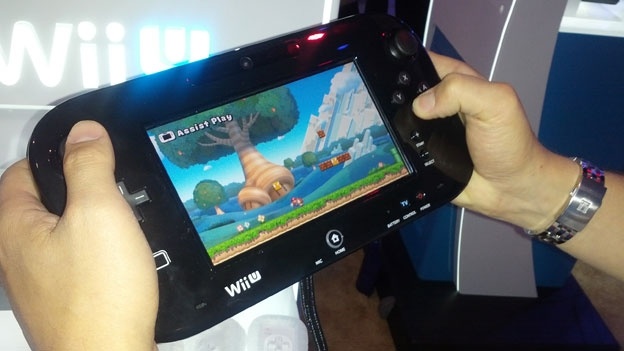
Nintendo Dropping the Wii U GamePad Is One of the Craziest "Solutions" We've Ever Heard

Recently, GameTrailers had a discussion and released a video dealing with the possibility of Nintendo removing the Wii U GamePad from the Wii U package. As current Wii U owners and just people in general with some sense, we argue against the side that thinks that Nintendo should take such a drastic measure. There are various points for our reasoning, so see if you agree or disagree with us.


First, cost is a topic that is brought up a lot, but we don't really know how much the GamePad factors into the overall cost of production for the Wii U system. People spout out numbers randomly, but Nintendo has never and probably never will revealed the price of making the GamePad for every system, so it's difficult to ascertain just how much (or at all) removing the Wii U GamePad would affect Nintendo's bottom line.

Secondly and a more important point, dropping the Wii U GamePad from the equation would take away what actually separates the Wii U from the competition. You take away the GamePad, and what you are left with is an underpowered (compared to the PlayStation 4 and Xbox One) console with no hook to it. Nintendo has made it clear that they cannot compete in an arms race with Sony and Microsoft.

We've seen Microsoft this past generation throw as much money as possible to get to where they are today in the gaming industry. Part of the reason why the Xbox brand is so popular now is all of the exclusive deals that money gave Microsoft and their Xbox 360. Nintendo doesn't have that benefit. They don't have multiple other departments like computers, televisions, movies, an online browser, MP3 players, etc. that Sony and Microsoft have. Despite how influential Nintendo has been to the industry, money-wise they are a small fish in a big pond. They only deal in gaming, unlike the others.

The point of all this is that Nintendo uses what critics like to call "gimmicks" (despite the d-pad, analog stick, rumble, and more-- all made popular by Nintendo, all called "gimmicks" in their time) to set their consoles apart and make their financially sound humble in power consoles from the competition. Nintendo has even tried to compete tech-wise with the competition before with the Nintendo 64 and GameCube, and all that did was make them lose a massive amount of market share through the years. So when someone wishes that Nintendo would have just made a "normal" console instead of what they've done, we sort of shake our heads and say they've tried just that in the past and have failed. Dropping the Wii U GamePad means dropping one of the only things the Wii U currently has going for it, as people are not going to just be happy with a souped up Xbox 360 by Nintendo.

Rumble was once considered a gimmick, too. In
 fact, that was once Sony's argument this past gen.
Moving onto another point, when something is made optional, it's usually not used much, then. Even Nintendo's own Wii MotionPlus peripheral, which was packaged with the highly successful Wii Sports Resort, did not receive much in the way of support from third-parties. This is despite the accessory and the included game (or is it the other way around?) selling in the multi-millions. Why, you ask? Because optional peripherals do not garner high support. All the proof you need is history. The Wii Fit Balance Board has its place in many homes across the globe, yet the support for the device was minimal at best. Case in point, if it doesn't launch with the console, it probably won't be used by many developers and by many games.


When someone says that Nintendo should drop the GamePad and make it optional, not only would it tick off buyers who already have the Wii U, but it'd make it so the GamePad would be much less used than it is already and things like the absolutely awesome Miiverse would be less popular and less used as well.


For us, the Wii U GamePad has already given us more than enough entertainment. We enjoyed the launch title Nintendo Land and its use of asymmetrical multiplayer. We loved its usage in Ubisoft's ZombiU, as we cautiously looked back and forth between both the television screen and the GamePad screen to check for zombies as we managed our inventory. We especially dug the GamePad's use as a scanner in the fantastic must-play LEGO City Undercover, one of our favorite Wii U games yet. (Scoff if you must, but it's really a terrific title, LEGO game or not.)


By far the greatest experiences we've had with the Wii U GamePad is its off-TV play. It's nowhere near as advanced as what Sony has come up with concerning their upcoming PlayStation 4 and PlayStation Vita Remote Play, but the Wii U solution is also not nearly as expensive either. Regardless, being able to watch the baseball game while running through the Mushroom Kingdom in New Super Mario Bros. U or while taking down behemoth creatures in Monster Hunter 3 Ultimate are experiences we absolutely cherish.


The Wii U GamePad is still struggling to gain traction. People argue that nobody wants it and cite current abysmal sales as the reason why, but we argue that the Wii U is not selling because the games haven't been there, nor have they been there in a consistent manner. We also argue that there's still plenty of brand confusion regarding the Wii and Wii U. It's easy to say Nintendo "should have done this" or "should have done that", and it's easy to say that someone's solution would have worked better, especially when there's no real way to prove a hypothetical solution wrong. That said, removing the Wii U GamePad from the equation is yet another short-sighted solution that would do more harm to Nintendo's brand than good.