Tuesday, October 4, 2016

It WAS Sometimes Worthwhile: The Games That Best Used the Wii U GamePad

As the Wii U enters its final holiday season, it seems apropos to look back on the system. Nintendo really tried to sell consumers the idea that the Wii U GamePad was something innovative and special. However, the sales of the Wii U system speak for itself. Most people either weren't interested in what the GamePad offered, or they still thought the GamePad was an add-on to the Wii. Still, despite Nintendo sometimes showing that it was even oblivious to how to show off the Wii U GamePad as a useful controller, the company did manage to make it seem worthwhile. Not only that, but a good amount of third-party developers managed to do the same!

With this article, my intention is to show off some of the games that actually used the Wii U GamePad well. Perhaps you could call them the best Wii U games that used the GamePad. Now, I'm neglecting to mention games that just had off-TV play available to them or something as simple as a means to select from an inventory or use the screen as a map, though there are some games that are on this list that slip past that caveat. Regardless, after you've read this article, answer the SuperPhillip Central community this: What Wii U games do you think best used the Wii U GamePad?

Super Mario Maker


I wonder if this game had been released closer to the Wii U's launch rather than near the end of the console's life if the Wii U would have been a better success. Of course, all I can do is think as there's no way to determine such a thing 100%, as there are too many variables to consider. Regardless, Super Mario Maker seemed like the game the Wii U was made for, allowing players to tap and insert various elements like blocks, pipes, enemies, and more into their own levels. The interface was immensely accessible to users of all ages, and the amount of cool stuff you could create was really only limited to your imagination. Okay, okay. Only limited to your imagination and what was actually possible in the maker part of Super Mario Maker! The community is still very much active, and while a Nintendo 3DS version is releasing in December, its lack of online level sharing already makes it an inferior version.

Nintendo Land


This game didn't get much fanfare as the final game revealed at the Wii U's coming out part several E3s ago. Heck, even the confetti that was supposed to go off at the end of the segment for the game didn't work. Still, Nintendo Land was the technical showcase of all the possibilities the Wii U GamePad could do, and it sold the concept of asymmetric multiplayer rather well. Whether having one player use the GamePad screen as not only a map but their own personal screen to hide and run away from their pursuers in Mario Chase to using both analog sticks to control Booker and Copper as they try to capture the candy thieves in Animal Crossing: Sweet Day, the variety of uses for the Wii U GamePad in the multiplayer games as well as the several solo experiences made the potential of the controller really exciting. Too bad the potential didn't really culminate as Wii U owners had desired.

Rayman Legends


The story of Rayman Legends's development is a sore story for Wii U owners. The game was delayed and was ported to other systems due to the less than stellar sales of another Ubisoft game, ZombiU. Not only did this delay anger Wii U owners, but the sales may have suffered too because of it. Many Wii U owners had other games to play by the time Rayman Legends came out, so maybe a timed exclusive would have worked better. Regardless, Rayman Legends used the Wii U GamePad with great gusto, having players touch, pull, and tinker with the environment in special Murfy levels. While players interacted with the environment, either an AI character (in solo mode) or players with Wii Remotes in multiplayer could navigate it thanks to the Wii U GamePad player's help. I remember being so excited and surprised at how well Legends looked in the live demo at an E3 Ubisoft press conference leading up to the Wii U launch. My excitement continued all throughout playing the game.

ZombiU


I mentioned this Wii U launch title in my description of Rayman Legends. This game bombed on the Wii U, though it wasn't due to its quality-- more to do with its subject matter that quite clashed with the traditional Nintendo demographic-- hopefully that is a fair assessment on my part. Regardless, ZombiU was a survival horror game of the most literal sense. It was about survival in the zombie apocalypse in present day London. As a survivor, you only had your wits about you and a bug-out bag containing limited room for items found in the wild. One bite from a zombie meant that your survivor was... well, no longer surviving!


From there, you took control of a new survivor with all of your old tools gone-- though you could find your last survivor in zombified form to take back your goodies. The Wii U GamePad was used to organize your bug-out bag, take out and put in items and objects. However, this played out in real-time, so while you sifted through your backpack, a zombie could come along and attack you. Thus, looking back and forth at both screens was required to be assured your survivor wouldn't turn into zombie chow out of nowhere. Ubisoft remastered ZombiU onto the PS4 and Xbox One, but not only did it bomb there, too, but it was an inferior game due to the lack of the Wii U GamePad's available options.

Splatoon


A lot of us in the gaming community ate our crow when a new IP from Nintendo, on the Wii U of all systems, found massive amounts of success. That new IP and game was Splatoon, a team-based third-person shooter where the goal wasn't to score kills, but instead, the super-creative and innovative goal of spewing your team's colored paint to cover the most ground before time runs out. Not only could you spray, but as a squid kid you could enter into squid form and travel inside the paint coated on the ground for some really clever arena traversal. The Wii U GamePad was a necessary part of Splatoon, allowing players to make note of how much of the map was covered by both their team and the opposing team's side, as well as allowing them to jump instantly towards another teammate. Whether the next game is called Splat2n or whatever, Nintendo gamers and third-person shooter fans wanting a different take on the genre wait with bated breath for the NX and a probable sequel!

Star Fox Zero


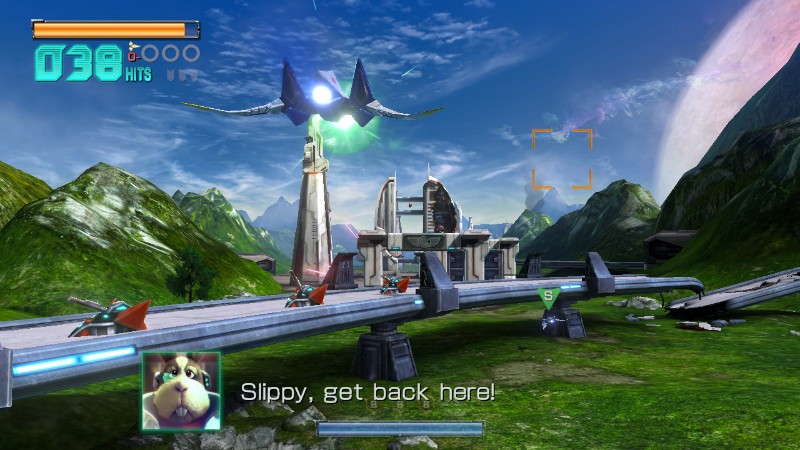
This game might be a controversial pick, as Star Fox Zero's reviews were mixed at best. This was mainly due to the controls and how the Wii U GamePad was utilized in-game. The television screen showed Fox McCloud's piloted vehicle in a third-person mode, while the Wii U GamePad screen showed a first-person view. With a mechanic that could only be done with a second screen, players could move the Wii U GamePad around to aim at enemy ships not only directly in front of Fox's Arwing, for instance, but they could aim at enemies to the side-- ones that would otherwise be completely off-screen in the third-person view. Now, there's no question that this control setup took some getting used to, but when (or maybe IF is the better word to use) that setup clicked, high scores could easily be obtained and you really felt like you were in control of Fox McCloud's space and land combat movement. It's a shame that the barrier of entry was so high, as I truly do believe that Star Fox Zero is a great game.

Star Fox Guard


The title that was bundled with Star Fox Zero, Star Fox Guard, saw you playing as Slippy Toad, using the Wii U GamePad to switch between various monitors. The different monitors had different viewpoints, and this allowed players to fend off enemy robots coming to cause trouble. Through smart management of switching between monitors and attacking, players could successfully complete each of Star Fox Guard's missions. For its relatively low entry price, Star Fox Guard possessed a good deal of variety and play time for players to enjoy. Outside of being bundled with the physical version of Star Fox Zero, those desiring the game but not wanting the entire package can download Guard from the Nintendo eShop.

Affordable Space Adventures


Indies continue to show that they shouldn't be ignored or seem inferior just because of their available budget or size. This is especially true for the folks at KnapNok Games, the creators of the Nintendo eShop exclusive, Affordable Space Adventures. This 2D adventure game had players controlling a spaceship, utilizing the Wii U GamePad to perform various systems within the ship. This included tasks like changing the landing gears of the ship, altering the thrust level, and more-- all done by touching icons on the Wii U GamePad's screen. The goal of the game was to navigate through levels, starting from the entrance and heading to each level's exit, all the while managing the spaceship's functions and systems. All in all, Affordable Space Adventures uses the Wii U GamePad in a sensationally clever way that few other indie games on the system can compete with.

New Super Mario Bros. U


To me and a lot of other Nintendo system owners, it didn't seem like a smart idea to release two New Super Mario Bros. series games in the same year, much less the same three month period. However, that didn't stop Nintendo from doing so, albeit on different systems. Thus, a launch game for the Wii U, New Super Mario Bros. U didn't have the same "wow" factor as it possibly could have had. Regardless, playing the game solo doesn't show off the Wii U GamePad in any effective way. Sure, you can play directly on the Wii U GamePad screen with off-TV play, but that's a feature so many Wii U games have. Hardly notable on such a list like this. Regardless, it was multiplayer where the Wii U GamePad really shined. Here, the player holding the controller could tap on the screen as the other player(s) went through the level normally. In doing so, differently colored platforms would appear for the other player(s) to jump on. In tandem with each other and with great communication, some really awesome platforming feats could be possible... or you could be like me and try to screw over your friends by placing blocks to impede their progress. I'm such a good friend, I sarcastically say!

Pikmin 3


Pikmin 3 was a pet project from Shigeru Miyamoto, who I think takes more crap from Nintendo gamers than he deserves lately. That's another topic for another day, however. Pikmin 3 utilized multiple control methods, and the best ones used the Wii U GamePad as a map for the various levels in the game. With the controller, players could assign one of the three main protagonists and their own legion of Pikmin to various areas on the map. This meant you could do lots of multitasking to split up chores between the three characters and their assigned Pikmin. It was especially fun seeing how well I could assign my "squadrons" to complete levels in as few days as possible. Pikmin 3 wasn't the most exciting use of the Wii U GamePad, but it sure as heck was one of the more effective ones for gameplay purposes.

Kirby and the Rainbow Curse

*The actual Wii U GamePad is not made of clay.
A direct sequel to the gameplay style that the Nintendo DS game Kirby Canvas Curse possessed, Kirby and the Rainbow Curse was a shoo-in for a game on the Wii U to use the Wii U GamePad. Rainbow Curse had you drawing lines with a magical rainbow paintbrush to guide Kirby through colorful and challenging levels. A tap of Kirby would allow the pink puffball to gain speed and slam into enemies safely. Now, sure, having to use the Wii U GamePad for the entire game meant that there wasn't really much of a point in making the game HD, as your attention always had to be focused on the SD Wii U GamePad screen, but Kirby and the Rainbow Curse's entertainment value far outweighs the compromise. The game also has one of my favorite Wii U soundtracks, but again, that's another topic for another day!

Deus Ex: Human Revolution Director's Cut


Originally announced as a Wii U exclusive, Deus Ex: Human Revolution Director's Cut was later announced that it was coming to the PlayStation 3 and Xbox 360, which was nice. Why keep an enhanced and much improved version of the game on one system? However, despite being on more platforms, many-- included the developers-- feel that the Wii U version of this Director's Cut is the ultimate version of the game due to the features added thanks to the help of the Wii U GamePad. Obviously you can play the entire game on the Wii U GamePad itself, but things like using the GamePad's screen as a radar, map, and infolog, as well as using the touch-based interface of the GamePad screen to hack different terminals, cameras, and other technology, and being able to view your inventory with the quickness and convenience of just looking down at the GamePad screen. Deus Ex: Human Revolution Director's Cut was an astounding game made even better thanks to the Wii U GamePad.

Wii Party U


I know what you might be thinking-- aren't there enough party games on the Wii U? Sure, but why not? Out of all them, though, besides Nintendo Land, I feel Wii Party U best utilized the Wii U GamePad in a variety of humorous, amusing, and engaging ways. Now, there were mini-games in Wii Party U that sported a similar asymmetric gameplay like Nintendo Land, where one player used the GamePad while the other three used Wii Remotes, but there were some other notable uses as well. The hysterics that could be brought on by Name That Face, where the Wii U GamePad player gets a description of a face to make, takes a photo, and then the other players try to guess what the player's face was trying to convey via multiple choice was incredible and led to many nights of laughter with my friends. Then, there was a Pictionary-styled game, as well as tabletop offerings in the form of baseball, foosball, and more. These tabletop games were played solely on the Wii U GamePad with two players seated on each side to control the game. Wii Party U was an entertaining party game that sadly, many Wii U owners passed on.

Pokémon Sun and Pokémon Moon (3DS) New Trailer

A new trailer was posted this morning for next month's Pokémon Sun and Pokémon Moon. This particular trailer shows off the first evolution of the three starters, as you can see in the video image, as well as information about how you store Pokémon in these games. Lastly, Ash-Greninja was revealed, as was the announcement of a demo coming soon to the Nintendo 3DS eShop.

Monday, October 3, 2016

SuperPhillip Central's Favorite VGMs - Happy Rosh Hashanah Edition

It's the Jewish new year today, and I'm glad I could catch it before the day's end. The Jewish calendar is more than a few thousand years ahead of the standard Roman calendar that we generally use. And it's around more than four thousand digits ahead of SuperPhillip Central's Favorite VGMs VGM volume total.

Regardless, as is customary on Mondays, the Favorite VGMs are here to deliver great video game music to all readers of SuperPhillip Central. This week, the critically mixed Star Fox Zero leads off with its version of Corneria. Then, Mario Kart 7 races onto the scene. Star Ocean: The Second Story is one of my favorite video game soundtracks of all time, so this week I'm showing off a world map theme for the game. Next, Tatsunoko vs. Capcom: Ultimate All-Stars delivers a titillating tune. Finally, Me & My Katamari busts out a ten minute-long funk-a-licious song.

As always, click on the VGM volume name to reach the YouTube video featuring that song. And if you want to listen to past VGM volumes featured on SuperPhillip Central's Favorite VGMs, look no further than the always-updated VGM Database. Now, let's get on to the music!

v1236. Star Fox Zero (Wii U) - Corneria: Galactic Hub of Peace


The first mission of Star Fox Zero takes players into familiar territory, the home world of the forces to face off against the evil Andross, Corneria! While Star Fox Zero's incarnation of Corneria's theme is wholly original and doesn't have the same memorability as what was heard in Star Fox and Star Fox 64, you do get a wonderful and riveting orchestral piece all the same. Expect to hear more from Star Fox Zero not only this week, but in future editions of SuperPhillip Central's Favorite VGMs.

v1237. Mario Kart 7 (3DS) - Toad Circuit


Last week, the final review of September 2016 was posted, a Review Redux of Mario Kart 7. Now, we take a listen to the song of the first circuit in the game, Toad Circuit, a simple track with easy, long curves and a wide track size. It's a perfect introductory course featuring a theme that also plays during the Mario Circuit track.

v1238. Star Ocean: The Second Story (PS1) / Second Evolution (PSP) - Field of Expel


I think the statute of limitations on spoilers for Star Ocean: The Second Story and its PSP port is over. Therefore, I can say that this theme, Field of Expel, plays as the world map theme of the first planet our heroes travel across. Motoi Sakuraba has yet to create a soundtrack that I love as much as his work on the Star Ocean: The Second Story score. The warm synth, memorable melodies, and robust rhythms make for a soundtrack that I do find to be Sakuraba-san's best work.

v1239. Tatsunoko vs. Capcom: Ultimate All-Stars (Wii) - Yatterman's Workshop


One of my favorite fighters from last generation just so happened to be a Wii exclusive of all things. It's Tatsunoko vs. Capcom: Ultimate All-Stars, which is by no means a stranger to SuperPhillip Central's Favorite VGMs. The game's music gets you prepped and primed for the engaging 2-on-2 battles between Capcom's best and the Tatsunoko anime company's greatest warriors. Even though online is no longer available, you should still own a copy if you're a fighting game fan and Wii owner.

v1240. Me & My Katamari (PSP) - Katamari on the Funk


Ready to get funky? Well, how about getting funky with a ten minute-long song! That's exactly how SuperPhillip Central's Favorite VGMs is ending this edition. This catchy vocal theme never outwears its welcome, bringing the funk to you and the colorful and wacky world of Katamari Damacy.

Review Round-Up - September 2016

Wait a minute. What year is this?! It doesn't matter when you have the all-new Review Redux!
October is here, as is autumn! Before we delve deeper into this month featuring Halloween at its tail end, let's look back at the month that was September 2016 for a Review Round-Up!

Oceanhorn: Monster of Uncharted Seas kicked things off with its console version, scoring an A- for its wonderful effort. Then, the 700th review of SuperPhillip Central, concluding the Summer of 700 promotion, was in the form of an all-new type of review, the Review Redux. Super Mario 3D Land was the first of this type of review, earning a fantastic A. A pair of racers then proceeded to follow Mario with Bears Can't Drift!? (C-) and Riptide GP: Renegade (B-). Mekorama delivered isometric puzzling fun with the ability to create levels, so it got a great B grade! Did I mention that game is totally free to download and play? Finally, another Review Redux arrived, capping off this past month's reviews, with a return look at Mario Kart 7 (B+).

October is going to excite with its review output. Such games that might be featured include Uncharted 4: A Thief's End, Paper Mario: Color Splash, Dragon Quest Builders, and some scary titles perfect for Halloween!

Oceanhorn: Monster of Uncharted Seas (PS4, XB1) - A-
Super Mario 3D Land (3DS) Review Redux - A
Bears Can't Drift!? (PS4, Steam) - C-
Riptide GP: Renegade (iOS, Android) - B-
Mekorama (iOS, Android) - B
Mario Kart 7 (3DS) Review Redux - B+

The Review Redux also took us by land, sea, and air with a return look at Mario Kart 7!

Thursday, September 29, 2016

Mario Kart 7 (3DS) Review Redux

Last week was SuperPhillip Central's 700th review, which introduced a new type of review to the site, the Review Redux. Now, the Review Redux returns again with another Mario game, but this time in a totally different genre. It's a look back at Mario Kart 7 for the Nintendo 3DS!

Revisiting the wild, rigorous racing of Mario Kart 7!


While Diddy Kong Racing seems to still be the king for me when it comes to kart racers, when it comes to kart racing series, then it's no question that Mario Kart is still the king for me. I like to make any excuse to replay the games in the series, whether it's to play with my friends and family, or just because I'm totally bored. I went to back to Mario Kart 7 recently, as I was hoping the online community was still available. Plus, I still had some kart parts to unlock. Returning to Mario Kart 7 has been a rewarding time in my gaming life, and it's great to see that I still find a lot to love about the latest handheld Mario Kart from Nintendo.

Mario Kart 7 is the first Mario Kart in the series where kart customization is a feature as well as something that's important. While past Mario Karts had it where what weight of character you chose factored into that character's top speed and acceleration skills, Mario Kart 7 has it where choosing from three kart options: body, wheels, and glider, affects your kart's performance. It can affect your top speed, acceleration, handling, and off-road skills.

When you begin Mario Kart 7, you have a very meager selection of kart parts available to you. However, as you progress through the game, collecting coins as you race, you receive new kart parts at various total coin milestones. For instance, if you collect 1,000 coins throughout your Mario Kart 7 career, then you unlock a new, random kart part. Now this way of unlocking kart content isn't perfect-- actually, far from it. As I stated, not only do you unlock a random kart part at various coin milestones, which means that if you're wanting a specific kart part for looks or for function, then you're a slave of the RNG, but you can only collect a maximum of 10 coins per race. This means per cup you can only get 40 coins. For kart parts that take that aforementioned 1,000 coins to unlock, for instance, that is A LOT of grinding for kart parts. Even then, you're not guaranteed 10 coins per race, as getting hit by an item knocks three coins away from your kart.

I dunno, Mario. I still think your brother gives the best death stare out there.
Thankfully, unlocking Mario Kart 7's cast of characters to race as is far easier a goal. All you have to do is win the various cups on various difficulties. The selection of racers this time around is an eclectic bunch with some new additions like Metal Mario, Honey Queen from Super Mario Galaxy (though shrunk to ridiculous size to fit in her kart), and Wiggler. However, some of the characters who missed the cut are very much missed by yours truly, such as Bowser Jr., Diddy Kong, and the most egregious loss for the reason that he has his track from Mario Kart DS in the game as a retro track, Mr. Waluigi, everyone's favorite racing wah-rrior.

Absences like Waluigi and Bowser Jr. may sting when their
replacements are characters like Honey Queen and Metal Mario.
The biggest new addition to the Mario Kart series this time around gameplay-wise takes the kart racing action beyond just the regular ground and puts it underwater and in the air. While the former isn't too interesting, save for changing how the karts handle and their physics while submerged in water, the air parts of Mario Kart 7 are an absolute blast. There are specific parts of tracks in Mario Kart 7 where your kart's glider automatically opens up, allowing you to take big air as you soar along the sky. Many of the newer tracks of the game contain areas that give you this temporary power of flight before you lose altitude and return to the ground. It's especially fun to see how far you can glide, sometimes even being able to skip modest portions of track to trim off some seconds from your overall time. In the Grand Prix case, it's awesome to gain some extra distance over your opponents or to help you catch up with the pack.

Daisy soars over the idyllic settings of the track named after her, Daisy Hills.
As for the racing in general, Nintendo once again delivers a tight, responsive racer in Mario Kart 7. You can opt to race normally with the Circle Pad to control your kart, or you can use new tilt controls for an interesting racing experience placing you in the driver's seat, given a first-person viewpoint as your race.

Mario Kart 7 shares how karts handle from Mario Kart Wii, its predecessor. As you drift, instead of moving the analog stick (or the Circle Pad in the Nintendo 3DS's case) back and forth to produce energy to unleash a turbo boost, you get energy from maintaining a drift. The longer your drift, the bigger boost you get when you let go of the drift button. In addition to the Mario Kart Wii way of earning turbo boosts, you can once again perform tricks off of ramps and jumps to get a minor boost when you land. Thankfully, you need not shake anything to do this. All that's needed is a tap of the R button as you reach the end of a ramp or jump.

Donkey Kong shows off his drifting skills. A blue streak like this
one will turn into a red one for maximum boosting goodness.
Items have been an important part of the Mario Kart series since its inception on the Super Nintendo. Mario Kart 7 continues this trend, but this time the game offers three new items in addition to the ones featured from past installments of the series. The Fire Flower item gives the acquirer the ability to launch fireballs backward and forward until it runs out. These fireballs spin out racers for a brief period of time, but in a race, even a split-second's spin-out can win or cost someone the race. Then, there's the Tanooki Leaf that spawns a Tanooki tail on the rear of the user's kart. Not only can this swipe at and spin out opponents who veer to closely to your kart, but it can whack away items like shells and banana peels. Finally, the Lucky Seven item gives you a spinning roulette of items to use, most notably the Super Star. Just don't let your opponents steal it from you! The total amount of items in Mario Kart 7 is nice and varied, but yes, there is still the Blue Shell to worry about when you're in first place. Fortunately, it doesn't just fly over opponents as it reaches towards first place. Instead, it speeds along the track, able to collide and crash into other racers who are foolish enough to race in the middle of the track when it heads for first place.

Mario Kart 7 sports 32 unique tracks. Since Mario Kart DS, the unofficial rule has been that 16 of these tracks are brand-new while 16 are from past Mario Kart games. Mario Kart 7 follows this rule to a "T." The original tracks featured in Mario Kart 7 are wonderfully designed, sporting plenty of unique locales, treacherous turns, underwater sections, segments where you can soar with your kart's glider, and many shortcuts and alternate paths. Some favorites of mine this time around include the Netherlands-like Daisy Hills, a track that features many rolling hills, and a very fun ending segment where you glide past the blades of several windmills as you re-enter the cozy-looking village where the track started. Then, there's two tracks situated in Wuhu Island, a place originally featured in Wii Sports Resort. These two tracks show off a varied amount of geography, as you race through the town, through caves, bridges, cliff-sides, and more. These races are especially notable for not being traditional three-lap affairs. Instead, they're so long that they're actually three-segment races, where each segment is a different piece of the track-- it's like one long adventure through Wuhu Island. Finally, there's my favorite iteration of Rainbow Road in any Mario Kart to date, a three-segment tour of space, featuring racing on a planet's rings as well as on the surface of the moon.

The 16 retro tracks take some of the best tracks featured in Mario Kart history and breathe new life into them, giving some new sections that include Mario Kart 7's new underwater and gliding gameplay. New shortcuts have been added, such as Mario Kart DS's Luigi's Mansion, where you can use a Mushroom to boost up a ramp in the graveyard portion that allows you to glide over the graveyard's exit instead of navigating the turns inside. Favorites of mine here in the retro selections include Airship Fortress (DS), Koopa Beach (N64), Maple Treeway (Wii), Coconut Mall (Wii), Dino Dino Jungle (GCN), the aforementioned Luigi's Mansion (DS), among many others.

I know you're excited about winning, Shy Guy, but let's be responsible racers. Both hands on the wheel, please.
Content-wise, Mario Kart 7 is pretty lacking compared to the series's past two installments, DS and Wii. A major part of that is the total lack of a Mission Mode. Really, all you have single-player-wise is getting through all of the four Grand Prix cups and four difficulties of each, unlocking all characters in the process, grinding for kart parts, and doing time trials. Thankfully, Mario Kart 7's online community is still quite a bustling one, where you won't have to wait long to race against up to seven human opponents from around the world. You can still join specific Mario Kart 7 Communities, where you and whomever possesses the Community code can race in groups with predetermined rules like no items, Mushrooms only, and options of that nature. Local multiplayer is a feature, allowing 3DS's with copies of the game to race against one another, or you can even do Download Play, which gives the player without a copy of Mario Kart 7 to still be able to race on all 32 tracks via Grand Prix or Vs. Mode. The only caveat here is that they can't customize their kart and are stuck with using Shy Guy.

You can also gain new time trial ghosts via Spotpass and Streetpass, as well as race against said ghosts to try to improve your times in the game's 32 races. You can even compare your best times with the world on a very helpful and easy-to-read graph. Finally, Battle Mode is included, and this offers six arenas: three new and new from past Mario Kart games, to combat their opponents in with traditional non-team rules.

Mario Kart 7's visuals range from very good to not-so-much. For instance to the latter, the character models sort of have the look of being carved out of wood, with blocky sections to them that don't appear like the best the Nintendo 3DS could do, even at the time of its release. However, the actual track environments and textures are lovely. There's plenty of stuff going on in the environments and some really cool effects, such as on a turn in Mario Circuit where cherry blossom trees unload their pink petals into the air and onto the track. The frame-rate of Mario Kart 7 is smooth as butter, offering a delicious-running game. On the sound side, you get the typical character voices and taunts in and after races, and the music is full of terrific tunes that are easy to want to hum along with. Just don't get too distracted by the music that you don't notice that red shell coming towards you!

Mario Circuit is made even lovelier with these pink cherry blossom petals fluttering about the track.
After replaying Mario Kart 7 after these 4-5-odd years, I still enjoy the game and the racing experience as a whole. I think a major part of that is just loving how well the tracks are designed and how memorable they are. They're just plain fun to race on, and the addition of underwater and flying segments really make the tracks more exciting. Sure, grinding for random kart parts isn't my preferred way of unlocking content, but it does give you something to shoot for, though I'm still only at about 6,500 total coins after this many years and my next kart part-unlocking milestone is at 10,000. Makes for some hard motivation to continue grinding, as you can probably understand. Still, whether it's engaging in a long sessions of Grand Prix cups against the AI or just doing a race online with friends or strangers, Mario Kart 7 remains a wonderful kart racer that while lacking in content, more than makes up for in its tremendous gameplay.

[SPC Says: B+]