Showing posts with label best video game remakes. Show all posts

Friday, November 27, 2020

Remakes & Remasterpieces 3: An Ongoing Look at the Best in the Biz

These remakes and remasters are certainly NOT turkeys by any stretch of the word. As many of us in the United States [hopefully safely] enjoy our Thanksgiving weekend, SPC returns with its ongoing look at the best video game remakes and remasters. These games greatly improved on their originals, or breathed new life into old classics with a fresh approach that ultimately worked out wonderfully in the end. These latest five remakes and remasters truly shine brightly and most definitely do their originals justice.

To read which games were featured in SPC's previous installments of Remakes & Remasterpieces, look no further than Volume One and Volume Two.

Final Fantasy VII Remake (PS4)

The original Final Fantasy VII was a three-disc game that spanned a myriad of locations and had such an involved plot that it would have been impossible for Square Enix to dedicate one of their patented humongous, bloated budgets to remaking the entire game--at least in any timely fashion. Instead, the developers decided to retell the story of Final Fantasy VII in multiple parts, starting with Midgar. While this did bring a fair amount of bloat and padding into the game, everything else is so remarkably remade that it's hard not to appreciate this game for everything that it did and everything new it brought to an old classic. It was truly a brave and bold choice to move towards a more action-oriented approach to combat, going for a Kingdom Hearts-like feel instead of the traditional active-time battle system of the original FF7, but it overall worked for this remake. Battles are equally challenging in difficulty and dazzling in spectacle.

And, really, that's what Final Fantasy VII Remake represents--a risk that ultimately played out well. The developers could have easily remade the Midgar portion of Final Fantasy VII and stuck closely to what made the original work so well. Instead, they opted to reimagine many parts of the original, from combat all the way to the story. Whether the latter works is a matter of opinion, but the thrill of reliving key moments of Final Fantasy VII's Midgar chapter alongside the extended scenarios which fleshed out the cast of characters even better than the original did up to that point in the original was fantastic to experience. Doing it all with jaw-dropping graphics, a soundtrack that excels in every way, and combat that is so expertly and enjoyably crafted makes Final Fantasy VII Remake a terrific remake and reimaging of a classic game.

Xenoblade Chronicles: Definitive Edition (NSW)


Monolith Soft's Xenoblade Chronicles on the Wii was a massive, almost overwhelming RPG that frankly the Wii hardware didn't do justice. Don't get me wrong--the game was excellent and the Wii didn't make the game and less fun. It just didn't look the greatest. With the Nintendo Switch, Monolith Soft sought to bring their classic RPG to a new generation of fans as well as bring a fresh coat of paint to its masterpiece for old fans as well. That's exactly what it did with Xenoblade Chronicles: Definitive Edition, which has a subtitle that is totally not just for show. This version of Xenoblade is definitely definitive.

The ghoulish-looking character models from the Wii have all been "glowed up" as it were, offering more emotion and detail than ever before. The worlds and environments, which were already equally gorgeous as they were expansive, have never looked better on the Nintendo Switch. The Switch version offers more color, more vibrancy, and more personality. The addition of the epilogue to the base game, Future Connected, brings an entirely new story with a brand-new area to explore as well. It's a bite-sized adventure that brings even more Xenoblade goodness to players. There are few 100+ hour games that I'd merrily play through again, but Xenoblade Chronicles is one of those. The Definitive Edition only made that case for me even clearer, making an excellent game on the Wii even more so on the Switch.

Trials of Mana (NSW, PS4, PC)

While Final Fantasy VII Remake took a major risk in changing a lot of things that fans loved about the original game and was ultimately successful for it, another Square Enix remake (also releasing that month), played it much more safely. However, it was successful in its own way as well. Trials of Mana didn't really change up much of the foundation of the original Super Famicom game, other than brilliantly revitalizing a 2D world into a fully 3D one. Everything else was essentially similar to the Super Famicom original, and really, I wouldn't have it any other way.

Trials of Mana's remake made for a superb adventure that harkened back to classic RPGs of yesteryear, despite it having the skin of a modern game. The new visuals look absolutely fantastic, even on the Switch version, which is the version the accompanying screenshots were taken from. The world was great fun to explore, the different ways the story played out depending on which three of the six main characters you chose made for some pleasant replay value, and the combat system, although basic compared to its contemporaries, offered both challenge and fun. It all adds up to a remake that tickled all the nostalgia strings of this particular player while remaining a fresh RPG experience.

Tony Hawk's Pro Skater 1 + 2 (PS4, XB1, PC)

This year saw a lot of remarkable remakes, and Activision isn't any stranger from remaking its catalog as of late. We saw Activision having success with both Crash Bandicoot and Spyro the Dragon. Next up was the revitalization of Tony Hawk's Pro Skater, and unlike its previous attempt at remaking the Birdman's game, this remake from Activision releasing early this past September was a tremendous success.

Not just remaking the first game's levels, but also the wildly popular second game's as well. Both game's levels were a part of the same career mode, allowing players to choose from a pro skater or their own custom creation that could be outfitted with various unlockable clothing items and gear. New challenges meant that even longtime THPS fanatics were tested to their utmost abilities. Most importantly, however, Tony Hawk's Pro Skater 1 + 2 absolutely NAILED the feel of the old games, offering tight, precise, and awesome feeling controls that seemed like 1999 never left us and that games like Tony Hawk's Ride, Shred, and Pro Skater 5 were just fever dreams. Tony Hawk's Pro Skater 1 + 2 was made with the proper amount of TLC--so much so that it is a stellar tribute to the classic THPS games and totally deserves to skate with the best that the series has to offer.

Bully: Scholarship Edition (360, Wii, PC)

Last but not least, we have a game that originally launched on the PlayStation 2 and later found itself a generation later appearing on both the Xbox 360/PC and the Nintendo Wii. It's Bully: Scholarship Edition, a Rockstar Games title that saw players take on the role of Jimmy at Bullworth Academy, causing various shenanigans as he butted heads with both school administration and other students. While the HD version was more of a remastered version that played just as well as the PS2 original but looked a bit sharper and cleaner, the Wii version, too, was worthwhile--though for different reasons. The Wii Remote and Nunchuk's motion controls, especially when used in the various class mini-games, were absolutely cleverly done and fine examples of motion controls done right. Definitely not the "waggle" nonsense that made so many despise certain Wii efforts at the time. What it amounts to is two different versions of Bully: Scholarship Edition that are worthwhile and worthy of sticking after class for.

===

Do you have a remake or remaster that has yet to be on an edition of Remakes & Remasterpieces that you would like to see on a future volume? Let the SPC community know in the comments section.

Monday, April 6, 2020

Remakes & Remasterpieces 2: An Ongoing Look at the Best in the Biz

We're smack dab in a month full of remakes. This past Friday saw the release of Resident Evil 3, and this upcoming Friday sees the long-awaited, hotly anticipated launch of the remake of Final Fantasy VII, cleverly titled "Final Fantasy VII Remake". Later in the month a remake of a less celebrated but still exciting game all the same with Trials of Mana.

What better month than April to bring back Remakes & Remasterpieces, SuperPhillip Central's continued glimpse at those special remakes and remasters that went the extra mile to make--or in this case--re-make some memories for fans of the originals and entirely new audiences. This second edition features familiar favorites from franchises like Resident Evil, The Legend of Zelda, and Final Fantasy.

Check out the first ever edition of Remakes & Remasterpieces by clicking HERE. Now, let's get on to the sequel!

Resident Evil 2 (PS4, XB1, PC)


Capcom gave players an all-too-tempting invitation to return to Raccoon City and all of the horrors both old and new that awaited them (and that's not even counting the most recent invitation with Resident Evil 3 as of this past Friday). Resident Evil 2 was a return to form for Capcom's storied franchise, delivering epic scares and labyrinthine areas to explore, infested with zombies and B.O.W.s of all shapes and sizes. A consistent sense of dread permeated through many a-player's first playthrough, and new surprises like the hulking, stalking Mr. X was terror personified. Further, every enemy in the game was a real threat. So many past Resident Evil games saw zombies as fodder for your ammo, but the zombies of Resident Evil 2 were smart and persistent, dangerously so.

It'd be silly of me to not mention the upgrade in the graphics, of which Resident Evil 2 truly shined like the stars in the sky. (Or is that S.T.A.R.S. in the sky?) The game featured breathtaking (if you could catch your breath while playing, that is) visuals with a robust and realistic lighting system, lifelike characters and animations, and a level of gore that would make satiate anyone's thirst for violence. Resident Evil 2 is a terrific remake whose campaigns and their second runs, whether playing as rookie cop Leon S. Kennedy or the strong-willed Claire Redfield, were filled to the brim with fresh takes on familiar areas. The game did a wonderful job of walking a fine line between adding enough newness to the campaign to make for a refreshing campaign while not completely diluting what made the original game so remarkable.

Okami HD (Multi)


We move from one Capcom game to another, though this one is of a decidedly much brighter and colorful sort. Okami was originally a PlayStation 2 game from the now-defunct Clover Studio that played and was structured similarly to Nintendo's venerable Legend of Zelda series. To many, Okami is a better Zelda game than many of Nintendo's own efforts. While I won't get into that part of the conversation, I will say that it's great that Amaterasu's adventure wasn't stranded in a standard definition format, because the vivid and brilliantly colored world of Okami looks absolutely sensational in HD. It looks great, and it runs great.

Obviously it plays great, too, regardless of which platform you play it on. That said, I'm a touch partial to the Switch version for its touch or JoyCon-based brush controls. Though the campaign itself is unchanged for the most part since its original launch, thus resulting in the game still possessing a rather bloated adventure that overstays its welcome by a fair bit, Okami HD remains a gem of a Zelda-inspired adventure. It's one whose hand-drawn, watercolor, cel-shaded art style stands the test of time and lent itself well to the remastering process.

The Legend of Zelda: Link's Awakening (NSW)


Speaking of Zelda games, let's dive right into the latest remade game in the series, a treasure originally released in 1993 for the Game Boy and now remade on the Nintendo Switch: The Legend of Zelda: Link's Awakening. Right away, the toy diorama art style bestows such a warm, cozy feeling. Koholint Island never felt like a more wondrous place, even if it has enemies infesting it, wishing nothing more than to slay our marooned hero Link. From the sandy shores of Toronbo to the heights of Tal Tal Mountain, Koholint Island was as much a character in Link's Awakening as the other memorable NPCs in the game, and the new visuals further enhanced that notion.

Additionally, it says a lot about the original game that so little in the way of changes was actually needed, but the quality of life upgrades to the Switch version of Link's Awakening were absolutely sent from the heavens, as they made the game so much better. More buttons meant more items could be used at once without constantly being forced to switch between menus at a rapid, obnoxious pace. The addition of being able to create dungeons from preset rooms was less of a "Zelda Maker" and more of a puzzle in placing the pieces properly to complete all of the conditions of a given dungeon-making challenge. The Legend of Zelda: Link's Awakening marked the return of the franchise's first handheld installment, remade for an entirely new generation in a truly astounding way.

Metroid: Samus Returns (3DS)


Nintendo's Zelda franchise saw a sharp spike in popularity this generation thanks to not just the success of the Switch but also the excellent quality and revolution to the series with The Legend of Zelda: Breath of the Wild. It's yet to be seen of course if Metroid Prime 4 will have a similar tale of success for Samus Aran and her series, as currently, Metroid isn't the most successful of Nintendo's properties. (Not to say it hasn't seen success in the past.)

Regardless, after the less than satisfying Metroid: Other M on the Wii that fragmented a lot of the fan base, Metroid fans were gutted yet again to discover that the next entry in the franchise--after what was about a five-year absence, then--was the chibi-styled Metroid Prime: Federation Force. While a good game in its own right (just not a good Metroid game), the fact that the Metroid series hadn't seen a more traditional game in years killed a lot of desire to give Federation Force a fair shake.

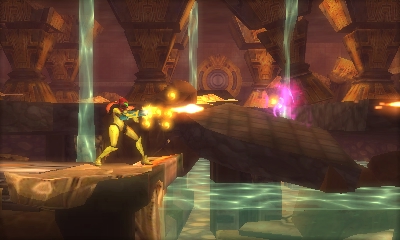
Then, like a gift from the gaming gods, Metroid returned to the forefront of gaming with an official remake of one of Samus' earliest expeditions. Another Game Boy game remade with Metroid: Samus Returns. Offering 3D visuals, an expanded story, new boss battles (some of the best in the series to date are included here in these), a super-satisfying counter mechanic, and the ability to shoot in multiple directions, Metroid and Samus herself were back and in a big way on the Nintendo 3DS. With an after credits story tease, the story will continue and if you're like me, you can't wait to see where Nintendo takes Samus and the Metroid series next.

Final Fantasy IV (DS, iOS, AND, PC)


Since I mentioned Final Fantasy in the introduction, let's talk about one of the better remakes in the franchise to date with Final Fantasy IV's 2007 enhanced remake. The "enhanced" part comes in when you realize how much content was added to this 3D version of the game. I believe a great remake stays somewhat faithful to the original while throwing in enough new content that makes the remake worthwhile and fantastic to re-experience all over again. Final Fantasy IV was all that and more.

For one, and most obvious, the 2D visuals of the original were replaced with 3D graphics, putting a fresh perspective on the adventure with new cutscenes as well as even new story sequences. Yes, the 3D hasn't aged as well as the [in my opinion] PSP's superior Final Fantasy IV: The Complete Collection's visuals, but they're still quite impressive for the Nintendo DS hardware and the fresh take on familiar locales is still appreciated. Further, a brand-new Augment system that relinquishes a party member's abilities to another member once they leave Cecil's party was introduced, as were various DS-exclusive mini-games and a New Game Plus mode. Final Fantasy IV is one of my favorite games in the franchise, so any opportunity I can get to replay it in a way that both honors and respects the original SNES game is one I will happily give my Gil to, and the DS version of Final Fantasy IV remains one of those games.

Friday, July 19, 2019

Remakes & Remasterpieces: An Ongoing Look at the Best in the Biz

Much like the realm of movies, video games are no strangers to remakes and returns to the classics that are fondly remembered. While with Hollywood, many times the modern version of a classic isn't at all necessary, with video games, we see entries that may have sufficed decades ago that may not exactly live up to our nostalgia or rose-tinted glasses today.

That's where remakes and remasters come in. Some might call them cynical money-grabs, but I'd prefer to call them modernizing and--at least with these examples on this inaugural edition of this new article series--improving the gameplay and visuals for old fans and new generations to enjoy. Bonus points if they add new content in as well!

This first edition of Remakes & Remasterpieces mainly features some classic mascots given both an updated and upgraded look. I say "mainly" because there's also Wipeout, which while not mascot-driven whatsoever, is so cool of a franchise that it's on this inaugural installment regardless.

Crash Team Racing Nitro-Fueled (PS4, XB1, NSW)


Crash Bandicoot once again proved to the gaming world that he's just as relevant as ever. Hitting #2 on NPD's best-selling games of June, Crash Team Racing: Nitro-Fueled brought with it intense technical racing where a the ratio between skill and luck is much more pronounced than something like Mario Kart. The folks at Beenox didn't just take the original CTR, a great kart racer all on its own, pretty it up, and then call it a day. Instead, they gave every track such a face lift and unique visual identity that if you didn't know the track design itself, you might not even recognize the remade versions from the original circuits.

Not one to rest on its laurels either, Beenox not only remade all of the tracks from Crash Team Racing, but also all 13 tracks from Crash Nitro Kart. That's not even including the free, completely new tracks, karts, characters, and content coming via the ongoing Grand Prix mode. While this games as a service offering does contain quite a bit of grinding, it keeps players engaged with the game. Beenox went beyond the call of duty to make one of the most content-rich, satisfying remakes out there, and the budget price of $40 with currently free DLC makes Crash Team Racing Nitro-Fueled a fantastic package.

Spyro: Reignited Trilogy (PS4, XB1, NSW, PC)


Another PlayStation 1 classic, the original Spyro the Dragon trilogy comprised of Spyro the Dragon, Spyro 2: Ripto's Rage!, and Spyro: Year of the Dragon was given the remake treatment by Activision, and the overall completed product introduced a whole new generation to the precocious purple dragon protagonist. Each game was lovingly recreated with gorgeous detail. This was thanks to the collaboration between the developer of the remade trilogy, Toys for Bob, and the developer of the original trilogy, Insomniac Games.

Thus, three classic titles from the PS1 era had new life breathed into them, and the end result of the Spyro: Reignited Trilogy revealed what many longtime fans of Spyro already knew--these games were great back in '90s and have only become better thanks to the efforts of Toys for Bob. As an aside, Nintendo Switch and PC players will soon get that their chance to check out this terrific trilogy of games when Spyro: Reignited Trilogy launches on both platforms this September.

Ratchet & Clank (PS4)


Speaking of Insomniac Games, let's move on to the series that was post-Spyro the Dragon for the developer. Coinciding with the release of the film of the same name, Ratchet & Clank's 2016 reboot/remake/re-whatever you want to call it didn't exactly stay totally true to the original source material, the 2002 PlayStation 2 game that started the unlikely pairing of a lombax with an intelligent, little robot companion. For instance, the plot mirrored the movie, and thus the originally rocky partnership between the two--particularly Ratchet's animosity towards Clank for most of the game--was completely absent. Some planets were completely axed from the 2016 remake as well.

However, to me, Ratchet & Clank's 2016 outing did more than satisfy. Obviously the visuals wowed and still do to this day, looking almost Pixar movie-like, but the quality of life improvements and some of the cut levels made for a more streamlined, enjoyable, and well paced game that didn't overstay its welcome by any stretch of the imagination. The highlights of the original Ratchet & Clank were still present, but they were joined by an exhaustive list of updates and upgrades making for a game that I couldn't help but love.

Wipeout Omega Collection (PS4)


Running extraordinarily well with blistering fast speeds and a silky smooth frame-rate, Wipeout Omega Collection was a technical showcase of the PlayStation 4, and moreover, just an impeccably solid racer. The collection contained two games: Wipeout HD, complete with its Fury expansion, as well as Wipeout 2048, which was a PlayStation Vita launch title. Between the two games in the collection, 26 circuits were able to be raced on, and a selection of nearly 50 different vehicles were able to be used.

A recent update to Wipeout Omega Collection allows every race to be played via PlayStation VR, making an intense racer all the more thrilling and exciting. Now, you're IN the cockpit, jockeying for position and having your vehicle hover and bounce around the tracks as you speed towards the finish line. Even without the PSVR update, just with the game on a TV is an amazing experience, and one that will get your palms sweating and your pulse pounding as you aim for the checkered flag.

Mega Man: Powered Up (PSP)


Mega Man remains one of my favorite franchises, and the pure action-platforming goodness that walks a fine line between accessible and challenging is one of the reasons why. Mega Man: Powered Up was a game that arrived early on in the PSP's lifetime, and it was when Capcom bet hard on the system. Unfortunately, that didn't quite play out too well for most series other than Monster Hunter, but that was more than enough to reward Capcom regardless!

Mega Man: Powered Up was a remake of the original Mega Man with a cutesy chibi art style, a full fledged story mode with voice acting, two original Robot Masters making for a total of eight--and the ability to play as said eight Robot Masters--a brand-new challenge mode, and finally, the ability to create and share your own Mega Man levels using an abundance of tools from unlockable kits, tucked away in the game's levels. Powered Up was an awesomely ambitious remake, but sadly, it sold as well as spikes to the Blue Bomber--that is to say poorly--cutting short Capcom's plan of remaking more of the games in the series for the PSP.