We're smack dab in a month full of remakes. This past Friday saw the release of Resident Evil 3, and this upcoming Friday sees the long-awaited, hotly anticipated launch of the remake of Final Fantasy VII, cleverly titled "Final Fantasy VII Remake". Later in the month a remake of a less celebrated but still exciting game all the same with Trials of Mana.
What better month than April to bring back Remakes & Remasterpieces, SuperPhillip Central's continued glimpse at those special remakes and remasters that went the extra mile to make--or in this case--re-make some memories for fans of the originals and entirely new audiences. This second edition features familiar favorites from franchises like Resident Evil, The Legend of Zelda, and Final Fantasy.
Check out the first ever edition of Remakes & Remasterpieces by clicking HERE. Now, let's get on to the sequel!
Resident Evil 2 (PS4, XB1, PC)
Capcom gave players an all-too-tempting invitation to return to Raccoon City and all of the horrors both old and new that awaited them (and that's not even counting the most recent invitation with Resident Evil 3 as of this past Friday). Resident Evil 2 was a return to form for Capcom's storied franchise, delivering epic scares and labyrinthine areas to explore, infested with zombies and B.O.W.s of all shapes and sizes. A consistent sense of dread permeated through many a-player's first playthrough, and new surprises like the hulking, stalking Mr. X was terror personified. Further, every enemy in the game was a real threat. So many past Resident Evil games saw zombies as fodder for your ammo, but the zombies of Resident Evil 2 were smart and persistent, dangerously so.
It'd be silly of me to not mention the upgrade in the graphics, of which Resident Evil 2 truly shined like the stars in the sky. (Or is that S.T.A.R.S. in the sky?) The game featured breathtaking (if you could catch your breath while playing, that is) visuals with a robust and realistic lighting system, lifelike characters and animations, and a level of gore that would make satiate anyone's thirst for violence. Resident Evil 2 is a terrific remake whose campaigns and their second runs, whether playing as rookie cop Leon S. Kennedy or the strong-willed Claire Redfield, were filled to the brim with fresh takes on familiar areas. The game did a wonderful job of walking a fine line between adding enough newness to the campaign to make for a refreshing campaign while not completely diluting what made the original game so remarkable.
Okami HD (Multi)
We move from one Capcom game to another, though this one is of a decidedly much brighter and colorful sort. Okami was originally a PlayStation 2 game from the now-defunct Clover Studio that played and was structured similarly to Nintendo's venerable Legend of Zelda series. To many, Okami is a better Zelda game than many of Nintendo's own efforts. While I won't get into that part of the conversation, I will say that it's great that Amaterasu's adventure wasn't stranded in a standard definition format, because the vivid and brilliantly colored world of Okami looks absolutely sensational in HD. It looks great, and it runs great.
Obviously it plays great, too, regardless of which platform you play it on. That said, I'm a touch partial to the Switch version for its touch or JoyCon-based brush controls. Though the campaign itself is unchanged for the most part since its original launch, thus resulting in the game still possessing a rather bloated adventure that overstays its welcome by a fair bit, Okami HD remains a gem of a Zelda-inspired adventure. It's one whose hand-drawn, watercolor, cel-shaded art style stands the test of time and lent itself well to the remastering process.
The Legend of Zelda: Link's Awakening (NSW)
Speaking of Zelda games, let's dive right into the latest remade game in the series, a treasure originally released in 1993 for the Game Boy and now remade on the Nintendo Switch: The Legend of Zelda: Link's Awakening. Right away, the toy diorama art style bestows such a warm, cozy feeling. Koholint Island never felt like a more wondrous place, even if it has enemies infesting it, wishing nothing more than to slay our marooned hero Link. From the sandy shores of Toronbo to the heights of Tal Tal Mountain, Koholint Island was as much a character in Link's Awakening as the other memorable NPCs in the game, and the new visuals further enhanced that notion.
Additionally, it says a lot about the original game that so little in the way of changes was actually needed, but the quality of life upgrades to the Switch version of Link's Awakening were absolutely sent from the heavens, as they made the game so much better. More buttons meant more items could be used at once without constantly being forced to switch between menus at a rapid, obnoxious pace. The addition of being able to create dungeons from preset rooms was less of a "Zelda Maker" and more of a puzzle in placing the pieces properly to complete all of the conditions of a given dungeon-making challenge. The Legend of Zelda: Link's Awakening marked the return of the franchise's first handheld installment, remade for an entirely new generation in a truly astounding way.
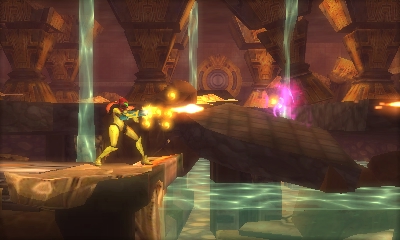
Metroid: Samus Returns (3DS)
Nintendo's Zelda franchise saw a sharp spike in popularity this generation thanks to not just the success of the Switch but also the excellent quality and revolution to the series with The Legend of Zelda: Breath of the Wild. It's yet to be seen of course if Metroid Prime 4 will have a similar tale of success for Samus Aran and her series, as currently, Metroid isn't the most successful of Nintendo's properties. (Not to say it hasn't seen success in the past.)
Regardless, after the less than satisfying Metroid: Other M on the Wii that fragmented a lot of the fan base, Metroid fans were gutted yet again to discover that the next entry in the franchise--after what was about a five-year absence, then--was the chibi-styled Metroid Prime: Federation Force. While a good game in its own right (just not a good Metroid game), the fact that the Metroid series hadn't seen a more traditional game in years killed a lot of desire to give Federation Force a fair shake.
Then, like a gift from the gaming gods, Metroid returned to the forefront of gaming with an official remake of one of Samus' earliest expeditions. Another Game Boy game remade with Metroid: Samus Returns. Offering 3D visuals, an expanded story, new boss battles (some of the best in the series to date are included here in these), a super-satisfying counter mechanic, and the ability to shoot in multiple directions, Metroid and Samus herself were back and in a big way on the Nintendo 3DS. With an after credits story tease, the story will continue and if you're like me, you can't wait to see where Nintendo takes Samus and the Metroid series next.
Final Fantasy IV (DS, iOS, AND, PC)
Since I mentioned Final Fantasy in the introduction, let's talk about one of the better remakes in the franchise to date with Final Fantasy IV's 2007 enhanced remake. The "enhanced" part comes in when you realize how much content was added to this 3D version of the game. I believe a great remake stays somewhat faithful to the original while throwing in enough new content that makes the remake worthwhile and fantastic to re-experience all over again. Final Fantasy IV was all that and more.
For one, and most obvious, the 2D visuals of the original were replaced with 3D graphics, putting a fresh perspective on the adventure with new cutscenes as well as even new story sequences. Yes, the 3D hasn't aged as well as the [in my opinion] PSP's superior Final Fantasy IV: The Complete Collection's visuals, but they're still quite impressive for the Nintendo DS hardware and the fresh take on familiar locales is still appreciated. Further, a brand-new Augment system that relinquishes a party member's abilities to another member once they leave Cecil's party was introduced, as were various DS-exclusive mini-games and a New Game Plus mode. Final Fantasy IV is one of my favorite games in the franchise, so any opportunity I can get to replay it in a way that both honors and respects the original SNES game is one I will happily give my Gil to, and the DS version of Final Fantasy IV remains one of those games.
Showing posts with label final fantasy iv. Show all posts
Monday, April 6, 2020
Tuesday, August 4, 2015
Top Ten Best Fourth Entries
It's August the 4th, so today SuperPhillip Central is getting into the numbered spirit and counting down the best of the best when it comes to fourth entries in gaming franchises. Most game series are lucky to even get a sequel nowadays, so reaching the fourth entry of a franchise is quite special. What's even more special are these ten fourth entries that are the ones that did their respective series the proudest. After you've taken a look at SPC's choices, feel free to contribute your own favorite fourth entries that may have been left off this list.
10) Super Castlevania IV (SNES)
A remake of the original Castlevania, Super Castlevania IV took the series into new territory with 16-bit graphics, stunning Mode 7 visuals, eight way attacking with hero Simon Belmont's whip, as well as the ability to block projectiles and swing from certain rings with the weapon. Through the 11 level game, the classic Castlevania formula was molded to a perfect design. If you're looking for the best of the classic Castlevania formula (i.e. the non-Metroid style games), then Super Castlevania IV is an easy pick to choose.
9) Mega Man X4 (PS1, SAT)
It was tough deciding between this game and Mega Man 4, but I ultimately went with Mega Man X4 due to it being a grander evolution of the franchise. This is mostly due to it being the first Mega Man X game on 32-bit hardware, the original PlayStation and the Sega Saturn. Offering eight more cleverly designed Maverick levels, two unique stories and the first opportunity to play as X's friend Zero for 100% of the game, Mega Man X4 gave players an exciting and adrenaline-pumping ride through its multiple levels, begging them to play through the game multiple times to see and collect all the game had to offer.
8) Teenage Mutant Ninja Turtles IV: Turtles in Time (ARC, SNES)
One of the greatest cooperative arcade games I have ever had the pleasure of experiencing, Turtles in Time, the fourth game in Konami's Teenage Mutant Ninja Turtles line of games, brought with it stellar gameplay, multiple levels to bash Foot Soldiers in, powerful bosses that required learning their attack patterns, and the ability to launch foes into the screen (at least in the Super Nintendo home version). The Super Nintendo port was special because it played so faithfully to the arcade game, and you didn't need to leech off your mom or dad's supply of quarters to continue playing.
7) Metal Gear Solid IV: Guns of the Patriots (PS3)
The final part of Solid Snake and the Patriots' story, Metal Gear Solid IV: Guns of the Patriots took the Metal Gear Solid into a new futuristic direction with new mechanics like an over-the-shoulder view for firing weapons, OctoCamo for more competent stealth capabilities, and a Psyche Meter, which if it depleted too much, would affect Solid Snake negatively in combat. While the story itself wasn't perfect, offering some cringe-inducing moments, overall the story of Solid Snake and the Patriots was concluded in a respectable and creative manner. It only makes the wait for Metal Gear Solid V that much harder.
6) Super Smash Bros. for Wii U/3DS (Wii U, 3DS)
Masahiro Sakurai actually considers Super Smash Bros. for Wii U and for 3DS to be separate entries, the fourth and fifth. However, since there's no telling which he considers the fourth and the fifth (is the 3DS version the fourth? The fifth?), I'm including both on this list. I consider this edition of Super Smash Bros. to be the best yet. The game's fighting mechanics don't stray too far on either side of the competitive spectrum that it alienates either the hardcore fighting community or casual players. What it does offer outside of balanced gameplay is a slew of modes, great online play, an abundance of characters and stages, and enough Nintendo love to make the staunchest of Nintendo fans smile.
5) Final Fantasy IV (SNES)
Back in 1991, both Final Fantasy II and III had been passed up for localization. Thus, when Final Fantasy IV came to the West, it was numbered as Final Fantasy II, as it was the second Final Fantasy game released here. That minor history lesson aside, Final Fantasy IV brought with it an epic story with more dimensional characters than had been previously seen, an "Active Time Battle" system used in fights to keep players from idling to long when making tactical battle decisions, and a masterful soundtrack by the incomparable Nobuo Uematsu. While I wouldn't consider Final Fantasy IV the best Final Fantasy on the SNES, it is still a magnificent and magical title worth playing. Definitely one of my favorites in the franchise.
4) Call of Duty 4: Modern Warfare (Multi)
Taking the Call of Duty franchise away from World War II and into modern times, Call of Duty 4: Modern Warfare was the game in the series to put the Call of Duty name near the top of the AAA heap. Although it didn't particularly innovate on the first-person shooter genre, it did refine its gameplay to awesome heights, offering tight controls, a compelling single player campaign, and a multiplayer that kept players coming back for more years after its initial release.
3) Street Fighter IV (Multi)
Similar to the transition between Street Fighter II and Street Fighter III, it seemed like we were doomed to spin-offs and expansions of Street Fighter III, never quite reaching an all-new entry in the series. Then the PlayStation 3 and Xbox 360 generation came along and lo and behold, Capcom gave us Street Fighter IV. Using fully 3D models as opposed to the 2D sprites of past games, new Ultra Moves, and a new system known as Focus Attacks, the current latest in the Street Fighter series (until the PS4 and PC's Street Fighter V, of course) rocked the arcade and fighting game scene for good reason. It was an excellent fighter.
2) Resident Evil 4 (Multi)
Sometimes viewed in a negative light for turning the formerly horror Resident Evil series into a more action-packed AAA blockbuster series, we'll just be noting Resident Evil 4 for being a fantastically designed game. The pacing is near pitch perfect, offering a pace that is absolutely unmatched. I believe Resident Evil 4 is a grand mix and near perfect balance of survival horror and action. There is a reason that so many shooters following Resident Evil 4's wake have taken so much inspiration from the game and still do. It's one of gaming's greatest in more ways than one.
1) Super Mario World (SNES)
The number one pick for the best fourth entry in gaming history is Super Mario World, actually known partly as Super Mario Bros. 4 in its native homeland of Japan. The game introduced the series to 16-bits, a whole new world to explore in Dinosaur Land, brought along with it a world map with dozens of secret exits in levels to find, and brought to gaming everyone's favorite Koopa-gobbling dinosaur, Yoshi. Super Mario World is one of the best video games in the history of the medium, and whether one prefers it to Super Mario Bros. 3 or not is a moot point, as this fourth Super Mario Bros. game delivers time and time again, perfect for repeat playing.
10) Super Castlevania IV (SNES)
A remake of the original Castlevania, Super Castlevania IV took the series into new territory with 16-bit graphics, stunning Mode 7 visuals, eight way attacking with hero Simon Belmont's whip, as well as the ability to block projectiles and swing from certain rings with the weapon. Through the 11 level game, the classic Castlevania formula was molded to a perfect design. If you're looking for the best of the classic Castlevania formula (i.e. the non-Metroid style games), then Super Castlevania IV is an easy pick to choose.
9) Mega Man X4 (PS1, SAT)
It was tough deciding between this game and Mega Man 4, but I ultimately went with Mega Man X4 due to it being a grander evolution of the franchise. This is mostly due to it being the first Mega Man X game on 32-bit hardware, the original PlayStation and the Sega Saturn. Offering eight more cleverly designed Maverick levels, two unique stories and the first opportunity to play as X's friend Zero for 100% of the game, Mega Man X4 gave players an exciting and adrenaline-pumping ride through its multiple levels, begging them to play through the game multiple times to see and collect all the game had to offer.
8) Teenage Mutant Ninja Turtles IV: Turtles in Time (ARC, SNES)
One of the greatest cooperative arcade games I have ever had the pleasure of experiencing, Turtles in Time, the fourth game in Konami's Teenage Mutant Ninja Turtles line of games, brought with it stellar gameplay, multiple levels to bash Foot Soldiers in, powerful bosses that required learning their attack patterns, and the ability to launch foes into the screen (at least in the Super Nintendo home version). The Super Nintendo port was special because it played so faithfully to the arcade game, and you didn't need to leech off your mom or dad's supply of quarters to continue playing.
7) Metal Gear Solid IV: Guns of the Patriots (PS3)
The final part of Solid Snake and the Patriots' story, Metal Gear Solid IV: Guns of the Patriots took the Metal Gear Solid into a new futuristic direction with new mechanics like an over-the-shoulder view for firing weapons, OctoCamo for more competent stealth capabilities, and a Psyche Meter, which if it depleted too much, would affect Solid Snake negatively in combat. While the story itself wasn't perfect, offering some cringe-inducing moments, overall the story of Solid Snake and the Patriots was concluded in a respectable and creative manner. It only makes the wait for Metal Gear Solid V that much harder.
6) Super Smash Bros. for Wii U/3DS (Wii U, 3DS)
Masahiro Sakurai actually considers Super Smash Bros. for Wii U and for 3DS to be separate entries, the fourth and fifth. However, since there's no telling which he considers the fourth and the fifth (is the 3DS version the fourth? The fifth?), I'm including both on this list. I consider this edition of Super Smash Bros. to be the best yet. The game's fighting mechanics don't stray too far on either side of the competitive spectrum that it alienates either the hardcore fighting community or casual players. What it does offer outside of balanced gameplay is a slew of modes, great online play, an abundance of characters and stages, and enough Nintendo love to make the staunchest of Nintendo fans smile.
5) Final Fantasy IV (SNES)
Back in 1991, both Final Fantasy II and III had been passed up for localization. Thus, when Final Fantasy IV came to the West, it was numbered as Final Fantasy II, as it was the second Final Fantasy game released here. That minor history lesson aside, Final Fantasy IV brought with it an epic story with more dimensional characters than had been previously seen, an "Active Time Battle" system used in fights to keep players from idling to long when making tactical battle decisions, and a masterful soundtrack by the incomparable Nobuo Uematsu. While I wouldn't consider Final Fantasy IV the best Final Fantasy on the SNES, it is still a magnificent and magical title worth playing. Definitely one of my favorites in the franchise.
4) Call of Duty 4: Modern Warfare (Multi)
Taking the Call of Duty franchise away from World War II and into modern times, Call of Duty 4: Modern Warfare was the game in the series to put the Call of Duty name near the top of the AAA heap. Although it didn't particularly innovate on the first-person shooter genre, it did refine its gameplay to awesome heights, offering tight controls, a compelling single player campaign, and a multiplayer that kept players coming back for more years after its initial release.
3) Street Fighter IV (Multi)
Similar to the transition between Street Fighter II and Street Fighter III, it seemed like we were doomed to spin-offs and expansions of Street Fighter III, never quite reaching an all-new entry in the series. Then the PlayStation 3 and Xbox 360 generation came along and lo and behold, Capcom gave us Street Fighter IV. Using fully 3D models as opposed to the 2D sprites of past games, new Ultra Moves, and a new system known as Focus Attacks, the current latest in the Street Fighter series (until the PS4 and PC's Street Fighter V, of course) rocked the arcade and fighting game scene for good reason. It was an excellent fighter.
2) Resident Evil 4 (Multi)
Sometimes viewed in a negative light for turning the formerly horror Resident Evil series into a more action-packed AAA blockbuster series, we'll just be noting Resident Evil 4 for being a fantastically designed game. The pacing is near pitch perfect, offering a pace that is absolutely unmatched. I believe Resident Evil 4 is a grand mix and near perfect balance of survival horror and action. There is a reason that so many shooters following Resident Evil 4's wake have taken so much inspiration from the game and still do. It's one of gaming's greatest in more ways than one.
1) Super Mario World (SNES)
The number one pick for the best fourth entry in gaming history is Super Mario World, actually known partly as Super Mario Bros. 4 in its native homeland of Japan. The game introduced the series to 16-bits, a whole new world to explore in Dinosaur Land, brought along with it a world map with dozens of secret exits in levels to find, and brought to gaming everyone's favorite Koopa-gobbling dinosaur, Yoshi. Super Mario World is one of the best video games in the history of the medium, and whether one prefers it to Super Mario Bros. 3 or not is a moot point, as this fourth Super Mario Bros. game delivers time and time again, perfect for repeat playing.
Wednesday, December 17, 2014
Play It Again, Sam! - Remarkable Remakes - Part Two
What's old is new again! The first time I looked at remarkable remakes, the news of Pokemon Omega Ruby and Alpha Sapphire was revealed, remakes of Pokemon Ruby and Sapphire. While I'm a bit late on the remake bandwagon with the news of The Legend of Zelda: Majora's Mask getting the much desired remake treatment, it's time for once again for a glance at some more terrific remakes of the past! From Metal Gear Solid to Ys, there's sure to be something for everyone on part two of my great remakes series!
Metal Gear Solid: The Twin Snakes (GCN)
I'm going to start off this list of remarkable remakes with two games that might be considered controversial picks. Well, not controversial in the same category as exposing your man parts while on live broadcast TV, but controversial nonetheless. Metal Gear Solid: The Twin Snakes was a joint effort by once-heralded Silicon Knights and Nintendo. The remake saw two carryovers from the PS2's Sons of Liberty, the graphics engine and the gameplay elements. The latter of these caused the game to be easier than the PS1 original, as the remake's area design was not retooled to fit the new gameplay mechanics, such as the first-person view for aiming. Nevertheless, the remade visuals, cutscenes (let's face it, MGS is already unbelievable and crazy a series story-wise anyway), and voice-work made for an exciting ride for GameCube owners.
Conker: Live & Reloaded (XBX)
This second "controversial" pick is Conker: Live & Reloaded for the Xbox. Despite having the intention of being wholly uncensored, as the subtitle was once Live & Uncut, the Xbox remake received a ton of censorship. Also, some objectives and tasks in the single-player portion of the game were either removed or heavily altered as well. Regardless of these changes, I was just glad to receive an updated version of Conker's original starring console role with visuals that still amaze to this day (that fur... oh my goodness) and a completely retooled multiplayer component that allowed for awesome online skirmishes via Xbox Live.
Final Fantasy IV (DS)
One of my favorite Final Fantasies just doesn't seem to want to go away. It's been re-released on practically every possible platform under the sun. However, the Nintendo DS version was a total remake, unlike the plenty of ports of the game other platforms had received in the past. As part of Square Enix's celebration of Final Fantasy's 20th anniversary, a 3D remake of the original Final Fantasy IV was put on the Nintendo DS, offering impressive 3D models and areas, voice acting, and some modest but engaging changes that affected the gameplay. Not only was this edition of Final Fantasy IV look like a completely new game, but it gave players a more difficult, and satisfyingly so, RPG adventure to love. I know I certainly was one.
Pokemon HeartGold and SoulSilver (DS)
Now, I must admit my total ignorance towards the Pokemon franchise. After the initial releases back in 1999, when I completely amassed my middle school self in the series, playing the games, collecting the toys, watching the anime, writing and drawing comics, etc., I didn't follow the series anywhere near as closely as I did. In fact, I skipped Pokemon Gold and Silver. It wasn't until later that I wanted to try either game, but the total archaic looks of the games turned me off of doing so. Thus, I jumped at the chance to try out the remakes on the Nintendo DS. Many of the games on this list are included because of major graphical enhancements, and this isn't more true than with Pokemon HeartGold and SoulSilver. These two titles make their originals look like they were made in the stone age in comparison visually, and the little touches add to make the games more modern added to my love of the titles even further.
Star Fox 64 3D (3DS)
Unlike Pokemon Gold and Silver, Star Fox 64 is still a game that is easily playable, and not too sore on the eyes despite its more ancient visuals. Star Fox 64 3D was an appealing remake to me for a number of reasons. For one, it brought the Star Fox series out of retirement, albeit in remade form. Anything to get the taste out of the nasty fan fiction of Star Fox: Command, right? Secondly, the game did have improved visuals and performance to justify it being remade. Finally, it was just another excuse to play through the game a few dozen more times. (I might be understating how many times I replayed Star Fox 64 3D.) My only major gripe with Star Fox 64 3D is how the multiplayer did not have an online component to it. It would have been so much fun to enjoy dogfighting with someone other than the AI.
Kirby: Nightmare in Dream Land (GBA)
Kirby, Kirby, Kirby, he's the star of the show. Kirby, Kirby, Kirby, it's a name you should know. Well, at least if you're on SuperPhillip Central regularly, as I do bring up the pink puffball on more than a number of occasions. Anyhow, Kirby: Nightmare in Dream Land is a Game Boy Advance remake of the NES game Kirby's Adventure. Obviously the visuals were updated to beautiful standards, but the gameplay was changed, albeit in minor fashion. Added to this upgraded Kirby's Adventure were new mini-games, as well cooperative play for up to four players via the GBA link cable. Nightmare in Dream Land was a less difficult Kirby's Adventure in some regards, but overall it retained the spirit of the original quite well.
Klonoa (Wii)
Unlike Kirby, Namco Bandai's (or is it Bandai Namco? ..Or is it Nandai Bamco? Aw, hell, who cares!) Klonoa doesn't get much love. It's a darn shame, too, as the character is charming and his games are immensely imaginative. The simply-titled Klonoa was released on the Wii in 2008 in Japan and elsewhere the following year. It was a remake of the PS1 cult classic Klonoa: Door to Phantomile, and it plays similarly. The most noticeable change to this remake is its hugely evolved visuals, making for an absolutely beautiful game-- and the original wasn't a bad looker to begin with. Unfortunately, even on a platform with a fan base that loves platformers, the Wii remake of Klonoa sold like it was a remake of Bubsy 3D. That is to say that sales stunk, effectively ending the long-eared lovely's future in gaming for the time being.
Ys: The Oath in Felghana (PSP)
By far the most transformed remake out of any other game on this list is Ys: The Oath in Felghana. It is a total remake of Ys III: Wanderers from Ys. Oath in Felgana not only makes some alterations to the original story, but it completely overhauls the Ys III, transforming it from its original roots as a 2D side-scrolling action game to a 3D action-RPG adventure. I have a fond attachment to Ys: The Oath in Felghana, as it was my first introduction to the franchise. I've since played the original Ys III, and it amazes me how greatly Oath in Felghana successfully changed the structure and gameplay to make a much better game.
Even if I've already made mention of them before, what are your favorite remade games? Which do you think didn't do their original games justice? Let the community know in the comments below!
Metal Gear Solid: The Twin Snakes (GCN)
I'm going to start off this list of remarkable remakes with two games that might be considered controversial picks. Well, not controversial in the same category as exposing your man parts while on live broadcast TV, but controversial nonetheless. Metal Gear Solid: The Twin Snakes was a joint effort by once-heralded Silicon Knights and Nintendo. The remake saw two carryovers from the PS2's Sons of Liberty, the graphics engine and the gameplay elements. The latter of these caused the game to be easier than the PS1 original, as the remake's area design was not retooled to fit the new gameplay mechanics, such as the first-person view for aiming. Nevertheless, the remade visuals, cutscenes (let's face it, MGS is already unbelievable and crazy a series story-wise anyway), and voice-work made for an exciting ride for GameCube owners.
Conker: Live & Reloaded (XBX)
This second "controversial" pick is Conker: Live & Reloaded for the Xbox. Despite having the intention of being wholly uncensored, as the subtitle was once Live & Uncut, the Xbox remake received a ton of censorship. Also, some objectives and tasks in the single-player portion of the game were either removed or heavily altered as well. Regardless of these changes, I was just glad to receive an updated version of Conker's original starring console role with visuals that still amaze to this day (that fur... oh my goodness) and a completely retooled multiplayer component that allowed for awesome online skirmishes via Xbox Live.
Final Fantasy IV (DS)
One of my favorite Final Fantasies just doesn't seem to want to go away. It's been re-released on practically every possible platform under the sun. However, the Nintendo DS version was a total remake, unlike the plenty of ports of the game other platforms had received in the past. As part of Square Enix's celebration of Final Fantasy's 20th anniversary, a 3D remake of the original Final Fantasy IV was put on the Nintendo DS, offering impressive 3D models and areas, voice acting, and some modest but engaging changes that affected the gameplay. Not only was this edition of Final Fantasy IV look like a completely new game, but it gave players a more difficult, and satisfyingly so, RPG adventure to love. I know I certainly was one.
Pokemon HeartGold and SoulSilver (DS)
Now, I must admit my total ignorance towards the Pokemon franchise. After the initial releases back in 1999, when I completely amassed my middle school self in the series, playing the games, collecting the toys, watching the anime, writing and drawing comics, etc., I didn't follow the series anywhere near as closely as I did. In fact, I skipped Pokemon Gold and Silver. It wasn't until later that I wanted to try either game, but the total archaic looks of the games turned me off of doing so. Thus, I jumped at the chance to try out the remakes on the Nintendo DS. Many of the games on this list are included because of major graphical enhancements, and this isn't more true than with Pokemon HeartGold and SoulSilver. These two titles make their originals look like they were made in the stone age in comparison visually, and the little touches add to make the games more modern added to my love of the titles even further.
Star Fox 64 3D (3DS)
Unlike Pokemon Gold and Silver, Star Fox 64 is still a game that is easily playable, and not too sore on the eyes despite its more ancient visuals. Star Fox 64 3D was an appealing remake to me for a number of reasons. For one, it brought the Star Fox series out of retirement, albeit in remade form. Anything to get the taste out of the nasty fan fiction of Star Fox: Command, right? Secondly, the game did have improved visuals and performance to justify it being remade. Finally, it was just another excuse to play through the game a few dozen more times. (I might be understating how many times I replayed Star Fox 64 3D.) My only major gripe with Star Fox 64 3D is how the multiplayer did not have an online component to it. It would have been so much fun to enjoy dogfighting with someone other than the AI.
Kirby: Nightmare in Dream Land (GBA)
Kirby, Kirby, Kirby, he's the star of the show. Kirby, Kirby, Kirby, it's a name you should know. Well, at least if you're on SuperPhillip Central regularly, as I do bring up the pink puffball on more than a number of occasions. Anyhow, Kirby: Nightmare in Dream Land is a Game Boy Advance remake of the NES game Kirby's Adventure. Obviously the visuals were updated to beautiful standards, but the gameplay was changed, albeit in minor fashion. Added to this upgraded Kirby's Adventure were new mini-games, as well cooperative play for up to four players via the GBA link cable. Nightmare in Dream Land was a less difficult Kirby's Adventure in some regards, but overall it retained the spirit of the original quite well.
Klonoa (Wii)
Unlike Kirby, Namco Bandai's (or is it Bandai Namco? ..Or is it Nandai Bamco? Aw, hell, who cares!) Klonoa doesn't get much love. It's a darn shame, too, as the character is charming and his games are immensely imaginative. The simply-titled Klonoa was released on the Wii in 2008 in Japan and elsewhere the following year. It was a remake of the PS1 cult classic Klonoa: Door to Phantomile, and it plays similarly. The most noticeable change to this remake is its hugely evolved visuals, making for an absolutely beautiful game-- and the original wasn't a bad looker to begin with. Unfortunately, even on a platform with a fan base that loves platformers, the Wii remake of Klonoa sold like it was a remake of Bubsy 3D. That is to say that sales stunk, effectively ending the long-eared lovely's future in gaming for the time being.
Ys: The Oath in Felghana (PSP)
By far the most transformed remake out of any other game on this list is Ys: The Oath in Felghana. It is a total remake of Ys III: Wanderers from Ys. Oath in Felgana not only makes some alterations to the original story, but it completely overhauls the Ys III, transforming it from its original roots as a 2D side-scrolling action game to a 3D action-RPG adventure. I have a fond attachment to Ys: The Oath in Felghana, as it was my first introduction to the franchise. I've since played the original Ys III, and it amazes me how greatly Oath in Felghana successfully changed the structure and gameplay to make a much better game.
Even if I've already made mention of them before, what are your favorite remade games? Which do you think didn't do their original games justice? Let the community know in the comments below!
Wednesday, May 7, 2014
Play It Again, Sam! - Remarkable Remakes - Part One
Fresh off the news of Pokemon Ruby and Sapphire remakes for the Nintendo 3DS, we thought we'd take the opportunity to dust off our brains and come up with some of our favorite video game remakes ever devised. These are the ones that made the originals look like student projects in comparison. Whether they updated the visuals, added cool new modes, or threw in extra playable characters, these are the remakes that get our hearts racing with excitement. Now, we don't want to overwhelm you with entries, so we're splitting up this feature into three parts. The other two will arrive on SuperPhillip Central in the following weeks.
The Legend of Zelda: Ocarina of Time 3D (3DS)
Our first remake is one that many have called one of the greatest games of all time. We're inclined to agree, but this 3DS remake took several annoyances we had with the N64 original and overall made a much better game. Ocarina of Time 3D totally rebuilt the land of Hyrule with completely different assets, textures, and colors to create a more enthralling gaming world. The addition of optional gyro sensor controls for aiming made sniping foes with Link's bow and arrow combo not only easier but more fun too. The touch screen always displayed items, so players could swap items on the fly rather than continually pause and unpause the game, breaking the flow. Yes, equipping those Iron Boots in the Water Temple was no longer a tedious task like in the N64 original.
An unlockable Master Quest, that upped the challenge of Ocarina of Time 3D significantly, as well as introduced elements and puzzles that went against what the original quest had taught players, was a bonus for more skilled adventurers. All of this with a steady frame-rate makes The Legend of Zelda: Ocarina of Time 3D the best 3D Zelda experience to date.
Super Mario All-Stars (SNES, Wii)
Nintendo could have simply taken all four NES Mario games (we're including the Japanese version of Super Mario Bros. 2, aka The Lost Levels, in this group) and ported them exactly to the Super Nintendo hardware. Instead, the development team decided to completely update the games visually and aurally. To this day, Super Mario All-Stars is one of the most impressive remakes ever created. If you somehow missed out on this too-good-to-be-true package when it originally released on the Super Nintendo, perhaps you can track down a copy of the ported Wii version, which was made for the Super Mario Bros. series' 25th anniversary. Regardless of which version you acquire, you will possess one of the grandest collections, featuring some of the very best games of all time.
Halo: Combat Evolved Anniversary (360)
Halo: Combat Evolved was a surprise hit when it arrived alongside the Xbox at the system's launch, and the Xbox brand's early success can single-handily be traced to this popular first-person shooter starring a helmeted hero named Master Chief. What the original Halo lacked was online play, so exactly a decade after the original Xbox release, developer 343 Industries brought this long desired feature into Combat Evolved's 2011 Xbox 360 remake. Alongside the addition of online play was greatly enhanced visuals, achievements, terminals, and skulls. It was a long wait for Xbox owners to be able to play the original Halo with players across the globe, but the wait was certainly worth it.
Perfect Dark (XBLA)
This 2000 N64 original by Rare was a first-person shooter way ahead of its time, presenting players with an abundant array of multiplayer options and different AI personalities. The Xbox Live Arcade remake by 4J Studios implemented the ability to play matches online with up to twelve players, or if there were any empty slots, spare AI simulants. Unlike the N64 game, all multiplayer options were available right from the get-go rather than needing to be unlocked through combat challenges. In addition to these multiplayer improvements, the visuals received a magnificent upgrade as well. For those longing for the days of console FPS games that don't follow the corridor shooter path that is so prevalent and popular now, one would do themselves well to check out this XBLA update of the sublime Perfect Dark.
DuckTales: Remastered (Multi)
Taking a NES classic from Capcom, developer WayForward created a retro revival and did the original source material supreme justice. Expanding upon the NES original, WayForward added in objectives in the game's levels, remodeled some areas, threw in a script that explained various story elements that the NES original made nebulous, implemented full voice acting with many of the surviving members of the old TV show cast, created a beautiful cartoon world come to life, added two new levels, and tossed in a Jake Kaufman-arranged soundtrack to put the proverbial cherry on top of this delicious and enticing sundae. While some can criticize the heavy focus on story elements, which do break the flow of the game, the overall package of DuckTales: Remastered makes us giddy with delight. We can only hope Capcom and Disney will allow WayForward more opportunities to recreate other classic games. Chip 'n Dale: Rescue Rangers, perhaps? Aladdin? Darkwing Duck?
Metroid: Zero Mission (GBA)
Not just a remake! No, no! It's an enhanced remake. All turning up our noses at semantics aside, Metroid: Zero Mission remade the highly antiquated original Metroid released on the NES and made one of the best Metroid games released. The development team successfully brought enough new content to make Samus Aran's debut adventure feel fresh while not completely forgoing the feeling of the original Metroid. With the inclusion of better graphics and a helpful map, no longer did players have to experience Metroid by exploring multiple similarly designed rooms, getting lost and frustrated in the process. The addition of story elements were unobtrusive and brought added dimension to Samus Aran's character. (No, not in a Metroid: Other M way either!) The biggest bonus was being able to play as Zero Suit Samus in an extra chapter that players could enjoy after Mother Brain was defeated.
Final Fantasy IV: The Complete Collection (PSP)
Whether you're a newcomer to Final Fantasy IV (formerly known in the West as Final Fantasy II) or have played through the game more times than you can remember, this PSP remake of Final Fantasy IV featured high resolution sprite work that was absolutely gorgeous on the PSP's screen. In addition to the original game, Square Enix included the WiiWare-exclusive The After Years, as well as a brand-new game in the form of Final Fantasy IV Interlude. Throw in a new arrangement for the classic Nobuo Uematsu-composed soundtrack, new CG scenes, and gallery mode, and you have the definitive version of Final Fantasy IV. (And boy, there have been many!)
Bully: Scholarship Edition (Wii, 360)
The PS2's Bully from Rockstar Games was a fantastic title that was a reprieve from the Grand Theft Auto series. In fact, we'd love to see Rockstar return to Bully sometime soon. The remake of the game, Bully: Scholarship Edition, hit the Nintendo Wii and Xbox 360 on the same day. Both versions feature multiple new inclusions, such as eight exclusive missions, new characters, four new classes, more clothing options, and minor additions to improve the experience. We preferred the Wii version for its engaging and enjoyable pointer controls, particularly in the various classes protagonist Jimmy Hopkins participated in. As for the PC version, we didn't list it as if that port was in school, it would have received a note from the teacher reading "See me after class."
The Legend of Zelda: Ocarina of Time 3D (3DS)
Our first remake is one that many have called one of the greatest games of all time. We're inclined to agree, but this 3DS remake took several annoyances we had with the N64 original and overall made a much better game. Ocarina of Time 3D totally rebuilt the land of Hyrule with completely different assets, textures, and colors to create a more enthralling gaming world. The addition of optional gyro sensor controls for aiming made sniping foes with Link's bow and arrow combo not only easier but more fun too. The touch screen always displayed items, so players could swap items on the fly rather than continually pause and unpause the game, breaking the flow. Yes, equipping those Iron Boots in the Water Temple was no longer a tedious task like in the N64 original.
An unlockable Master Quest, that upped the challenge of Ocarina of Time 3D significantly, as well as introduced elements and puzzles that went against what the original quest had taught players, was a bonus for more skilled adventurers. All of this with a steady frame-rate makes The Legend of Zelda: Ocarina of Time 3D the best 3D Zelda experience to date.
Super Mario All-Stars (SNES, Wii)
Nintendo could have simply taken all four NES Mario games (we're including the Japanese version of Super Mario Bros. 2, aka The Lost Levels, in this group) and ported them exactly to the Super Nintendo hardware. Instead, the development team decided to completely update the games visually and aurally. To this day, Super Mario All-Stars is one of the most impressive remakes ever created. If you somehow missed out on this too-good-to-be-true package when it originally released on the Super Nintendo, perhaps you can track down a copy of the ported Wii version, which was made for the Super Mario Bros. series' 25th anniversary. Regardless of which version you acquire, you will possess one of the grandest collections, featuring some of the very best games of all time.
Halo: Combat Evolved Anniversary (360)
Halo: Combat Evolved was a surprise hit when it arrived alongside the Xbox at the system's launch, and the Xbox brand's early success can single-handily be traced to this popular first-person shooter starring a helmeted hero named Master Chief. What the original Halo lacked was online play, so exactly a decade after the original Xbox release, developer 343 Industries brought this long desired feature into Combat Evolved's 2011 Xbox 360 remake. Alongside the addition of online play was greatly enhanced visuals, achievements, terminals, and skulls. It was a long wait for Xbox owners to be able to play the original Halo with players across the globe, but the wait was certainly worth it.
Perfect Dark (XBLA)
This 2000 N64 original by Rare was a first-person shooter way ahead of its time, presenting players with an abundant array of multiplayer options and different AI personalities. The Xbox Live Arcade remake by 4J Studios implemented the ability to play matches online with up to twelve players, or if there were any empty slots, spare AI simulants. Unlike the N64 game, all multiplayer options were available right from the get-go rather than needing to be unlocked through combat challenges. In addition to these multiplayer improvements, the visuals received a magnificent upgrade as well. For those longing for the days of console FPS games that don't follow the corridor shooter path that is so prevalent and popular now, one would do themselves well to check out this XBLA update of the sublime Perfect Dark.
DuckTales: Remastered (Multi)
Taking a NES classic from Capcom, developer WayForward created a retro revival and did the original source material supreme justice. Expanding upon the NES original, WayForward added in objectives in the game's levels, remodeled some areas, threw in a script that explained various story elements that the NES original made nebulous, implemented full voice acting with many of the surviving members of the old TV show cast, created a beautiful cartoon world come to life, added two new levels, and tossed in a Jake Kaufman-arranged soundtrack to put the proverbial cherry on top of this delicious and enticing sundae. While some can criticize the heavy focus on story elements, which do break the flow of the game, the overall package of DuckTales: Remastered makes us giddy with delight. We can only hope Capcom and Disney will allow WayForward more opportunities to recreate other classic games. Chip 'n Dale: Rescue Rangers, perhaps? Aladdin? Darkwing Duck?
Metroid: Zero Mission (GBA)
Not just a remake! No, no! It's an enhanced remake. All turning up our noses at semantics aside, Metroid: Zero Mission remade the highly antiquated original Metroid released on the NES and made one of the best Metroid games released. The development team successfully brought enough new content to make Samus Aran's debut adventure feel fresh while not completely forgoing the feeling of the original Metroid. With the inclusion of better graphics and a helpful map, no longer did players have to experience Metroid by exploring multiple similarly designed rooms, getting lost and frustrated in the process. The addition of story elements were unobtrusive and brought added dimension to Samus Aran's character. (No, not in a Metroid: Other M way either!) The biggest bonus was being able to play as Zero Suit Samus in an extra chapter that players could enjoy after Mother Brain was defeated.
Final Fantasy IV: The Complete Collection (PSP)
Whether you're a newcomer to Final Fantasy IV (formerly known in the West as Final Fantasy II) or have played through the game more times than you can remember, this PSP remake of Final Fantasy IV featured high resolution sprite work that was absolutely gorgeous on the PSP's screen. In addition to the original game, Square Enix included the WiiWare-exclusive The After Years, as well as a brand-new game in the form of Final Fantasy IV Interlude. Throw in a new arrangement for the classic Nobuo Uematsu-composed soundtrack, new CG scenes, and gallery mode, and you have the definitive version of Final Fantasy IV. (And boy, there have been many!)
Bully: Scholarship Edition (Wii, 360)
The PS2's Bully from Rockstar Games was a fantastic title that was a reprieve from the Grand Theft Auto series. In fact, we'd love to see Rockstar return to Bully sometime soon. The remake of the game, Bully: Scholarship Edition, hit the Nintendo Wii and Xbox 360 on the same day. Both versions feature multiple new inclusions, such as eight exclusive missions, new characters, four new classes, more clothing options, and minor additions to improve the experience. We preferred the Wii version for its engaging and enjoyable pointer controls, particularly in the various classes protagonist Jimmy Hopkins participated in. As for the PC version, we didn't list it as if that port was in school, it would have received a note from the teacher reading "See me after class."
Subscribe to:
Posts (Atom)


