Showing posts with label metroid prime trilogy. Show all posts

Thursday, August 20, 2015

Greatness Comes in Threes: Best Trilogies in Gaming - Part Two

The trilogy-- in movies it's a common occurrence with hugely successful blockbusters whether it's Star Wars, Indiana Jones, Toy Story, or Back to the Future. Trilogies are also pretty common in gaming as well, but at the same token, an actual good trilogy is a completely different matter. This new article series details some of the very best trilogies that our hobby and industry have been able to create in its much shorter lifespan. This second edition (the first was seen last week) deals with more recent trilogies both official and unofficial.

The Uncharted Trilogy

Uncharted: Drake's Fortune (PS3)
Uncharted 2: Among Thieves (PS3)
Uncharted 3: Drake's Deception (PS3)


Naughty Dog changed drastically from its cartoon mascot Crash Bandicoot games on the original PlayStation (that trilogy was covered last week). Now, the studio is more focused on making games interactive experiences that rival big Hollywood blockbusters. Whether that's a good direction or not for video games to emulate Hollywood and not try to be its own medium is an argument for another day. Uncharted: Drake's Fortune introduced Nathan Drake, not really an everyman, as he has some freakish physical strength, as shown by his ability to seamlessly climb cliff sides, leap over large chasms, and perform other acrobatics that would make an Olympian jealous. The greatest in the current trilogy, Among Thieves, dialed up the action sevenfold, brought with it a more well balanced and enjoyable campaign, and delivered some incredible multiplayer. Uncharted 3 released years later, though while it's a better game than the original, it failed to live up to Uncharted 2 in the gameplay and campaign department. Still, the Uncharted trilogy is one of the PlayStation brand's strongest, and for good reason-- it's an adventure like no other.

The God of War Trilogy

God of War (PS2)
God of War II (PS2)
God of War III (PS3)


Join Kratos on his journey of redemption and revenge with the God of War trilogy. While his character becomes much less sympathetic as the series goes on, it's always mad fun to beat the living hell out of centaurs, cyclopses, harpies, and other foes from Greek mythology. The original saw the story of Kratos being tricked by the current God of War Ares into slaying his loved ones, and going to get revenge on the god. God of War II saw Zeus stripping Kratos of the powers he inherited from Ares at the end of the original game and savagely killing Kratos, sending him to Hades. Both God of War II and III see Kratos on a perilous adventure through rooms of enemies, platforming challenges, big bosses, and tricky puzzles in order to get revenge on Zeus and the gods that stand in his way. God of War as a series delivers epic battles and set pieces, a brilliant combat system that is accessible enough for beginners but deep enough for more experienced players to unleash massive combos on foes, and superb level design that makes the entire game a joy to explore.

The Grand Theft Auto PS2 Trilogy

Grand Theft Auto III (PS2, XBX)
Grand Theft Auto: Vice City (PS2, XBX)
Grand Theft Auto: San Andreas (PS2, XBX)


The original pair of Grand Theft Auto games are worth mentioning for starting the series, but they featured an overhead perspective. It wasn't until the franchise's first full foray into 3D with its first PlayStation 2 entry, Grand Theft Auto III, that the series started gaining huge amounts of popularity. It was a revolutionary game and set the standard for many crime-based open world games set in a city. Vice City took the franchise to the 1980s, offering a time warp that felt genuine, as well as a more relate-able protagonist, voiced by the great Ray Liotta. Jetting around the neon metropolis of Vice City with classic '80s music blaring from your vehicle's stereo speakers was always an awesome experience. San Andreas then came, delivering a fantastic gang story, character customization, and a then-unprecedented world to explore with three unique large cities, a robust countryside and desert to explore, and just an amazing, living, breathing place to journey and tool around in. San Andreas remains my favorite GTA game, though going through GTA V currently might take its place.

The Final Fantasy PS1 Trilogy

Final Fantasy VII (PS1)
Final Fantasy VIII (PS1)
Final Fantasy IX (PS1)


An unofficial trilogy, but every generation starting with the one where the Final Fantasy series debuted up until the PS2 generation, there were three mainline Final Fantasy games released. What I consider the greatest generation of Final Fantasy games (although the SNES games very seriously rival it, but that's a subject for another edition) is the PlayStation trio, Final Fantasy VII, VIII, and IX. Final Fantasy VII is one of the most popular Final Fantasy games in existence, being the one that a lot of players started with first, or it was the one that had the most impact for players as it was the first 3D Final Fantasy. Sure, the LEGO-like characters outside of cutscenes didn't really look good even for the time, but the gameplay, story, and battle systems are top tier to this day. Final Fantasy VIII is the black sheep of the PS1 Final Fantasy trilogy, using a junction and draw system that many didn't care for. However, it did bring us one of the best mini-games in gaming history, the massively addicting collectible card game Triple Triad. Lastly, Final Fantasy IX went back to a more medieval world with characters that resembled a fairy tale instead of the realistic approach VII and VIII went with. While battles take a while to load, which is a shame, the game is overall the unsung star of the PlayStation Final Fantasy trio of games.

The Metroid Prime Trilogy

Metroid Prime (GCN)
Metroid Prime 2: Echoes (GCN)
Metroid Prime 3: Corruption (Wii)


Retro Studios was hurting in a big way trying to bring Metroid into 3D. A trip to the studio by Shigeru Miyamoto did wonders for the project. When the final game released, Metroid Prime, gamers like myself, the same ones who doubted the ability of this young studio and whether Metroid could would in first-person, were blown away by how amazing the game was. Putting a game series with a deep history and ties to 2D and implementing it into a 3D one is already a difficult task. Retro Studios successfully did so with Metroid and not only that, but made one of the best games of all time, if I may be so bold. The sequel, Metroid Prime 2: Echoes, added a light and dark world mechanic, doubling the amount of exploration involved and creating some clever design tricks between worlds. The game also introduced multiplayer that would be the basis for the Nintendo DS Metroid title Metroid Prime Hunters. When the series jumped to the Nintendo Wii, Corruption introduced absolutely stellar pointer controls with the Wii Remote which still is my preferred way to play first-person games for maximum fun factor. The whole trilogy was later released on one disc as, coincidentally enough, the Metroid Prime Trilogy, offering the same Wii Remote functionality for all three games. If you don't want to pony up the high amount of money for a complete version of the original disc and box on Wii, you can download the trilogy on the Wii U.

The Sly Cooper Trilogy

Sly Cooper and the Thievius Raccoonus (PS2)
Sly 2: Band of Thieves (PS2)
Sly 3: Honor Among Thieves (PS2)


We started this edition of Best Trilogies in Gaming with a what could be described as a thief (but a handsome and dignified one), so let's conclude this edition with another, although an anthropomorphic one in the form of a raccoon, Sly Cooper. The Sly Cooper trilogy on the PlayStation 2 from Infamous developer Sucker Punch, showed brilliant stealth gameplay, fast paced and prized platforming, and a universe of lovable characters. The first Sly Cooper is my personal favorite, as the latter two introduced an open world hub that made the games more Grand Theft Auto in mission design that the linear platforming levels of the original. That isn't to say the second and third games are bad by any stretch of the imagination, though. My personal order of favorite Sly Cooper games on the PS2 starts with the original, then goes in the order of release. Sly 3 brought with it more mini-games than I would have liked that replaced a lot of the platforming goodness the other two games had. Still, the trilogy is a wonderful one for any 3D platforming fan. Speaking of which, definitely check out Sly Cooper: Thieves in Time on the PlayStation 3 and Vita. It's not made by Sucker Punch, but it's a highly competent platforming adventure.

Friday, March 15, 2013

400th Review! Metroid Prime (Wii) Retro Review

After nearly five years of service, SuperPhillip Central has reached its 400th review. We couldn't help but celebrate with what is rightfully considered one of the greatest games of all time, Metroid Prime. Here is our review.

The Girl With the Golden Touch


Metroid is a legendary franchise and one that has created many imitators. However, few have ever reached the levels of greatness that Metroid as a series has obtained. While many Metroid fans find the greatest height of the franchise being the Super Nintendo's excellent Super Metroid, others find the first fully 3D Metroid game, Metroid Prime, as the best Samus Aran has to offer. This reviewer sides with the latter argument. Metroid Prime isn't just the best Samus Aran has to offer, it's simply one of the best games in modern gaming history.

Metroid Prime begins with Samus Aran investigating a Space Pirate frigate in the quiet of space. The crew had been decimated by the experiments being manufactured on board. Inside the ship she uncovers a grotesque Parasite Queen, one such experiment gone awry. After defeating it, she comes across a genetically altered version of her nemesis, Ridley, who quickly retreats and heads for the nearby planet of Tallon IV. As Samus retreats from the then-self-destructing frigate, she makes chase in her Gunship of the new Meta Ridley creature. Little does Samus know that there's more to Tallon IV than meets the eye.

Samus is on the scene.
If you are unfamiliar with how the Metroid series works, let me enlighten you. The Metroid series is built on exploring areas and uncovering new abilities through power-ups. By finding new power-ups and gaining those new abilities, you are able to access previously unreachable areas, thus being able to explore more and more of each series's games. That's generally the crux of how Metroid works. Metroid Prime gives players for the first time a fully 3D world to explore instead of the typical side-scrolling 2D action the series is most known for.

The world is incredibly well put together. Tallon IV is a living, breathing world full of things to see, do, and discover. You really feel like you are on a mysterious planet-- a bold new world. Tallon IV is split up between multiple areas: you have the Tallon Overworld; the footprint of the Chozo tribe, the Chozo Ruins; the underworld of Tallon IV where molten magma and blazing beasts call their home, the Magmoor Caverns; the eerily tranquil and icy areas of the Phendrana Drifts; and the radioactive quarries of the Phazon Mines. Each area is connected by elevator from one area to another, and each area has multiple elevators. With all of these areas you might think that getting lost is easy. Thankfully, it's not too terribly bad, despite the addition of a new dimension. Metroid Prime has its own fully rotatable map with every room and hallway having its own name. Uncovering map stations allows you to reveal the lay of the land. Rooms in blue are not yet entered while orange rooms are. Meanwhile, save stations allow you to obviously save your game, and are routinely placed in convenient locations around Tallon IV.

Tallon Overworld is the main hub 
of Metroid Prime.
Samus Aran has a lot of her abilities from past games such as the Morph Ball that allows her to curl up into a ball to squeeze through narrow passages, the Space Jump that allows her to perform a double jump, and the Power Bomb that grants her the ability to blow up certain walls that would otherwise be impenetrable.

I'm getting cold just looking at this screen!
In addition to new abilities, Samus can gain new beams. From icy shots of arctic cold with the Ice Beam to the intense heat of the Plasma Beam, these can be cycled through by holding the + button on the Wii Remote and then holding the pointer over the desired beam to select it. Outside of beams, an important part of exploration comes through obtaining different visors for Samus to utilize. For instance, the Thermal Visor allows Samus to obtain heat signatures within pitch black rooms while the X-Ray Visor grants Samus the ability to see through walls and uncover hidden goodies. Without these visors, journeying through the perilous Tallon IV would be next to impossible.

A big part of discovering the back story to Metroid Prime is done through the Scan Visor, which allows Samus to scan objects, items, and enemies. Nearly everything in the game can be scanned. These scanned items go into Samus's log book where players can read up on the history of Tallon IV, the Chozo, various enemies, Space Pirate data entries, and much more at any time. Players can honestly go through the game without knowing much of anything regarding what is happening if they don't bother to read the various scan information around Tallon IV.

Discovery is indeed an important part of the Metroid franchise, and it is remarkably well done in Metroid Prime. As new upgrades are acquired, new areas are able to be entered, opening up new sights and sounds for Samus to see and hear. Hidden in the game are an immense amount of helpful expansions. These increase the amount of missiles, power bombs, and health Samus can hold. In order to obtain that often heralded 100% completion percentage, not only do all of the expansions need to be found and received, but all of the pages in Samus's log book must be filled through scanning the necessary objects and enemies.

Perhaps something that will turn off some players is the copious amounts of returning to previously explored areas. You will be backtracking a lot in Metroid Prime, and while that is an accepted part of the genre, some players may get tired of trekking through old haunts just to reach one new room. That said, Metroid Prime limits needless backtracking to a great degree, and it's one of the better examples of the genre archetype to be had. One other issue that relates to backtracking is a quest that needs to be done at the end of the game. That is, twelve Chozo Artifacts must be found before you can reach the final area of the game. Their locations are given in cryptic hints, and they require returning to past areas to find them. Again, this is something that might drain the enthusiasm of some players.

Tallon IV's so dangerous that even the 
plants are trying to kill you.
The planet of Tallon IV is full of interesting (and dangerous) creatures. Each can be scanned to get details about the proper way to dispose of them. This is no truer than with Metroid Prime's colossal bosses. Each has their own patterns and ways to defeat them, from gigantic rock monsters to Phazon-powered omega-level Space Pirates. The boss battles themselves are entertaining, and some are downright challenging too. Generally each boss is the last thing in the way of Samus acquiring a brand-new power-up or even better, a brand-new suit.

Stop, rock, and roll.
While we're on the subject of combat, the Wii Remote and Nunchuk are the tools of your trade to eliminate the threat to Tallon IV. By pointing at the edges of the television screen, you move the camera around (i.e. Samus's viewpoint). In correlation with the analog stick, this is how you move around. Aiming is done by locking on to foes (though locking on isn't necessary, it's quite the help) and pointing carefully with the Wii Remote. While this method of control is not as entirely accurate as a keyboard and mouse combo, it is better in precision (and much more fun in this reviewer's opinion) than dual analogs. As for every other control input (curling into Samus's Morph Ball, firing missiles, and so on), everything makes sense as to how it is performed and situated on both the Wii Remote and Nunchuk.

Show this baddie who's boss.
Metroid Prime still astonishes with its graphics. Little touches like steam fogging up Samus's visor and rain droplets tinkling down her armor make for impressive sights. Then there are the big touches like the gorgeous environments (Phendrana Drifts is one of the most beautiful places in a Nintendo game) and the well designed enemies and bosses that make for some sensational sights (and fights). The music is a series of remixed Metroid classic themes and entirely new compositions. It is a mix of music that makes for a marvelous soundtrack. It perfectly fits with the feeling of being on an alien planet.

The Arnold Schwarzenegger of Space Pirates.
It is simply amazing how well Nintendo and Retro Studios have managed to transplant the gameplay of the Metroid series from its 2D roots and place them into 3D so splendidly. The level of polish and attention to detail is just enormous, and you can tell that Metroid Prime was crafted as a labor of love between developer Retro Studios and publisher Nintendo. Although it has a first-person perspective and there is plenty of shooting, those looking for Nintendo's answer to Halo are better suited to look elsewhere as Metroid Prime is Metroid through and through with all of its backtracking and exploring. With the addition of Wii Remote controls, the best version of this game can now only be found on the Nintendo Wii.

[SPC Says: 9.75/10]

Friday, September 21, 2012

The 50 Best Nintendo Wii Games - Part One

Generally when I see people say that the Wii's library is one of the worst of any mainstream console, I can only roll my eyes so far to the back of my head before pain sets in. It's just a lazy, thoughtless, misguided statement. Unless one's tastes are severely limited, there is no excuse for such a comment.

The Nintendo DS had its turn for the past five weeks, now the Wii is getting its share of the spotlight as the system is approaching the end of its life as Nintendo's main console. The console has one of the most diverse lineups of software. There's really everything except the Western RPG, I believe -- platformers, action, adventure, shooters, puzzle games, JRPGs, open world games, and so on and so forth for Wii owners to enjoy. So for every vocal minority that says the Wii has few games worth playing, there is a title that appeals to most people, and a library with loads of undiscovered and well known treasures to find. This list of fifty of the greatest Wii games details just that.

Once again, I remind people that only North American releases will be listed here. Sorry, Fatal Frame, Disaster, and Pandora's Tower fans.

Super Mario Galaxy


Super Mario Galaxy is without a doubt one of the greatest platformers of all time, showcasing brilliant ideas and ingenuity in nearly every facet of its design. Taking Mario and friends into outer space, the final frontier, where no plumber has gone before, Super Mario Galaxy utilizes planetoids both large and small to increase the platforming possibilities exponentially. The game also uses a new smart camera that generally focuses on the action in wondrous ways, without the need for the player's interaction like in past 3D Marios like Super Mario 64 and Sunshine. Then there is the fabulous soundtrack, mostly sporting a 50-person orchestra, never before seen in a Mario game before. Super Mario Galaxy isn't one of the top-rated games of all time for no reason. It is absolutely fantastic in every regard. 

Super Smash Bros. Brawl


Not a fighter in the traditional sense, the Super Smash Bros. series focuses on knocking someone out of the ring rather than simply knocking them out. Super Smash Bros. Brawl delivered not only on compelling gameplay (sorry, competitive players), but it also delivered on fan service. Containing characters, stages, and music (the latter being composed and arranged by over 35 unique video game music composers), Super Smash Bros. Brawl is essentially a love letter to fans of Nintendo, with stages from Super Mario Bros., The Legend of Zelda, Metroid, Kirby, Pikmin, Kid Icarus, F-Zero, Star Fox, and the list goes on and on. But it's not just for Nintendo fans and nostalgia-lovers solely. No, the fighting mechanics are simple enough for anyone to learn, but they are mighty tough to master. Case in point: Super Smash Bros. Brawl is one of Nintendo's beefiest games, and it possesses enough content, replay value, and action to last you for generations... or until the next Smash Bros. arrives.

New Super Mario Bros. Wii


Mario is back, but this time he's not alone. One of the best selling games of this generation, and rightfully so, New Super Mario Bros. Wii, Mario is joined by Luigi and two Toads to rescue the Princess. Of course, you can play the nine worlds (one bonus) of the game alone, but with friends and family, things get all the more hectic, and all the more fun. Star Coins that were once difficult to get alone could be grabbed by a partner doing an amazing suicide leap. But multiplayer alone isn't what makes New Super Mario Bros. Wii so enticing and enchanting. No, the level design in some of the best seen in a 2D Mario. Each level showcases a new concept. From erupting sand geysers to use as platforms to cross bottomless pits to swimming in bubbles that float within dry air, each level brings something new to the table, and makes an already exciting game all the more exciting. New power-ups such as the Ice Flower, Penguin Suit, and one of my favorites, the Propeller Mushroom, liven things up as well. New Super Mario Bros. Wii isn't a ho-hum Mario game. It's an essential Mario game, and one that is essential for fans of the franchise.

Metroid Prime Trilogy


A must-have collection for Metroid fans, Metroid Prime Trilogy is an out-of-print collection of all three Metroid Prime games (Prime 1, Echoes, and the Wii's Corruption) given the Wii treatment with what I consider to be supremely superior controls in comparison to the original two Primes. The pointer aiming is second place only to a keyboard and mouse in accuracy and enjoyability. They alone are worth the price of admission and reliving Metroid Prime 1 and 2 all over again. These two titles almost feel like completely different games, and that is a good thing. Outside of the new controls, an achievement system was implemented, allowing players to earn tokens to obtain artwork, music, and even the Fusion Suit for Metroid Prime, originally only available by linking a Game Boy Advance with Metroid Fusion inserted in it to a GameCube. Additionally, Metroid Prime Trilogy had lessened load times, 16:9 capabilities, updated visual textures, and increased special effects. If you're looking (and can find for a reasonable price) this excellent compilation, do not hesitate to pull the trigger... or whatever you do with Samus' Arm Cannon.

The Legend of Zelda: Skyward Sword


With some of the most impressive motion controls ever implemented into a video game, The Legend of Zelda: Skyward Sword is one of the most satisfying Wii experiences on the market. The near 1:1 swordplay offered new challenges to the combat. You had to smarten up and be quick on the uptake in each confrontation, especially with enemies that could damage you if you attacked incorrectly. Some claim that the controls don't work and the game is awful for it, but some of these people are the same types who "waggle" their way through everything. Skyward Sword altered the formula for the Zelda series quite a bit. It featured a world of puzzles and exploration that extended outside of dungeons and onto the various overworlds. Following Super Mario Galaxy's lead, Skyward Sword's soundtrack mostly consisted of fully orchestrated themes. I consider Skyward Sword's score to be one of the best the Zelda series has ever seen, and the game itself is tremendous in its own right as well, pending you try to learn the controls and be capable with them.

Xenoblade Chronicles


After almost a two-year wait and an online campaign for the game, Xenoblade Chronicles finally reached North American soil, though with the caveat of being exclusive to Nintendo's online shop and GameStop. Regardless, Xenoblade is what I consider to be one of the best RPGs this generation, Japanese OR Western. The world of the game takes places on the bodies of two deceased titans, and these are enormous giants much like the world Shulk and the gang traverses. Gaur Plains alone spreads out so far and is so expansive that you might think you were playing an offline MMORPG. Coincidentally enough, the creators of Xenoblade Chronicles have in the past compared the world they created to such a game. Introducing a real-time battle system, the ability to earn experience through not only slaying monsters but through completing quests and finding new areas, and the time-saving feature of being able to warp to any previously visited destination, Xenoblade Chronicles rights many wrongs of past RPGs. It's an experience many thought was impossible on the modest in power Wii. Those in a state of discontent with current JRPGs should definitely check out this extremely competent 50+ hour quest.

Wario Land: Shake It!


A platformer from a series that was in hibernation for approximately seven years, Wario Land: Shake It! (known as Wario Land: The Shake Dimension in Europe and simply Wario Land: Shake in Japan) is the series's first console installment. If the gorgeous hand-drawn art style doesn't grab you (it's fantastic even in standard definition), the gameplay certainly will. Each level has Wario plundering it for treasure, found in bags that must be shook, and diamonds placed in hard-to-find/reach areas. The true fun comes in trying to complete the game 100% as just running through the 15 or so levels of the game won't last too long, even if you find all of the treasure chests. Getting 100% involves finishing off all of the game's challenges such as running to the goal within a set amount of time (requiring the player to learn the best route to do so), not getting hit within a level, not entering a body of water, and so forth. Alongside the vivacious visuals is a stellar soundtrack that hits all the right notes and contains an abundance of genres like rock, funk, latin, and new age. Wario Land: Shake It! features a splendid art style and the gameplay to back it up.

Kirby's Return to Dream Land


What I love about the Wii (well, one of the things I love about the Wii) is the renaissance of 2D platformers it brought to systems. Kirby's Return to Dream Land is another of such games that brought back 2D platformers to the spotlight. Like New Super Mario Bros. Wii before it, the latest Kirby game (the second one on Wii) offered four person cooperative multiplayer. Unlike NSMB Wii, however, all players shared a life pool, so one player could drag down the entire team. That notwithstanding, Return to Dream Land is one of more impressive and enjoyable Kirby platforming titles around. The levels and worlds are superb, supporting plenty of secrets, trouble spots, and devious designs. The addition of Kirby's Super Abilities means the pink puffball can unleash even more of his pent-up rage onto his opponents as well as come across portals to another dimension. These sections of the game have Kirby (and friends) being pursued by a purple cloud that if it touches the player, it automatically defeats them. These tense sections break up any monotony of the game, though there is hardly any repetition within the game. And those who claim Kirby's Return to Dream Land is a cakewalk have obviously not played the Extra campaign.

Excite Truck


While not the best in the series to me (a later game on this batch of 50 Nintendo Wii games will take that crown), Excite Truck was a Wii launch arcade racing game with loads of fun. The game wasn't simply content with you winning the race. No, no. You had to score stars while doing so through pulling off various stunts like spins. Acquiring enough stars in a given race allowed you to move forward to the next, but if you wanted that all-coveted S ranking, you'd have to trick out immensely and (generally) win first place. Excite Truck featured terrain that could be transformed through passing across certain icons. If you timed it just right, the track could transform while a competitor was jetting across, sending them rocketing way off course or into the air. Excite Truck was one of the first all-motion control games on the Wii, and it worked remarkably well. Through tilting the Wii remote, you steered your monster truck (you started out with only three, but could unlock many more). You could boost to speed past your opponents, but you could overheat if you held the throttle for too long (going through water or letting the booster rest would allow you to cool down). Excite Truck is a significantly entertaining racer, and I hope, I just hope, Monster Games is working on a Wii U equivalent.

Boom Blox Bash Party


You might be thinking, "SuperPhillip. Dude. All of these games mentioned so far are first or second-party ones. Where are the third-party games?" Well, that's a question many Wii owners throughout the console's life asked. They were greeted with shovelware and C-team efforts most of the time by developers who were caught with their pants down regarding the Wii's success and their heavy investment on the HD consoles. That said, don't worry. There will honestly be plenty of third-party efforts within the 50 best Wii games. Boom Blox Bash Party (and its predecessor Boom Blox, for that matter) is yet another great Wii game. It is a physics-based puzzle game featuring over 400 puzzles where you throw a limited supply of balls at towers to earn points, carefully pull blocks from a teetering tower Jenga-style, and other various activities. Two new environments with their own physics, underwater and outer space, joined the party, and originally there was the ability to download and share created levels (EA has since taken down the servers for the game). Still, what you'll find with Boom Blox's sequels is a party that is quite frankly a blast, alone or with family and friends.

===

Speaking of parties, ours has just begun with the Nintendo Wii. Ten more terrific titles for the Wii will be posted next Friday. If you need more of a bash, check out the past five weeks of articles where I listed my favorite Nintendo DS titles:

The 50 Best Nintendo DS Games - Part One
The 50 Best Nintendo DS Games - Part Two
The 50 Best Nintendo DS Games - Part Three
The 50 Best Nintendo DS Games - Part Four
The 50 Best Nintendo DS Games - Part Five 

Have a great weekend!

Friday, June 22, 2012

Rank Up! - New Play Control!

Smell that in the air? No, it's not delicious body odor, it's the scent of a new Rank Up! in the air! Exactly one week ago I posted my review of the New Play Control! version of Pikmin 2. This version had all-new Wii-based controls and received a 9.0 out of 10. Since all of the NPC releases have been... uh... released (save for Chibi Robo, which is a JPN exclusive), now is the perfect time to strike while the iron is hot and rank this series of GameCube ports from least impressive to most impressive. But before we can engage in this activity, we must see what games will be ranked:

New Play Control! Pikmin (Wii)
New Play Control! Mario Power Tennis (Wii)
New Play Control! Donkey Kong Jungle Beat (Wii)
Metroid Prime (Wii)
Metroid Prime 2: Echoes (Wii)
Pikmin 2 (Wii)


The New Play Control! line of games was originally designed as a twofold proposition: 1) To hark back some classics from the GameCube library and retrofit them with enhanced Wii controls as well as other bonuses, and 2) To fill the gap in-between software releases. Whether the NPC line succeeded in either of these goals is entirely debatable. Nonetheless, for twenty dollars apiece, it was nice to revisit these titles once more.

6) New Play Control! Mario Power Tennis (Wii)


I really enjoyed the GameCube iteration of the Mario Tennis series, Mario Power Tennis. Its introduction of all-new gimmick courts, featuring obstacles and hazards like treadmills, Klaptraps, ghosts, and puddles of goop to give the sport of tennis some more Mushroom Kingdom flavor. The addition of power shots is something that arguably worked in the game's favor. It did slow down the pace of matches quite a bit, but they could be turned off if one wished. The cast of colorful characters consisted of the likes of standbys like Mario, Luigi, Peach, Daisy, Yoshi, and Bowser, and included atypical character choices such as Koopa Troopa, Paratroopa, Petey Piranha, Wiggler, and Fly Guy. The Wii version brings all of these aforementioned aspects to the fold, so it must be even better with Wii controls, right? Well, not exactly. The game hardly manages to read your ball-striking gestures, making you enter a den of relative frustration. By the time you're through trying to play a match, you'll have cursed as much as a classic John McEnroe match. You cannot be serious. Well, I am.

5) New Play Control! Pikmin (Wii)


Unlike New Play Control! Mario Power Tennis, the Wii version of the original Pikmin is not a bad game by any means. In fact, the brand-new controls work wonderfully with the game. The pointer is used to select targets and areas for your favorite fictional astronaut Captain Olimar to chuck his precious Pikmin army upon. His ship, the Dolphin, has crashed on a foreign planet (though it is remarkably similar to a certain planet you and I live on), and meeting the helpful Pikmin, the capable Captain Olimar search across five unique levels to find his missing ship parts. The reason Pikmin is listed as number five is the annoying (at least to me) time constraints. You have a limited number of days to succeed in Olimar's mission, and the constant pressure can get to a more timid player! Regardless of this, Pikmin is a modern classic that demands your attention, Wii or GameCube.

4) New Play Control! Donkey Kong Jungle Beat (Wii)


I adored the GameCube exclusive Donkey Kong Jungle Beat. This game came out around the era of Nintendo experimenting with their main monkey after they parted ways with Rare, the developer behind the Donkey Kong Country trilogy on the SNES/GBA, the Donkey Kong Land games on Game Boy, and the 3D platformer Donkey Kong 64 on the Nintendo 64. Nintendo made the criminally overlooked DK King of Swing for the GBA, but they also developed this ace of a title. The game had players bashing a bongo drum controller. Tapping the right drum would move DK right while tapping the left drum would-- you guessed it-- move him left. The faster you tapped, the faster the banana-craving monkey moved. After extended periods of play, one's hands would hurt considerably. Meet New Play Control! Donkey Kong Jungle Beat. Instead of tapping, you have a control stick on the Wii's nunchuk to move DK around. Jumping is assigned to the A button while smacking foes and nabbing 'nanas is the job of shaking both the Wii remote and nunchuk. At first glimpse, the game seems relatively short, deceptively so. Gunning for high banana totals earns you crests which unlock secret, more difficult kingdoms filled with new levels. It's a fantastic game, and one that the team would move on from to make a little-known classic called Super Mario Galaxy.

3) Pikmin 2 (Wii)


While the sequel still had time to worry about, you didn't have to be anxious regarding beating the game within so many number of game-time days. Olimar's employer, an intergalactic shipping company, has gone in mad debt, and Olimar's boss sends him and newcomer Louie to the planet that the Dolphin previously crashed on in order to salvage as much valuable treasure as possible. Getting out of debt is never easy, after all. The Pikmin quickly get reacquainted with Olimar, and vow to assist him on his adventure. There's even two new types to be found, Purple and White Pikmin. Purple Pikmin are heavy creatures who may be slow, but they can really whoop a baddie brutally. Meanwhile, White Pikmin are poisonous (great for wading through toxic areas) and can uncover buried treasure. Despite their being only four levels in this sequel, the levels present are large and well designed. They also feature various caves which are essentially levels of their own. Deeper and deeper you delve in search of loot and survival. The greatest horrors lie in these dark and dank sublevel of the caves. Pikmin 2 is very much an improvement on the original's formula, and the Wii iteration brings with it the same superb pointer controls of New Play Control! Pikmin.

2) Metroid Prime 2: Echoes (Wii)


There were a lot of changes going on as well as a ton of hype for the sequel to the highly successful-- both critical and commercial-- Metroid Prime. Retro Studios had a lot of work to do if they wanted to appease their fans, and they quite possibly crafted yet another masterpiece. The light and dark world mechanic, similar to what was found in The Legend of Zelda: A Link to the Past, allowed players to transport themselves between both worlds, solving environmental puzzles, earning new suit upgrades such as for the first time in 3D history, the Screw Attack, and overcoming obstacles. Yes, the near end fetch quest might have soured some opinions of the game, but when you have such tight controls (especially the Wii's version highly responsive point to aim controls) the fun outweighs the bad most definitely. Added to this game and perhaps a precursor to the Nintendo DS's Metroid Prime Hunters was a multiplayer mode for up to four combatants, all playing as different colored Samus Aran characters. The lack of bots made this mode nothing more than a novelty for me and others. That said, Metroid Prime 2: Echoes is another essential play for any self-described gamer. Note: The Wii version can only be found outside of Japan in the Metroid Prime Trilogy collection.

1) Metroid Prime (Wii)


After multiple gos at transitioning Metroid from a 2D side-scroller to a fully 3D game, Shigeru Miyamoto stepped in and suggested that the wet behind the ears team at Retro Studios turn the game from a third-person action game into a first-person adventure. A crazy idea, but it would turn into be an extremely successful and novel one. From the moment you step foot on the planet of Tallon IV and have the steamy surroundings fog up your visor, you know you are in the midst of something sensational. The map design was impeccable, the abilities' tremendous representation in 3D, and the creature and boss design were all fantastic. The story was subtle, usually requiring the player to scan data from objects, wildlife, plant life, and computers strewn about the planet to gather information. The secrets like extra energy tanks, power bomb upgrades, and missile tanks were hidden especially well. Every inch, every segment, and every room of the world of Tallon IV had reason for existing. Metroid Prime is one of my favorite titles of time, and the Wii edition makes this the superior iteration. The controls are smooth, flawless, and make precision a priority and almost effortless to do. The fun of flanking foes and blasting them from behind is always a treat, and taking down the expertly created bosses is always a thrilling prospect. If you can somehow manage to score a used copy of Metroid Prime Trilogy, then you will no doubt play one of the best games in Nintendo's grand history. Note: The Wii version can only be found outside of Japan in the Metroid Prime Trilogy collection.

===

Rank Up! is all ranked out. We have flourishingly conquered yet another edition of this popular and most requested segment. Next week we will be hitting court and ranking the Mario Tennis games while our tennis rackets are still hot. Until later, have a magnificent weekend!

Friday, December 16, 2011

Top Five Video Game Collections

The collection-- we've seen plenty of HD ones over the past couple of years such as The Sly Collection. God of War Collection, Metal Gear Solid Collection, Devil May Cry Collection, among others. Those don't hold a candle to the compendiums contained on this Friday's top five list of best video game collections. These give players the biggest bang for their buck. Enough out of me, though, let's see which ones are top of the heap.

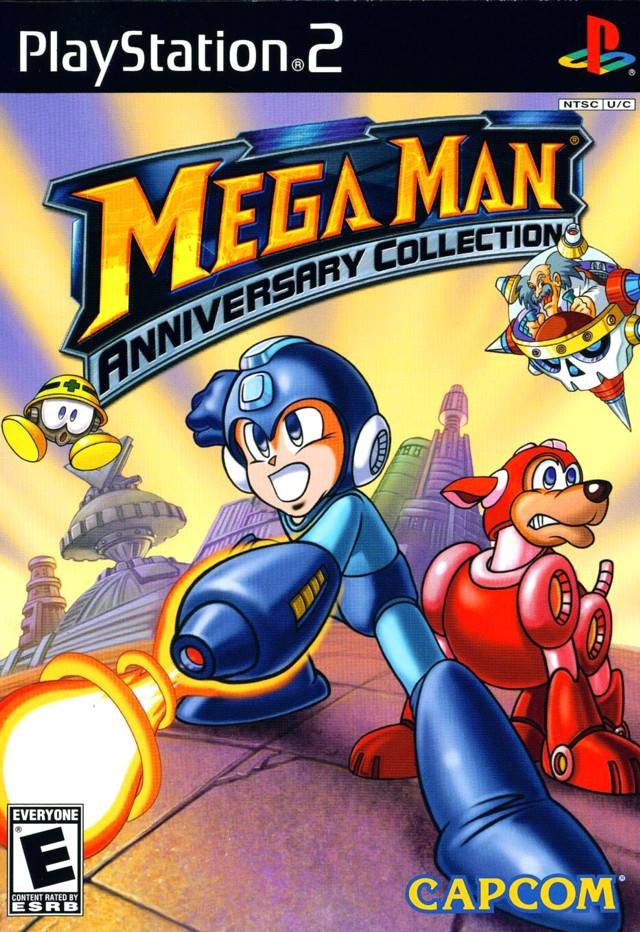
5) Mega Man Anniversary Collection (PS2)


I'm talking solely about the PlayStation 2 version and not the GameCube or Xbox ones. The reason for this is because the jumping and shooting buttons are switched on the GameCube version, plus the remixed music is not present either. The Xbox iteration has that uncomfortable controller, so the PS2 entry automatically wins. Featuring ten games (Mega Man 1-8, and both Power Fighters arcade games), remixed music, updated UI in-game (both optional), and artwork, get your Mega Man on with this awesome anniversary collection.

4) Super Mario All-Stars (SNES, Wii)


Released a year or so ago on Wii with a bonus CD for $30 and also available on cartridge for the Super Nintendo, one of the greatest consoles of all time, Super Mario All-Stars features four games (Super Mario Bros., Super Mario Bros. 2, Super Mario Bros. 3, and Super Mario Bros. The Lost Levels) with remastered and touched up graphics. What was once 8-bit is now 16-bit, and boy, does it look glorious! Special copies of the SNES version contained five games (the aforementioned titles along with Super Mario World). Which ever version of the compendium of Mario's earliest titles you decide to go with, you are bound to reignite your love for everything Mario and Mushroom Kingdom.

3) Metroid Prime Trilogy (Wii)


Three sensational games for the low price of fifty dollars? Did I mention that each game had added motion controls that made these the definitive versions of these titles? Metroid Prime was already an incredible experience, but with pointer functionality added, the game was on a whole 'nother level. Metroid Prime 2: Echoes, while not superior to its predecessor, is still worth blasting through Aether for. The new controls truly add a huge amount to the experience, and Wii owners would be amiss if they didn't manage to scrounge up a copy. Unfortunately, Metroid Prime Trilogy is the only compilation on our list that was manufactured in rare and limited quantities, so good luck finding a used copy under seventy dollars!

2) Sonic's Ultimate Genesis Collection


Possessing over thirty unique and individual Genesis or Mega Drive games, Sonic's Ultimate Genesis Collection had the best games from the SEGA's 16-bit escapades. Included were games like Sonic the Hedgehog (of course), Kid Chameleon, Ristar (one of my personal favorites from the collection), Decap Attack, Flicky, Dr. Robotnik's Mean Bean Machine, Alex Kidd, Beyond Oasis, Columns, Comix Zone, Ecco the Dolphin, Vectorman 1 & 2, and much, much more. With trophies and achievements for those that dig those collectibles, awesome artwork, and behind-the-scenes interviews with various developers, and you have one anthology worth picking up. You can do so on the cheap by the by...

1) The Orange Box (PS3, 360)


Five games for fifty dollars, and they are some of the best titles to come from Valve? Where do I sign? The Orange Box is the ultimate in value with Half-Life 2, Episode One, Episode Two, the online zaniness of Team Fortress 2, and the puzzling romp of the original Portal. Rated highly with a Metacritic of 96 by reviewers both trustworthy and not-so-reputable, The Orange Box is the highest-rated collection on this list which is another reason why it is number one here. With countless replay value in both the single-player games and the multiplayer-centric Team Fortress 2, you will be playing this compendium long after you've reached 1000/1000 on your Gamerscore.

===

Which gaming collections do you fancy? Let your old friend SuperPhillip and everyone else who reads SPC know in the comments section below!

Monday, August 31, 2009

Metroid Prime Trilogy (Wii) Review

So I managed to finish another review after all. For August's last review (I'm serious this time), we're taking a look at Metroid Prime Trilogy for the Wii. How do these three titles shape up in 2009?

Three Times the Prime


Sold separately as three games elsewhere, Nintendo has decided to combine all three Metroid Primes into one collection for the steal of a price of $49.99. It's a great deal considering each of the games is considered one of the best of their respective consoles: Metroid Prime 1 and 2 on the Gamecube and Metroid Prime 3: Corruption for Wii. Not content on just porting over the games, developer Retro Studios has added bonus content and Wii remote controls to the entire package. What it all adds up to is a collection that no fan should be without.

Samus is back and ready to roll.

Metroid Prime Trilogy comes packed with the three Metroid Prime adventures. First off is Metroid Prime which many were blown away by. When it originally came out in 2002, many were hesitant that Metroid could work in first-person, much more 3-D. By some kink of fate, Retro Studios pulled it off with a masterful adventure with stunning level design, incredible art, and a copious amount of fun thrown into the mix. For the first time, players got to control Samus in full 3-D. The goal of the Metroid games is all the same. You explore areas in order to acquire new upgrades. These upgrades are then used to access areas previously unreachable. In Metroid Prime, Samus' arsenal of upgrades included the morph ball, the spider ball, missiles, super missiles, three types of beam upgrades, the power, gravity, and ultra-cool phazon suits and much more. Tallon IV was the planet that Samus tracked the returning Ridley towards, but little did she know that there was more to the little planet than she had originally thought. Space pirates put up a base there and were breeding metroids, and an ultimate evil rested in the heart of an impact crater. Overall, Metroid Prime is the best of the bunch purely on originality alone.

Bosses are as big as ever.

Metroid Prime 2: Echoes was Nintendo's gift to Retro for their fantastic work on the first Prime. They were essentially allowed to create the game of their dreams with little order from Nintendo. This game featured a dual world mechanic much like The Legend of Zelda: A Link to the Past. There was a light world and a dark world. The light world was your typical Metroid fare while the dark world slowly siphoned off Samus's health if she strayed away from protecting light beacons. The main hub was the Temple Grounds which connected all of the other worlds together from the sandy dunes of the Agon Wastes to the tumultuous rain showers of the Torvus Bog. In Echoes, Dark Samus was Aran's main antagonist. Somehow the planet of Aether was split into two dimensions, and the evil monstrosity known as the Ing were the end result of the dimensional split. Samus had plenty of moves returning from the original Prime including super missiles, the spider ball, and grapple beam along with returning favorites from Super Metroid such as the deadly screw attack, utilized for the first time in 3-D.

Nintendo loves dark versions of their characters.

Metroid Prime 3: Corruption was a much more linear experience than the previous two Primes. That isn't to say it held your hand. Samus could enter her ship and transport to various destinations. This wasn't just one cohesive world like the past two games had. This was the game that brought motion controls and the pointer functionality of the Wii remote to the Prime series, and boy, did it do so splendidly!

Speaking of the controls, these have been added to Metroid Prime and Metroid Prime 2. There's no choice for Gamecube controls, but you won't miss them after playing with the Wii remote and nunchuk. That's how wonderfully they work. You point at the screen to aim, and when the cursor is on the edge of the screen, Samus will turn or look up or down. Jumping is relegated to the B button while shooting is with A. The minus and plus buttons bring up Samus' various visors and beams respectively. In Metroid Prime 3, the plus button changes Samus into hypermode where she'll take off more damage but risk facing corruption if she's in it for too long. Samus can also lock-on and shoot enemies, scan them for detailed information, and roll around in the morph ball by pressing C on the nunchuk. The controls feel tight, responsive, and Samus is a dream to control.

Metroid Prime 3 is still one of the Wii's best-looking titles.

Metroid Prime Trilogy comes in a sexy steel-book case covered by a slip-cover. Inside the box are instructions for all three games rolled up into one booklet as well as a fold-out poster with art work and history of the trilogy. Speaking of art work, you can purchase music, concept art, and other bonuses by earning medals in-game. These are earned by performing such tasks as taking down a boss, scanning a high percentage of items, or collecting new power-ups. Friend vouchers return, so get ready to scour the internet for vouchers if you want to unlock everything.

Visually, the trio of titles are still darned good-looking games. They outclass and outshine a lot of current Wii games showing that great design trumps great power any day. Some alterations have been made to the graphics including improved textures as well as true widescreen support for tech savvy gamers everywhere. Each game runs at a smooth clip throughout the duration of each adventure. Some liberties have been taken, however, such as the questionable removal of certain in-game special effects such as not seeing Samus's right hand when the X-ray visor is equipped as well as the alteration of a NPC's "Damn" to "No".

Metroid Prime Trilogy is a fantastic deal no matter how you slice it. It combines all three Metroid Prime classics onto one disc with bonus content to boot. Each adventure may take anywhere between 8-15 hours to complete offering great longevity to the titles. The Wii remote controls make playing with the Gamecube controls of yesteryear feel archaic (though still functional) in comparison. Metroid Prime Trilogy gets a high recommendation for fans and those new to the Metroid franchise.

[SuperPhillip Says: 9.5/10]