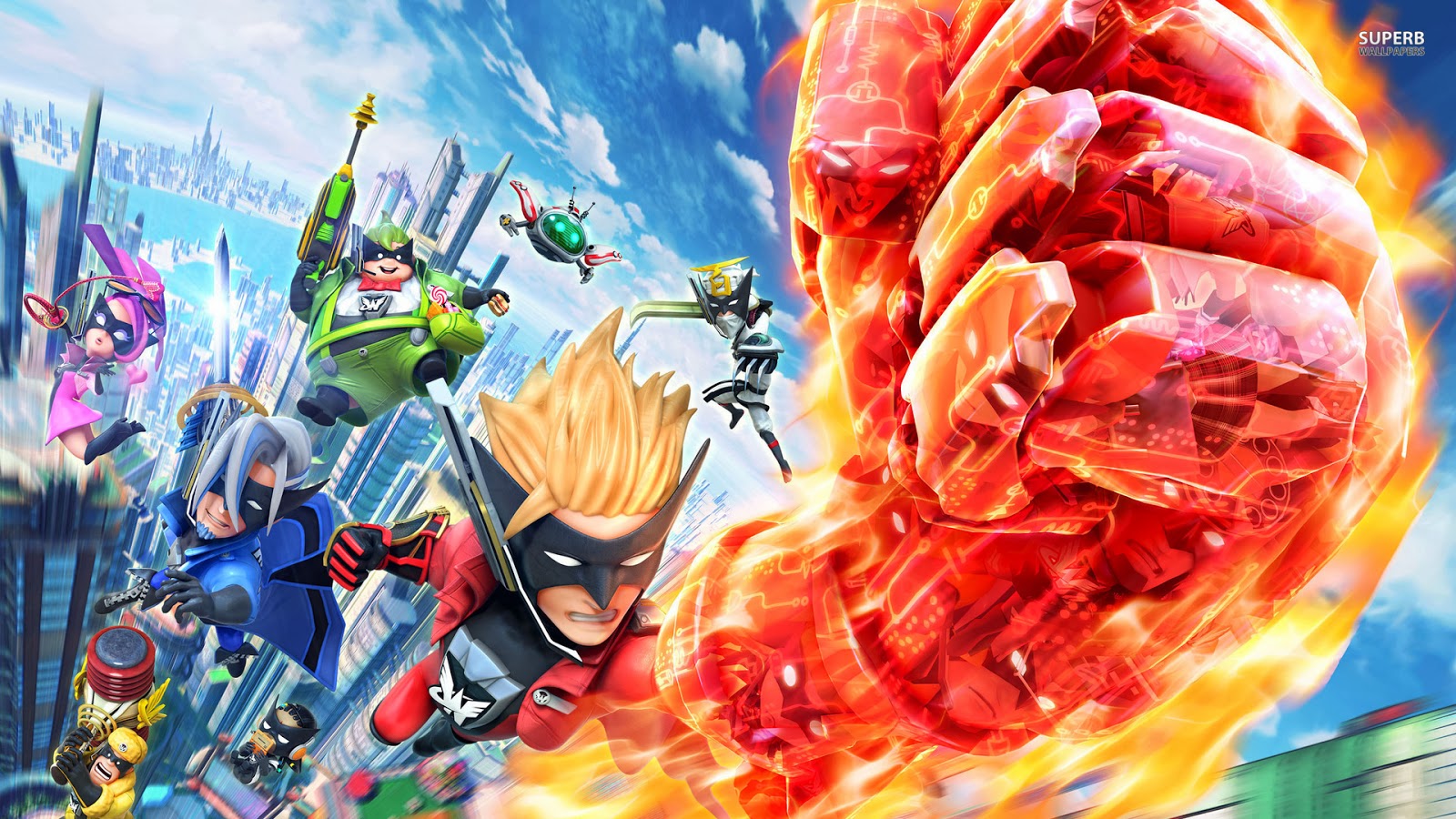
A great opening or introduction can be the hook that grabs onto you and doesn't ever let go. It's the thing that can make for a strong start to a game that keeps its momentum up right from the very beginning. With the First Things First line of articles, it has been SuperPhillip Central's intention to showcase the strongest opening cutscenes from gaming history. This third edition features favorites from Final Fantasy VII, Super Smash Bros. Melee, Donkey Kong 64, and more.
For SuperPhillip Central's previous looks at great game openings, check out these links:
Best Openings in Gaming - Part One
Best Openings in Gaming - Part Two
(And just click on the game name to watch its opening on YouTube.)
Final Fantasy VII (PS1)
Final Fantasy VII is one of the most important games of its kind. It introduced a plethora of players and PlayStation owners to the world of RPGs, particularly of the Japanese kind. It was also an impressive showcase of the possibilities of CD technology over cartridges, a reason why Squaresoft moved from Nintendo consoles to Sony's new PlayStation. The opening cutscene that serves as the opening to Final Fantasy VII floored gamers back when VII originally released. From showing off the denizens of Midgar to cuts to the train housing members of AVALANCHE showing their trip to the Mako Reactor, the opening of Final Fantasy VII is one of the most engaging beginnings to any Final Fantasy game both past and present.
Super Smash Bros. Melee (GCN)
Imagine (or remember depending on how old you are) being a fan of Nintendo, putting the Super Smash Bros. Melee disc into your newly purchased Nintendo GameCube, and being greeted with this epic opening feature a host of characters and references from the big N's big history. You get Donkey Kong rushing through a jungle, an army of multicolored Yoshis stampeding through a grassy knoll, Ness speeding through Onett as he leaves two trails of fire behind him, Captain Falcon in the Blue Falcon slamming Samurai Goroh off the track, and so much more. All of this is punctuated by one of Nintendo's first orchestral scores, and you get a highly memorable and still awesome opening to this day.
Star Fox 64 [3D] (N64, 3DS)
I'd be remiss if I didn't mention the Nintendo 3DS remake of Star Fox 64, but the more memorable opening is definitely from the Nintendo 64 original. It showed Nintendo at its most cinematic, showing off its then relatively recent Nintendo 64 hardware with tremendous effect. There was unforgettable fully voiced dialogue, strategically done camerawork, and great production values in place for the opening that introduced many players to Team Star Fox, its main craft the Arwing, and a quick briefing from General Pepper on the story of this classic game. Whether you play it on the Nintendo 64 or can track down the unpredictably rarer Nintendo 3DS version, you're going to get a terrific arcade game to enjoy.
Donkey Kong 64 (N64)
With a rap theme that has gained great notoriety over the years, even from composer Dave Wise himself, you can't help but fall in love with this cheeky and charming opening for Donkey Kong 64. The rap introduces all five playable Kongs-- Donkey, Diddy, Tiny, Lanky, and Chunky-- with their own verses detailing each ones' abilities. Meanwhile, you get Cranky Kong serving as DJ, scratching his paws along the spinning records and mixing table. He surely knows how to take it to the fridge. This lovingly weird, whimsical, and ridiculous rap is a highlight of Donkey Kong 64 and got players ready to roll with the DK crew.
Banjo-Kazooie (N64, XBLA)
Before Rare went all ape **** crazy with the collectibles of Donkey Kong 64, they made a nice balance of platforming, exploring, and adventuring with one of my favorite 3D platformers of all time, Banjo-Kazooie. When I let the game idle as a middle schooler and saw this intro, I knew then and there I was watching something that clued my brain into knowing I was about to play something both ridiculously charming and special. Banjo-Kazooie's opening begins with Banjo and Kazooie playing their titular instruments before cast members Tooty and Mumbo Jumbo begin interrupting with their own instrumental performances. Feeling upstaged, Banjo gets increasingly angrier, but eventually lets that anger subside and happily plays along with the group for a joyous performance.
No More Heroes (Wii, PS3, 360)
Originally released on the Wii, No More Heroes gained cult classic status with many owners of Nintendo's revolutionary system. The game would go on to have a fully HD version on the PlayStation 3 and Xbox 360, though not as enjoyable to those who loved the Wii original. Regardless, No More Heroes' opening is as stylish and cool as the game itself. It details the premise of the game with great narration by hero Travis Touchdown. You get the ultra cool opening with the super catchy main theme of the game with its infectious ostinato. The Wii version of the opening has cool transitions between shots via the staff roll, as well as urging players to grab their Wii Remotes and let the bloodshed begin.
Showing posts with label super smash bros. melee. Show all posts
Wednesday, February 22, 2017
Tuesday, November 24, 2015
Rank Up! - Super Smash Bros.
Over the weekend it was Super Smash Bros. for Wii U's first anniversary. With that in mind, it seems like the perfect time for SuperPhillip Central's Rank Up series to return to count down the best of the Super Smash Bros. series as a whole. There are five game in the series, and SuperPhillip Central is going to list them from least greatest to the best. Here are the games we'll be mentioning:
Super Smash Bros. (N64)
Super Smash Bros. Melee (GCN)
Super Smash Bros. Brawl (Wii)
Super Smash Bros. for Nintendo 3DS (3DS)
Super Smash Bros. for Wii U (Wii U)
With that, let's get to ranking these games!
5) Super Smash Bros. (N64)
The original Super Smash Bros. kicks off this countdown of Smash Bros. supremacy. This is Smash at its most basic, offering a modest selection of characters (eight to start with, four to unlock), a fun assortment of stages, and several modes to enjoy like the amazing Classic and Target Blast modes that would return in future installments. This was the beginning of something very special for Nintendo and its fans, and the original Super Smash Bros., like every other game in the series, is worth playing for multiplayer fun even to this day.
4) Super Smash Bros. for Nintendo 3DS (3DS)
The first and only Super Smash Bros. game on a handheld, Super Smash Bros. for Nintendo 3DS broke new territory and blew minds as Masahiro Sakurai and his team successfully converted the console gameplay of past Super Smash Bros. games to the small screen with almost everything you'd want from the series intact. The same arsenal of characters from the Wii U version were all available for play without much in the way of making concessions. Smash Run was the exclusive mode for the 3DS version, and it offered a maze-like dungeon of enemies to defeat to get your character stronger for the final round, a match of some kind against AI opponents. The stage variety was quite good, too, delivering well designed stages like The Legend of Zelda: Spirit Tracks' train, Nintendogs' Living Room, and Fire Emblem: Awakening's Arena Ferox. While it's not a game that competitive players went to in droves, Super Smash Bros. for Nintendo 3DS is a wonderful Smash Bros. game that feels complete and great to play on-the-go.
3) Super Smash Bros. Brawl (Wii)
It seemed like we were waiting ages for the Wii's Super Smash Bros. game to be released, constantly getting teased with new information every weekday with the Super Smash Bros. Dojo website. When the game finally came out, it was a mixed blessing, more of a positive one than a negative one, though. Packed with amazing stages with seldom a stinker in the bunch, an incredible amount of characters with such newcomers as Wario, Kid Icarus's Pit, Kirby's Metaknight and King Dedede, as well as a first for the series, third party characters like Sonic the Hedgehog and Solid Snake of Metal Gear Solid fame. Super Smash Bros. Brawl featured a campaign with it with engaging and charming cutscenes, allowing for up to player to join in on the 2D side-scrolling levels. The amount of content in Super Smash Bros. Brawl is amazing, and that fact is something that is a tradition with the series itself. However, not all was great with Brawl. One issue that ruined its chances as a competitive title was the inclusion of tripping. While great for a party game, not really well suited for tournaments. Still, for the millions of people who just enjoy the games as Nintendo fighters and not the small number of players who seek a tournament-caliber competitive game, Super Smash Bros. Brawl was a legitimately great game.
2) Super Smash Bros. Melee (GCN)
This next Super Smash Bros. game, Melee, is still played competitively and enjoyed by players all over the world. It says a lot about the legacy of this near-launch GameCube title. What I enjoyed about Super Smash Bros. Melee was how it really began the content-packed tradition that games following Melee would possess. Melee saw the introduction of trophies, a collectible that showed well known and forgotten characters, items, settings, and objects with wonderful descriptions. It was a virtual museum and shrine of Nintendo. The solo mode, Adventure, continues to be my personal favorite single player mode of any Smash game, taking players through familiar Nintendo settings like the Mushroom Kingdom, a Legend of Zelda temple, and even an F-Zero race track. The stage design is some of the series' best without a doubt, offering great locales like the Fountain of Dreams, Mute City, Temple, Kongo Jungle, and so many others. Then there is the cast of characters that introduced Fire Emblem as a series to the West and brought memories of Nintendo's Game and Watch systems back into the limelight (or for many, the first time ever). Super Smash Bros. Melee is the complete package, but at the same time, it's not the best that the Super Smash Bros. series has to offer.
1) Super Smash Bros. for Wii U (Wii U)
The latest and what SuperPhillip Central considers the greatest Super Smash Bros. game is the recently released Wii U sequel. Although its board game mode isn't the best, everything else more than makes up for it. Everything including the largest roster of Super Smash Bros. characters ever to be contained in one game-- from Nintendo staples like Mario, Donkey Kong, Link, Samus Aran, and Pikachu, to third party greats like Mega Man, Sonic the Hedgehog, Pac-Man, and now even Street Fighter's Ryu and Final Fantasy VII's Cloud Strife. The immense amount of excellent stages with plenty of dynamic hazards and obstacles to concern yourself with give them as much character as the fighters you battle with. The variety extends to the game's many modes like returning delights like Classic mode, All-Star mode, Event mode, Special Orders, Multi-Man Smash, Target Blast, Home-Run Contest, and Trophy Rush. The addition of mostly lag-free online play (something that Brawl sadly balked on) makes it easy to join up and play intense battles for up to four players over the Internet. Finally, the creation of Omega versions of stages makes it so the Battlefield and Final Destination aren't the only backdrops competitive players will have to put up with, as all stages now feature a Final Destination version. Super Smash Bros. for Wii U is the most content-rich, enjoyable to play, and magnificent Smash Bros. game to currently exist. Once again, Masahiro Sakurai and his team delivered sublimely.
Super Smash Bros. (N64)
Super Smash Bros. Melee (GCN)
Super Smash Bros. Brawl (Wii)
Super Smash Bros. for Nintendo 3DS (3DS)
Super Smash Bros. for Wii U (Wii U)
With that, let's get to ranking these games!
5) Super Smash Bros. (N64)
The original Super Smash Bros. kicks off this countdown of Smash Bros. supremacy. This is Smash at its most basic, offering a modest selection of characters (eight to start with, four to unlock), a fun assortment of stages, and several modes to enjoy like the amazing Classic and Target Blast modes that would return in future installments. This was the beginning of something very special for Nintendo and its fans, and the original Super Smash Bros., like every other game in the series, is worth playing for multiplayer fun even to this day.
4) Super Smash Bros. for Nintendo 3DS (3DS)
The first and only Super Smash Bros. game on a handheld, Super Smash Bros. for Nintendo 3DS broke new territory and blew minds as Masahiro Sakurai and his team successfully converted the console gameplay of past Super Smash Bros. games to the small screen with almost everything you'd want from the series intact. The same arsenal of characters from the Wii U version were all available for play without much in the way of making concessions. Smash Run was the exclusive mode for the 3DS version, and it offered a maze-like dungeon of enemies to defeat to get your character stronger for the final round, a match of some kind against AI opponents. The stage variety was quite good, too, delivering well designed stages like The Legend of Zelda: Spirit Tracks' train, Nintendogs' Living Room, and Fire Emblem: Awakening's Arena Ferox. While it's not a game that competitive players went to in droves, Super Smash Bros. for Nintendo 3DS is a wonderful Smash Bros. game that feels complete and great to play on-the-go.
3) Super Smash Bros. Brawl (Wii)
It seemed like we were waiting ages for the Wii's Super Smash Bros. game to be released, constantly getting teased with new information every weekday with the Super Smash Bros. Dojo website. When the game finally came out, it was a mixed blessing, more of a positive one than a negative one, though. Packed with amazing stages with seldom a stinker in the bunch, an incredible amount of characters with such newcomers as Wario, Kid Icarus's Pit, Kirby's Metaknight and King Dedede, as well as a first for the series, third party characters like Sonic the Hedgehog and Solid Snake of Metal Gear Solid fame. Super Smash Bros. Brawl featured a campaign with it with engaging and charming cutscenes, allowing for up to player to join in on the 2D side-scrolling levels. The amount of content in Super Smash Bros. Brawl is amazing, and that fact is something that is a tradition with the series itself. However, not all was great with Brawl. One issue that ruined its chances as a competitive title was the inclusion of tripping. While great for a party game, not really well suited for tournaments. Still, for the millions of people who just enjoy the games as Nintendo fighters and not the small number of players who seek a tournament-caliber competitive game, Super Smash Bros. Brawl was a legitimately great game.
2) Super Smash Bros. Melee (GCN)
This next Super Smash Bros. game, Melee, is still played competitively and enjoyed by players all over the world. It says a lot about the legacy of this near-launch GameCube title. What I enjoyed about Super Smash Bros. Melee was how it really began the content-packed tradition that games following Melee would possess. Melee saw the introduction of trophies, a collectible that showed well known and forgotten characters, items, settings, and objects with wonderful descriptions. It was a virtual museum and shrine of Nintendo. The solo mode, Adventure, continues to be my personal favorite single player mode of any Smash game, taking players through familiar Nintendo settings like the Mushroom Kingdom, a Legend of Zelda temple, and even an F-Zero race track. The stage design is some of the series' best without a doubt, offering great locales like the Fountain of Dreams, Mute City, Temple, Kongo Jungle, and so many others. Then there is the cast of characters that introduced Fire Emblem as a series to the West and brought memories of Nintendo's Game and Watch systems back into the limelight (or for many, the first time ever). Super Smash Bros. Melee is the complete package, but at the same time, it's not the best that the Super Smash Bros. series has to offer.
1) Super Smash Bros. for Wii U (Wii U)
The latest and what SuperPhillip Central considers the greatest Super Smash Bros. game is the recently released Wii U sequel. Although its board game mode isn't the best, everything else more than makes up for it. Everything including the largest roster of Super Smash Bros. characters ever to be contained in one game-- from Nintendo staples like Mario, Donkey Kong, Link, Samus Aran, and Pikachu, to third party greats like Mega Man, Sonic the Hedgehog, Pac-Man, and now even Street Fighter's Ryu and Final Fantasy VII's Cloud Strife. The immense amount of excellent stages with plenty of dynamic hazards and obstacles to concern yourself with give them as much character as the fighters you battle with. The variety extends to the game's many modes like returning delights like Classic mode, All-Star mode, Event mode, Special Orders, Multi-Man Smash, Target Blast, Home-Run Contest, and Trophy Rush. The addition of mostly lag-free online play (something that Brawl sadly balked on) makes it easy to join up and play intense battles for up to four players over the Internet. Finally, the creation of Omega versions of stages makes it so the Battlefield and Final Destination aren't the only backdrops competitive players will have to put up with, as all stages now feature a Final Destination version. Super Smash Bros. for Wii U is the most content-rich, enjoyable to play, and magnificent Smash Bros. game to currently exist. Once again, Masahiro Sakurai and his team delivered sublimely.
Thursday, October 29, 2015
Let the Good Names Roll: Great Credits Sequences in Gaming - Part Two
The staff roll, otherwise known as the credits of video games. This is where not only do we see all the names of the folks who worked on the game you just beat, but perhaps something special to go along with it, whether it's an overview of your adventure, the cast of enemies in the game, or something else. This article delves into some of the very best and most memorable staff rolls/credits sequences in video game history. From old school classics to modern marvels, part two of this expanding list continues to bring the excellent staff rolls. Click on the game title to see the credits sequence described, and for the first part of this series of articles, click here.
Super Mario 3D World (Wii U)
We kick things off with a game I talked about in SuperPhillip Central's top ten list of the best platformers on the Wii U from yesterday. Super Mario 3D World delights as Mario, Luigi, Princess Peach and Toad make their way back to the Mushroom Kingdom through the very same clear pipe that transported them to the Sprixie Kingdom in the first place. Along the way home, they see various characters from throughout their adventure, such as various rescued Sprixies, the helpful water creature Plessie, cute rabbits, and even disappointed, defeated Boom Boom, Pom Pom, and a bottled-up Bowser. All this occurs while a sensational big band theme plays makes this one terrific staff roll sequence.
The Legend of Zelda: Majora's Mask (N64)
After reliving the same three-day cycle over and over again, though not as many times as Bill Murray had to relive Groundhog Day at least, Link finally defeats Majora's Mask and saves the land of Termina. After some exposition to tidy up loose ends, the credits of the game start running. We see a peaceful Termina, comfortable in the present and hopeful for the future, with multiple scenes showing the denizens enjoying their newly saved lives. We see the organ grinder playing to a full house in the Milk Bar, we see the father and daughter outside of the Music Box House celebrating their lives together, and we see the wedding of Kafei and Anju at the very end. It's a wonderful recap of the lives of the people you, as Link, helped save.
Final Fantasy IX (PS1)
Speaking of recaps, here's a literal one with the credits sequence of Final Fantasy IX. It hits some emotional highs, showcasing CG moments from Zidane and the player's adventure throughout the game. It certainly helps that the two themes that coincide with these moments are absolutely sensational. The first is Melodies of Life, a beautiful ballad that uses the melody of the world map theme. The second is simply Final Fantasy, the main theme of the franchise that plays in most of the mainline games up to this point. The ending, where Zidane and Dagger's two different worlds combine into one, is a powerful one, as is the glowing, rotating crystal that forms the Final Fantasy IX logo adds up to a worthwhile end to the game.
Super Smash Bros. Melee (GCN)
We move from two credits sequences that are emotionally empowered to a credits sequence that is its own game. Most of the Super Smash Bros. games feature interactive staff rolls where you can mess about with the names of crew members displayed on the screen. What many consider the most memorable of these credits sequences is the one from Super Smash Bros. Melee. It features a first-person view of the player flying through a sector space with flying names coming from all directions. It's possible, as this video shows, to hit all of the names. Since players see this sequence after every Classic mode run, it can either be zoomed through by holding a button, or one can try to hit as many names as possible.
Banjo-Kazooie (N64, XBLA)
There are actually two ending sequences for Banjo-Kazooie, one focusing on the enemies of the game, after completion of Grunty's Furnace Fun game show, and this second one that is played after defeating Gruntilda. This latter one is the one we'll focus on, as it not only shows a parade of supporting characters and bosses, but it also displays the names of the development and production team behind the game. The names are read in the voices of the characters currently shown on screen, each given nicknames such as Eveline "Twinkles" Fischer and Chris "Chomper" Peil, for instance. I love it when games show off their cast, and Banjo-Kazooie's setup is perfect in this regard.
God Hand (PS2)
Now from a comical game to an even more comical credits sequence. You can tell that Clover Studio (rest in peace) had a lot of fun working on God Hand. This is especially apparent in the incredibly goofy and unapologetic in its cheesiness ending credits, helped immensely by the '80s-esque vocal theme played during it. I mean what else can you say about a song that with lyrics that go, "dragon kick your ass into the Milky Way. (Milky Way!)" The credits feature clips from the game's cutscenes, but it also shows the cast shaking their groove thangs like crazy. It's just a balls to the wall ridiculous staff roll, and I, as well as many others, can't help but love it.
What credits sequences from games would you like to see in future installments of Let the Good Names Roll? Hit me up with some suggestions in the comments below!
Super Mario 3D World (Wii U)
We kick things off with a game I talked about in SuperPhillip Central's top ten list of the best platformers on the Wii U from yesterday. Super Mario 3D World delights as Mario, Luigi, Princess Peach and Toad make their way back to the Mushroom Kingdom through the very same clear pipe that transported them to the Sprixie Kingdom in the first place. Along the way home, they see various characters from throughout their adventure, such as various rescued Sprixies, the helpful water creature Plessie, cute rabbits, and even disappointed, defeated Boom Boom, Pom Pom, and a bottled-up Bowser. All this occurs while a sensational big band theme plays makes this one terrific staff roll sequence.
The Legend of Zelda: Majora's Mask (N64)
After reliving the same three-day cycle over and over again, though not as many times as Bill Murray had to relive Groundhog Day at least, Link finally defeats Majora's Mask and saves the land of Termina. After some exposition to tidy up loose ends, the credits of the game start running. We see a peaceful Termina, comfortable in the present and hopeful for the future, with multiple scenes showing the denizens enjoying their newly saved lives. We see the organ grinder playing to a full house in the Milk Bar, we see the father and daughter outside of the Music Box House celebrating their lives together, and we see the wedding of Kafei and Anju at the very end. It's a wonderful recap of the lives of the people you, as Link, helped save.
Final Fantasy IX (PS1)
Speaking of recaps, here's a literal one with the credits sequence of Final Fantasy IX. It hits some emotional highs, showcasing CG moments from Zidane and the player's adventure throughout the game. It certainly helps that the two themes that coincide with these moments are absolutely sensational. The first is Melodies of Life, a beautiful ballad that uses the melody of the world map theme. The second is simply Final Fantasy, the main theme of the franchise that plays in most of the mainline games up to this point. The ending, where Zidane and Dagger's two different worlds combine into one, is a powerful one, as is the glowing, rotating crystal that forms the Final Fantasy IX logo adds up to a worthwhile end to the game.
Super Smash Bros. Melee (GCN)
We move from two credits sequences that are emotionally empowered to a credits sequence that is its own game. Most of the Super Smash Bros. games feature interactive staff rolls where you can mess about with the names of crew members displayed on the screen. What many consider the most memorable of these credits sequences is the one from Super Smash Bros. Melee. It features a first-person view of the player flying through a sector space with flying names coming from all directions. It's possible, as this video shows, to hit all of the names. Since players see this sequence after every Classic mode run, it can either be zoomed through by holding a button, or one can try to hit as many names as possible.
Banjo-Kazooie (N64, XBLA)
There are actually two ending sequences for Banjo-Kazooie, one focusing on the enemies of the game, after completion of Grunty's Furnace Fun game show, and this second one that is played after defeating Gruntilda. This latter one is the one we'll focus on, as it not only shows a parade of supporting characters and bosses, but it also displays the names of the development and production team behind the game. The names are read in the voices of the characters currently shown on screen, each given nicknames such as Eveline "Twinkles" Fischer and Chris "Chomper" Peil, for instance. I love it when games show off their cast, and Banjo-Kazooie's setup is perfect in this regard.
God Hand (PS2)
Now from a comical game to an even more comical credits sequence. You can tell that Clover Studio (rest in peace) had a lot of fun working on God Hand. This is especially apparent in the incredibly goofy and unapologetic in its cheesiness ending credits, helped immensely by the '80s-esque vocal theme played during it. I mean what else can you say about a song that with lyrics that go, "dragon kick your ass into the Milky Way. (Milky Way!)" The credits feature clips from the game's cutscenes, but it also shows the cast shaking their groove thangs like crazy. It's just a balls to the wall ridiculous staff roll, and I, as well as many others, can't help but love it.
===
What credits sequences from games would you like to see in future installments of Let the Good Names Roll? Hit me up with some suggestions in the comments below!
Monday, November 4, 2013
SuperPhillip Central's Favorite VGM - 500 Reasons to Enjoy Edition
This is a momentous edition of SuperPhillip Central's Favorite VGM. This edition is where we have reached are 500th VGM! It's been two years or so since we began this version of the list, and it's amazing to think back at all of the great music that has been featured on this weekly segment. This week we have music from The Wonderful 101, Tetris, and Super Smash Bros. Melee!
v496. The Wonderful 101 (Wii U) - The Won-Stoppable Wonderful 100
The Wonderful 101 was overlooked by many Wii U owners, but then again, it seems every title on the Wii U is overlooked. What is selling on that thing anyway? Regardless, hearing this vocal theme during epic moments of The Wonderful 101 energized players to push their gaming skills beyond their own limits.
v497. Tetris (GB) - Type A
Let's go old school for a moment, shall we? You cannot have a favorite VGM list without having this game and this theme on it. It's Tetris's Type A theme, an infectious melody that stayed with players long after they shut off the power to their Game Boys. Tetris was a game that sold Nintendo's portable system to the history books, and the game's addicting gameplay was a reason for that.
v498. Kirby Air Ride (GCN) - Sky Sands
Kirby Air Ride was quite an unorthodox racing game, created in part by the mind behind the Kirby character and series, as well as Super Smash Bros., Masahiro Sakurai. You see, speed was controlled by one button and one button only. As for the race, Sky Sands is a desert course that takes place miles above solid ground. This Arabian theme suits the course perfectly, wouldn't you say?
v499. Puppeteer (PS3) - Across the Plains
We recently reviewed Puppeteer, and we enjoyed the game overall. It had a lot of story sequences that broke up the flow of the game, but all-in-all it's a solid title. The presentation is but a part of that, but we were really astounded by the soundtrack, composed by Patrick Doyle. Across the Plains delivers a very Southwestern America, Mexico desert-type feel to it.
v500. Super Smash Bros. Melee (GCN) - Great Medley
Here we are! The big one! VGM number 5-0-0! We've selected a big one, too, for this great occasion. It's the Great Medley, incorporating a myriad of themes from many of Super Smash Bros. Melee's combatants. In North America, the CD that this medley is a part of was available to Nintendo Power subscribers. We actually have an original copy of it, and orchestrated performances of Smash Bros. music makes it a gem in our music library.
v496. The Wonderful 101 (Wii U) - The Won-Stoppable Wonderful 100
The Wonderful 101 was overlooked by many Wii U owners, but then again, it seems every title on the Wii U is overlooked. What is selling on that thing anyway? Regardless, hearing this vocal theme during epic moments of The Wonderful 101 energized players to push their gaming skills beyond their own limits.
v497. Tetris (GB) - Type A
Let's go old school for a moment, shall we? You cannot have a favorite VGM list without having this game and this theme on it. It's Tetris's Type A theme, an infectious melody that stayed with players long after they shut off the power to their Game Boys. Tetris was a game that sold Nintendo's portable system to the history books, and the game's addicting gameplay was a reason for that.
v498. Kirby Air Ride (GCN) - Sky Sands
Kirby Air Ride was quite an unorthodox racing game, created in part by the mind behind the Kirby character and series, as well as Super Smash Bros., Masahiro Sakurai. You see, speed was controlled by one button and one button only. As for the race, Sky Sands is a desert course that takes place miles above solid ground. This Arabian theme suits the course perfectly, wouldn't you say?
v499. Puppeteer (PS3) - Across the Plains
We recently reviewed Puppeteer, and we enjoyed the game overall. It had a lot of story sequences that broke up the flow of the game, but all-in-all it's a solid title. The presentation is but a part of that, but we were really astounded by the soundtrack, composed by Patrick Doyle. Across the Plains delivers a very Southwestern America, Mexico desert-type feel to it.
v500. Super Smash Bros. Melee (GCN) - Great Medley
Here we are! The big one! VGM number 5-0-0! We've selected a big one, too, for this great occasion. It's the Great Medley, incorporating a myriad of themes from many of Super Smash Bros. Melee's combatants. In North America, the CD that this medley is a part of was available to Nintendo Power subscribers. We actually have an original copy of it, and orchestrated performances of Smash Bros. music makes it a gem in our music library.
Wednesday, July 31, 2013
SuperPhillip Central's Top 100 Games of All Time (20-11)
On June 5, SuperPhillip Central turned five years old. We're celebrating big the only way we know how, with a list of our favorite 100 games of all time. SuperPhillip Central's staff has come together to come up with this list. These don't necessarily have to be the best, but they are indeed our favorites. Coming up with an order for these games has been an immense challenge. We're sure you won't agree with our order-- heck, we don't even agree with our order. That said, we hope you'll at least agree with our picks, and if you don't, at least you can read our rationale for our choices. Regardless, for ten weeks, we will be counting down our favorite games of all time. Please join us for this great undertaking.
If you missed a previous edition of our countdown, look no further than these links:
Games of All Time (100-91)
Games of All Time (90-81)
Games of All Time (80-71)
Games of All Time (70-61)
Games of All Time (60-51)
Games of All Time (50-41)
Games of All Time (40-31)
Games of All Time (30-21)
Let's return to the countdown!
20) Super Mario 3D Land (3DS)
The first game on our list of ten titles for this week is Super Mario 3D Land. The series finally found a nice balance between the 3D gameplay of games like Super Mario 64 and Super Mario Galaxy, and the 2D linearity of games like Super Mario Bros. 3 and Super Mario World. Because of this, Super Mario 3D Land really felt like a 2D Mario game in 3D. What players received with the game were an unforgettable combination of cleverly constructed obstacle courses, each with three hidden star medals to find, power-ups like the returning Tanooki Suit and more than double the expected content of 3D Land with the secret eight bonus worlds after originally completing the game. Many were bummed with the unveiling of Super Mario 3D World on the Wii U that the new 3D Mario action game wasn't in line with something like Super Mario Galaxy. Seeing as how great Super Mario 3D Land really was and the addition of multiplayer, we can't help but be excited.
19) Star Fox 64 (N64)
Do a barrel roll! One of those rare games that seemingly has infinitely quotable lines of dialogue, Star Fox 64 put players in the role of Fox McCloud, joined by his squadmates Peppy Hare, Slippy Toad and Falco Lombardi. Star Fox 64 was the type of action game that offered multiple paths to the final planet of Venom, where the nefarious scientist Andross was exiled to. There were over twenty unique ways to reach Venom, meaning players needed to replay the game multiple times to reach every level within the game. Most levels had two paths to them, giving players an option on which path they wished to go. (Sometimes the path would be chosen for you if you failed to complete the requirement.) The replay value didn't stop there, either. No, one could go for medals by getting high kill counts on each of the 15+ levels. Outside of arwing combat, whether it is along rails or in all-range mode, Fox could pilot a ground tank and even a submarine. Star Fox 64 is one Nintendo's classics for the 64, so there's no wonder why gamers around the globe wish to step into the cockpit with Team Star Fox once again.
18) Donkey Kong Country 2: Diddy's Kong Quest (SNES)
Last week we had Donkey Kong Country Returns on our list. This week the greatest of the Donkey Kong Country line of games is proudly represented on the Top 100 Games of All Time list. Donkey Kong Country 2: Diddy's Kong Quest featured Diddy Kong in the starring role, alongside his girlfriend Dixie Kong (no relation) to save Donkey Kong from Kaptain K. Rool's klutches-- er... clutches. What transpired from there was a myriad of differently themed areas, masterfully crafted levels, which constantly brought some new and fresh gameplay mechanic into the fold, and an atmosphere that most 16-bit games of that era would have dreamed to have. Donkey Kong Country 2 brought a harder challenge than its predecessor, more interesting bonus areas and even a secret world and boss battle to overcome. Then there's the glorious soundtrack, which made our list of best soundtracks of all time. All of this is packaged into one banana-slamma' of a ride.
17) Final Fantasy VI (SNES)
What we declare to be the best in the Final Fantasy series (sorry, Final Fantasy VII fans), Final Fantasy VI (or as it was originally released in the West as Final Fantasy III) brought together a cast of interesting characters, each with unparalleled development from beginning to end. Final Fantasy VI contained a villain who actually succeeded in his plans, creating a second half of the game that was totally nonlinear, which may have been overwhelming to some players, and understandably so. The previous Final Fantasy games were already fantastic experiences to themselves, but Final Fantasy VI seemed like such a massive beast in comparison to them. There were so many side quests to do, optional bosses to conquer, powerful equipment to find, party members to save and dungeons to enter. It's amazing how timeless Final Fantasy VI is, and it's all thanks to the compelling gameplay, stunning presentation and excellent vision the developers had for the game.
16) The Legend of Zelda: Link's Awakening DX (GBC)
The first handheld Zelda title was Link's Awakening. A remastered version of the game, implementing color, was released on the Game Boy Color in the form of The Legend of Zelda: Link's Awakening DX. Of course, if you had a Super Game Boy, you could already play the original Link's Awakening in color, but you'd miss out on DX's exclusive color dungeon, giving Link either stronger offense or beefier defense. Koholint Island didn't waste any space within its borders. Each grid on that island served a purpose. There was little to nothing in the way of filler. The dungeons sported clever puzzles, especially the seventh dungeon, a tower, where one needed to chuck an iron ball into the support columns to bring the top floor crashing down. Link's Awakening brought with it Roc's Feather, an item that would be used in the majority of handheld Zelda titles that followed. The Legend of Zelda: Link's Awakening was a dream come true in video game form, and the DX version only heightened its greatness.
15) Diddy Kong Racing (N64)
SuperPhillip Central's favorite kart racer of all time gets the 15th spot here on this monumental little countdown of ours. It is Diddy Kong Racing, one of Rare's greatest spectacles. It introduced something that a lot of future racers tried to copy, to varying degrees of success, an adventure mode. Through completing races, acquiring golden balloons and beating bosses in tests of speed, the player progressed through a story to halt the sinister sorcerer Wizpig's tyranny on Timber Island. Not only that, but alongside the four player multiplayer, the three different racing vehicle types that offered their own takes on the twenty tracks, and aforementioned adventure mode was a cast of characters that were fun to play as, each with their own stats. We even had a look at Conker before he let alcoholism ruin his life. Diddy Kong Racing was a combination of well crafted tracks, addicting multiplayer (even allowing two players to cooperatively do the adventure mode via code) and colorful presentation.
14) Perfect Dark (N64, XBLA)
Our favorite first-person shooter of all time also comes from Rare. Man, those guys were really something during the Nintendo 64 era! Perfect Dark was built as a spiritual successor to GoldenEye 007, one of the best selling games on the Nintendo 64. However, Agent Joanna Dark can do anything James Bond can do, and her game did it a lot better. The missions were much more complex, offering a similar amount of freedom like GoldenEye 007 to complete objectives in any order the player liked. The multiplayer was practically its own game, presenting players with large scale maps with endless amounts of vantage points, places of cover and hidden areas. The mode also allowed something GoldenEye 007 lacked-- bots. This made it so you didn't need to have a sleepover or live on campus just to have some competition. All this in addition to the added beauty and powerful performance that the expansion pak gave to Perfect Dark (slowdown, be damned) make for a first-person shooter that may be a little long in the tooth, but is near perfection.
13) Super Mario Bros. 3 (NES)
We like Super Mario Bros., but we did not like it enough for it to make our list of 100 games. Now, if this was a list of revolutionary or influential games, we'd no doubt have to include the game on merit alone. That said, we didn't truly get into the Super Mario Bros. series seriously until the third installment. With Super Mario Bros. 3, Nintendo implemented eight overworld maps, which served as the player's way to access each level. Unlike past games, Super Mario Bros. 3 featured a non-linear level structure, offering different paths for the player to go, sometimes skipping over some levels entirely if need or want be. Super Mario Bros. 3 brought a bunch of other mechanics that would be featured in future Mario games, such as items that could be held, sliding down slopes, new types of jumping, the ability to fly via the Super Leaf power-up, airships, fortresses, ghost houses and more complex level design than previously seen. Despite all of these revolutionary features that many future Mario games would use, Super Mario Bros. 3 isn't quite our favorite 2D Mario.
12) Super Smash Bros. Melee (GCN)
Many nights went sleepless when the fantastic Super Smash Bros. Melee came into our lives. Like a falcon punch to the gut, Melee came out of nowhere as our go-to multiplayer game. Everything about Melee was meant to bigger and better than its Nintendo 64 predecessor, a game that was originally never supposed to leave Japan! We're glad it did, because otherwise we would have never gotten to experience Super Smash Bros. Melee. The game gave us more characters, more stages, more items, more modes (like the awesome Adventure mode, more crazy nights than we can count, classic Nintendo musical tracks orchestrated, better graphics, the addition of collectible trophies and much much more. To this day, Super Smash Bros. Melee is a game that many still break out for parties and get-togethers, and it is still played competitively at various events around the world. Whether or not you call it a fighting game is moot, Super Smash Bros. Melee is a love letter to all Nintendo fans and fans of great, addicting gameplay.
11) New Super Mario Bros. Wii (Wii)
This may be considered sacrilege to some Mario fans, but we actually prefer New Super Mario Bros. Wii to Super Mario Bros. 3. While the NES classic was certainly revolutionary, New Super Mario Bros. Wii had the overall better designed and more interestingly designed levels. The addition of multiplayer to make messing over your friends and family, or, as the game probably intended, to work together to beat each level didn't hurt either. We really believe that New Super Mario Bros. Wii is the pinnacle of 2D Mario level design, showing that Nintendo EAD's experience with the franchise allowed them to craft some of the finest obstacle courses that ever existed in a 2D platformer. Each level offered up something exciting to freshen things up, challenges and hidden areas that were expertly placed. Every Goomba, every pipe, every Koopa Troopa, every pit, every coin, etc. served its own purpose. There was nothing on screen that didn't belong there. That is masterful level design, and that is what New Super Mario Bros. Wii delivered in spades.
Next week we will finally name our favorite game of all time. Oh, there will be nine other titles to be listed as well. You do NOT want to miss this. You'll HATE yourself if you do! Trust us. We know these things.
If you missed a previous edition of our countdown, look no further than these links:
Games of All Time (100-91)
Games of All Time (90-81)
Games of All Time (80-71)
Games of All Time (70-61)
Games of All Time (60-51)
Games of All Time (50-41)
Games of All Time (40-31)
Games of All Time (30-21)
Let's return to the countdown!
20) Super Mario 3D Land (3DS)
The first game on our list of ten titles for this week is Super Mario 3D Land. The series finally found a nice balance between the 3D gameplay of games like Super Mario 64 and Super Mario Galaxy, and the 2D linearity of games like Super Mario Bros. 3 and Super Mario World. Because of this, Super Mario 3D Land really felt like a 2D Mario game in 3D. What players received with the game were an unforgettable combination of cleverly constructed obstacle courses, each with three hidden star medals to find, power-ups like the returning Tanooki Suit and more than double the expected content of 3D Land with the secret eight bonus worlds after originally completing the game. Many were bummed with the unveiling of Super Mario 3D World on the Wii U that the new 3D Mario action game wasn't in line with something like Super Mario Galaxy. Seeing as how great Super Mario 3D Land really was and the addition of multiplayer, we can't help but be excited.
19) Star Fox 64 (N64)
Do a barrel roll! One of those rare games that seemingly has infinitely quotable lines of dialogue, Star Fox 64 put players in the role of Fox McCloud, joined by his squadmates Peppy Hare, Slippy Toad and Falco Lombardi. Star Fox 64 was the type of action game that offered multiple paths to the final planet of Venom, where the nefarious scientist Andross was exiled to. There were over twenty unique ways to reach Venom, meaning players needed to replay the game multiple times to reach every level within the game. Most levels had two paths to them, giving players an option on which path they wished to go. (Sometimes the path would be chosen for you if you failed to complete the requirement.) The replay value didn't stop there, either. No, one could go for medals by getting high kill counts on each of the 15+ levels. Outside of arwing combat, whether it is along rails or in all-range mode, Fox could pilot a ground tank and even a submarine. Star Fox 64 is one Nintendo's classics for the 64, so there's no wonder why gamers around the globe wish to step into the cockpit with Team Star Fox once again.
18) Donkey Kong Country 2: Diddy's Kong Quest (SNES)
Last week we had Donkey Kong Country Returns on our list. This week the greatest of the Donkey Kong Country line of games is proudly represented on the Top 100 Games of All Time list. Donkey Kong Country 2: Diddy's Kong Quest featured Diddy Kong in the starring role, alongside his girlfriend Dixie Kong (no relation) to save Donkey Kong from Kaptain K. Rool's klutches-- er... clutches. What transpired from there was a myriad of differently themed areas, masterfully crafted levels, which constantly brought some new and fresh gameplay mechanic into the fold, and an atmosphere that most 16-bit games of that era would have dreamed to have. Donkey Kong Country 2 brought a harder challenge than its predecessor, more interesting bonus areas and even a secret world and boss battle to overcome. Then there's the glorious soundtrack, which made our list of best soundtracks of all time. All of this is packaged into one banana-slamma' of a ride.
17) Final Fantasy VI (SNES)
What we declare to be the best in the Final Fantasy series (sorry, Final Fantasy VII fans), Final Fantasy VI (or as it was originally released in the West as Final Fantasy III) brought together a cast of interesting characters, each with unparalleled development from beginning to end. Final Fantasy VI contained a villain who actually succeeded in his plans, creating a second half of the game that was totally nonlinear, which may have been overwhelming to some players, and understandably so. The previous Final Fantasy games were already fantastic experiences to themselves, but Final Fantasy VI seemed like such a massive beast in comparison to them. There were so many side quests to do, optional bosses to conquer, powerful equipment to find, party members to save and dungeons to enter. It's amazing how timeless Final Fantasy VI is, and it's all thanks to the compelling gameplay, stunning presentation and excellent vision the developers had for the game.
16) The Legend of Zelda: Link's Awakening DX (GBC)
The first handheld Zelda title was Link's Awakening. A remastered version of the game, implementing color, was released on the Game Boy Color in the form of The Legend of Zelda: Link's Awakening DX. Of course, if you had a Super Game Boy, you could already play the original Link's Awakening in color, but you'd miss out on DX's exclusive color dungeon, giving Link either stronger offense or beefier defense. Koholint Island didn't waste any space within its borders. Each grid on that island served a purpose. There was little to nothing in the way of filler. The dungeons sported clever puzzles, especially the seventh dungeon, a tower, where one needed to chuck an iron ball into the support columns to bring the top floor crashing down. Link's Awakening brought with it Roc's Feather, an item that would be used in the majority of handheld Zelda titles that followed. The Legend of Zelda: Link's Awakening was a dream come true in video game form, and the DX version only heightened its greatness.
15) Diddy Kong Racing (N64)
SuperPhillip Central's favorite kart racer of all time gets the 15th spot here on this monumental little countdown of ours. It is Diddy Kong Racing, one of Rare's greatest spectacles. It introduced something that a lot of future racers tried to copy, to varying degrees of success, an adventure mode. Through completing races, acquiring golden balloons and beating bosses in tests of speed, the player progressed through a story to halt the sinister sorcerer Wizpig's tyranny on Timber Island. Not only that, but alongside the four player multiplayer, the three different racing vehicle types that offered their own takes on the twenty tracks, and aforementioned adventure mode was a cast of characters that were fun to play as, each with their own stats. We even had a look at Conker before he let alcoholism ruin his life. Diddy Kong Racing was a combination of well crafted tracks, addicting multiplayer (even allowing two players to cooperatively do the adventure mode via code) and colorful presentation.
14) Perfect Dark (N64, XBLA)
Our favorite first-person shooter of all time also comes from Rare. Man, those guys were really something during the Nintendo 64 era! Perfect Dark was built as a spiritual successor to GoldenEye 007, one of the best selling games on the Nintendo 64. However, Agent Joanna Dark can do anything James Bond can do, and her game did it a lot better. The missions were much more complex, offering a similar amount of freedom like GoldenEye 007 to complete objectives in any order the player liked. The multiplayer was practically its own game, presenting players with large scale maps with endless amounts of vantage points, places of cover and hidden areas. The mode also allowed something GoldenEye 007 lacked-- bots. This made it so you didn't need to have a sleepover or live on campus just to have some competition. All this in addition to the added beauty and powerful performance that the expansion pak gave to Perfect Dark (slowdown, be damned) make for a first-person shooter that may be a little long in the tooth, but is near perfection.
13) Super Mario Bros. 3 (NES)
We like Super Mario Bros., but we did not like it enough for it to make our list of 100 games. Now, if this was a list of revolutionary or influential games, we'd no doubt have to include the game on merit alone. That said, we didn't truly get into the Super Mario Bros. series seriously until the third installment. With Super Mario Bros. 3, Nintendo implemented eight overworld maps, which served as the player's way to access each level. Unlike past games, Super Mario Bros. 3 featured a non-linear level structure, offering different paths for the player to go, sometimes skipping over some levels entirely if need or want be. Super Mario Bros. 3 brought a bunch of other mechanics that would be featured in future Mario games, such as items that could be held, sliding down slopes, new types of jumping, the ability to fly via the Super Leaf power-up, airships, fortresses, ghost houses and more complex level design than previously seen. Despite all of these revolutionary features that many future Mario games would use, Super Mario Bros. 3 isn't quite our favorite 2D Mario.
12) Super Smash Bros. Melee (GCN)
Many nights went sleepless when the fantastic Super Smash Bros. Melee came into our lives. Like a falcon punch to the gut, Melee came out of nowhere as our go-to multiplayer game. Everything about Melee was meant to bigger and better than its Nintendo 64 predecessor, a game that was originally never supposed to leave Japan! We're glad it did, because otherwise we would have never gotten to experience Super Smash Bros. Melee. The game gave us more characters, more stages, more items, more modes (like the awesome Adventure mode, more crazy nights than we can count, classic Nintendo musical tracks orchestrated, better graphics, the addition of collectible trophies and much much more. To this day, Super Smash Bros. Melee is a game that many still break out for parties and get-togethers, and it is still played competitively at various events around the world. Whether or not you call it a fighting game is moot, Super Smash Bros. Melee is a love letter to all Nintendo fans and fans of great, addicting gameplay.
11) New Super Mario Bros. Wii (Wii)
This may be considered sacrilege to some Mario fans, but we actually prefer New Super Mario Bros. Wii to Super Mario Bros. 3. While the NES classic was certainly revolutionary, New Super Mario Bros. Wii had the overall better designed and more interestingly designed levels. The addition of multiplayer to make messing over your friends and family, or, as the game probably intended, to work together to beat each level didn't hurt either. We really believe that New Super Mario Bros. Wii is the pinnacle of 2D Mario level design, showing that Nintendo EAD's experience with the franchise allowed them to craft some of the finest obstacle courses that ever existed in a 2D platformer. Each level offered up something exciting to freshen things up, challenges and hidden areas that were expertly placed. Every Goomba, every pipe, every Koopa Troopa, every pit, every coin, etc. served its own purpose. There was nothing on screen that didn't belong there. That is masterful level design, and that is what New Super Mario Bros. Wii delivered in spades.
===
Next week we will finally name our favorite game of all time. Oh, there will be nine other titles to be listed as well. You do NOT want to miss this. You'll HATE yourself if you do! Trust us. We know these things.
Subscribe to:
Posts (Atom)