The most important unofficial holiday of all time was yesterday, so SuperPhillip Central's Favorite VGMs had to be out of the office for that! Of course, I'm talking about Cyber Monday. How else do you expect SuperPhillip Central's Favorite VGMs to get half price cutting boards shaped like ducks?! Do you think that kind of deal happens any other day? No way!
Nonetheless, this favorite music-related feature of mine is here for your Tuesday instead of Monday this week. Such games featured this week include Shadow of the Colossus, Tales of Legendia, and Baten Kaitos: Eternal Wings and the Lost Ocean. Let's go!
v751. Shadow of the Colossus (PS2) - To the Ancient Land
I start off this edition of my favorite VGMs with the introduction song of Shadow of the Colossus. The composer of this game, Koh Otani, might be familiar to anime fans, as he wrote the music to both Gundam Wing and Outlaw Star. Those are two of my favorite non-Yoko Kanno anime soundtracks. Regardless, Otani-san's (I don't usually do the "san" stuff, so beg my pardon this one time) approach to the Shadow of the Colossus soundtrack is a soundtrack full of raw emotion. It's as moving as the game itself.
v752. Tales of Legendia (PS2) - Enemy Attack
Before Motoi Sakuraba became pretty much the de facto composer for the Tales series, Go Shiina had his talented hands on the Tales soundtrack with Tales of Legendia for the PlayStation 2. This lively and energetic Enemy Attack theme is showcased by a brilliant, fast-paced piano melody, followed by lovely strings. It's a gorgeously designed piece, for sure.
v753. Hot Shots Golf 3 (PS2) - Main Menu
Moving away from epic scaled games to the links for a short respite here, the Hot Shots Golf series is one that rarely disappoints. The music also stays strong game after game in the series. Rather than choose a theme from one of the golf courses in the game, I figured I'd share the main menu theme. Not only is it heard a lot obviously while playing, but it constantly gets you in high spirits and in the mood to play another round of golf.
v754. Baten Kaitos: Eternal Wings and the Lost Ocean (GCN) - House of Cards
We return to "epic" games and sounding stuff with Baten Kaitos's House of Cards, composed by a name I mentioned in the Tales of Legendia Enemy Attack VGM, Motoi Sakuraba. Not only does this fantastic and masterful composer get around, he consistently makes quality soundtracks. I guess that would be a great reason as to why he gets around so often!
v755. Breath of Fire (SNES, GBA) - Battling
Breath of Fire was one of my first RPG's I ever played. Thus, it has a certain nostalgia I appreciate, but even then, the game still holds up rather well-- at least much better than its poorly-translated sequel. Battling is the second battle theme that plays after Ryu's party has reached a certain point in their adventure. Its much more uptempo than the first battle theme, making it my personal favorite from the game.
Tuesday, December 2, 2014
Monday, December 1, 2014
Review Round-Up - November 2014
| Nintendo's all-star fighter leads the charge this month at SuperPhillip Central. |
Over half of SuperPhillip Central's November reviews was dedicated to Wii U eShop games from indies, such as Stealth Inc. 2: A Game of Clones (9.0), Art of Balance (8.25), Teslagrad (8.25), Ping 1.5+ (7.25), The Swapper (8.0), and Tengami (7.0). Following the indie Wii U eShop titles, I turned to the Virtual Console offerings the system possessed with two offerings, Super Mario Advance (7.25) and Kirby: Nightmare in Dream Land (7.0). After that, I posted a fashionably late review of Theatrhythm Final Fantasy: Curtain Call, giving it a 9.25. Little Deviants on the PlayStation Vita didn't review as favorably, getting only a below average 4.0. Finally, one of the most compelling and content-heavy multiplayer games, Super Smash Bros. for Wii U, brawled its way to a near-perfect 9.75.
That's the Review Round-Up for November 2014! If you ever want to look back in SuperPhillip Central's past at one of the previous 500 or so reviews, check out the review database here!
Stealth Inc. 2: A Game of Clones (Wii U eShop) - 9.0
Art of Balance (Wii U eShop) - 8.25
Teslagrad (Wii U eShop) - 8.25
Ping 1.5+ (Wii U eShop) - 7.25
The Swapper (Wii U eShop) - 8.0
Tengami (Wii U eShop) - 7.0
Super Mario Advance (GBA, Wii U eShop) - 7.25
Kirby: Nightmare in Dream Land (GBA, Wii U eShop) - 7.0
Theatrhythm Final Fantasy: Curtain Call (3DS) - 9.25
Little Deviants (Vita) - 4.0
Super Smash Bros. for Wii U (Wii U) - 9.75
![]() |
| While Smash Bros. celebrates Nintendo's history, Theatrhythm celebrates Final Fantasy's. |
Friday, November 28, 2014
Super Smash Bros. for Wii U (Wii U) Review
The last post of November just so happens to be the last review of November, too. It's for a game I was excited about playing, but then again, I get excited about playing anything. Maybe I have some sort of problem? ...Naaaaaah! Here's my review of Super Smash Bros. for Wii U.
Like many anticipating the newest console release of Super Smash Bros., I used the Nintendo 3DS game as a bit of an appetizer to the main Wii U course. While the handheld Smash Bros. was competent and a roaring good time, it lacked some of the basic necessities that has fans returning to the series time and time again. For one, the controls weren't perfectly suited for the Nintendo 3DS and two, the single player content left a little more to be desired. Now that its big brother, Super Smash Bros. for Wii U, has released, not only is the game better than what the Nintendo 3DS offered, but it's close to the best the Super Smash Bros. series has seen yet.
While one could enjoy local multiplayer with the Nintendo 3DS version, for a party of four players, each needed a copy of the game and their own Nintendo 3DS console. It wasn't the easiest setup. With Super Smash Bros. for Wii U, all you need is a TV, a copy of the game, a Wii U, and four controllers. The Wii U GamePad and Pro Controllers obviously are compatible with the game, but so are pretty much every other controller that works with the Wii U works with Smash as well, including the Wii Remote, Classic Controller, and even the Nintendo 3DS. With an adapter, Smash fans still clinging to how they enjoyed Melee in 2001 will find that GameCube controllers even work for this edition of Smash Bros. as well.
I mentioned four controllers as what one would need for a nice session of couch multiplayer. However, Super Smash Bros. for Wii U offers for the first time in the series up to eight players in one match, brawling it out simultaneously. Things can get a little hard to see in such scenarios, especially in the larger stages in the game, as the camera zooms out really far, but overall, the experience is a welcomed one, if not a total novelty. The catch with 8-player competitive play is that the number of stages that can be played on is much more limited.
And how about those stages, by the way! Super Smash Bros. for Wii U without question has the most amazing and cleverly designed stages in Smash Bros. history. Some personal favorites of mine include an innovative concept for the series, a stage that features battles on the foreground and the background. This Donkey Kong Country Returns inspired Jungle Hijinks stage presents combatants with barrels to blast them from one plane to another. The background is riskier to do battle on, as players are launched much more easily here.
Then there's Star Fox's Orbital Gate stage. It's here where combatants battle aboard a bevy of different platforms, such as the Great Fox, Arwings, and missiles, all the while fighting in the heart of a battle between Cornerian forces and the alien Aparoid army.
It is all too easy to get caught up in how many of the 46 stages delight, such as the Mushroom Kingdom U, where Kamek transforms the stage into various locations from New Super Mario Bros. U; Wuhu Island, which has a platform that shuttles you around multiple hot spots on the well known Wii Sports Resort locale; and the wide open expanses of Gaur Plains. Gah! See right there? I got caught up in the stages being great anyway!
Anyhow, while there are an abundance of new stages, a multitude of what is unlocked are past stages from other Smash Bros. games, mostly from Melee and Brawl. All stages can be played in For Fun or For Glory modes-- the latter of which has battles which take place on a totally flat platform with a bottomless pit on each side. This mode is meant for more competitive players who don't want to trifle with items or cheap K.O.s.
Super Smash Bros. for Wii U delivers on the single player front as well. While Smash Run from the Nintendo 3DS version is missed and would have made this Wii U game's solo content almost perfect, what's there to offer for players is terrific enough.
However, let's get the dud mode out of the way first. Smash Tour is a Mario Party / Fortune Street-esque board game where through everyone moving at once, tries to build a team of fighters for the final round of the mode. Players can steal others' fighters through various means, but even with knowing the majority of the rules that goes on in Smash Tour, the mode can still be quite overwhelming. I know that even when playing Smash Tour in a multiplayer setting, most of us just wanted to do some normal Smash battles instead of this lame duck of a mode.
Regardless, the other modes allow for a much better time. In the Wii U edition of Super Smash Bros., Classic and All-Star aren't just limited to solo play. Now, another player can join you, making your battles through hordes of video game all-stars all the more engaging and entertaining. You even get two trophies for the price of one for completing each of these modes with two players.
The two really cool and wholly awesome modes for solo play starts off with Event mode. Like past Super Smash Bros. games, you play through mission after mission, each with their own set of rules and unique challenges. Some might task you with protecting an AI partner, while others require you to perform your final smash on a foe to end the match. Each event has its own requirement to get a bonus prize, such as beating the event under a certain time or simply beating an event on a certain difficulty.
The latter solo mode is called Special Orders. Master Orders has you selecting between three challenges to win nice prizes. Crazy Orders, requires you to bet money or use a crazy orders pass to participate in a series of battles. The further you progress, the more you earn. However, if you lose any of the battles, you lose a fair number of your prizes. The strategy here is to know when to quit and take on Crazy Hand in a survival showdown. Win, and you're able to claim all of your prizes without any other hassles. Crazy Orders is a sensational way of earning mad bank, and it offers a great challenge, as you're not healed by a lot in-between battles.
If you're all by yourself and want to play against someone that isn't just the very capable AI, then hop online for some Smash Bros. action. Fights can be fought in either For Fun or For Glory modes, and the lag in battles depends on a multitude of things. For instance, I have found that a wired connection is much more reliable than a wireless one. Even still, sometimes fights do become a little laggy at times. That said, it's nowhere-- and I mean nowhere-- as awful as the netcode that the Wii's Super Smash Bros. Brawl had. Still, even with battling against friends, there's no voice chat during play. It would have been nice to see some kind of voice chat during online contests instead of only in lobbies.
Outside of super smashing some bros, there is a lot of bonus content to be found in Super Smash Bros. for Wii U. Firstly, there is a list of 140 unique challenges that can be completed in order to earn prizes. Some of these challenges are insane to even think about trying, much more actually doing them. Then there are an abundance of trophies which are modeled after various video game characters, enemies, objects, and places, each with some intriguing (and sometimes humorous) info alongside them. Lastly, there is a (bare-bones) stage creator, plenty of music tracks either new, remixed, or from their original games (over 400 tracks total), and the ability to take photos during gameplay and save replays of your favorite battles.
Super Smash Bros. for Wii U delivers one of the most amazing multiplayer experiences on any platform, whether you're a fan of local competitive couch play or online competition. Even without friends to play with, Super Smash Bros. for Wii U is redeemed by having an immense amount of content packed into one disc-- so much so that it will take hundreds upon hundreds of hours to unlock and complete everything the game has to offer. Regardless of whether this Smash is the best of the bunch to date, know that if you're a fan of addicting video games with loads of content to last you long into the new year, you NEED Super Smash Bros. for Wii U.
[SPC Says: 9.75/10]
Do U even smash, bro?!
Like many anticipating the newest console release of Super Smash Bros., I used the Nintendo 3DS game as a bit of an appetizer to the main Wii U course. While the handheld Smash Bros. was competent and a roaring good time, it lacked some of the basic necessities that has fans returning to the series time and time again. For one, the controls weren't perfectly suited for the Nintendo 3DS and two, the single player content left a little more to be desired. Now that its big brother, Super Smash Bros. for Wii U, has released, not only is the game better than what the Nintendo 3DS offered, but it's close to the best the Super Smash Bros. series has seen yet.
| Pretty brave of Mario and the crew to gang up on Bowser... |
| I never knew Kirby was into break-dancing. |
| Up to eight players can play on a decent selection of stages. |
| "No!! Little buddy!! ...And there's no DK barrels nearby!" |
| It makes sense that Mario's doing well in outer space. He is a star after all. |
| Two newcomers with swords prepare to duel. |
Super Smash Bros. for Wii U delivers on the single player front as well. While Smash Run from the Nintendo 3DS version is missed and would have made this Wii U game's solo content almost perfect, what's there to offer for players is terrific enough.
However, let's get the dud mode out of the way first. Smash Tour is a Mario Party / Fortune Street-esque board game where through everyone moving at once, tries to build a team of fighters for the final round of the mode. Players can steal others' fighters through various means, but even with knowing the majority of the rules that goes on in Smash Tour, the mode can still be quite overwhelming. I know that even when playing Smash Tour in a multiplayer setting, most of us just wanted to do some normal Smash battles instead of this lame duck of a mode.
![]() |
| Don't worry-- Sensory overload is common with Smash Tour. |
| There seems to be a bounty today on doppelgangers with attitude. |
| Those eyes... Those damn eyes... |
| Mario knows it don't mean a thing if it ain't got that swing. |
| And Little Mac comes in with the haymaker! |
| Uh... no one ordered crab, did they? |
[SPC Says: 9.75/10]
Labels:
bandai namco,
capcom,
masahiro sakurai,
nintendo,
review,
sega,
sora,
super smash bros. for wii u
Thursday, November 27, 2014
Bad Levels in Gaming History - Volume Six
Today is Thanksgiving for the United States. It's the day where we gorge ourselves on a massive-sized meal and partake in watching football. For this holiday, I'd like to talk turkeys. No, not the actual birds-- I'm talking about levels that are so bad that I consider them to be turkeys. Har-har!
These levels are frustrating, annoying, poorly conceived, have a certain segment in them that lead to nothing but tears, or are otherwise just plain bad. This sixth volume has games both recent and retro, such as Super Mario Sunshine, Sonic: Lost World, and Double Dragon II. If you are ready, let's dive in to some bad levels on this fine Turkey Day! Gobble-gobble!
Corona Mountain - Super Mario Sunshine (GCN)
Let's get this out of the way-- Super Mario Sunshine is my least favorite 3D Mario title. That said, it's not a bad game by any stretch of the imagination; it just features more annoyances (i.e. blue coins, annoying levels, a poor camera at times, etc.) than other 3D Mario games have let loose on me as the player.
Outside of picks like the Pachinko bonus level, the bonus level where you have to guide a leaf on a poison river to collect eight red coins (and getting to said level), that one Yoshi mission in Ricco Harbor, among others, one of the worst challenges in Super Mario Sunshine is the final level, a trek through the sultry and dangerous hot Corona Mountain, the volcano that sits right in the middle of Isle Defino.
From the very start, Corona Mountain is a genuine pain in Mario's tuchus. The first part of the level requires Mario to smartly use the hover function of the FLUDD to move from platform to platform. However, these platforms have intermittent spikes that protrude from each platform and flames, both of which will kill Mario in one hit if he even so much as touches them. This is an annoyance all to itself.
Nonetheless, the most taxing part of Corona Mountain is its second portion, navigating a boat along the channel of lava. This is performed by using the FLUDD to spray water to push the boat along. Spraying to the right will move the boat towards the left, for instance. Crashing into ANYTHING, and there's a lot of potential hazards to crash into, will result in the boat sinking, along with Mario. The boat handles so poorly, which nine times out of ten will be the reason for Mario's death in the level.
After the boat ride comes a section where Mario needs to propel himself into the air with the FLUDD's rocket nozzle, carefully rocketing himself onto the surfaces of clouds both stationary and moving. What is your reward for getting through this fairly ho-hum and frustrating final level? Why, an anti-climactic boss fight against Bowser, one of the worst in Super Mario history.
Frozen Factory Zone 3 - Sonic: Lost World (Wii U)
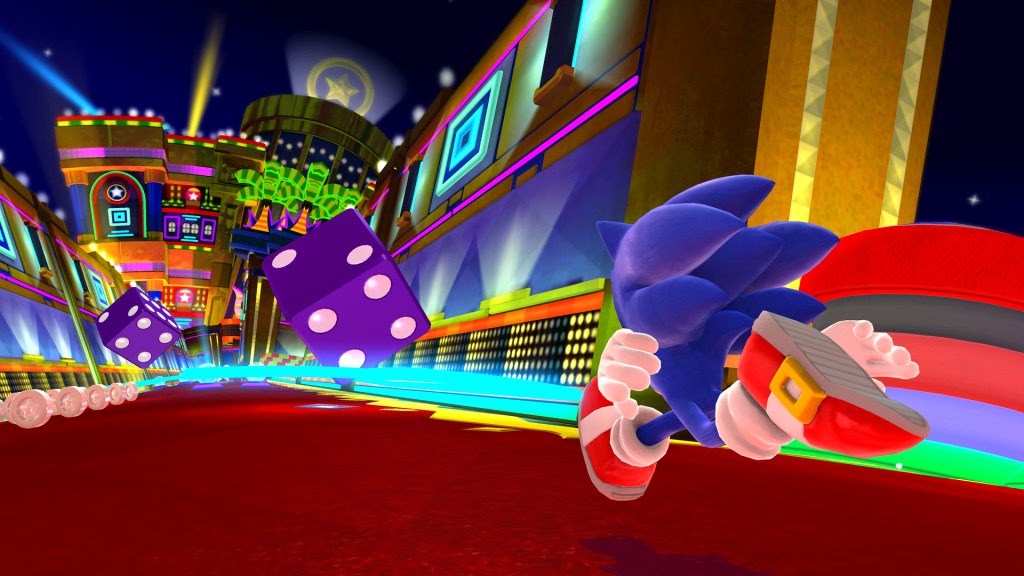
The first of two level picks from the Sonic the Hedgehog series, we deal with a level from Sonic: Lost World first. Sonic Team has a bad habit of working so much on the first level of its games to make a great first impression on players that it doesn't let later levels have enough time in the oven to be made wonderfully. This is the case with the third level in the Frozen Factory Zone, a casino level.
The level itself is essentially one long hall with multiple springs, split paths, and enemies to contend with. This by itself is just fine. There is nothing wrong at all with these segments of the level.
No, the major issue comes from the handful of segments where Sonic is transported into a pinball table. These sections are absolute hell. The ball physics are terrible, resulting in many cheap deaths, as falling off the table counts as a loss of life.
Unfortunately, one of the pinball tables is home to one of the game's many red rings, a collectible used to unlock extra content in Sonic: Lost World. It's at the very top of one of the three pinball tables. Not only is that problematic and infuriating to try to attempt to collect, but for every five or so times you lose a life, a little portal is created within the pinball table. Touching it makes you skip past the problem spot. The issue here is that the portal is so difficult to avoid that most players will hit it, thus unintentionally skipping the pinball table with the red ring. Talk about adding insult to injury! This means you need to kill Sonic just to get to a point before the portal, but heaven help you if you hit a checkpoint after that pinball table first!
Sky Canyon Zone - Sonic Advance 2 (GBA)
We move from one Sonic the Hedgehog game to another, though this time it's a 2D affair with Sonic Advance 2. Unlike its predecessor, Sonic Advance 2 started the whole "boost to win" level design of the handheld Sonic the Hedgehog games. While this essentially automatic gameplay where boost pads, springs, and grind rails directed players without much need for player control was not a problem in the more open zones of Sonic Advance 2, when the Blue Blur arrives at the Sky Canyon Zone, an issue rears its unfriendly head.
You see, Sky Canyon Zone, like its name implies, takes places in the sky. Therefore, there are plenty of points in the level where bottomless pits position themselves to gobble up the uninitiated. Needless to say, Sonic Advance 2's constant high speeds and bottomless pit placements do not mix well. You're constantly being forced to speed through the level thanks to boost pads and the like, and because of this you do not have a firm grasp on what lies ahead, making running into a row of spikes or worse yet, a bottomless pit, very easy to do.
Then there's the Dr. Eggman encounter at the end of the zone. If you're unaware of how most of Sonic Advance 2's boss fights go, you're always on the run in these battles, chasing after Eggman's latest machine. However, momentum plays a big part in each battle, making it so jumping or otherwise not running slows you down. With Sky Canyon's boss, made up of three unique parts moving in a circular pattern, not only do you have to dodge the boss' advances, but you are required to attack each part of the robot and destroy it. The latter is difficult, as you don't have a lot of real estate on the Game Boy Advance's screen to see which part of the boss is currently facing you're on top of it. Did I mention the boss has a one-hit kill move as well?
Mansion of Terror - Double Dragon II (NES)
Double Dragon II is one of those classic "NES hard" games that begs of its players to constantly get game overs while simultaneously improving and having its players get a little bit further in the game with each try. Soon, you become so skillful at the game that you know how to take down every grunt and boss that stands in your way.
However, even with the most skill, there is one sticking point in Double Dragon II that follows a no-no I have in game design. The Mansion of Terror turns a 95% beat-em-up into a 95% platformer near the end. This wouldn't be so bad if the mechanics of Double Dragon II lent themselves well to jumping with great precision. Double Dragon II's jumping mechanics absolutely, positively do not.
No, what you get is a game that was all about beating up foes for the most part and has it transform into a problematic platformer with plenty of cheap deaths that will result from falling into pits. Get used to having a full set of lives in your collection only to see them fall one by one as you miss jumps, get hit in midair, resulting in you falling to your death, and other incredibly cheap pit-related deaths.
Double Dragon II's Mansion of Terror is a level that requires the player to use a mechanic that the game was not based off of, adding up to an immense amount of frustration. It wouldn't be so bad if the penalty for messing up jumps wasn't so severe. However, seeing your tally of lives go from a high amount to zero because the game decided to throw in ill-conceived platforming for a gameplay system that doesn't handle it well is a game design sin from my position.
Infinity - Breath of Fire II (SNES, GBA)
RPG fans have it much easier nowadays than they did back in 8-bit and 16-bit eras. Breath of Fire II is a product of the 16-bit era, and it definitely possesses that old school, kick-you-in-the-butt type sensibilities. Its final dungeon, Infinity, puts players through the game's ultimate test.
Infinity is little more than an absurd endurance run through a labyrinth of many floors, many dead ends, and an abundant amount of random encounters. It really says something poorly about the random encounter rate when less than five steps results in a new battle and monsters to contend with.
It wouldn't be so obnoxious if the battles themselves didn't take so long, but even at the recommended level for your party, fights with enemies can take a(n) (un)fair while to complete. That isn't even considering many of the harder enemies are HP tanks and some can even cast a death spell that automatically kills one party member. This means that if you have a party member that has been fused with magical power to become stronger in battle and allowing said battles to be won more easily, this fusion is removed upon death.
Infinity is split up within two parts. The first part is actually the most difficult of the two, as it has zero save points. Don't be surprised to spend upwards of 45 minutes in a hellish dungeon with no opportunity to save your progress. This means one battle can undo 45 minutes of hard work.
Thankfully, there is a town that splits up the two halves of Infinity, and it contains a place to rest and a save point. However, upon entering the town, you're greeted with a very long conversation with one of the town's denizens, making that upwards of 45 minutes without saving stretch out even further. The impatient and weak-hearted need not apply to the absurd insanity that is playing through the incredibly exhausting Infinity dungeon in Breath of Fire II.
These levels are frustrating, annoying, poorly conceived, have a certain segment in them that lead to nothing but tears, or are otherwise just plain bad. This sixth volume has games both recent and retro, such as Super Mario Sunshine, Sonic: Lost World, and Double Dragon II. If you are ready, let's dive in to some bad levels on this fine Turkey Day! Gobble-gobble!
Corona Mountain - Super Mario Sunshine (GCN)
Let's get this out of the way-- Super Mario Sunshine is my least favorite 3D Mario title. That said, it's not a bad game by any stretch of the imagination; it just features more annoyances (i.e. blue coins, annoying levels, a poor camera at times, etc.) than other 3D Mario games have let loose on me as the player.
Outside of picks like the Pachinko bonus level, the bonus level where you have to guide a leaf on a poison river to collect eight red coins (and getting to said level), that one Yoshi mission in Ricco Harbor, among others, one of the worst challenges in Super Mario Sunshine is the final level, a trek through the sultry and dangerous hot Corona Mountain, the volcano that sits right in the middle of Isle Defino.
From the very start, Corona Mountain is a genuine pain in Mario's tuchus. The first part of the level requires Mario to smartly use the hover function of the FLUDD to move from platform to platform. However, these platforms have intermittent spikes that protrude from each platform and flames, both of which will kill Mario in one hit if he even so much as touches them. This is an annoyance all to itself.
Nonetheless, the most taxing part of Corona Mountain is its second portion, navigating a boat along the channel of lava. This is performed by using the FLUDD to spray water to push the boat along. Spraying to the right will move the boat towards the left, for instance. Crashing into ANYTHING, and there's a lot of potential hazards to crash into, will result in the boat sinking, along with Mario. The boat handles so poorly, which nine times out of ten will be the reason for Mario's death in the level.
After the boat ride comes a section where Mario needs to propel himself into the air with the FLUDD's rocket nozzle, carefully rocketing himself onto the surfaces of clouds both stationary and moving. What is your reward for getting through this fairly ho-hum and frustrating final level? Why, an anti-climactic boss fight against Bowser, one of the worst in Super Mario history.
Frozen Factory Zone 3 - Sonic: Lost World (Wii U)
The first of two level picks from the Sonic the Hedgehog series, we deal with a level from Sonic: Lost World first. Sonic Team has a bad habit of working so much on the first level of its games to make a great first impression on players that it doesn't let later levels have enough time in the oven to be made wonderfully. This is the case with the third level in the Frozen Factory Zone, a casino level.
The level itself is essentially one long hall with multiple springs, split paths, and enemies to contend with. This by itself is just fine. There is nothing wrong at all with these segments of the level.
No, the major issue comes from the handful of segments where Sonic is transported into a pinball table. These sections are absolute hell. The ball physics are terrible, resulting in many cheap deaths, as falling off the table counts as a loss of life.
Unfortunately, one of the pinball tables is home to one of the game's many red rings, a collectible used to unlock extra content in Sonic: Lost World. It's at the very top of one of the three pinball tables. Not only is that problematic and infuriating to try to attempt to collect, but for every five or so times you lose a life, a little portal is created within the pinball table. Touching it makes you skip past the problem spot. The issue here is that the portal is so difficult to avoid that most players will hit it, thus unintentionally skipping the pinball table with the red ring. Talk about adding insult to injury! This means you need to kill Sonic just to get to a point before the portal, but heaven help you if you hit a checkpoint after that pinball table first!
Sky Canyon Zone - Sonic Advance 2 (GBA)
We move from one Sonic the Hedgehog game to another, though this time it's a 2D affair with Sonic Advance 2. Unlike its predecessor, Sonic Advance 2 started the whole "boost to win" level design of the handheld Sonic the Hedgehog games. While this essentially automatic gameplay where boost pads, springs, and grind rails directed players without much need for player control was not a problem in the more open zones of Sonic Advance 2, when the Blue Blur arrives at the Sky Canyon Zone, an issue rears its unfriendly head.
You see, Sky Canyon Zone, like its name implies, takes places in the sky. Therefore, there are plenty of points in the level where bottomless pits position themselves to gobble up the uninitiated. Needless to say, Sonic Advance 2's constant high speeds and bottomless pit placements do not mix well. You're constantly being forced to speed through the level thanks to boost pads and the like, and because of this you do not have a firm grasp on what lies ahead, making running into a row of spikes or worse yet, a bottomless pit, very easy to do.
Then there's the Dr. Eggman encounter at the end of the zone. If you're unaware of how most of Sonic Advance 2's boss fights go, you're always on the run in these battles, chasing after Eggman's latest machine. However, momentum plays a big part in each battle, making it so jumping or otherwise not running slows you down. With Sky Canyon's boss, made up of three unique parts moving in a circular pattern, not only do you have to dodge the boss' advances, but you are required to attack each part of the robot and destroy it. The latter is difficult, as you don't have a lot of real estate on the Game Boy Advance's screen to see which part of the boss is currently facing you're on top of it. Did I mention the boss has a one-hit kill move as well?
Mansion of Terror - Double Dragon II (NES)
Double Dragon II is one of those classic "NES hard" games that begs of its players to constantly get game overs while simultaneously improving and having its players get a little bit further in the game with each try. Soon, you become so skillful at the game that you know how to take down every grunt and boss that stands in your way.
However, even with the most skill, there is one sticking point in Double Dragon II that follows a no-no I have in game design. The Mansion of Terror turns a 95% beat-em-up into a 95% platformer near the end. This wouldn't be so bad if the mechanics of Double Dragon II lent themselves well to jumping with great precision. Double Dragon II's jumping mechanics absolutely, positively do not.
No, what you get is a game that was all about beating up foes for the most part and has it transform into a problematic platformer with plenty of cheap deaths that will result from falling into pits. Get used to having a full set of lives in your collection only to see them fall one by one as you miss jumps, get hit in midair, resulting in you falling to your death, and other incredibly cheap pit-related deaths.
Double Dragon II's Mansion of Terror is a level that requires the player to use a mechanic that the game was not based off of, adding up to an immense amount of frustration. It wouldn't be so bad if the penalty for messing up jumps wasn't so severe. However, seeing your tally of lives go from a high amount to zero because the game decided to throw in ill-conceived platforming for a gameplay system that doesn't handle it well is a game design sin from my position.
Infinity - Breath of Fire II (SNES, GBA)
RPG fans have it much easier nowadays than they did back in 8-bit and 16-bit eras. Breath of Fire II is a product of the 16-bit era, and it definitely possesses that old school, kick-you-in-the-butt type sensibilities. Its final dungeon, Infinity, puts players through the game's ultimate test.
Infinity is little more than an absurd endurance run through a labyrinth of many floors, many dead ends, and an abundant amount of random encounters. It really says something poorly about the random encounter rate when less than five steps results in a new battle and monsters to contend with.
It wouldn't be so obnoxious if the battles themselves didn't take so long, but even at the recommended level for your party, fights with enemies can take a(n) (un)fair while to complete. That isn't even considering many of the harder enemies are HP tanks and some can even cast a death spell that automatically kills one party member. This means that if you have a party member that has been fused with magical power to become stronger in battle and allowing said battles to be won more easily, this fusion is removed upon death.
Infinity is split up within two parts. The first part is actually the most difficult of the two, as it has zero save points. Don't be surprised to spend upwards of 45 minutes in a hellish dungeon with no opportunity to save your progress. This means one battle can undo 45 minutes of hard work.
Thankfully, there is a town that splits up the two halves of Infinity, and it contains a place to rest and a save point. However, upon entering the town, you're greeted with a very long conversation with one of the town's denizens, making that upwards of 45 minutes without saving stretch out even further. The impatient and weak-hearted need not apply to the absurd insanity that is playing through the incredibly exhausting Infinity dungeon in Breath of Fire II.
Wednesday, November 26, 2014
Gone But Not Forgotten 2: Game Cancellations That Also Still Sting
Oh, what could have been... That's a statement that dances around in my mind, taunting me at every waking hour. GAH! ...Okay, maybe it's not that bad, but no doubt you've followed a game from its initial announcement with feverish anticipation only to have it unceremoniously cancelled down the road. It's like a sucker punch to the gut when that happens, and that is what Gone But Not Forgotten deals with, cancelled games that I still feel the sting from. This is the second article in the series, so if you missed the first, check out this link. With that out of the way, let's get depressed and disappointed together! Yay!
Sonic X-treme (SAT)
Sonic X-treme was set up to be the first original Sonic the Hedgehog game for the ill-fated Sega Saturn. However, development hell plagued the game, as did the illnesses of two of main designers. Sonic X-treme went through plenty of alterations and versions before it was ultimately cancelled for good, one of which being the tube-like level designs where Sonic could run on walls, shifting the gravity in the process. The game was intended to use a unique fish-eye lens camera to make the game even more of an eye-catcher. Perhaps the remnants of Sonic X-treme can be seen in last year's Sonic: Lost World released for the Wii U.
Heavenly Sword 2 (PS3)
The original Heavenly Sword was a great success sales-wise, performing well enough to cross the million sale threshold. However, the development duties of its sequel were handed over to a new team, outside of the original developer, Ninja Theory. Meanwhile, Ninja Theory started work on a reboot to the Devil May Cry series. SCE Cambridge was the new team in charge of Heavenly Sword 2, but they were soon restructured and absorbed by Guerilla Games. As it stands now, Heavenly Sword 2 is but a wish from fans of the series, and while the creators say that hope isn't totally lost for a sequel, the likelihood of a new entry is quite low. Not very reassuring, huh?
Maximo 3 (PS2)
Maximo 3's cancellation is a case of poor sales of a predecessor meaning the halting of development for a sequel. After the critically acclaimed Ghost to Glory in 2001 and Army of Zin two years later, both titles released on the PlayStation 2, it's a darn shame that the latter didn't sell anywhere near enough to justify a third entry to cap of the trilogy. Perhaps the games' old school challenging gameplay turned off plenty of potential players, thus dooming a chance for a third game in the series. Well, at least we'll always have Ghosts to Glory and Army of Zin, right?
Bomberman (3DS)
Bomberman was one of the first games shown for the Nintendo 3DS. However, the developer Hudson Soft was purchased by Konami, who proceeded to cancel the game. As a huge fan of Bomberman 64 and its sequel, The Second Attack, the news of this inspired game hit me pretty hard. Not only was the game looking just like a great successor to those two Nintendo 64 classics, but since the game's cancellation, Bomberman as a series has been all but silent in recent years. It was only recently a smartphone game for Japan was announced, offering the old style Bomberman gameplay. It's not a replacement for what the Nintendo 3DS game could have been, but at least Konami isn't totally keeping Bomberman on hiatus.
Chocobo Racing (3DS)
Like the Bomberman project, Chocobo Racing was another tentative title shown during Nintendo's 2010 E3 press conference. Little is known about the game outside of a few screens here and there, but coming off the Mario Kart and Crash Team Racing inspired PlayStation One original, I can't help but feel saddened by the game's cancellation. It's not like competitive mascot arcade racers are in as steady supply as say, first-person shooters, so Chocobo Racing's 3DS entry would have been a welcomed addition to the gaming landscape.
Kirby Tilt 'n' Tumble 2 (GCN, GBA)
Finally we look at a death-by-Nintendo-of-Japan Kirby game for the Game Boy Advance and Nintendo GameCube, a sequel to Kirby Tilt 'n' Tumble. The original Game Boy Color title used accelerometers in the game's cartridge to allow players to tilt the game system to move Kirby around labyrinths full of enemies, collectibles, and obstacles. As a huge fan of the original, the existence of a new Tilt 'n' Tumble excited me greatly upon seeing it in an issue of Nintendo Power. Now, all that is left of the game are old screenshots and some footage, a painful pair of reminders of what could have been.
Sonic X-treme (SAT)
Sonic X-treme was set up to be the first original Sonic the Hedgehog game for the ill-fated Sega Saturn. However, development hell plagued the game, as did the illnesses of two of main designers. Sonic X-treme went through plenty of alterations and versions before it was ultimately cancelled for good, one of which being the tube-like level designs where Sonic could run on walls, shifting the gravity in the process. The game was intended to use a unique fish-eye lens camera to make the game even more of an eye-catcher. Perhaps the remnants of Sonic X-treme can be seen in last year's Sonic: Lost World released for the Wii U.
Heavenly Sword 2 (PS3)
The original Heavenly Sword was a great success sales-wise, performing well enough to cross the million sale threshold. However, the development duties of its sequel were handed over to a new team, outside of the original developer, Ninja Theory. Meanwhile, Ninja Theory started work on a reboot to the Devil May Cry series. SCE Cambridge was the new team in charge of Heavenly Sword 2, but they were soon restructured and absorbed by Guerilla Games. As it stands now, Heavenly Sword 2 is but a wish from fans of the series, and while the creators say that hope isn't totally lost for a sequel, the likelihood of a new entry is quite low. Not very reassuring, huh?
Maximo 3 (PS2)
Maximo 3's cancellation is a case of poor sales of a predecessor meaning the halting of development for a sequel. After the critically acclaimed Ghost to Glory in 2001 and Army of Zin two years later, both titles released on the PlayStation 2, it's a darn shame that the latter didn't sell anywhere near enough to justify a third entry to cap of the trilogy. Perhaps the games' old school challenging gameplay turned off plenty of potential players, thus dooming a chance for a third game in the series. Well, at least we'll always have Ghosts to Glory and Army of Zin, right?
Bomberman (3DS)
Bomberman was one of the first games shown for the Nintendo 3DS. However, the developer Hudson Soft was purchased by Konami, who proceeded to cancel the game. As a huge fan of Bomberman 64 and its sequel, The Second Attack, the news of this inspired game hit me pretty hard. Not only was the game looking just like a great successor to those two Nintendo 64 classics, but since the game's cancellation, Bomberman as a series has been all but silent in recent years. It was only recently a smartphone game for Japan was announced, offering the old style Bomberman gameplay. It's not a replacement for what the Nintendo 3DS game could have been, but at least Konami isn't totally keeping Bomberman on hiatus.
Chocobo Racing (3DS)
Like the Bomberman project, Chocobo Racing was another tentative title shown during Nintendo's 2010 E3 press conference. Little is known about the game outside of a few screens here and there, but coming off the Mario Kart and Crash Team Racing inspired PlayStation One original, I can't help but feel saddened by the game's cancellation. It's not like competitive mascot arcade racers are in as steady supply as say, first-person shooters, so Chocobo Racing's 3DS entry would have been a welcomed addition to the gaming landscape.
Kirby Tilt 'n' Tumble 2 (GCN, GBA)
Finally we look at a death-by-Nintendo-of-Japan Kirby game for the Game Boy Advance and Nintendo GameCube, a sequel to Kirby Tilt 'n' Tumble. The original Game Boy Color title used accelerometers in the game's cartridge to allow players to tilt the game system to move Kirby around labyrinths full of enemies, collectibles, and obstacles. As a huge fan of the original, the existence of a new Tilt 'n' Tumble excited me greatly upon seeing it in an issue of Nintendo Power. Now, all that is left of the game are old screenshots and some footage, a painful pair of reminders of what could have been.
Subscribe to:
Posts (Atom)