Showing posts with label n64. Show all posts

Saturday, April 4, 2026

Bomberman 64 (N64) Retro Review

This weekend sort of has a theme of reviews on SuperPhillip Central. Two games to be reviewed today (Saturday) and tomorrow for Easter, and one is retro and one is modern. Well, there goes one theory of how they're related out the proverbial window! Stick around for tomorrow to find and figure out the theme!

In the meantime, let's turn our attention to a Nintendo 64 classic: Bomberman 64. I absolutely enjoyed this game back as a younger superhero, and nowadays I can actually beat the game without the need of a Game Genie! Progress! Huzzah! Here's SPC's retro review of Bomberman's first N64 outing. 

Does whatever a Bomberman can (traditional jumping not included)

 
One of my first forays into the Bomberman franchise was Bomberman 64. I'm sure like many, a lot of us have approached and been introduced to a long-running series like Bomberman via different games and eras. That could be the original classic Bomberman games, the modern Super Bomberman R games, and yes, the era that one could argue debuted with Bomberman 64 and concluded around Bomberman Jetters. 

At any rate, Bomberman 64 starts with a devious villain named Altair who uses an all-powerful device called the Omni Cube to cause destruction in its wake. Countless planets have fallen victim to Altair's forces and the Omni Cube, and now poor Planet Bomber is under attack next. Unfortunately for Altair, the previous planets didn't have the White Bomber aka Bomberman to save the day! 

Upon seeing his home planet being bombarded and assaulted by this new threat, Bomberman is introduced to Sirius. This potential ally informs Bomberman that in order to reach Altair's base, he'll have to destroy the anchors in four different worlds to lower the force field surrounding the base. Thus, Bomberman and we, the player, have our goal and are ready to bomb and blast away.  

You can pull the camera in and out, circle it around completely, but cheap deaths can and still do happen.

Bomberman 64 was quite different to pretty much every past and previous Bomberman game at the time. Instead of battling in what were essentially arenas, destroying blocks, and all enemies in order to reach a goal, the objective in Bomberman 64 was to explore fully 3D areas, blasting away at baddies, yes, but most of the time Bomberman needed to solve some sort of environmental puzzle to open up the way to the exit of the stage.

Taking the very first level of Green Garden, the recommended world for first time players, it's here where the objective is to step on four green switches, some hidden away better than others. These unlock a force field around a large red crystal, which when removed, opens up the level exit. Now, sure, one can simply make like a speed runner and rush to clear the objective, but first-time players will most likely wish to explore the rather sizable level. 

After the four green button switches are pressed, your prize awaits.

It's here where Sirius serves as your tutorial's teacher of sorts, giving you advice and information on the controls and abilities Bomberman possesses. Pretty much everything that Bomberman needs to beat each level he already has at its beginning. Save for remote bombs that detonate manually as opposed to an automatic, timed explosion, but these are earned via temporary power-up. 

Pump up the jam and pump up the bombs to blow certain, otherwise invulnerable enemies away.

Regardless, Bomberman has all sorts of tricks to his trade. He can drop bombs, of course, but he can also kick them, pick them up, and with the latter, he can even pump them up to large size, letting loose a powerful explosion in its erupting wake. Obviously in true Bomberman series fashion, poor Bomberman--despite years previously of repeatedly doing so--he never became immune to blowing himself up, so both carefulness and caution are required when planting bombs all about.

Bomberman 64 also introduces a new mechanic that is touched on briefly around the beginning of the game, but it's not exactly mandatory to use until much later in the game--for instance, going for 100% completion. This is the bomb jump. Like the '90s movie said, "White Bombers Can't Jump." Or maybe I'm mixing that up with something else. EITHER WAY, Bomberman does not have the ability to jump in this iteration of the series, unlike his Bomberman Hero self. Therefore, to mind gaps and "leap" over them when it's necessary, Bomberman must drop bombs in the gap to bounce over. Needless to say, one should consider utilizing remote bombs here, but also that this takes some getting used to, as well. 

Feeling hot under the collar, Bomberman? ...Wait, do you even have a collar to feel hot under?!

Even in the first level there are warp pads that are totally inaccessible without clever use of bomb jumping. Usually it amounts to placing small and big bombs in various patterns to make a "staircase" (for lack of a better term) of bombs to bounce up or across to reach new areas. That said, even mistakenly placing or kicking a bomb just a smidge too far or too short can cause your entire bomb jump attempt to be a dud. Seeing Bomberman get smacked in the face or head with a bomb and become dazed, helplessly bouncing up and down, is just a demoralizing thing at best and the absolute worst at, well, worst.

While the first and third stages of each world are exploration and puzzle-based, the second and forth stages involve some form of boss battle. The first four worlds pit you against either Sirius or one of Altair's right-hand henchmen or hench-woman, as it were for one of the trio, for the second stage, and a big, bad boss to battle in the fourth and final stage. The former encounters are the pure Bomberman boss battle formula in essence. You bomb them and beat them before they can beat you, as you smartly drop, kick, or throw bombs to blow them up three times. With the latter battles, these require dodging attacks while waiting for an opening to blast the large boss, whether that be a blue dragon in Green Garden or a massive death robot in Red Mountain's finale.

Send Hades (the mech) back to Hades (the place) where it belongs!

After the initial four worlds have been completed with bosses battled and beaten, the fifth world opens up: Black City, featuring four more stages. Once the final level is reached and Altair is defeated, then the day is saved... right? 

Well, not so much. Taking a page out of the same rulebook that so many games of the era used, in order to get the true ending of Bomberman 64, you must do much more than the basics. What that amounts to is getting all 100 Gold Cards, five in each previous stage, before being graced with the opportunity to visit the final, true world of the game where Bomberman 64's real villain awaits.  

And THIS is where all that bomb jumping will come in. While a lot of the levels and stages don't require bomb jumping to acquire most of the Gold Cards that are scattered about, hidden in different locations, some are indeed placed in locales that DO require bomb jumping to reach. Hopefully you're not like me back in the day and either failed to learn how to properly bomb jump or the concept just alludes you completely. Otherwise, you might drop the game like middle school Phil did way back when. Honestly, it wasn't until a friend brought over his Game Genie that I finally was able to play the last levels! Fortunately, this time around, I, at long last, managed to get all 100 Gold Cards on my own--cheat devices be damned!

In the exploration-oriented stages, three Gold Cards are hidden in blocks located in out of the way places or secret spaces that are off the beaten path. A fourth Gold Card is always earned by defeating your 30th enemy, while the fifth and final Gold Card in each stage is acquired by beating the stage's target time. Trying to get all five Gold Cards in one run in one of these stages is next to impossible, but I'm sure speed runners are--and have been--more than up to the challenge! 

In the boss-based stages, four Gold Cards are attained from damaging or hitting the boss in a certain way. This can be bouncing a bomb off its head, exposing a secret weak point, damaging an appendage enough to make it completely worthless in battle, etc. The fifth Gold Card in these boss battles are also target time-related, and unlike the exploration stages, you need to earn all five Gold Cards at once in boss battles. Otherwise, only your best Gold Card score is saved.

Discovering the way to defeat bosses to earn Gold Cards is a bit of a puzzle unto itself!

Bomberman 64 is definitely a difficult game due to the bomb jumping aspect. The final world basically has you doing bomb jumps with essentially no safety net, so a mistaken jump will lead poor Bomberman to fall to his doom, death, demise, whatever horror you can think of! For a playthrough without necessarily rushing, but also having some prior experience and playthroughs under my proverbial belt, my run took about 8 hours to fully beat the game with all 120 Gold Cards. (Counting the 20 Gold Cards that are in the true final world of the game.) However, there's also goodies to unlock from beating the game in less than three hours with 100% completion, but suffice to say, your superhero pal was not up to that particular challenge in the slightest. Nor was the Hard Mode that appealing after all struggling I encountered, as well!

Bomberman will slip and slide away on this icy floor, so mind your footing!

Apart from Gold Cards, there are also hidden custom parts to discover in stages, and these are placed in even more fiendish locations than the Gold Cards. Thankfully, these are entirely optional, but they do unlock cool costume pieces to equip your Bomber with in the multiplayer portion of the game.

Yes, it wouldn't be a proper Bomberman game without a multiplayer aspect! (Yes, I know Bomberman Hero fans have a bone to pick with me right now, but I said what I said!) This mode forgoes the grid-like movement of traditional Bomberman games and instead uses full 3D movement, just like in the single player adventure component. Further going just like in the single player adventure component, bombs don't blow up in cross-like patterns like typical Bomberman games, and instead they explode in spheres. The game's multiple 3D arenas--all set to fit on a single screen with little to no camera movement--are rather fun, and it's really novel to play Bomberman multiplayer like this! Throw in the custom rules and custom parts you can outfit your Bomber with (the latter from the single player campaign), and you have a game that was a figurative and literal blast for party nights at the SuperPhillip household!

I lament that this era of Bomberman is over. I don't particularly mind the modern era that is a throwback to the classic era of Bomberman, but there was something to this adventure era that was so fun in its novelty, so cool, and so... explosive. While I certainly don't lament Bomberman 64's requirement for mastering bomb jumping or otherwise having a frost bomb's chance in Hell at succeeding at completing the Adventure mode, I do love this game to this day. It gets frustrating, it gets difficult, and it gets annoying at times, but with enough practice, enough patience, and enough perseverance, players will blast on through without hopefully blowing themselves up too much in the process. For these reasons and the absolutely novel multiplayer, I truly hope Bomberman 64 arrives on the Nintendo Switch Online subscription service sooner rather than later.

[SPC Says: B-] 

Tuesday, March 31, 2026

[VIDEO] Top Ten Nintendo 64 Racing Games

We're going retro to end the month of March on SuperPhillip Central with some rare video content. The Nintendo 64 through its life had less than 300 games total to its name, and a lot of those were in the racing genre. This video top ten list talks about my ten favorite N64 racers, what I consider to be the best of the best. I hope you enjoy this video, and I encourage you to like, subscribe, and provide any feedback you might have, as well! 

Wednesday, August 3, 2016

Greatness Comes in Threes: Best Trilogies in Gaming - Part Three

It's the third day of August and the third day of the work week-- what a perfect time to bring back an article series celebrating its third entry about the best gaming trilogies!

The trilogy-- in movies it's a common occurrence with hugely successful blockbusters whether it's Star Wars, Indiana Jones, Toy Story, or Back to the Future. Trilogies are also pretty common in gaming as well, but at the same token, an actual good trilogy is a completely different matter. This new article series details some of the very best trilogies that our hobby and industry have been able to create in its much shorter lifespan. Check out parts one and two to see the past trilogies mentioned in this article series.

The Batman Arkham Trilogy:

Batman: Arkham Asylum (PS3, 360, PC)
Batman: Arkham City (Wii U, PS3, 360, PC)
Batman: Arkham Knight (PS4, XB1, PC)


Rocksteady made a name for itself by creating one of the first truly masterful Batman games, much more a truly masterful superhero game, with Batman: Arkham Asylum. The game felt somewhat like a Metroid-structured game with new gadgets allowing Batman to access new portions of the titular asylum, where the inmates indeed ran it. Batman: Arkham City opened up things with a large open world to explore, as well as keeping multiple dungeon-like indoor areas available as well. Lastly, Batman: Arkham Knight, released last year, took the series to a larger open world area, complete with Batmobile. The tale told by the Arkham series is one that tells one of the greater Batman stories in the video game medium. Controlling Batman felt fast and fluid, taking out henchmen and other malcontents could be done with ease and finesse, and you really felt like you were the Dark Knight throughout all three games. While Arkham Origins is also an excellent entry, a prequel to Rocksteady's games, its story isn't as important to the overall Arkham trilogy, nor was it developed by Rocksteady. Hence why it's not included.

The Gears of War Trilogy:

Gears of War (360)
Gears of War 2 (360)
Gears of War 3 (360)


Epic Games came off the wild success of the Unreal Tournament series with a new franchise for the Xbox brand, Gears of War. Taking the already revolutionary third-person shooting gameplay from Resident Evil 4 and somehow revolutionizing it further with a highly remarkable cover-and-shoot mechanic, the Gears of War trilogy is something macabre and marvelous to behold. From running, gunning, and taking up cover, to shooting a Locust into submission before tearing into them with a chainsaw, the brutality available to players was exceptional. The popcorn movie blockbuster-like story across the three games saw your crew of four buff and gruff soldiers sticking it to the Locust horde all the while spouting off smooth one-liners. The other piece to Gears of War's success as a series is the incredible multiplayer, though it did hit a bit of a snag with the second game. However, Gears 3 brought things back to how they should be with addicting and visceral multiplayer action goodness for all.

The Mass Effect Trilogy:

Mass Effect (PS3, 360, PC)
Mass Effect 2 (PS3, 360, PC)
Mass Effect 3 (PS3, 360, PC)


Despite all of the arguments both founded and not about the ending of the Mass Effect trilogy, that by no means ruins the entire time many of us spent with the three games in the Mass Effect series. Filled to the brim with different character classes, races, planets, areas to explore, and lore that would give other sci-fi series like Star Trek a run for their money, Mass Effect brought players into its universe and grabbed them, never letting go until long after Mass Effect 3's credits rolled. From the engaging third-person shooting gameplay to the RPG-like customization for your own specially crafted character, Mass Effect as a series is a wonderful one. Again, the trilogy might not have ended on the highest of notes, but that doesn't detract from the overall greatness that the Mass Effect trilogy has and will continue to endure for (console) generations to come.

The Jak and Daxter Trilogy:

Jak and Daxter: The Precursor Legacy (PS2)
Jak II (PS2)
Jak 3 (PS2)


This trilogy is an interesting one. Despite having a formula and tone set for the original Jak and Daxter, after The Precursor Legacy, Naughty Dog went for a much darker angle with Jak II. In essence, it was very tryhard and almost embarrassing to see. That said, while the original Jak and Daxter was a 3D collectathon like a Super Mario 64 or a Banjo-Kazooie, Jak II took the series to an open world, darker setting where instead of attacking with Jak and Daxter's limbs, Jak used weaponry such as guns, turning the platformer series into a third-person shooter with platforming elements. Jak 3 ended the trilogy with a great capstone to the story, and it was a more polished and less frustrating game. While I would have preferred that Naughty Dog not lose the narrative on what makes a platformer fun, the Jak and Daxter trilogy is a fun one despite the tonal shift the series saw.

The LittleBigPlanet Trilogy:

LittleBigPlanet (PS3)
LittleBigPlanet 2 (PS3)
LittleBigPlanet 3 (PS4, PS3)


Play, Create, and Share-- that is the mantra and motto of the LittleBigPlanet series. The first LittleBigPlanet game was such an exciting prospect, and it turned out to be really good execution-wise by Media Molecule. Not only were the worlds fun to explore, but the ability to create one's own levels and creations and share them with the world was added to the longevity of the game. Though the creation tools took some learning to create masterpieces, being able to craft your own designs whether levels or enemies was stupendous. LittleBigPlanet 2 added even more creation options with it being my favorite of the trilogy. Finally, LittleBigPlanet 3 released a couple of years ago on both the PS3 and the PS4, though under the care of a new developer. New characters and level types were included, but so were unwanted glitches and bugs that I think still permeate throughout both versions of the game. SuperPhillip Central has yet to review the third installment, but don't worry, dear gadders, it's coming!

The Original Mario Party Trilogy:

Mario Party (N64)
Mario Party 2 (N64)
Mario Party 3 (N64)


While all of the other trilogies on this list are trilogies by story, Mario Party's trilogy is based on being on the same system, the original party machine, the Nintendo 64. Call it an unofficial trilogy! Mario Party brought Nintendo 64 gamers and party-goers multiple boards and a multitude of mini-games for four players either in a battle royal, 2 vs. 2, or 1 vs. 3 form. Many mini-games would see a second time in the spotlight with Mario Party 2, such as crowd favorite Bumper Balls. Thankfully, with the sequels of Mario Party, the need to turn the control stick of the N64 controller was long gone, which meant no more blisters on palms or thumbs due to super fast spinning of the stick! Mario Party 2 also brought costumes into the forefront, while Mario Party 3 introduced new characters to play as. All in all, my favorite Mario Party games still remain the first trio. What about you?

Saturday, July 4, 2015

600th Review! Perfect Dark (N64, XBLA) Retro Review

Here's where the true fireworks are tonight! It's time for SuperPhillip Central's 600th review! Think of all of the books on figuring out world problems like hunger and curing cancer that I might have written with the words used instead for the previous 599 reviews!

...Actually, don't. Instead, let's celebrate this occasion with one of my favorite video games of all time, Perfect Dark! This game comes from a genre I don't hold much love to, so it's obviously something special if it managed to hook your buddy, jaded old Phil! See why I love Perfect Dark so much with my review!

You're really on the mark, Ms. Dark.


I'm a bit of an old fart when it comes to certain gaming genres. For instance, the first-person shooter has come really far as a genre, especially this past decade. However, I still enjoy the basic gameplay of games like GoldenEye, and yes, the subject of this review, Perfect Dark. There's something special about how these games were designed that make them preferable to me than something like Halo or Call of Duty-- though I'm not saying both of the latter series are totally similar. To this day I find Perfect Dark one of the greatest first-person shooters around. It's a philosophy and foundation that developer Rareware had that makes this game still so enjoyable to me that we don't see in first-person shooters of today. A real shame, too, as I'd probably love and play the genre more if more games went the Perfect Dark route with its design.

Perfect Dark has the lead Joanna Dark, an up and coming special agent for the Carrington Institute on her premiere mission, an extraction at the DataDyne Corporation of a person of great interest, Dr. Caroll. What follows is a (pardon the pun) dark scheme and conspiracy that runs all the way to involve the presidency and two alien races. The story unfolds throughout the single player campaign in cutscenes, and these are relatively acted out okay. No big expense was given to the voice actors, as most are from Rareware's own developers. Still, it's an engaging enough story with some clever dialogue sprinkled in to keep players hooked if the missions don't do so themselves.

However, this is probably impossible, as the missions in the single player campaign are absolutely superbly designed. Unlike the majority of first-person shooters out today, Perfect Dark uses an objective-based mission system instead of the typical corridor shooters available en masse on the market nowadays. Levels feature split paths, multiple ways of completing missions, and plenty of ways to succeed and fail at the many objectives in Joanna's missions. Sometimes the objectives can feel a bit obtuse, making the player a bit confused as to what he or she actually needs to do to succeed and complete them. However, most of the time one can simply pause the game and read the mission briefing details to get a better idea on what needs to be accomplished.

A secret agent always has to dress the part, right?
There are three main difficulties in Perfect Dark, and each of these brings a different number of objectives each per mission to complete. Sometimes the location of objectives changes as well pending the difficulty. On the easiest difficulty, Agent, it's usually as simple as doing one or two objectives while not really having to worry about the poor aim and weak damage Joanna takes from gunfire. While on Perfect Agent, there are a multitude of objectives, enemies do greater damage, have better aim, and there are no shields, an extension of Joanna's health bar, to acquire whatsoever. To this day beating Perfect Agent mode back in my younger high school days is one of my proudest gaming accomplishments, as the mode is quite taxing, but all the enjoyable. Sure, it can be distressing to fail at the tail-end of a mission, meaning you have to make up ten minutes or more of gameplay as there are no checkpoints to be found, but the effort and satisfaction when you finally beat a difficult mission are something special.

Though I'm starting to think Joanna's finding
dressing up for missions to be a bit stimulating.
Completing missions in Perfect Dark awards players with cheats that can be used a la GoldenEye 007. These are things like big head mode, using certain weapons that you otherwise wouldn't be able to use in a particular mission, and much more. Also like GoldenEye, the more worthwhile cheats are locked behind beating target times in levels on particular difficulties. These cheats require the most work to unlock, but the rewards are usually well worth it. For example, who doesn't want invincibility, unlimited ammo, or the ability to not need to reload weapons!

Play cooperatively with a friend...
The solo campaign can be played cooperatively or competitively with another player. It is a lot of fun splitting up objectives or teaming up to take down squadrons of enemies effectively and efficiently. Both players have less health to work with than in solo, but if one has a great partner, the cooperative campaign is a hell of a lot of fun. Conversely, two players can compete against one another with one serving as Joanna Dark, trying to complete the mission while the other player has an endless amount of enemies they can play as, trying to thwart the Joanna player from completing their objectives. This is a nice twist to a classic mode offering, and it only makes the entire package all the more enticing an feeling fully loaded.

...Or turn a friend into an enemy with the Counter Operative mode.
An agent's only as good as his or her guns, and Perfect Dark offers a robust set of amazing weaponry. Most single-hand weapons offer dual-wielding functionality, and every weapon in the game brings with it a secondary function. For instance, even something as simple as grenades have a unique hook as their secondary function allows them to bounce off ceilings and walls like a ball in a pinball table until an enemy (or if your luck is bad, yourself or a companion) winds up in their proximity.

There is also a myriad of guns that feel excellent to hold and unleash death with. There are assault rifles that second as grenade launchers, fly-by-wire remote controlled rockets, a gun that takes the form of a laptop which can be tossed onto a wall or ceiling to be used as an automatically firing sentry gun, combat knives that can either slash into or be chucked into a foe's flesh, a gun that can enter an enemy into psychosis, flushing drugs into them that makes them turn on their allies, and so many more awesome guns. The creativity in the weaponry is only rivaled by the Ratchet & Clank series, which is high praise, if not a weird contrast-- one mature shooter and one cartoony action-platformer.

From shotguns to high capacity machine guns,
Joanna Dark has a license to kill and thrill.
What makes Perfect Dark even better and giving players an immense amount of replay value is the multiplayer, known as the Combat Simulator. This multiplayer mode features an abundance of options for players locally and, for the Xbox Live Arcade verison, online to create the match types of their dreams. You can select which of the great amount of weapons they prefer to have in the match; which of the wide range of large, but not too large maps to play in, featuring plenty of hiding spots, points of contention, and places to explore and become familiar with; how many bots (yes, hallelujah! Bots are here as should be mandatory for any first-person shooter) are in the match, what their personalities are (you can make bots go after the player that last killed them, have a bot only use their fists, have a bot that doesn't mind blowing himself up to get a kill, and so on), what difficulty they are set at, and so much more; set up teams; set player handicaps; set the music for the match (or just have what is essentially a mixtape for the match play); and so many other options that cannot fit into just one paragraph. The Combat Simulator's range of options is absolutely immense and might be a bit intimidating at first, and I'd argue that the multiplayer's myriad options have yet to be matched by most first-person shooters since.

Yes, even some GoldenEye relics have returned
for Perfect Dark's multiplayer madness.
Along with matches with other players in the Combat Simulator there are dozens of challenges for up to four players to take on. These put you into different scenarios that pit you against a team of bots with certain victory conditions. Some require a simple kill limit, while others put all players into slow motion, have one hit kills, or utilize one of the multiplayer's many modes, like Capture the Case (a version of Capture the Flag), Hold the Briefcase (the goal is to find and hold onto the briefcase to earn points over time), and Pop A Cap (essentially a mode where you must target and eliminate the person who is designated as the "cap"). Completing challenges unlocks new costumes, new weapons, and in the Nintendo 64 version, new arenas, of which there are over a dozen easily.

Perfect Dark is one of the Nintendo 64's best looking games, and it's because of the expansion pack that so much content is available. For those without the necessary peripheral inside their Nintendo 64, most of the game is locked away, so it's really important to acquire that accessory. Meanwhile, the Nintendo 64 version can suffer some tremendous slowdown at times, putting the game in single digit frame-rates at times. The Xbox Live Arcade version is in full HD, offering little in the way of slowdown. Its controls take some getting used to (it is particularly hard to move at maximum speed with the default controls), but overall it is the better version. Both versions utilize the same extraordinary soundtrack that switches between regular and action-packed versions of themes when the action gets intense.

Not exactly dressed for this sort of thing, is she?
It is for all of these reasons why I still love Perfect Dark and find it to be my favorite first-person shooter of all time. Some things have been done better by future FPS games, but at the same token, a lot of things still haven't been beaten that Perfect Dark mastered. If you're looking for a content-heavy first-person shooter with an engaging single player campaign full of different ways to go about fulfilling objectives and completing missions, a robust multiplayer mode that is bursting with options, and a presentation that is top-notch, Perfect Dark is the game that is most on the mark in those categories.

[SPC Says: A]

Thursday, April 23, 2015

Banjo-Kazooie (N64, XBLA) Retro Review

After taking two days off to ruminate, I am back with a new review. This one is another part of SuperPhillip Central's 3D Platforming Month, Banjo-Kazooie! Replaying this game recently, I remembered why I hold Banjo-Kazooie with such high esteem. Read on, dear SPC faithful, and see why!

Grin and Bear It (No, seriously. 
This game will make you grin.)


The similarities between Super Mario 64 and Banjo-Kazooie are definitely apparent. It's no secret that Rare indeed developed Banjo-Kazooie with great inspiration from Nintendo's launch title for the 64. However, there's enough newness here that Banjo-Kazooie doesn't feel like a total ripoff of Nintendo's work. Instead, what we get is a 3D platformer that I have no qualms with saying is a superior product to Super Mario 64.

Banjo-Kazooie begins with the bear and bird pair (that's Banjo the bear and Kazooie the bird, for those of the uninitiated) resting in bed. Meanwhile, Banjo's sister Tooty waits outside, anxious to go out on an adventure. All of a sudden, the wicked witch Gruntilda, known for speaking in verse, rides upon her broom, swoops down, and nabs Tooty. Grunty's plan is to rob Tooty of her beauty while making herself thin and beautiful. Hearing the commotion, Banjo and Kazooie leap outside to find Tooty bearnapped and a helpful mole named Bottles ready to give them advice to help the bear and bird pair rescue Banjo's sister.

Without question, Banjo-Kazooie brims with personality and charm. Gruntilda certainly steals the show with her funny rhymes, as well as her unconventional ways she goes about her business as a villain. This is seen through a late-game game show hosted by Grunty herself that tests the player's knowledge on many aspects of the entire game-- from distinguishing between areas of the game from closeup pictures to deciphering between character voices. Then there is the comedic banter between Banjo and Kazooie, the latter of the which isn't shy about insulting any and every character the duo come across.

Banjo, you're not going to be able to take this bull by the horns.
Banjo-Kazooie is very much a product of inspiration of Super Mario 64. However, Banjo-Kazooie goes a little deeper with the amount of collectibles to gather throughout the duo's adventure. Whereas Mario's 3D platforming romp featured the main collectible in the form of the Power Stars and side collectibles as red and gold coins, Banjo-Kazooie offers much more to acquire if you want to go for 100%.

This Jiggy requires Banjo to play a game of
"Simon Says" off the backs of these turtles.
For one, Banjo-Kazooie's Jiggies, golden jigsaw pieces, serve as the game's equivalent of Super Mario 64's Power Stars. These are the main collectible, and they are used to open new worlds within the game. However, that's just the start of what needs to be gathered. In levels, collecting five differently colored Jinjo characters reveals a Jiggy to collect. There are also Blue Eggs, Red Feathers, and Gold Feathers, providing ammo, the power of flight, and the power of invincibility respectively.

As birds tend to do, Kazooie gets distracted by a shiny object.
Musical Notes, of which there are 100 in each world, need to be collected in some capacity to open locked doors within Gruntilda's lair. The doors lead to new chambers of Grunty's hideout where new worlds await. However, the process of opening new worlds is more involved, albeit slightly so.

Each level has an accompanying picture that is missing Jiggies from it and needs to be completed. Through finding the picture, piecing it together for a finished product, only then will the way to that picture's world open.

Aside from those collectibles, there is one final one to go after, silver Mumbo Tokens. These are the currency in which you deliver to the game's shaman, Mumbo Jumbo, in exchange for him to work his magic and turn Banjo and Kazooie into one of many world-specific transformations. For instance, the first world of the game sees Mumbo Jumbo turning Banjo into a termite, able to trek on slopes that would otherwise be deemed too awkward to climb on for the bear and bird by themselves. Many times a transformation has more than one purpose within a world, but sometimes a transformation is just there for one reason-- to get a Jiggy that wouldn't be reachable without Mumbo's magic.

While Super Mario 64 kicked you out of a level once you collected a Power Star, Banjo-Kazooie allows you full exploration of worlds even after a Jiggy has been collected. Whereas Super Mario 64 had seven Power Stars per level, Banjo-Kazooie has ten, in addition to the 100 Musical Notes to collect, and one Gruntilda switch to stomp on that summons a Jiggy in Gruntilda's lair, the hub world of the game.

There's no time to monkey around when there's Jiggies to get.
Starting in Mumbo's Mountain, the tasks that Banjo-Kazooie asks players to do in order to acquire Jiggies are relatively simple. For honeycomb's sake, some of the Jiggies are right out in the open with no interference from enemies. As you proceed through the nine worlds of the game, the objectives to nab more Jiggies become more and more complicated, making it so that Jiggies that were right out in the open now require more platforming prowess to collect. Meanwhile, some Jiggies require a sequence of events, albeit a bit basic (this is a game meant for everyone, after all), to acquire the golden prize.

With the speed shoes, Kazooie is quick enough to
nab this Jiggy before the hand closes.
The worlds are well designed and feature plenty of nooks and crannies to explore. Each has a set theme and set of challenges presented to the player. The starting world, Mumbo's Mountain, introduces basic platforming challenges, whereas the next world, Treasure Trove Cove, implements a greater focus on puzzles, swimming, and even flying challenges. From the frozen heights of Freezeey Peak to the four unique seasons of Click Clock Wood, Banjo-Kazooie's set of worlds are amazing in both concept and execution.

No, thanks. We don't have the time for a snowball fight!
Unlike Super Mario 64, Banjo and Kazooie do not have their full arsenal of moves immediately from the get-go. Instead, they have to come across Bottles' mole mounds in the various worlds of their adventure to save Tooty. While baseline moves like a flutter jump, great for precision platforming, and a backflip are available, among other moves, Banjo and Kazooie can learn multiple new abilities. For one, Kazooie can learn to shoot eggs out of her mouth as well from her rear end (ouch). Then, there's the Talon Trot, allowing Kazooie's apparently strong legs to carry Banjo up otherwise slippery and steep slopes. By the sixth world of Banjo-Kazooie, the pair will have learned every move in the game. It may feel unnecessarily limiting to some players, but I found it that with all of the moves Banjo and Kazooie can learn, having all of them available at once would have been a bit overwhelming. Not only that, but learning new moves meant that new platforming challenges based off of them could be implemented at a steady pace. It makes for a perfect amount of pacing.

Also unlike Super Mario 64, the camera seldom causes trouble or unintended deaths. Now, to be fair, Super Mario 64 was the pioneer of the 3D camera, not having many contemporaries to take notes off of. However, Banjo-Kazooie does, and it makes for an experience with the camera that rarely causes aggravation and headaches. Another example of the superiority of Banjo-Kazooie over Super Mario 64.

Don't look down. Don't look down. Don't look down.
I find myself preferring Banjo-Kazooie over Super Mario 64 for several reasons other than just the camera. For one, a handful of courses within Super Mario 64 featured plenty of tedious tasks and Power Stars to obtain. Not only does Banjo-Kazooie feature far less of these tedious tasks, but it also doesn't kick you out of the level once you've nabbed a Jiggy. Now, obviously Super Mario 64 modestly altered levels based off what Power Star you selected as the one you were going for, but still, this meant that you were oftentimes required to play through the same portion of level again and again just to acquire a different Power Star. I don't want to remember how many times I've scaled Tall, Tall Mountain in Super Mario 64. Needless to say, the lack of repetition in Banjo-Kazooie makes it easier to replay for me.

"There's sand in my shorts!"
Banjo-Kazooie also possesses a lot more wit and humor, offering a cast of supporting characters that deliver humorous conversations and characters in levels that adorably refer to themselves in the third-person. I adore the dynamic soundtrack by Grant Kirkhope, delivering the same theme in a given level, only in a different octave or key depending on the area traveled to. Combine all of this with tight controls and a more beginner-friendly move set (thank you, Kazooie's wing-flapping to slow my ascent on jumps), and you have why I can't get enough Banjo-Kazooie.

[SPC Says: A+]

Wednesday, April 15, 2015

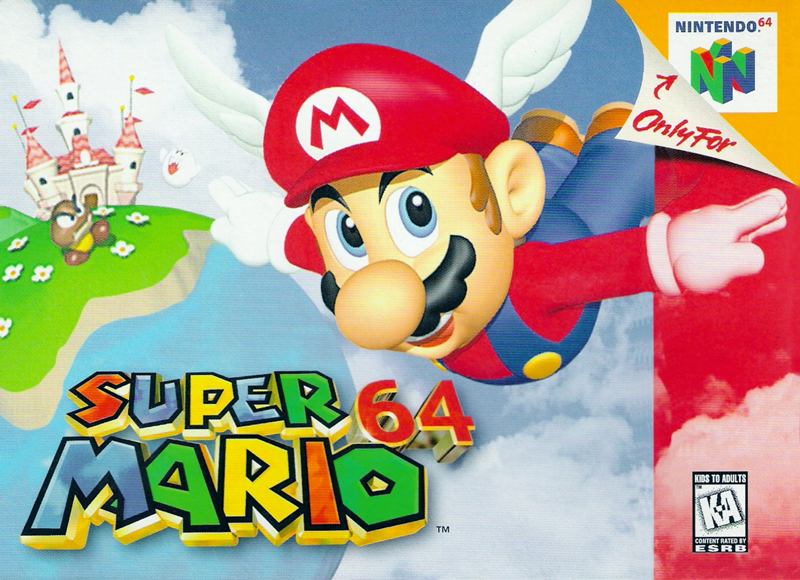
Super Mario 64 (N64, Wii U VC, Wii VC) Retro Review

Earlier this week I reviewed Mushroom Men: The Spore Wars. This was the first of SuperPhillip Central's month of 3D platformers. Little did I know that at the time, to be truthful. However, with Super Mario 64 releasing on the Wii U Virtual Console two weeks ago and Donkey Kong 64 releasing tomorrow in North America, it seems like an opportune themed month of reviews!

Super Mario 64 is one of the most loved 3D games of all time. It is just a master class of brilliant design, so you don't need me telling that the game is great. We know that. However, with this review, I'd like to share my own thoughts on why I think the game is so great.

Relive how Mario brought gaming into a brave new world


It seemed like the perfect day for Mario. He had just received a letter from Princess Peach requesting that he come to her castle to eat a finely prepared and baked cake waiting for him. However, upon reaching the castle grounds, there was no pomp and circumstance. Entering the castle, Mario heard the roar of Bowser, taunting that he had imprisoned Princess Peach and her Toad helpers within the castle walls via the power of the stars. What is Mario's misfortune is players' delight, as without Bowser getting involved, we wouldn't have an excellent 3D platforming adventure to play!

Super Mario 64's overworld hub is Princess Peach's castle and the surrounding expanse of greenery, trees, and the castle moat. It is the latter area that is essentially a danger-free and risk-free training ground for beginning players to get accustomed to the controls. There is no fear of losing a life because one doesn't have a full grasp on controlling the camera, moving Mario around, or their coordination in a 3D space is off. A player has as much time as they would like to freely explore the castle grounds before marching across the bridge above the castle moat and entering into Peach's domicile.

Super Mario 64 started the collect-a-thon approach to platformers. That said, the game is the most basic in this approach, only requiring the player to go after and collect the game's Power Stars and sometimes also red coins. Collecting enough Power Stars opens the way to new rooms in Peach's castle, leading to new levels to explore and gather even more Power Stars in.

Mario zeroes in on his good, old buddy, the Goomba.
The levels of Super Mario 64 take place primarily in the castle's paintings and pictures. The first course, Bob-Omb Battlefield, teaches the player how to do basic battle with enemies (whether it's punching, kicking, or going old-school and jumping on their heads when possible), how to run around more complicated environments, and utilize the controls and camera in a smarter way. The latter is best shown in the simplistic battle with King Bob-Omb, who reigns over his land as he stands at the summit of the level's mountain. All that is required of the player is to run around to the boss's backside, a task that is easy to do due to the king's slowness, pick him up, and chuck him to the ground.

No time to stop, so just run for it!
There are seven Power Stars in each of the game's fifteen courses, with the seventh Power Star always being one where 100 coins total need to be gathered. The fun of collecting Power Stars is that the majority in a particular level need not be collected in a given order. For instance, the fourth level of Super Mario 64, Cool Cool Mountain's task to acquire the level's first Power Star is to race down an icy slide and reach the bottom without falling into the abyss below. Once Mario exits the cabin door in which the icy slide leads down to, a Power Star appears. However, players can opt to grab hold of the lost baby penguin at the top of the mountain and bring it to the mama penguin at the mountain's base to earn a Power Star from that task instead.

Some say the gloves are for fashion, but sometimes
you never know when you're going to end up in a snowstorm.
To face Bowser in the final showdown (players face him two times prior in the game), all one needs to do is collect only 70 of the game's 120 Power Stars. This means that if a certain task or objective is deemed too challenging by the player, they can opt to just do another task or just head to a different level altogether. This is a pleasant arrangement due to the fact that it makes it so if one wants to collect every Star for an added challenge, they can do so. Meanwhile, players will a more limited skill set can just get the requisite Stars and beat the game if they so wish.

There is an incredibly amount of variety in Super Mario 64's objectives to get Power Stars. Some are as simple as performing relative minor platforming challenges to reach a said Star, while others require a little more footwork and using one's old noggin. Whether it's collecting eight red coins in a given level to spawn a Power Star, finding a secret exit in the Hazy Maze Cave's titular hazy maze, blasting Mario from a cannon into a piece of wall to reveal a hidden Power Star, using perfect timing to nab a Power Star from the tail of an electrifying eel, or solving a pyramid-related puzzle in the desert world, Super Mario 64's array of objectives will have players participating and partaking in a seemingly endless variety of activities.

Other times the gloves are great to
get one's grip and just hang out.
There are three major portions to Princess Peach's castle, and the last two are inaccessible at the beginning of the game. Mario has to collect a key from Bowser's merciless mitts to reach these areas, housing new mysteries in the castle and new levels. Upon collecting a specific amount of Power Stars, the way to Bowser's domain is opened. These three levels that play out throughout the course of Super Mario 64 are designed in much more linear fashion, setup more in the form of an obstacle course to test the player's abilities up until now. Reaching the end means reaching Bowser himself and engaging in battle with him. These battles are quite novel, requiring Mario to grab Bowser's tail, having the player draw circles with the analog stick, and pressing the throw button with proper time to launch big, bad Bowser into one of the mines that surrounds the arena.

An example of one of Bowser's obstacle-laden levels.
The Mario series is known for awesome power-ups, like the Super Leaf, Fire Flower, and Super Star. While these specific power-ups don't make an appearance within Super Mario 64, the game does offer a special line of caps for Mario to don. Upon entering special bonus areas hidden away in the game, players can stomp on switches that enable the use of these caps in multiple locations in multiple levels. The Metal Cap turns Mario into a metal mold, allowing him to sink underwater, nabbing submerged goods in currents that would otherwise be impossible to reach. Meanwhile, the Vanish Cap grants Mario the ability to move through grated walls, again, reaching areas he would otherwise be unable to. Lastly, the Wing Cap gives Mario unprecedented flying freedom. While this cap is a bit unwieldy in its controls, flight mostly feels right, save for when precision movements are called for (looking at you, "any time I have to go after red coins suspended in the air!"). All three caps give Mario temporary power.

Super Mario 64 immensely revolutionized 3D in gaming, and it's a testament to the game's superb design that so much of it still holds up today. The controls are tight and fluid, offering an amazing amount of control and influence the player can put to Mario's movements. Mario has myriad acrobatic abilities to utilize, from easy to achieve back flips and long jumps to more complicated maneuvers such as wall kicks into wall jumps and side jumps. In the case of side jumping, those aren't needed to beat the game. Instead, they're more a way for advanced players to show off their skills and platforming prowess.

Sometimes the camera can be your best friend...
or your worst enemy. Par for the 3D platformer course.
That said, not all is perfect. Moving the camera with the C left and C right buttons can be a bit tricky. Even with plenty of space to turn the camera around, it will become stubborn and not allow the player to get the optimal viewing angle. Getting such an angle is really important for places where precision movement, such as a very narrow pathway over an abyss, for instance, is required. It's challenging already since every little push or degree moved of the analog stick will send Mario a slight but noticeable different direction. Combine this with the camera occasionally disallowing you to get a straight path to walk on, and things can become a bit irritating. Still, it's astounding that as a really early example of a 3D camera system, even with its faults, Super Mario 64's camera still works better than a good number of its contemporaries. Once again a testament to the game's superb design and timeliness.

Mario would use these mushrooms to get high,
but he's already pretty far up this mountain.
Super Mario 64 presents a very easy on the eyes graphical style to players. Areas are appropriately colorful in outdoor areas and dark and a bit foreboding in cavern and Bowser areas. Geometry may be a bit simple, but the game's graphics get the job done admirably while not being rough on the old peepers in the process. The draw distance is pretty impressive, allowing players to see obstacles from relatively far away, though things like enemies and coins won't show up until Mario is within a somewhat closer range.

The ultimate course in Super Mario 64, Rainbow Ride.
Sound-wise, Super Mario 64 hits all the right notes, and that play on words was most definitely intended. Koji Kondo's timeless score full of catchy melodies and atmospheric themes is still as fantastic and memorable today as it was back in 1996. Mario's cute woo-hoos and voice work entertains without being overly grating, and the sound effects feel as if they belong in Mario's wonderful world.

Super Mario 64 was considered a masterpiece of 3D gaming and a revolution to the industry back when it originally released. For the most part, outside of some camera issues that pop up occasionally, whether just minor niggles or some things more severe, Super Mario 64 is still one of gaming's best. Now that it's on the Wii U Virtual Console, a new generation of gamers can grow up knowing that when 3D platforming is concerned, Mario may definitely be considered king.

[SPC Says: A]

Thursday, July 17, 2014

Rank Up! - Mario Golf

The British Open begins today, so in celebration of this, SuperPhillip Central has a list of our favorite Mario Golf games. Time for our usual Rank Up! segment, where we organize a series of games from our least favorite to our most loved, all for your reading and viewing pleasure. There's six games we'll be weeding through, so get ready to take to the links and enjoy this golf-centric edition of Rank Up! Here's which six we'll be covering today:


NES Open Tournament Golf (NES)
Mario Golf (N64)
Mario Golf (GBC)
Mario Golf: Toadstool Tour (GCN)
Mario Golf: Advance Tour (GBA)
Mario Golf: World Tour (3DS)

6) NES Open Tournament Golf (NES)


Back in the day, NES Open Tournament Golf was an innovator in the genre. It used many of the gameplay elements that modern golf games use today, such as the multiple click gauge system to set up shots. You had to factor in things like wind velocity, terrain, and club choice to make the best possible shot you could. While not amazing nowadays, NES Open Tournament Golf is a highly functional if not bare bones take on what can be a really loved and really despised game at the same time. It all depends on how the golf gods treat you on the links. 

5) Mario Golf: Toadstool Tour (GCN)


Featuring seven courses, the latter half of which implemented more zany Mario and Mushroom Kingdom themes and obstacles, Mario Golf: Toadstool Tour was a fantastic take on the sport with Mario and company. A course set around Peach's castle? Check. Chain Chomps as hazards? Check. Warp pipes to offer a shortcut to the hole? You got it. The basic fundamentals of Toadstool Tour worked well, and the options included meant players would be golfing for dozens upon dozens of hours. Some little annoyances get in the way, such as questionable camera decisions, where characters like Yoshi would have their snouts blocking the hole during the already tricky short putts, and a weak single player offering meant solo golfers wouldn't enjoy the game as much as with friends. That said, Toadstool Tour was a tour de force for arcade golf and would lay the foundation for future sequels.

4) Mario Golf (GBC)


If you're looking for an even more packed and content-rich golf game, look no further than the Game Boy Color's version of Mario Golf. It put players in the shoes of one of four custom characters, learning the ins and outs of the glorious game of golf. Players participated in tournaments and match play contests in order to earn experience points to level up their characters, granting longer drives and more intricate swinging types. Mario Golf on the Game Boy Color offered four unique 18-hole courses, and an abundance of unlockables such as new modes and mini-games to test out one's skills. What it lacks in presentation compared to the other games on this list, Mario Golf on Game Boy Color more than makes up for in a divine amount of gameplay hooks, challenge, and fun.

3) Mario Golf: Advance Tour (GBA)


Take all that we loved about Mario Golf on the Game Boy Color and make it look much better, and you have Mario Golf: Advance Tour for the Game Boy Advance. There were tons of questing (yes, quests in a golf game) to take part in, matches to complete, tournaments to reach the top in, and experience to earn from all of them, used to level up your character in the process. This was the all the while teaching players all about the basics of golf, such as taking in the terrain, lie, and wind speed into consideration, as well as adding impact to shots, like topspin and backspin. Throw in a charming aesthetic that was heavily reminiscent of Golden Sun (it was by the same developer using the same graphical engine, after all), and you have a top-tier handheld golfing experience.

2) Mario Golf (N64)


If you're looking for a golf game with plenty of content, the original Mario Golf on the Nintendo 64 shines brightly. It introduced concepts that would be used in most future iterations of the series, including standbys like Tournament mode, a robust multiplayer mode, and Ring Shot. Astonishingly enough, the Nintendo 64's Mario Golf was the only installment of the series to feature mini-golf of any type. Anyhow, Mario Golf came with six individual courses that didn't go absolutely crazy with the Mario motif, though certain courses did go outside typical design. We're looking at you, golf green in the center of a deep canyon and that course elevated upwards into the sky (i.e. Boo Valley). Through Match Play, Ring Shot, and collecting birdie badges, new characters were unlocked, and you could use the Transfer Pak to bring your Game Boy Color custom golfer to the N64 version. It all adds up to a golf game that we still treasure and hold great nostalgia to. It helps that Mario Golf on the N64 has the gameplay and features to back it all up.

1) Mario Golf: World Tour (3DS)


After a long hiatus of ten years, the Mario Golf franchise made its glorious return! The RPG mode of past Mario Golf games might have been absent in this 3DS iteration, but Castle Club was a nice alternative, offering ways to have your Mii become an all-star through online regional and worldwide tournaments, practicing the fundamentals of your golf game through specialized modes, and unlocking new costumes from costume challenges and completing various in-game tasks like getting three hole-in-ones. Mario Golf: World Tour came packed with three traditional 18-hole courses (and one 18-hole course that challenged players with its all par 3 holes), but what far and away made the package wonderfully worthwhile was the addition of six Mushroom Kingdom-inspired courses, such as teeing off in Peach Gardens or even golfing underwater in Cheep Cheep Lagoon. The inclusion of online play and DLC meant the experience lasted a long time, and weekly tournaments were an excellent reason to keep coming back for more. It's for these reasons why our favorite Mario Golf happens to be the Nintendo 3DS's World Tour.