Showing posts with label yoshi's woolly world. Show all posts

Tuesday, February 21, 2017

The Worst Things About SuperPhillip Central's Favorite Games II

The easiest thing to do when reviewing bad games is ripping them to shreds, taking all of their faults and going through each, one by one, eviscerating them. However, it's much harder to look at games that you have a great love for, perhaps irrationally so due to them being an important part of one's childhood, and picking out the things that just don't work so well in them. That's what this series of articles from SuperPhillip Central is all about: figuring out what didn't work-- no matter how small-- in the games that I love so much.

If you'd like to see five of my favorites from the first installment of this article series, click this link.

Final Fantasy VII (PS1)


We begin with a game that has the gaming world excited for its upcoming remake, though with Square Enix's history, we might be sitting here five years from now still waiting for it (okay, okay, maybe that's a bit of an exaggeration). Of course, I'm talking about Final Fantasy VII, one of the most popular entries in the storied Final Fantasy series and many players' first foray into the franchise.

The game has a lot of variety to it, an excellent story, and one of the best casts of characters in the entire series. Everything from the memorable locales, then-impressive visuals in both gameplay and CG cinematic form, the stellar Nobuo Uematsu-composed soundtrack, and rewarding Materia system makes for a wonderful and lengthy RPG that seldom outwears its welcome.

Certainly, it was an arduous proposition to come up with something truly bad about Final Fantasy VII, but then I remembered something that stops me from regularly replaying the game. After the intense and excellent introduction of VII inside Midgar, many players found themselves bewildered by the fact that Midgar was just the tip of Final Fantasy VII's iceberg. They were thrust into a world map that meant that Midgar was but a small part of a much grander and ambitious game.


However, soon after arriving on the world map, the part of Final Fantasy VII that brings me pause upon starting up a new play-through so easily rears its head into the picture. I'm talking about the approximately 40-minute flashback sequence that occurs upon arriving in Kalm. There are good things about this moment in the game, such as showing off Sephiroth's amazing power in battle by killing a giant dragon with one attack while the soldiers joining him can hardly put a dent into its HP, as well as establishing character relationships and some back story (as well as making a later revelation in the game have a much larger impact).


However, upon repeated play-throughs, it's a section of the game I wish I could skip sometimes. Even then, that's big praise that a quick fraction of a gigantic game is the thing that bothers me the most about Final Fantasy VII.

Final Fantasy Tactics (PS1, PSP, iOS, Android)


While Final Fantasy VII's Kalm flashback sequence can stop me from doing a run of the game, Final Fantasy Tactics has something that can stop beginning players from successfully continuing their first run of the game.

Final Fantasy Tactics' various missions generally take place isolated from one another. However, occasionally within the game, there are missions occur one after the other without the option to return to the world map. That isn't a problem so far. The problem here is that you're given the option to save in between these missions. What's wrong with that? You can find protagonist Ramza's party too underleveled or not strong enough to tackle a mission in these successive battles. With no option to return to the world map upon losing (you get a game over instead), you can find yourself stuck with no possible means to progress in the campaign.


The first set of battles that this can become a problem is Riovannes Castle, a setting housing three successive fights. The second, against a transformed Wiegraf, is quite possibly one of the toughest encounters in the game, much more a massive jump in difficulty early in the game. Without proper knowledge of this, beginning players can find themselves having to start a new save data from the very beginning of the game if they weren't aware to make a second save ahead of time. I know my early struggle with this problem caused me to drop Final Fantasy Tactics for months. Thankfully, I went back to it and found myself thinking Tactics is one of the greater games in the franchise, mainline, spin-off, or whatever.

Metroid Prime (GCN)


Retro Studios and Nintendo seemingly did the impossible-- not only take the then-previously all 2D Metroid franchise into 3D with fantastically epic results, but it was done with a team that was inexperienced at best. Really, Metroid Prime is one of my favorite games of all time, but it's not without an issue that many players might find frustrating.


This particular segment of Metroid Prime occurs late in the game. Samus Aran is tasked to venturing to the Impact Crater of Tallon IV after exploring all other areas within the game. There she finds a series of nine pillars that require you as the player to venture (see: backtrack) through the areas of Tallon IV to find the Chozo Artifact designated to each pillar. You get a clue for each artifact's location from each pillar.


Personally, I found this little end game scavenger hunt enjoyable, but just imagine other players' perspectives, thinking they were at the end of the game, ready to take on the final bosses, only to be stopped by this late game collect-a-thon. Many found themselves turning to places like GameFAQs and the like to rush through this section of the game to finally get the chance to take down Meta-Ridley for good (at least in the original Metroid Prime "for good") and then go on to face Metroid Prime itself.

The funny (perhaps I should have put that in quotes) part about this late game scavenger hunt is that it would be used in the Metroid Prime games succeeding this one. I found them fun, but then again, I found the Triforce Quest of The Legend of Zelda: The Wind Waker somewhat tolerable, so I have my own issues!

Mario Kart 8 (Wii U)


Mario Kart 8 is the latest in the long-running and most successful arcade kart racing series on the market. With every iteration, Nintendo delivers fun and fast racing that is accessible to all skill levels while possessing enough depth to remain engaging for gaming veterans.

This is a rather humorous inclusion to this list of my favorite games with problems because the problem I am going to talk about is getting fixed with the Nintendo Switch's Mario Kart 8 Deluxe, coming out at the end of April. That problem is one many players of the Wii U original know all too well-- the omission of Bowser Jr. Okay, no, while that was an issue I had with the Wii U original, the real problem is the Battle Mode.


What made previous entries of Mario Kart so engaging with their Battle Modes were dedicated arenas to pursue, hunt down, and attack opponents on. In Mario Kart 8's Wii U incarnation, the Battle Mode consisted of tracks from the Grand Prix mode of the game with no real alterations that could be traveled on in both forwards and backwards fashion (i.e. no major glider sections that could only be traveled one-way). While the varied geography of the battlefields weren't inherently awful, the size of them meant opponents took much longer to find one another and confrontations weren't as thrilling as they would otherwise be in an arena setting.


Thankfully, a big part of the appeal of Mario Kart 8 Deluxe on the Switch is the return of the classic arena-style Battle Mode. Sure, for many who owned the Wii U original, it might not be worth a second purchase. However, at the same token, most gamers and consumers didn't own a Wii U, so the package will be an entirely new game to them regardless.

[Poochy &] Yoshi's Woolly World (3DS, Wii U)


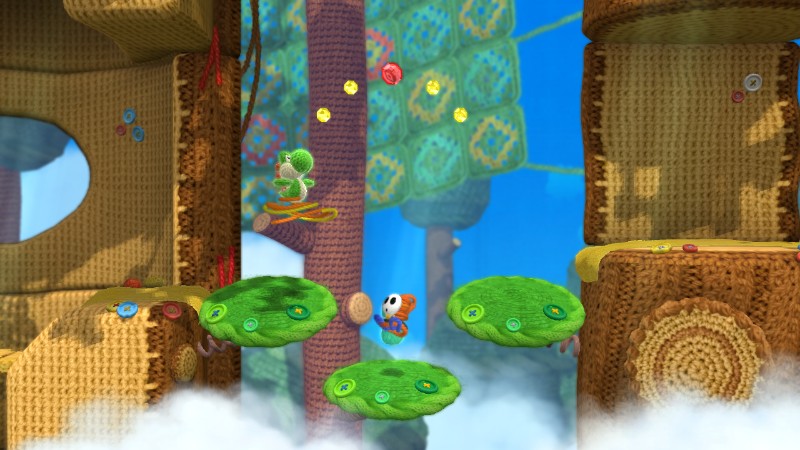
I recently reviewed the Nintendo 3DS port of the Wii U's tremendously creative and charming Yoshi's Woolly World. To me, both versions of the game are modern classics that rival even the original Yoshi's Island on the Super Nintendo. One of the major things I like over the SNES classic is that getting 100% in a level doesn't need to be performed by doing every task in one run (getting all five flowers, collecting all 20 red coins, or badges in Woolly World's case, or having full health by the end of a level), making for a much less stressful experience.


However. Yoshi's Woolly World isn't without its faults. Let me focus on the main one that can drive many completionists crazy. A good deal of collectibles within the game are found in hidden cloud bubbles. I'm talking literally hidden in that they're invisible to the eye until Yoshi brushes up against them. This means that in many levels and in order to find everything, you need to obsessively jump in any suspicious space to have the bubbles appear.


Inside the bubbles are usually things that are required to fully complete a level, such as a flower, a collection of colorful beads where one or two of them are badges you need to nab, or a yarn spool. While there are items you can spend beads on to reveal their locations, it feels disappointing that the collectibles almost require you to do that for so many levels. It's like the developers knew how much they overdid hiding secrets in the game and gave themselves a way out. Nonetheless, even with this problem, I find Yoshi's Woolly World on Wii U and its Nintendo 3DS port amazing platformers worthy of any fans of the genre's time and money.

Friday, February 17, 2017

Best Levels in Gaming History - Volume Eighteen

Last week we took a look at some more fantastic boss battles. Now, it's time to look at some more fantastic levels! Nearly 100 levels have been featured on SuperPhillip Central's long-running Best Levels in Gaming History series. We continue our look at magnificent, memorable, fun, and exciting levels with Volume Eighteen. Such games represented this time around include Uncharted 4: A Thief's End, Titanfall 2, and Super Mario 3D World.

For those who would like to look back at past prized levels featured on Best Levels in Gaming History, look no further than these links:

Volume One
Volume Two
Volume Three
Volume Four
Volume Five
Volume Six
Volume Seven
Volume Eight
Volume Nine
Volume Ten
Volume Eleven
Volume Twelve
Volume Thirteen
Volume Fourteen
Volume Fifteen
Volume Sixteen
Volume Seventeen

The Convoy Chase - Uncharted 4: A Thief's End (PS4)


The chapters in Uncharted 4: A Thief's End can range from relatively short affairs to much more lengthier ones. Chapter 11 is one of the latter, and it's also one of the most memorable in the Uncharted series' history. While the entire chapter is quite enjoyable with the opening saunter through the busy marketplace streets leading up to the clock tower, the actual clock tower climb and subsequent unintentional destruction of said tower, Chapter 11 is not short of memorable moments.

However, I'd like to cherry pick from the chapter and mention the best set piece in the game by far. It's the convoy chase that starts with Nathan Drake and Sully racing downhill through city streets, alleyways, and on makeshift shortcuts in their jeep as a Stormfront truck with a mounted machine gun pursues and hunts them down. They make their escape from the truck by speeding down across the tops of roofs until they reach an overhang where they can see the Stormfront convoy that is chasing after Nate's brother Sam.


It's up to the player to make haste down the hill, following through the trench below the roadway that the convoy is taking. Unfortunately, soon the amount of available road ends, requiring Sully to take over control of the jeep's steering and brakes to successfully stop it from careening into the ocean. Simultaneously, Nate lassos onto the hook of one of the trucks driving alongside the convoy, as he hangs on for all he's worth, Nate has to swing around beams and other obstacles or else he'll slam right into them, costing him his life. Once the convoy has crossed over the bridge, Nate holds on tight as he's pulled through the mud. He must pull himself towards the truck and enter inside its carrier to have a fighting chance against the motorcyclists and jeeps shooting at him.


The entire experience is so fast paced and frenetic that you can't help but feel the adrenaline pumping throughout your body, even after playing through this action-packed sequence multiple times. From jumping from truck to truck until finally commandeering a jeep to rescue Sam, the whole sequence is one of the Uncharted series's best and Naughty Dog should be commended for successfully accomplishing it.

Effect and Cause - Titanfall 2 (PS4, XB1, PC)


As stated in this week's Titanfall 2 review, the game's solo campaign is one of the finest first-person shooter campaigns in modern gaming history alongside DOOM's. It consistently throws at the player fresh concepts and challenges. One of the main pieces to Titanfall 2's gameplay comes from the varied amount of mobility players can use to their advantage not only through the forced platforming segments but in every encounter in the game. The notion of Titanfall 2 introducing a constant feed of fresh concepts is perhaps no better displayed than in mission five's three chapters. The overarching mission is known as Effect and Cause.

The mission starts out quietly enough, but soon Pilot Jack Cooper finds something strange occurring as he explores a dilapidated city. Right before his (and the player's) eyes he sees on multiple occasions the ruins of the lab he's in turn into a clean and productive facility with human beings roaming about, casually going along with their business. This phenomenon is revealed to be a time distortion. Starting out, Jack can't use this to his advantage just yet, but by the second chapter of the mission's beginning, he pries a device of the arm of a fallen soldier who was tasked with investigating the area. Obviously he didn't come back from his assignment.


With this special device placed on his wrist, Jack gains the ability to switch between past and present as quickly as the player presses the front left shoulder button. This is used to great effect in not only creating clever environmental puzzles (like being able to enter a vent in the past that was covered up by a panel in the present) but also impressive platforming opportunities. Multiple times Jack will need to switch between past and present in midair, as in the past there's a wall to run along on the left-hand side of the chasm while in the present there's a wall to run along on the right-hand side of the chasm. Switching between the two time periods as he makes each of his jumps enables Jack to make it across the abyss with success. Then, there are enemies that appear in the past, human soldiers, that don't appear in the present, where vicious and hungry beasts lurk, ready to slash and strike Jack Cooper down in no time flat.


Effect and Cause isn't the first mission in the game that requires the player to have proficiency when it comes to running off wall to wall over an abyss, but it is the first and only mission to use instantaneous switching between times in such a clever way that it makes for one heck of an interesting and entertaining level.

Snowball Park - Super Mario 3D World (Wii U)


Shifting gears to more lighthearted fare, Super Mario 3D World may not be the sandbox-styled Super Mario game that gamers experienced with Super Mario 64 and Super Mario Sunshine, but it is an amazing platformer all the same, especially with friends. The levels of the game are much more linear than what was found in earlier 3D Mario games, so the design is more akin to a 2D Mario. However, all the levels have plenty of opportunities to explore off the beaten path, usually to find one of a level's three invaluable Green Stars or even a well-hidden Stamp.

With us North Americans deep within the winter months, it seemed like a pleasant time to delve into one of the most glorious levels in Super Mario 3D World, which conveniently enough, happens to occur in a winter wonderland. The start of the third world of Super Mario 3D World, Snowball Park, isn't a particularly lengthy level, but what it does possess is plenty of winter fun for all.

Right from the get-go you're introduced to a wonderfully winter landscape, fresh with heavy snow as well as huge snowballs that can be picked up and launched into enemies to eliminate them immediately. Large patches of ice are planted throughout the level to lower the traction on any would-be runners. However, the second half of the level helps players out with an insanely cool mode of transportation.


Perhaps making a callback to World 5-3 in Super Mario Bros. 3, the Goombas slide around the ice as if they were skaters at Rockefeller Plaza in giant ice skates of various colors. Just like with Super Mario Bros. 3's Kuribo Shoe, jumping on a Goomba's head will defeat it, relinquishing its control of the super-sized ice skate to you if you so desire to commandeer it. With it, you can skate and zoom around the ice without fear of slipping or sliding into one of many bottomless pits. Having a full crowd of four friends zipping along the ice together in four different full-sized skates is a truly remarkable and unique part of Super Mario 3D World, and it and the level design in general make Snowball Park one of the most unforgettable levels in the game.

World 3-S: Woollet Bill's Last Ride - [Poochy &] Yoshi's Woolly World (3DS, Wii U)


A 2D platforming mainstay since the early days of the genre is the auto-scrolling stage. That is the exact type of level that the secret level of Yoshi's Woolly World's World 3 is. Not only that but there is nary a batch of solid ground to work with at all! Most of the time Yoshi needs to ride the exhaust clouds of the titular Woollet Bills, making sure not to defeat the actual enemy itself, or else there will be no trail of exhaust to run along.

In Woollet Bill's Last Ride, you're in a constant state of rushing, especially if you plan to go for 100% completion for the level. From Monty Moles that occasionally fall into play from popped bubbles that float in the air to donut lifts that require enough time and weight for them to fall, Yoshi is seemingly always needing to hurry up or he'll either get crushed or fall into the great abyss below.


The platforming challenges only get more insane as Yoshi needs to avoid the paths of other Woollet Bills, whose exhaust trails conveniently carry bothersome Monty Moles to cause nothing but the ruination of a promising run, or have giant clouds pop their heads in on the level, causing damage to Yoshi if he doesn't launch a yarn ball to them before it's too late.

Even with the frustrations that can come for first-timers on this level, Woollet Bill's Last Ride from Yoshi's Woolly World and most recently its Nintendo 3DS port, Poochy & Yoshi's Woolly World, is never an unfair challenge. It does take quick thinking and fast feet, but it's an enjoyable platforming trial in a game that can really be relaxing sometimes and crazy challenging other times.

Eagle's Tower - The Legend of Zelda: Link's Awakening (GB, GBC)


With The Legend of Zelda: Breath of the Wild, the latest in the Legend of Zelda franchise hitting the Switch and the Wii U two weeks from today, it's a good time as any to talk about a truly special dungeon from the early days of the series. Link's Awakening was the first portable entry in the series, and since then, we've seen a multitude of handheld-only adventures starring the hero in the green tunic.

A lot of dungeons in the 2D games have an aura of memorability to them, and Link's Awakening abides by that opinion. Nonetheless, what stands out for me as the most memorable dungeon in the game is Eagle's Tower, the seventh dungeon in Link's Awakening.


This multi-tiered tower is special for two main reasons for me. The first is that it has an overarching puzzle to it. Nearly every other dungeon in the game has puzzles limited to just one room, while in Eagle's Tower, the main puzzle takes place in multiple rooms. This concept of an overarching puzzle in a dungeon would be a major one in the coming 3D Zelda games. The puzzle requires players to pick up an iron ball and throw it against the tower's four pillars. It's not just about figuring out to throw the various iron balls into the pillars (which is something that the player needs to come up with on their own), but it's also about figuring out to transport an iron ball from its starting location to the pillar it needs to destroy. Through damaging all four pillars, the previously inaccessible floor on top will fall down, revealing the way to the boss.


The boss of Eagle's Tower is the second reason the dungeon is special to me. The boss, a giant eagle (what a surprise, right?), has its battle taking place on the top of the tower in a 2D plane, similar to the basement sections of Link's Awakening's various dungeons. The fight is one that requires timing with the Roc's Feather to leap over the eagle as it zooms by, intending to collide with Link. The whole setting of being on top of the tower and the fun of facing off against the boss make the conclusion to Eagle's Tower magnificent. Thus, the whole dungeon is quite special.

Monday, January 9, 2017

SuperPhillip Central's Favorite VGMs - "How Can I Handle All of This Cute" Edition

SuperPhillip Central is kicking off your work week with cuteness, adorableness, and stuff that you just want to hug. Now, if you haven't been revolted by the sweetness of the introduction to this edition of SuperPhillip Central's Favorite VGMs, then sit tight and get ready for some great music from some excellent games.

Yoshi and Poochy (no, don't worry-- not The Simpsons' Poochy) lead things off with Yoshi's Woolly World. Then, we go deep-sea divin' with Kirby and the Rainbow Curse. Following that is a peppy tune from LocoRoco. Rounding things up are themes from Pokemon Ruby/Sapphire/Emerald and Super Monkey Ball: Banana Splitz. Between cute dinosaurs, adorable monkeys, and everything else in between, this is not just cuteness overload but awesome music overload too!

As always, click on the VGM volume to hear the song mentioned. Finally, check out the VGM Database for all past VGM volumes featured on SuperPhillip Central's Favorite VGMs over the years. Now, let's get on to the music!

v1306. Yoshi's Woolly World (Wii U) - Welcome to Yoshi's Woolly World!


We start off this edition of SuperPhillip Central's Favorite VGMs with a game that is seeing a Nintendo 3DS port next month. Yoshi's Woolly World released on the Wii U, and I'd be lying if I said it wasn't a worthy successor to Yoshi's Island (finally, right?). Its soundtrack is amazing, offering pleasant and cheery tunes fitting for the adorable aesthetic of the game. I'm looking forward to having an excuse to replay this game when Poochy and Yoshi's Woolly World releases on the Nintendo 3DS early next month.

v1307. Kirby and the Rainbow Curse (Wii U) - Deep-Divin' Kirby Submarine


Kirby's sole Wii U entry saw HAL Laboratory create a successor to Kirby Canvas Curse, the classic Nintendo DS game that released early in the system's life, the very game that for me proved the Nintendo DS's touch screen's worth. While Canvas Curse had a nice soundtrack, Kirby and the Rainbow Curse has one of the best soundtracks period in any Kirby game-- heck, in any Wii U game!

v1308. LocoRoco (PSP) - Yellow's Theme


Each color of LocoRoco has their own theme song attached to them. For what is essentially the leading color of the series, Yellow LocoRoco's theme is called Bu bu poruche, sung in the fictional LocoRoco language. Regardless of the language of the song that no one could possibly understand, the common language we all share is that of music. Here, we have an upbeat tune that you'd have to have feet of stone to not have your toes tap to.

v1309. Pokemon Ruby/Sapphire/Emerald (GBA) - Route 110


Pokemon's third generation saw the series jump into a wider array of colors than what the series was originally limited to on the Game Boy and the Game Boy Color. With Pokemon Ruby, Sapphire, and later Emerald, the Game Boy Advance showed its power with improved visuals and a better sound. Route 110 is a triumphant tune that uses synth brass to great effect.

v1310. Super Monkey Ball: Banana Splitz (Vita) - Advanced World 4: Cardboard West


Sega really exhausted gamers with sequel after sequel of Super Monkey Ball. It seemed like for the longest time that every platform under the sun would get a Super Monkey Ball game of some type. The latest in the series arrived on the PlayStation Vita, and it was darn hard, and not in a fair way. Many times you could perform the same moves in one try at a level and whether you'd complete it or not was seemingly random. Regardless, the quality of the music, as heard with this lovely tune, continues the Super Monkey Ball tradition of being fantastic.

Wednesday, January 4, 2017

Underrated Games With Even More Underrated Soundtracks - Part Four

It's a tradition here at SuperPhillip Central that every Monday five songs from various video games are shared in what we like to call SuperPhillip Central's Favorite VGMs. There is also a recurring series of articles called Most Overlooked Games that is pretty self-explanatory. Combining these two ideas comes Underrated Games With Even More Underrated Soundtracks! We ring in the new year with the fourth installment of the ongoing series, talking about the games that might not have had the sales and/or critical success that they may or may not have deserved.

To check out previous parts, follow these links:

Underrated Games With Even More Underrated Soundtracks - Part One
Underrated Games With Even More Underrated Soundtracks - Part Two
Underrated Games With Even More Underrated Soundtracks - Part Three

Yoshi's Woolly World (Wii U)


On the day Yoshi's Woolly World's composer, Tomoya Tomita announced his parting from developer Good Feel to freelance, we have the game as first honors on this list of underrated games with even more underrated soundtracks. It might seem blasphemous to Yoshi's Island lovers, but Nintendo finally managed to not only create a Yoshi game that was as good as the SNES classic but managed to outdo it, making for a better game. From the adorable yarn and craft aesthetic and spectacular level design to not needing to collect everything in a level in one go to get 100%, Yoshi's Woolly World stands tall. Thankfully, even though it got overlooked on the Wii U due to the system's horrible sales, the game is getting a second chance next month with a 3DS port. Despite the visual downgrade, the catchy and infectious soundtrack will very much stay intact, allowing you to hum along with the terrific tunes of Yoshi's latest adventure on the go!


Star Fox Zero (Wii U)


Some might not call this next game underrated at all. However, many who gave Star Fox Zero a chance and mastered the unorthodox controls found a marvelous cockpit experience controlling Fox McCloud's Arwing, Landmaster, or Gyrowing. The game's Wii roots definitely revealed themselves in the visual fidelity of Star Fox Zero, especially texture-wise, but overall, the game is one that was harshly judged by some who couldn't get a grasp of the controls. Once learned, the game was a blast. The wonderful orchestral soundtrack really gets you in the mood and the groove to shoot down Andross' forces both aerial and ground. While the music isn't as memorable as heard in Star Fox 64 or even Assault, Star Fox Zero's soundtrack accentuates the action of combing the sands of Titania or maneuvering through the buildings of Corneria quite well.


World of Final Fantasy (PS4, Vita)


A commemoration of 30 years of Final Fantasy, World of Final Fantasy puts players in control of both Lann and Reynn, twins who have the power to control Mirages, creatures that can be used in combat as well as collected like Pokemon. The soundtrack was meticulously crafted by Masashi Hamauzu, who received plenty of direction from the development team to create a soundtrack that fit the world and was true to the various characters. Among many original compositions are remixes of classic Final Fantasy themes, from the original to Final Fantasy XIII. World of Final Fantasy didn't exactly get the most attention due to being overshadowed by the much bigger elephant in the room, Final Fantasy XV. Regardless, World of Final Fantasy is a game and a soundtrack that shouldn't be ignored.


Digimon Story: Cyber Sleuth (PS4, Vita)


Perhaps you didn't even realize that Digimon was still around! The once-rival to Pokemon found its own way and its own path, building its own brand instead of copying Pokemon so blatantly. With last year's Digimon Story: Cyber Sleuth, what PlayStation 4 and PlayStation Vita owners received was a deep dungeon-crawler with a competent story and exceptional turn-based RPG gameplay. Let's not forget the part that's of import to this series of articles-- the soundtrack! Composed by Masafumi Takada of Killer7, No More Heroes, and Danganronpa fame, the music is full of fantastic themes to enter the hacking world that Digimon Story's latest release presents to players.


Final Fantasy Crystal Chronicles: The Crystal Bearers (Wii)


The most recent retail release of the Final Fantasy Crystal Chronicles spin-off series, The Crystal Bearers was quite unlike the rest of the games before it. Instead of being pure dungeon crawlers, The Crystal Bearers went with a grander adventure feel, though most of it played out in either Wii Remote-oriented combat where the goal was to pick up enemies and throw them into others, or mini-game-like tasks. Regardless of one's opinion on how well Crystal Bearers pulled off its gameplay, one thing that can't be argued as well is the quality of the soundtrack. It features a myriad of styles and all of the music is absolutely fantastic. From blues and jazz to rock and heavy metal, the soundtrack styling of Final Fantasy Crystal Chronicles: The Crystal Bearers is hard to top.


Graffiti Kingdom (PS2)


The sequel to another underrated gem, Magic Pengel: The Quest for Color, Graffiti Kingdom was a PlayStation 2 release that saw little fanfare with its release, sneaking out to store shelves, doomed to a life of being overlooked. Not by SuperPhillip Central, though! Graffiti Kingdom allowed players to collect and create their own 3D creatures in a platforming world. The music was composed by none other than video game music great Yasunori Mitsuda, known for his work on Chrono Trigger, Chrono Cross, Xenogears, and a lot more. The soundtrack is one of utter whimsy and cheer, perfect for the lighthearted tale and adventure that Graffiti Kingdom delivers.

Thursday, December 22, 2016

Classics I Can Return To - Part Seven

It's been over a year since this article type has been seen on SuperPhillip Central. Now, "Classics I Can Return To" is back with part seven, showcasing six more gems that I can't help but yearn to replay due to how fantastic and solid of gaming experiences they are. From Ratchet & Clank to Final Fantasy, multiple series are represented this time around.

To see all six prior parts to "Classics I Can Return To", look no further than these links:


Ratchet & Clank (PS4)


Not just a great rebirth of the Ratchet & Clank series, but one of my favorite games of 2016. Ratchet and Clank's PlayStation 4 debut had all the trappings of a good time: superb level design, tight controls, awesome weaponry, an alluring campaign that made me want to replay it multiple times, great humor, and some very beautiful graphics. The game didn't mirror the original PS2 Ratchet & Clank 100%, so it felt like a wholly brand-new game with some familiar enemies, story beats, and locales. Whether developer Insomniac decides to continue this reboot of Ratchet & Clank games with Going Commando or go down a fresh new path for the franchise, I'm both game and on board.

New Super Mario Bros. U (Wii U)


One of the main complaints of the New Super Mario Bros. series is how sterile and bland the visuals are. Plus, there is the fact that there have been three previous New Super Mario Bros. games, with one that had just released three months prior to the Wii U version, though on Nintendo 3DS. That said, New Super Mario Bros. U brought the series to HD with an assortment of goodies, such as gorgeous backgrounds, the return of co-op multiplayer, insanely good level design that was filled to the brim with secrets, a Super Mario World-styled world map, and an incredibly fun Challenge Mode. I really think that had New Super Mario Bros. U not have had so many similar-looking sequels of the New Super Mario Bros. name before it, this game would have been more accepted, despite its critical acclaim. Well, that and getting rid of the "Bah, bahs!" in the music.

Yoshi's Woolly World (Wii U)


The Wii U possesses a lot of really good games. However, being stuck to the poor-selling system meant that good deal of consumers and gamers never got to play them. Thankfully, many of these games are getting second chances, either with Nintendo 3DS versions or rumored Switch versions. Yoshi's Woolly World is one of those Wii U games getting a second chance to shine early next year with a Nintendo 3DS port. The game is a tremendous 2D platformer, and it really surprised me with its quality, whether that was in its music, amazing presentation, level design, and secrets to discover. Since Yoshi's Island on the Super Nintendo, we've seen the big N try and try again at making worthwhile Yoshi games that live up to the SNES classic, but they always came too short. However, Yoshi's Woolly World is not just a game that finally lives up to the quality of the original Yoshi's Island, but in some ways I would argue that Woolly World surpasses it.

Final Fantasy VI (SNES)


Nowadays, you can find Final Fantasy VI on a plethora of platforms, whether it's the Super Nintendo original release, the lackluster-due-to-loading-times PlayStation version, the Game Boy Advance port, or the iOS enhanced port with unsatisfying sprite art. Regardless of the platform, Final Fantasy VI remains one of the entries in the long-running franchise that I possess a profound sense of nostalgia towards. It's not unfounded nostalgia either, as the game still contains an immense amount of stellar scenes, an engaging battle system, memorable characters, fantastic music (one of Nobuo Uematsu's greatest scores, in my opinion), and a wonderful world. I would very much love for the Final Fantasy series to take a step back and look towards its past to influence its future, as games like Final Fantasy VI represent some of the best quality the series has yet to see.

Star Ocean: The Second Story (PS1) / Star Ocean: Second Evolution (PSP)


Regardless of whether I play the PS1 original or the PSP enhanced port, I'm always enthralled by Star Ocean 2's world and characters. This is a game that I continue to return to just for the fun of it. Exploring Expel, recruiting new characters, taking on side quests, venturing through dungeons and towns, participating in intense real-time battles, and replaying the game multiple times to see changes in the story depending on which characters were recruited are all activities that make Star Ocean 2 shine and shine brightly. Motoi Sakuraba's warm and wonderful soundtrack is one of my favorites in video games. All of these things add up to one RPG experience that not only gives me nostalgia but makes me realize how Star Ocean 2 has withstood the test of time.

Kirby: Canvas Curse (DS)


Three things come to mind when I play Kirby: Canvas Curse on the Nintendo DS; 1) This game is fun as heck, 2) For me, it single-handily made the touch screen of the Nintendo DS system worth it, and 3) This type of game would be pretty killer on mobile. Nevertheless, Kirby: Canvas Curse was an atypical Kirby game where tapping Kirby with the stylus would give him a boost forward while drawing lines would guide Kirby around levels. Kirby's traditional abilities taken from enemies were here, and several were needed to access secret portions of levels to find special medals, the collectibles of Canvas Curse. The addition of three unlockable playable characters and a host of modes meant that I was playing Canvas Curse for a seriously long time. If you have a Nintendo DS, 2DS, or 3DS, you're missing out if you haven't played Kirby's touch-centric adventure with Kirby: Canvas Curse.

Tuesday, April 26, 2016

Top Ten Underrated 2D Platformers of the Past 20 Years

The 2D platformer is one of my favorite genres, and there are so many that are well known and loved. But what about those ones that have slipped through the cracks, or just haven't got their fair share of spotlight and fanfare from the gaming public? That's exactly the point of this top ten list, to talk about those 2D (sometimes 2.5D) platformers that while fun to play, didn't exactly get the best sales or the most attention. Even big stars like Mega Man and Donkey Kong make an appearance on this underrated 2D platformer top ten. After you've scoped out my picks, feel free to offer your own in the comment section.

10) Mega Man ZX Advent (DS) - 2007


The original Mega Man ZX started a new Mega Man sub-series, and it attempted to go the so-called Metroidvania route. While the overall game was enjoyable, the execution left something to be desired. With Mega Man ZX Advent, the end result is much better, offering an easier-to-understand map, more Mega Man forms to transform into, bigger boss battles, and two protagonists. You still have the classic, action-packed, high throttle gameplay of the Mega Man X and Zero sub-series while offering a new twist on the then-much worn formula the Mega Man series had already established. Overall, what you get with Mega Man ZX Advent is tremendous action platformer deserving of more attention.

9) Chibi-Robo! Zip Lash (3DS) - 2015


Often maligned for not sticking with the genre the series was known for, Chibi-Robo tried its hand in the platforming genre, and before it was even released it wasn't popular. Of course this was because Nintendo said that if Chibi-Robo! Zip Lash sold poorly, that'd probably be the last fans would see of the helpful miniature robot. Still, the actual game is a terrific 2D platformer, sporting the use of Chibi-Robo using his plug to whip enemies, grab onto faraway ledges to pull itself across chasms, and ricochet off walls. While the level roulette system is questionable in its delivery, it can easily be cheesed (which is the exact reason it's questionable in its delivery). Regardless, if you're looking for a platformer that really has creativity in it from its levels to its boss battles, then Chibi-Robo! Zip Lash is definitely worth looking at.

8) Prinny: Can I Really Be the Hero? (PSP) - 2009


The wonderfully titled Prinny: Can I Really Be the Hero? takes the dood-speaking Disgaea series penguin and puts him inside a brutal 2D platformer for the PSP. The game makes no attempts to hide its difficulty, giving the player 1000 lives to tool around with. Each mission has an in-game clock that, as the time of day moves between day and night, the challenges, such as bosses and enemies, and designs of levels change. If you can stomach the challenge, then you'll find yourself enjoying and being put to the test to a highly creative platformer that saw a sequel two years later in Japan and PAL territories and three years later in North America.

7) Puppeteer (PS3) - 2013


Doomed to fall through the cracks in the PlayStation 3 library due to releasing around the time of the PS4's big, long-awaited launch and being a 2D (technically 2.5D, close enough) platformer on a system that didn't cater to that genre much, Puppeteer is a masterful platforming adventure. Once a boy turned to a headless puppet, Kutaro runs and jumps around levels, collecting different heads that possess different powers. Between the brilliant presentation (though some might feel the constant interruptions to gameplay by the story elements are too frequent) and exquisite charm and ideas brought forth by the game, Puppeteer may not have got much sales success, but it's loved by a select few who actually played it.

6) LocoRoco (PSP) - 2006


LocoRoco is a PSP franchise that plays unlike any other platformer out there. In the game, you're not directly controlling the group or accumulative blob of LocoRoco. Instead, you're tilting the playing field, guiding the LocoRoco through hazard-filled levels. The goal is to amass as many LocoRoco as possible, surviving each of the challenging levels, and finding hidden collectibles in secret alcoves and tough-to-find areas. The intuitive controls and innovative gameplay are accentuated by a lovely art style and gloriously zany music. Two sequels would be released for the series, one a direct sequel, and one a more action-packed affair. Regardless of where you start with the franchise, you'll find something wonderful.

5) Mischief Makers (N64) - 1997


One of the few 2D games on the Nintendo 64, Mischief Makers released to many calling the game a short romp, hard to learn, short, and too easy. Now, gamers and even critics look back on the game with a more positive light. Mischief Makers uses pre-rendered sprites similar to the ones found in the Donkey Kong Country series on the Super Nintendo. The game has a trifecta of awesomeness: pure-blooded platforming, intense action sequences, and clever puzzles to solve. Our hero Marina runs, jumps, boosts through the air via her jet pack, and grabs and shakes enemies into submission. Mischief Makers is much desired to see a re-release for a reason, and that would give so many more gamers the chance to find out what they've been missing with Treasure's... well, treasure!

4) Drill Dozer (GBA) - 2006


Made by the same folks known for their work on Pokemon and to a much lesser extent Tempo the Badass Elephant, Drill Dozer has you piloting the eponymous machine as Jill, a treasure hunter seeking a prized family jewel that was stolen by a pack of mean-spirited bandits. Using the Drill Dozer, you can power through blocks, use various machinery to progress through levels such as lifts that rise Jill up once she hooks her Drill Dozer up to them, and defeat savage foes both small and large. Each level starts off with you only being able to drill through weaker objects. When you find new upgrades, you can drill longer and through harder objects, up to level three. This is an atypical platforming adventure, but Drill Dozer shines in all of its creative ideas. Certainly releasing near the end of the Game Boy Advance's life didn't help, but if you can track down a copy (it has a built in rumble feature directly in the cartridge), then you'll find a game that is absolutely brilliant.

3) Klonoa (Wii) - 2009


Do your ears hang low, do they wobble to and fro? Can you tie them in a knot? Can you tie them a bow? For most of us, the answer is no, but for Namco's Klonoa, that answer is very much yes. This cheerful rabbit's first adventure originally released on the PS1 as Klonoa: Door to Phantomile in 1998. This version, simply titled Klonoa in the West, is a remake on the Wii with glorious new visuals and added challenges. The gameplay has Klonoa grabbing enemies and using them to propel himself higher, essentially using them as a double jump opportunity. Klonoa is full of charm, creatively designed levels that wrap around themselves, and fun. It's quite a shame that even on a platform that was very kind to the platforming genre that Klonoa didn't sell hardly at all, effectively killing any hopes of future entries. Sad, but at least Klonoa ended on a very good note quality-wise.

2) Donkey Kong: Jungle Beat (GCN) - 2005


The most non-traditional 2D platformer on this list, Donkey Kong: Jungle Beat used the GameCube's bongo drum peripheral to control Donkey Kong. Through pounding the left and right bongos, sometimes together, sometimes not, players moved the sensational simian through colorful levels, defeating enemies, gathering bananas, and scoring killer combos, sometimes one giant combo from the start of one level to its finish. The battles against other apes in Punch-Out-styled Kong-frontations (hee-hee) played out marvelously with the bongos, really letting you pound on your foes while pounding on the drums. A highly innovative and most of all incredibly fun platformer, Donkey Kong: Jungle Beat is a greatly underrated title for the GameCube. It received a New Play Control version on Wii, eliminating the bongos and adding the shaking of the Wii Remote and Nunchuk to replicate the controls. Which ever version you go for, you'll get an amazing game.

1) Yoshi's Woolly World (Wii U) - 2015


Currently at an astonishingly low (for its actual level of quality) 78 on Metacritic, Yoshi's Woolly World was criticized for being more of the same and yet another Wii U 2D platformer. However, calling it just that is an amazing disservice to the game. Woolly World is finally the Yoshi's Island game fans have been clamoring for, with the highest amount of quality and polish to it, sometimes even outdoing the critically acclaimed SNES original in multiple aspects. From the endearing yarn and fabric visuals to the fantastic level design, to the massive amount of optional collectibles that just further enhance how good said level design is, it's a crime that Yoshi's Woolly World was given so much ho-hum feedback from critics. For me, Yoshi's Woolly World isn't just worthy to be in the same level as the SNES's Yoshi's Island, it is a better game overall.